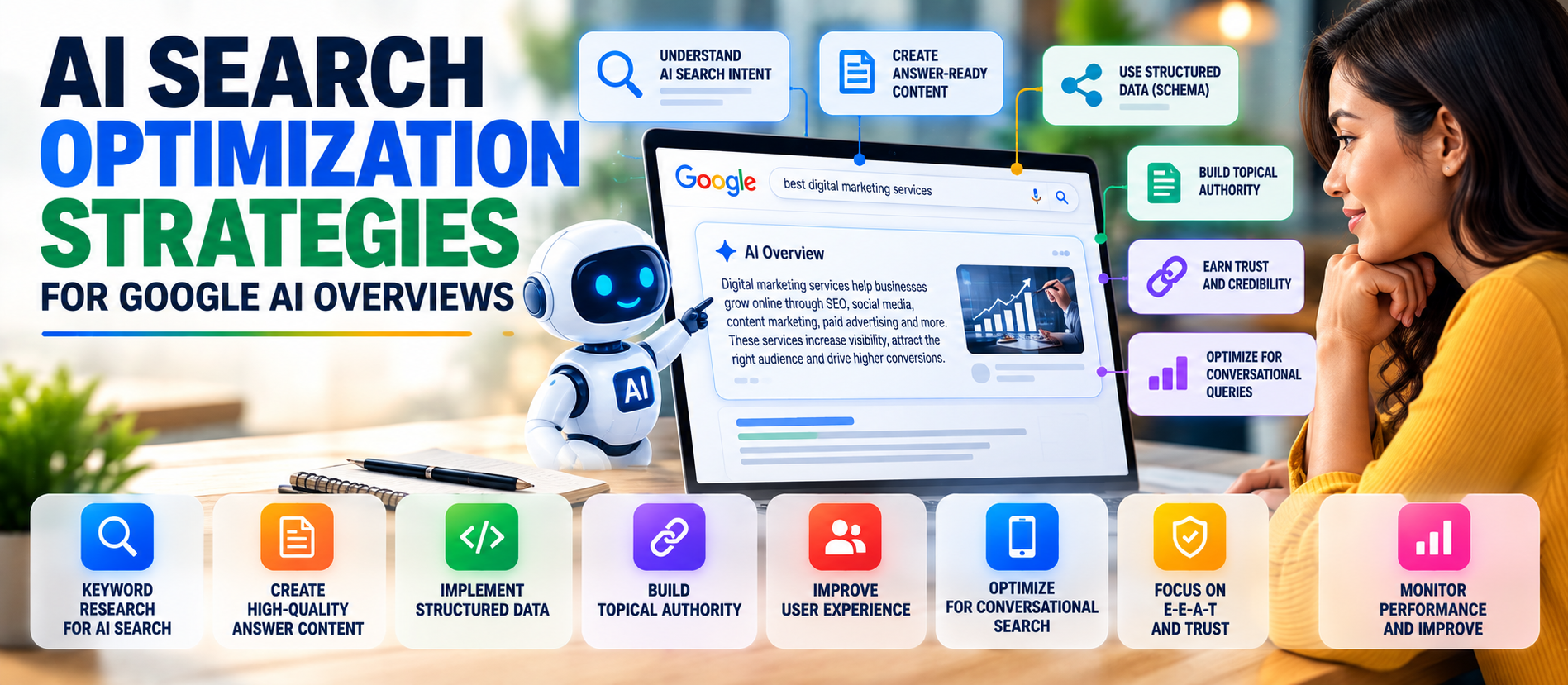
📋 Quick Summary
In this article:
Why AI Search Optimization Matters
1. Continue Using Core SEO Best Practices
2. Create Helpful, Original Content
3. Answer the Main Question Early
4. Build Content Around Search Intent
5. Cover Related Questions and Subtopics
6. Use Clear Headings and Page Structure
7. Improve Content Readability
8. Strengthen Internal Linking
9. Make Your Website Easy to Crawl
Introduction
Search is changing. People are using more conversational queries. They also expect faster and more complete answers.
Google AI Overviews are part of this change. They can provide an AI-generated overview for some searches and may link to supporting web sources. Google also provides AI Mode for more conversational search experiences.
For website owners, this creates a new question: How should a website be optimized for AI search?
The answer is not a secret trick or a special AI markup. Google says that its generative AI search features are built on its core Search ranking and quality systems. Google also says that normal SEO best practices remain relevant for AI search. Its current guidance emphasizes useful, unique, trustworthy content and clear technical foundations.
This means businesses should not abandon SEO. They should make SEO more useful. Pages need to answer real questions. They need clear structure. They need accurate information. They also need a strong user experience.
This guide explains practical AI Search Optimization strategies for Google AI Overviews. The goal is simple: make your website easier for people and modern search systems to understand.
What Are Google AI Overviews?
Google AI Overviews are AI-generated summaries that can appear in Google Search for eligible queries. They are designed to help users understand a topic and explore information through supporting web sources.
Google's current documentation treats AI Overviews and AI Mode as part of its generative AI features in Search. Google states that these features rely on its existing Search ranking and quality systems.
💡 Key Insight
This is important for marketers. There is no separate replacement for SEO. A website still needs to be crawlable, indexable, useful, relevant, and trustworthy.
Why AI Search Optimization Matters
Traditional search often presents a list of results. AI search can provide a synthesized response and then help the user explore supporting sources.
This changes how visibility should be viewed. A business should not focus only on one keyword position. It should also build strong topical coverage and become a useful source for the questions customers ask.
- Users can search with longer and more natural questions.
- Search experiences can combine information from multiple sources.
- Clear answers can make content easier to understand.
- Strong topical coverage can support broader discovery.
- Useful content can serve both traditional and AI-assisted search.
- Search Console can help website owners monitor performance from Google's AI features.
Google's documentation also notes that AI features use web sources and that standard technical and quality requirements still matter.
1. Continue Using Core SEO Best Practices
The first AI Search Optimization strategy is simple: keep your SEO foundation strong.
Google's official guidance says SEO best practices continue to be relevant for generative AI search. This includes technical accessibility, crawlability, indexing, useful content, and good page experience.
Review the basics:
- Make important pages crawlable.
- Make sure important pages can be indexed.
- Use clear page titles.
- Use descriptive headings.
- Create useful and original content.
- Maintain a logical website structure.
- Use internal links where they help users.
- Optimize important images and media.
- Keep the site mobile-friendly.
- Maintain a secure and usable website.
AI search does not remove the need for these fundamentals. It makes them more important because AI systems still need access to understandable web content.
2. Create Helpful, Original Content
One of the strongest strategies for AI search is creating content that provides real value.
Do not create an article simply because a keyword has search volume. Ask what the user needs to know. Then provide information that solves the problem.
Google's current AI optimization guidance emphasizes useful, reliable, user-first content and encourages publishers to provide information that goes beyond generic or commodity material.
Original value can come from:
- First-hand experience.
- Original research.
- Real examples.
- Case studies.
- Expert explanations.
- Unique comparisons.
- Practical checklists.
- Original data.
- Detailed processes.
- Clear explanations of complex topics.
AI can help with research and drafting. But businesses should review AI-generated material carefully. Add human judgment, original information, examples, and accurate details.
3. Answer the Main Question Early
AI-friendly content should be easy to understand. Do not hide the main answer under a long introduction.
If a page answers “What is local SEO?”, define local SEO near the beginning. Then explain how it works, why it matters, common mistakes, and practical steps.
This structure helps readers. It also creates clear sections that search systems can interpret.
A simple structure is:
- Direct answer.
- Short explanation.
- Important details.
- Examples.
- Practical steps.
- Related questions.
4. Build Content Around Search Intent
Search intent is the reason behind a query. Understanding it is essential for both traditional SEO and AI search.
Someone searching “what is SEO” needs an explanation. Someone searching “SEO agency near me” may be looking for a service provider. Someone searching “best SEO tools” may want a comparison.
Do not force every intent into one page. Create different pages when the user needs a different type of answer.
A strong content plan maps keywords and questions to the right page type.
5. Cover Related Questions and Subtopics
AI search can handle complex questions. Users may ask one broad question that contains several smaller questions.
For example, a person may ask how to improve local search visibility. A useful resource may need to cover Google Business Profile optimization, local content, reviews, citations, location pages, and measurement.
Cover important subtopics naturally. Do not add unrelated sections simply to make an article longer.
Topical depth should come from relevance, not repetition.
6. Use Clear Headings and Page Structure
Clear structure helps both people and machines understand a page.
Use one main H1 for the primary topic. Use H2 headings for major sections. Use H3 headings for supporting topics.
For example:
- H1: AI Search Optimization Strategies
- H2: What Is AI Search?
- H2: Why AI Search Matters
- H2: AI Search Optimization Strategies
- H3: Improve Technical SEO
- H3: Create Original Content
- H3: Answer Customer Questions
- H3: Strengthen Internal Links
- H2: Measuring AI Search Performance
Good headings make long content easier to scan. They also provide context around each section.
7. Improve Content Readability
Simple writing is powerful. Use short sentences. Use direct language. Explain one idea at a time.
⚠ Watch Out
Avoid unnecessary jargon. When a technical term is needed, define it.
Use bullet points when listing several items. Use tables when a comparison is easier to understand in a table. Use examples when a concept is abstract.
Readable content helps users find answers faster. It also creates a clearer information structure for search systems.
8. Strengthen Internal Linking
Internal links connect related pages on your website. They help users discover more information and help search engines understand relationships between topics.
Build topic clusters around important subjects. For example, a digital marketing website could have a main SEO page linked to pages about technical SEO, on-page SEO, local SEO, keyword research, content marketing, and SEO audits.
Use descriptive anchor text. Link when the destination page provides useful additional information.
9. Make Your Website Easy to Crawl
Search visibility starts with access. If important pages cannot be crawled or indexed, they cannot perform normally in Search.
Review your robots.txt file, XML sitemap, canonical URLs, redirects, status codes, internal links, and indexing settings.
Use Google Search Console to inspect important URLs. Check whether Google can access and index them.
Google's AI optimization guidance states that pages need to meet Search technical requirements and be indexed to be eligible for generative AI features in Search.
10. Improve Page Experience
Content quality is not the only part of a successful website. Visitors also need a usable experience.
Google's page experience guidance recommends looking at the overall experience. It includes Core Web Vitals, mobile usability, secure delivery, intrusive elements, and the clarity of the main content.
Review:
- Page loading performance.
- Mobile layout.
- Navigation.
- Font readability.
- Button usability.
- Form experience.
- Visual stability.
- Security.
11. Use Structured Data Correctly
Structured data helps search engines understand specific information on a page. Google uses structured data to understand content and may use eligible markup for search features.
Use structured data that matches the visible and accurate content of the page. Do not add markup simply because you hope it will produce a special result.
Depending on the site, useful structured data can include Organization, LocalBusiness, Product, Article, BreadcrumbList, and other supported types.
Structured data is not a magic AI ranking signal. It is one part of a broader technical and content strategy.
12. Build Strong Entity Signals
AI systems need context. They need to understand what a business is, what it offers, where it operates, and which topics it covers.
Make important business information clear. Use consistent company names, descriptions, contact details, service information, and location information.
Create strong About, Contact, Service, Product, and author pages when relevant.
For a local business, keep business details consistent across the website and important third-party profiles.
13. Demonstrate Experience and Expertise
Trust matters in search. Content should show why the author or business is qualified to discuss the topic.
Useful trust signals can include author information, professional experience, original examples, citations, references, case studies, and transparent business information.
Do not manufacture expertise. Use real experience and accurate information.
14. Create Non-Commodity Content
Generic content is easy to produce. It is also easy to replace.
Give readers something they cannot get from ten other pages. Explain your process. Share real lessons. Add original examples. Show how you solve a problem.
For example, instead of publishing a generic article about “digital marketing tips,” create a detailed guide based on a real workflow. Explain the research process, campaign structure, metrics, mistakes, and lessons learned.
This creates a stronger reason for users to trust and remember the content.
15. Use Multiple Content Formats
AI search is not limited to text. Google's current guidance discusses local, shopping, image, and video content as useful areas to consider.
Depending on your business, create:
- Helpful articles.
- Product pages.
- Service pages.
- Original images.
- Demonstration videos.
- Case studies.
- Comparison pages.
- Local information.
- Downloadable resources.
Use the format that best answers the user's need.
16. Optimize for Conversational Queries
People may ask AI search systems complete questions instead of short keywords.
Traditional keyword research should therefore be combined with question research. Look for the problems customers describe in their own words.
Useful sources can include customer support questions, sales conversations, reviews, community discussions, internal search data, and Search Console queries.
Turn common questions into clear content sections when the topic deserves a detailed answer.
17. Build Topic Clusters
A topic cluster connects a broad topic with detailed supporting pages.
For example, a digital marketing website might create a main “SEO Services” page. Supporting pages could cover on-page SEO, technical SEO, local SEO, ecommerce SEO, SEO audits, keyword research, and content optimization.
Link these pages naturally. This helps users explore the subject and creates a logical information architecture.
18. Keep Facts Accurate and Current
AI search makes accuracy even more important. Outdated information can reduce trust.
Review statistics, product details, pricing, business information, laws, platform features, and technical recommendations regularly.
When a fact may change, include a date or update note when useful.
For Google Search guidance, use current official documentation instead of old blog posts or outdated SEO claims.
19. Avoid AI Search Hacks That Lack Evidence
The growth of AI search has created many optimization theories. Some are presented as guaranteed hacks.
Be careful with claims about special text patterns, artificial keyword repetition, hidden content, or files that supposedly guarantee AI visibility.
Google's current guidance specifically says that websites do not need to create special AI files such as llms.txt to appear in Google Search generative AI features. Google also says such files do not provide a positive or negative ranking effect for Google Search.
Focus your resources on useful content, technical SEO, user experience, and accurate information.
20. Use Google Search Console to Measure Performance
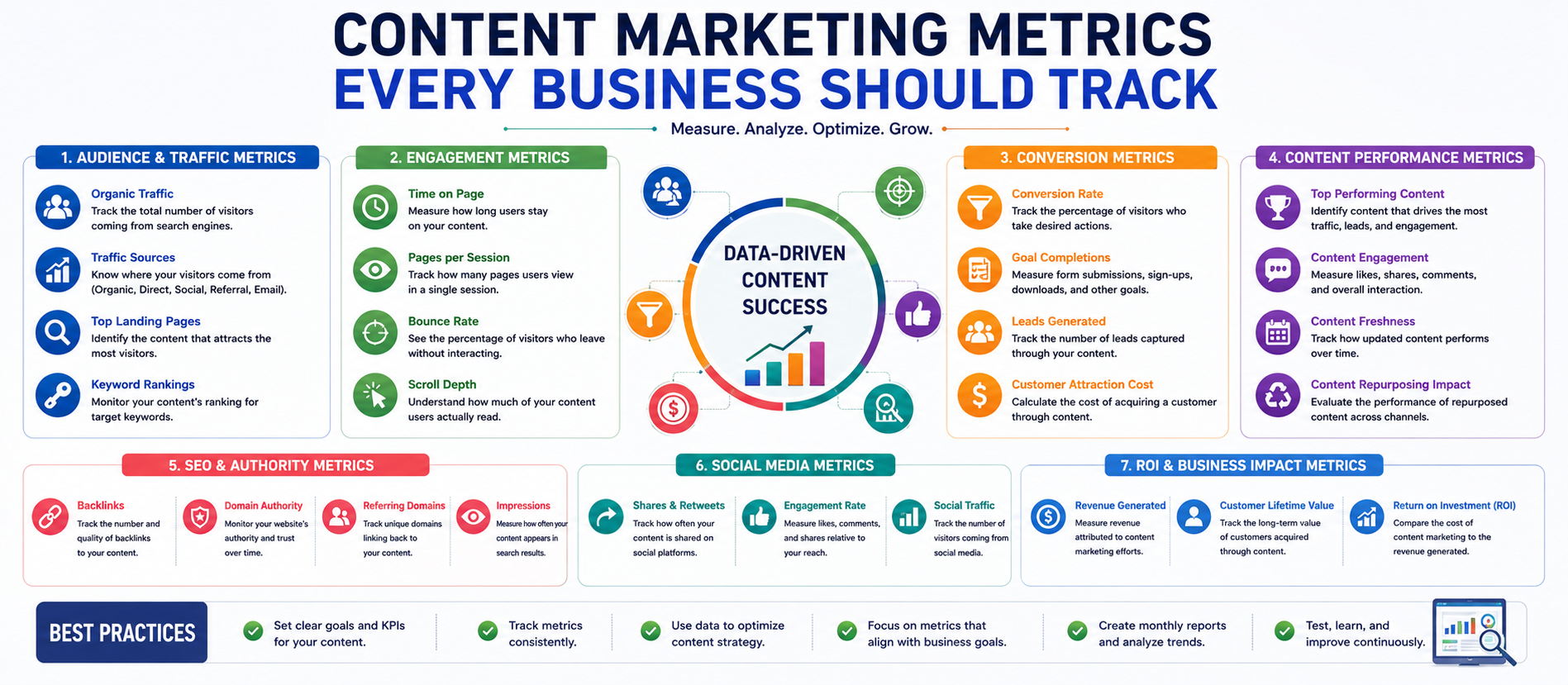
Measurement is essential. Google has expanded Search Console reporting around generative AI features. Its documentation explains how AI feature performance is represented in Search Console.
Monitor:
- Search impressions.
- Clicks.
- Click-through rate.
- Queries.
- Landing pages.
- Conversions.
- Traffic from relevant search experiences.
Do not judge AI Search Optimization from one screenshot or one query. Look for trends over time.
21. Track Business Outcomes, Not Just Visibility
Visibility is useful only when it supports business goals.
Track qualified leads, sales, revenue, bookings, downloads, calls, or other meaningful actions.
A page can receive many impressions and still produce little business value. Another page may receive fewer visitors but generate highly qualified leads.
Connect Search data with analytics and CRM data where possible.
22. Optimize Existing High-Value Pages
You do not always need to publish new content. Existing pages may have more potential.
Find pages that already receive impressions but have low clicks. Review their titles, descriptions, search intent, content quality, and internal links.
Also find pages that rank for related questions but do not answer them well. Improve those sections.
Updating valuable pages can be more efficient than creating many new pages with little authority.
23. Improve Your FAQ Strategy
FAQs can make content easier to use when the questions are genuine. They should answer questions customers actually ask.
Do not create a large FAQ section just to add keywords. Keep answers concise and accurate.
Also remember that a FAQ section does not guarantee a special Google rich result. Google removed documentation for the FAQ rich result feature in 2026.
The value of FAQs is primarily in helping users understand your service, product, or topic.
24. Create Better Local Content
Local businesses can improve AI and traditional search visibility by providing useful local information.
Explain the service area. Provide location-specific details. Show real work when appropriate. Answer local customer questions.
Avoid creating dozens of duplicate city pages with only the location name changed. Each page should provide genuine value.
25. Make Commercial Pages Helpful
AI Search Optimization is not only for blog posts.
Service and product pages can also answer questions. Explain what the service includes, who it is for, how the process works, what customers should expect, and how to get started.
Good commercial content reduces uncertainty. It helps customers make decisions.
26. Build a Clear Content Architecture
Your website should have a logical structure. Important pages should not be buried several clicks deep without a reason.
Create clear navigation. Use breadcrumbs where useful. Link related pages together. Remove orphan pages when they provide no strategic value.
A clear architecture makes the site easier to navigate and easier to interpret.
27. Create an AI Search Optimization Workflow
A repeatable workflow is better than occasional optimization.
Step 1: Research
Study customer questions, search intent, competitors, existing content, and Search Console data.
Step 2: Plan
Choose the right page type. Define the primary question. List supporting topics.
Step 3: Create
Write clear, original, useful content. Add examples and practical details.
Step 4: Optimize
Improve titles, headings, internal links, images, metadata, structured data, and page performance.
Step 5: Publish
Check the page on desktop and mobile. Make sure important content is accessible and indexable.
Step 6: Measure
Use Search Console and analytics to review performance.
Step 7: Improve
Update pages based on real user behavior and new information.
28. Common AI Search Optimization Mistakes
- Trying to find a guaranteed AI ranking hack.
- Publishing large amounts of generic AI-generated content.
- Ignoring technical SEO.
- Ignoring search intent.
- Writing very long content without adding value.
- Using keyword stuffing.
- Creating duplicate location pages.
- Using unsupported structured data.
- Ignoring mobile experience.
- Ignoring page speed.
- Failing to update outdated information.
- Measuring only rankings instead of business outcomes.
- Creating content without internal links.
- Using fake reviews or unsupported claims.
29. A Practical Checklist for Google AI Overviews
- Make sure Google can crawl important pages.
- Make sure important pages can be indexed.
- Write original, useful content.
- Answer the main question clearly.
- Cover important related questions.
- Use descriptive headings.
- Keep sentences and paragraphs clear.
- Use natural language.
- Build useful internal links.
- Use accurate structured data when appropriate.
- Keep business and entity information consistent.
- Improve mobile experience.
- Review Core Web Vitals and page experience.
- Use relevant images and videos.
- Show real expertise and experience.
- Update outdated information.
- Monitor Search Console data.
- Track conversions and revenue.
- Avoid unproven AI search hacks.
How Digiifrog Can Help With AI Search Optimization
Digiifrog helps businesses improve their online visibility through SEO, content marketing, technical SEO, local SEO, Google Ads, social media marketing, AEO, GEO, and AI Search Optimization.
Our approach focuses on the fundamentals that matter across modern search. We analyze search intent, website structure, content quality, internal links, technical health, business information, and conversion paths.
We can also help businesses develop content systems that answer customer questions clearly and support visibility across traditional search and AI-powered discovery.
Frequently Asked Questions
What is AI Search Optimization?
AI Search Optimization is the practice of improving website content, structure, technical accessibility, and usefulness so it can perform well in modern AI-assisted search experiences as well as traditional search.
How do I optimize my website for Google AI Overviews?
Start with standard SEO fundamentals. Make pages crawlable and indexable. Create original and useful content. Answer user questions clearly. Build topical coverage. Improve page experience. Use accurate structured data where relevant. Measure performance in Search Console.
Is AEO different from SEO?
AEO means Answer Engine Optimization. It emphasizes clear answers for answer-focused search experiences. Google states that its generative AI search features are grounded in its existing Search systems, so traditional SEO best practices remain important.
Is GEO required for Google AI Overviews?
There is no separate Google ranking system that requires a special GEO technique. Google describes generative AI optimization as part of optimizing for Search. Useful content, technical SEO, and strong quality signals remain important.
Do I need an llms.txt file for Google AI Overviews?
No. Google's current guidance says an llms.txt file is not required for Google Search and does not provide a positive or negative visibility or ranking effect in Google Search.
Does structured data guarantee AI Overview visibility?
No. Structured data can help search engines understand content, but it does not guarantee rankings, AI Overview inclusion, or a special search appearance.
Should I publish more AI-generated articles?
Publishing more content is not automatically better. Focus on useful, original, accurate information. If AI tools are used, review the output and add real expertise, examples, and editorial judgment.
How can I measure AI Search performance?
Use Google Search Console and analytics to monitor search visibility, clicks, queries, landing pages, conversions, and relevant AI feature reporting. Look for trends instead of relying on one search result.
Final Thoughts
AI Search Optimization for Google AI Overviews is not about finding a shortcut. It is about making your website genuinely useful.
Build a strong technical foundation. Understand your audience. Answer real questions. Create original content. Use clear headings. Strengthen internal links. Improve page experience. Keep business information accurate.
Then measure what happens.
Google's current guidance makes one point especially clear: SEO still matters for generative AI search. The strongest long-term strategy is to create helpful content and maintain a technically sound website rather than chase unproven AI search hacks.
As search continues to evolve, businesses that focus on useful information, clear communication, trustworthy expertise, and measurable outcomes will be better prepared for new search experiences.
Digiifrog helps businesses build practical SEO and AI Search strategies that connect online visibility with real business goals.
Website: www.digiifrog.com
Suggested Internal Links
- Digital Marketing Services
- SEO Services
- Technical SEO Services
- On-Page SEO Services
- Local SEO Services
- Content Marketing Services
- AEO Services
- GEO Services
- AI Search Optimization Services
- Google Ads Management
Readability and AI Search Content Standards
This article uses short paragraphs, direct sentences, descriptive headings, question-based sections, lists, definitions, and practical steps. The goal is to make the content easy for readers to scan and easy for search systems to interpret.
For best results, apply the same approach across your website. Explain one idea at a time. Use simple language. Avoid unnecessary jargon. Give direct answers. Support important claims with reliable information. Add original value wherever possible.
Reference Note
This article follows current Google Search Central guidance available in September 2026. Google recommends continuing core SEO practices for generative AI search and emphasizes useful, unique, user-first content and clear technical foundations. Google's guidance also states that special files such as llms.txt are not required for Google Search visibility.
Reference Note
This article follows current Google Search Central guidance available in September 2026. Google recommends continuing core SEO practices for generative AI search and emphasizes useful, unique, user-first content and clear technical foundations. Google's guidance also states that special files such as llms.txt are not required for Google Search visibility.
- Google Search Central: Guide to Google Search Generative AI Features
- Google Search Central: Search Appearance Documentation
- Google Search Central: Page Experience
- Google Search Central: Documentation Updates
Ready to Grow?
Talk to us about a strategy tailored to your brand — we will help you stand out in search, AI discovery and social.

Comments (0)
Log in to leave a comment.