📋 Quick Summary
In this article:
Focus on Long-Tail Keywords
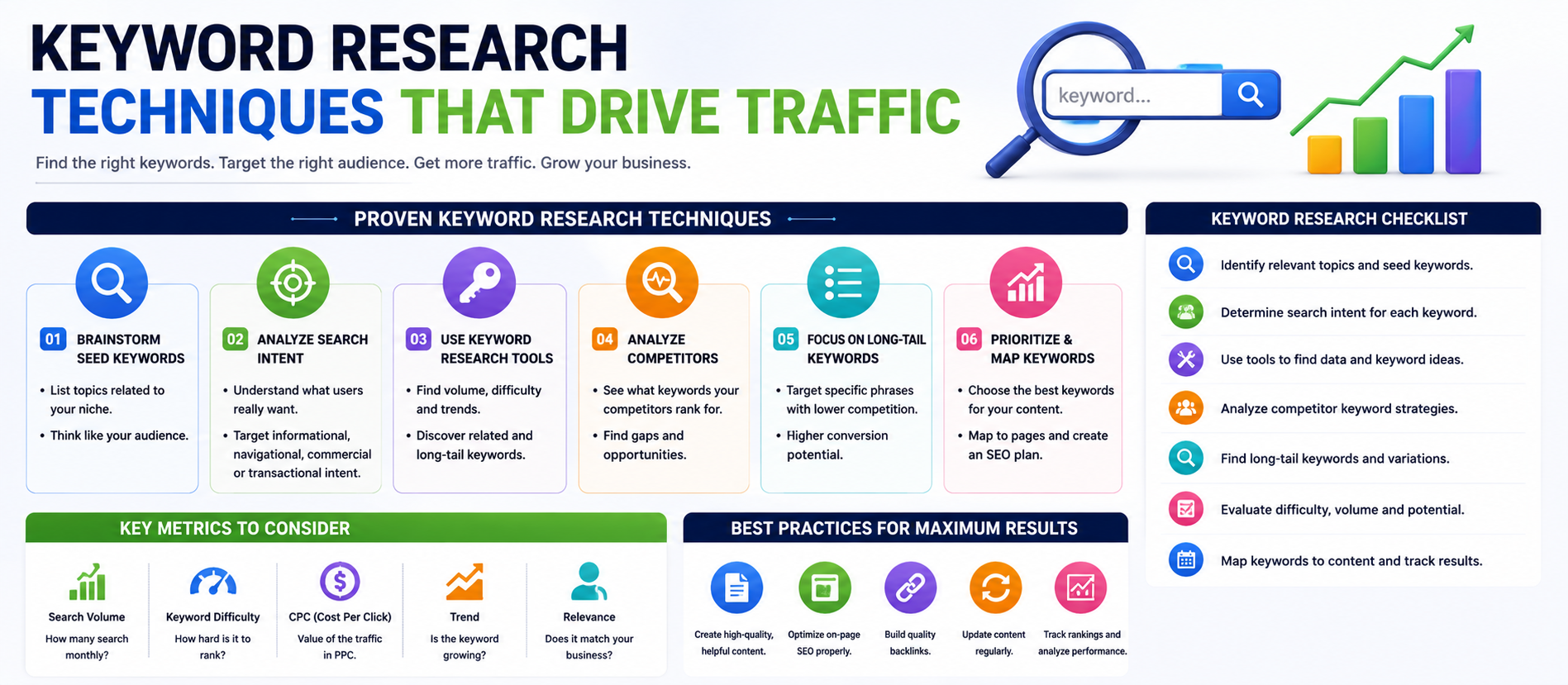
Keyword research remains the foundation of every successful SEO strategy. In 2026, businesses must move beyond simply targeting high-volume keywords. Modern search optimization requires understanding user intent, semantic search, AI-powered search experiences, Answer Engine Optimization (AEO), Generative Engine Optimization (GEO), and topical authority.
This WordPress-ready guide explains the most effective keyword research techniques that consistently drive qualified traffic, improve rankings, and increase conversions.
Why Keyword Research Matters
Effective keyword research helps businesses understand what potential customers are searching for and create content that satisfies those needs.
- Increase organic traffic
- Improve search rankings
- Generate qualified leads
- Boost conversions
- Build topical authority
Understand Search Intent
Every keyword reflects a user's goal. Classify keywords into informational, navigational, commercial, and transactional intent before creating content.
Focus on Long-Tail Keywords
Long-tail keywords usually have lower competition and higher conversion rates because they match specific user needs.
Analyze Competitor Keywords
Study competing websites to identify valuable keyword opportunities, content gaps, and ranking strategies.
Build Topic Clusters
Create pillar pages supported by related articles to establish expertise and improve internal linking.
Use Semantic SEO
Include related entities, synonyms, and naturally connected topics to help search engines understand your content.
Optimize for AI Search
Create structured, authoritative, fact-based content that AI assistants can easily summarize and cite.
AEO Best Practices
- Create FAQ sections
- Answer questions directly
- Use clear headings
- Write concise definitions
GEO Strategies
- Publish expert content
- Build topical authority
- Use consistent terminology
- Support claims with useful examples
Keyword Research Tools
- Google Search Console
- Google Keyword Planner
- Google Trends
- SEO research platforms
- AI-assisted keyword analysis tools
Measure Success
- Organic traffic
- Keyword rankings
- Click-through rate
- Conversions
- Bounce rate
Common Mistakes
- Targeting only high-volume keywords
- Ignoring search intent
- Keyword stuffing
- Neglecting internal linking
- Not updating content
Future Trends
AI-powered search, conversational queries, entity-based SEO, predictive search, and personalized experiences will continue shaping keyword research in the coming years.
Conclusion
Businesses that combine keyword research with SEO, AEO, GEO, and AI Search Optimization will achieve stronger rankings, higher traffic, and sustainable growth.
Digiifrog delivers advanced SEO, AI Search Optimization, content marketing, keyword research, and digital marketing solutions.
Website: www.digiifrog.com
Ready to Grow?
Talk to us about a strategy tailored to your brand — we will help you stand out in search, AI discovery and social.

Comments (0)
Log in to leave a comment.