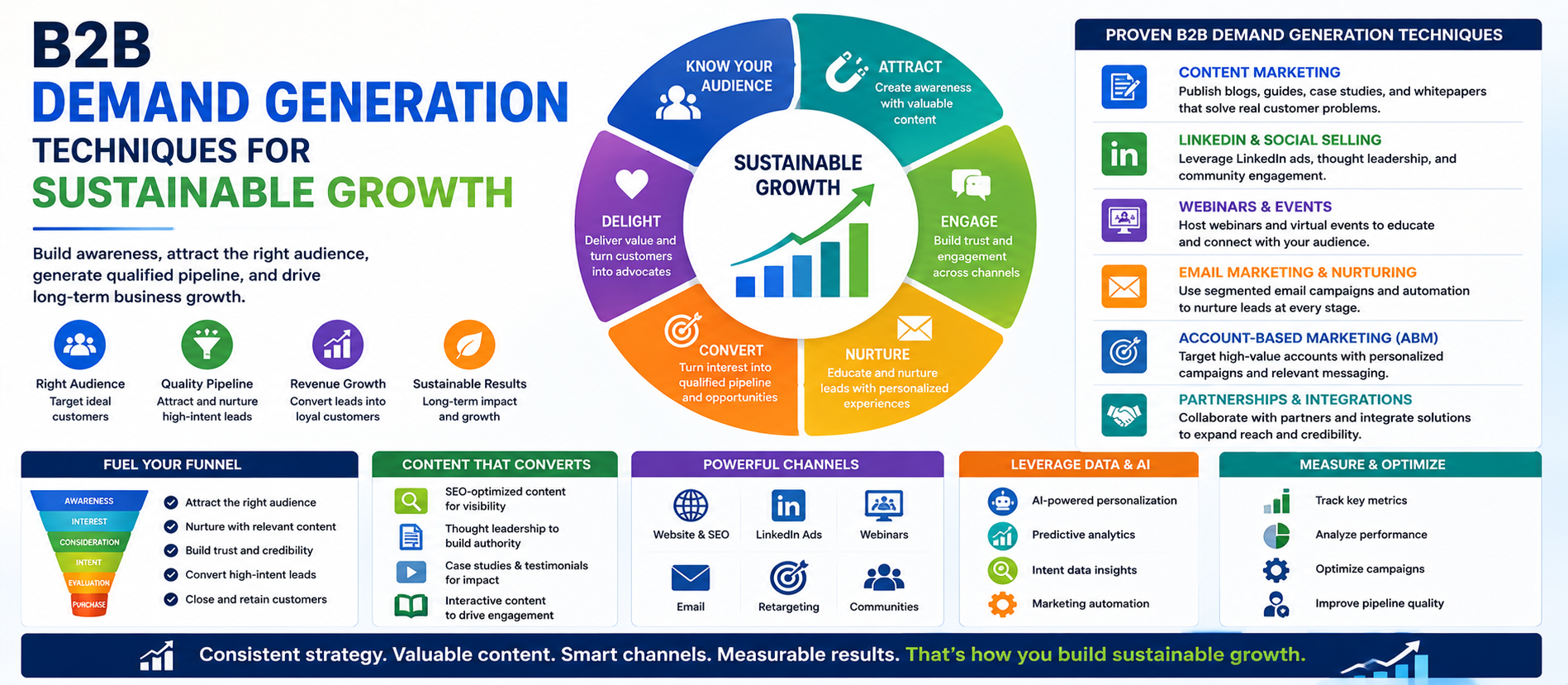
📋 Quick Summary
In this article:
What Is B2B Demand Generation?
Why Sustainable Growth Requires a Different Approach
1. Build a Clear Ideal Customer Profile
2. Map the Real Buyer Journey
3. Create Educational Content Before Asking for the Sale
4. Use SEO, AEO, GEO, and AI Search Optimization Together
5. Turn Thought Leadership into a Consistent Demand Engine
6. Use LinkedIn for Full-Funnel Demand Generation
7. Combine Account-Based Marketing with Broader Demand Generation
B2B growth does not come from collecting the largest possible number of leads. Sustainable growth comes from creating awareness, building trust, educating the right buyers, and helping qualified prospects move toward a purchasing decision.
That is the purpose of B2B demand generation. A strong demand generation strategy connects brand building, content, search visibility, social engagement, nurturing, sales alignment, and measurement.
In 2026, the focus is shifting even further from lead quantity toward relevance, trust, intent, pipeline quality, and measurable business value. The most successful programs are designed for the full buying journey instead of a single form submission.
This guide explains practical B2B demand generation techniques for sustainable growth. The content uses clear language and a structured format that supports SEO, AEO, GEO, and AI Search Optimization.
Digiifrog creates structured, readable, and search-friendly content for businesses, technology brands, service providers, and digital growth strategies.
What Is B2B Demand Generation?
B2B demand generation is the process of creating awareness, interest, trust, and buying intent among business audiences. It starts before a prospect is ready to submit a form or speak with sales.
Demand generation and lead generation are related, but they are not identical. Demand generation creates and nurtures interest. Lead generation converts interested prospects into identifiable contacts or leads.
A sustainable program therefore asks a broader question than, “How many leads did we get?” It asks:
- Are we reaching the right companies?
- Do buyers understand the problem we solve?
- Do they trust our expertise?
- Are target accounts showing meaningful engagement?
- Is marketing creating qualified pipeline?
- Does demand eventually contribute to revenue and retention?
Why Sustainable Growth Requires a Different Approach
Short-term campaigns can generate a sudden increase in form fills. But many low-quality leads never become customers. Sustainable growth requires a repeatable system that continues to educate future buyers while helping current buyers take action.
A quality-first approach usually combines three layers:
Brand: Build recognition and trust.
Demand: Create interest and help buyers understand the value of solving a problem.
Conversion: Give high-intent prospects a clear next step.
These layers should work together. A prospect may first discover a useful article, later watch a video, then attend a webinar, read a case study, and finally request a consultation.
1. Build a Clear Ideal Customer Profile
Demand generation starts with knowing who you want to influence. A vague audience definition creates vague messaging and wasted marketing spend.
Create an Ideal Customer Profile, or ICP, using factors such as:
- Industry.
- Company size.
- Location or market.
- Technology environment.
- Business challenges.
- Revenue model.
- Growth stage.
- Buying potential.
Then identify the people involved in the decision. B2B purchases often involve multiple stakeholders. A technical user may care about implementation. A finance leader may care about cost and ROI. An executive may focus on strategic value and risk.
Your content should reflect these different questions.
2. Map the Real Buyer Journey
Do not assume every visitor is ready to buy. Some people are discovering a problem. Others are comparing options. Some are close to making a decision.
A simple journey can include:
Awareness Stage
The buyer is learning about a problem or opportunity. Educational articles, short videos, research, checklists, and thought leadership work well here.
Consideration Stage
The buyer understands the problem and is evaluating approaches. Comparison guides, webinars, expert articles, templates, and use cases can help.
Decision Stage
The buyer is evaluating specific providers or solutions. Case studies, demonstrations, ROI content, implementation information, and consultations become more important.
Map your content to the questions buyers ask at each stage.
3. Create Educational Content Before Asking for the Sale
One of the strongest demand generation techniques is useful content. Instead of constantly promoting your service, help buyers understand a problem, evaluate options, and make better decisions.
High-value B2B content can include:
- In-depth blog articles.
- Industry guides.
- Research summaries.
- Case studies.
- Checklists.
- Templates.
- Comparison pages.
- Explainer videos.
- Webinars.
- Expert interviews.
Start with real customer questions. Ask your sales and customer teams which problems appear repeatedly. Those questions can become a long-term content roadmap.
4. Use SEO, AEO, GEO, and AI Search Optimization Together
B2B buyers research independently. Your company needs to appear when they search for problems, solutions, comparisons, and implementation advice.
SEO helps your content become discoverable in traditional search results.
AEO, or Answer Engine Optimization, focuses on giving clear and direct answers to specific questions.
GEO, or Generative Engine Optimization, focuses on making content understandable and useful for generative search experiences.
AI Search Optimization emphasizes clear structure, factual context, concise answers, descriptive headings, useful comparisons, and strong topical coverage.
A practical structure is simple:
- Answer the main question early.
- Use descriptive headings.
- Explain terms clearly.
- Add examples and comparisons.
- Support important claims with reliable sources.
- Keep sentences direct and readable.
- Update important evergreen content regularly.
5. Turn Thought Leadership into a Consistent Demand Engine
Thought leadership works best when it provides a useful point of view rather than repeating generic industry advice.
Encourage founders, executives, specialists, and subject-matter experts to share:
- Original observations.
- Lessons from customer work.
- Market changes.
- Common mistakes.
- Frameworks and processes.
- Predictions supported by evidence.
LinkedIn is particularly useful for many B2B audiences. Combine company content with authentic expert voices instead of relying only on polished brand posts.
6. Use LinkedIn for Full-Funnel Demand Generation
LinkedIn can support awareness, engagement, lead generation, retargeting, and account-focused campaigns. The key is matching the message to audience awareness.
For cold audiences, promote useful ideas and educational content. For engaged audiences, use deeper resources, webinars, and case studies. For high-intent audiences, introduce stronger conversion offers.
A simple campaign sequence may look like this:
- Educational post or video.
- In-depth article or guide.
- Retargeting based on engagement.
- Webinar, case study, or practical resource.
- Consultation, demo, or assessment.
This approach reduces pressure to convert every new prospect immediately.
7. Combine Account-Based Marketing with Broader Demand Generation
Account-Based Marketing, or ABM, is especially useful when a business sells to a limited number of high-value companies.
Create a target account list and research:
- Business priorities.
- Likely buying groups.
- Current technology.
- Relevant pain points.
- Market events or growth signals.
💡 Key Insight
Then create relevant campaigns and content. Avoid over-personalization that feels artificial. Relevance is more important than simply inserting a company name into every asset.
A strong strategy can combine broad demand generation to create market awareness with ABM for selected high-value accounts.
8. Build a Webinar and Event System
A single webinar should not be treated as a one-time campaign. Turn it into a content system.
Before the event, publish educational posts and invite relevant audiences. During the event, focus on practical learning instead of a long sales presentation. Afterward, reuse the recording.
One webinar can become:
- Short video clips.
- Blog articles.
- Social posts.
- Email sequences.
- FAQ content.
- Sales enablement material.
This increases the long-term value of the original work.
9. Nurture Prospects with Useful Email
Email nurturing should not mean sending repeated sales messages. Each email should give the reader a reason to continue the relationship.
A useful sequence might include:
- A welcome message with a helpful resource.
- An article explaining a common problem.
- A practical checklist.
- A relevant customer story.
- A comparison or decision guide.
- An invitation to speak with an expert when intent is clear.
Segment audiences where possible. A prospect researching a new solution should not receive the same message as a current customer.
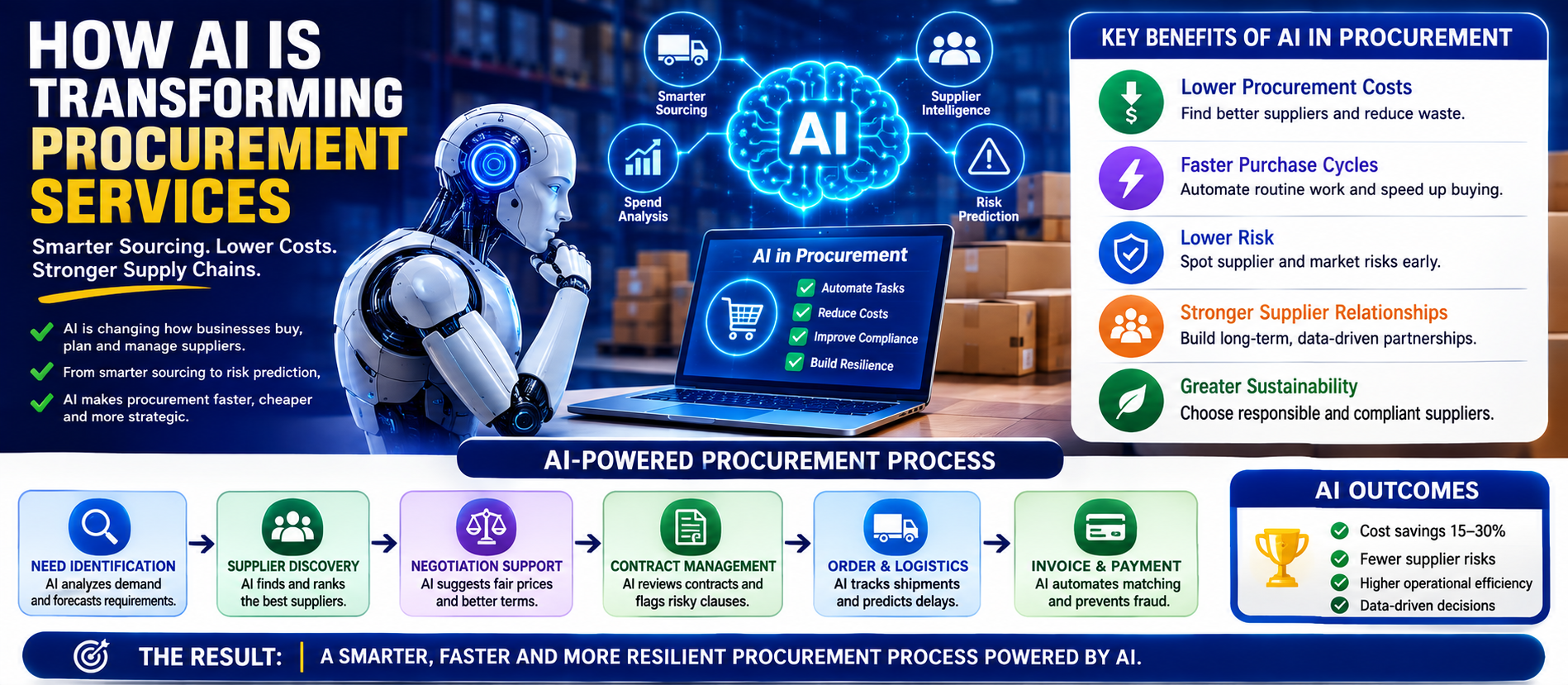
10. Use AI to Improve Relevance, Not to Create Noise
AI can help demand generation teams analyze content, identify patterns, summarize research, support personalization, and improve workflow efficiency.
Useful applications include:
- Content research.
- Audience segmentation.
- Lead and account prioritization.
- Email draft support.
- Campaign analysis.
- Content repurposing.
- Intent signal analysis.
However, AI should not replace strategy. Poor targeting and weak positioning do not become effective simply because content is generated faster. Human review is essential for accuracy, brand voice, and buyer relevance.
11. Align Marketing and Sales Around Shared Signals
Demand generation becomes more sustainable when marketing and sales agree on what a valuable prospect looks like.
Create shared definitions for:
- Target account.
- Marketing-qualified lead.
- Sales-qualified opportunity.
- Meaningful engagement.
- Pipeline contribution.
- Revenue influence.
Schedule regular feedback sessions. Sales teams can explain which objections they hear. Marketing teams can identify content gaps and engagement trends.
12. Measure Pipeline Quality, Not Only Lead Volume
Lead volume is easy to report, but it does not always represent business value.
Track a balanced set of metrics such as:
- Qualified pipeline created.
- Opportunity conversion rate.
- Pipeline velocity.
- Cost per qualified opportunity.
- Win rate.
- Customer acquisition cost.
- Revenue influenced or generated.
- Engagement within target accounts.
- Organic search growth.
- Content-assisted conversions.
Measurement should help you make better decisions, not simply produce a larger dashboard.
13. Create a Sustainable Content Distribution System
Publishing more content is not always the answer. Distribution matters.
For each major article, guide, or webinar, create a distribution plan across:
- Organic search.
- LinkedIn.
- Email.
- Sales outreach.
- Partner channels.
- Communities where appropriate.
- Paid retargeting.
Repurpose strong ideas instead of constantly starting from zero. Update high-performing evergreen pages and connect related content through internal links.
14. Build Trust with Proof
B2B buyers often need evidence before making a high-value decision. Add proof throughout the journey.
Useful trust assets include:
- Case studies.
- Customer testimonials.
- Measurable results.
- Implementation examples.
- Technical documentation.
- Transparent pricing or process information where appropriate.
- Expert credentials.
Specific evidence is usually stronger than vague claims such as “industry-leading” or “best-in-class.”
15. Focus on Retention and Expansion
Sustainable demand generation does not stop when a deal closes. Existing customers can create referrals, case studies, expansion opportunities, and long-term revenue.
Continue educating customers with onboarding content, product education, webinars, expert resources, and community experiences.
A strong customer experience also improves the credibility of future marketing.
Simple B2B Demand Generation Framework
| Stage Main Goal Useful Techniques | ||
| Awareness | Build recognition and trust | SEO, thought leadership, social content, video |
| Interest | Educate the buyer | Guides, webinars, newsletters, expert content |
| Consideration | Help evaluation | Comparisons, case studies, workshops, ABM |
| Intent | Identify meaningful buying signals | Retargeting, nurturing, sales alignment |
| Conversion | Create qualified opportunities | Demos, consultations, assessments |
| Retention | Create long-term value | Education, customer marketing, expansion |
Common B2B Demand Generation Mistakes
Chasing Every Possible Lead
Broad targeting can create high volume but poor quality. Focus on audiences with a realistic fit.
Gating Everything
Not every useful resource needs a form. Ungated content can build trust and reach more future buyers.
Ignoring Brand Building
Buyers are more likely to consider companies they recognize and trust.
Using One Message for Every Buyer
Different stakeholders have different priorities. Adapt content to their role and stage.
Measuring Only Clicks and Form Fills
Connect campaign performance to qualified pipeline and business outcomes.
Stopping After One Campaign
Demand generation is a system. Consistency, learning, and optimization create compounding results.
Frequently Asked Questions
What is the difference between demand generation and lead generation?
Demand generation creates awareness and interest. Lead generation captures contact information from interested prospects and supports follow-up.
What are the best B2B demand generation techniques?
Effective techniques include educational content, SEO, thought leadership, LinkedIn marketing, ABM, webinars, email nurturing, retargeting, customer proof, and strong sales-marketing alignment.
How long does B2B demand generation take?
It depends on the market and sales cycle. Some campaigns can create short-term opportunities, but sustainable demand usually requires consistent investment over time.
Is SEO important for B2B demand generation?
Yes. B2B buyers often search for problems, solutions, comparisons, and implementation information before speaking with sales. SEO can create a long-term source of relevant traffic.
Should B2B content always be gated?
No. Ungated content can build reach and trust. Gate content when the value exchange is clear and lead information is genuinely useful for the next stage.
How should AI be used in demand generation?
Use AI to improve research, analysis, workflow, segmentation, personalization, and content operations. Keep humans responsible for strategy, accuracy, judgment, and buyer relevance.
Conclusion
The strongest B2B demand generation techniques for sustainable growth do not depend on one channel or one campaign. They create a connected system.
Start with a clear ICP. Understand the buyer journey. Create useful content. Build search visibility. Use LinkedIn and thought leadership to create awareness. Apply ABM where high-value accounts matter. Nurture interest through email, webinars, and retargeting. Align marketing with sales. Measure qualified pipeline instead of only lead volume.
The goal is not simply to capture more names. The goal is to become a trusted choice before the buyer is ready to purchase and to make the next step easy when intent appears.
For sustainable B2B growth, relevance, trust, quality, and consistency matter more than short-term lead volume.
Disclaimer: This article is for general educational and informational purposes. Marketing results vary based on industry, audience, product, budget, sales cycle, competition, and execution. Review platform documentation and test strategies before making major business decisions.
Digiifrog
Website: www.digiifrog.com
Ready to Grow?
Talk to us about a strategy tailored to your brand — we will help you stand out in search, AI discovery and social.
Comments (0)
Log in to leave a comment.