📋 Quick Summary
In this article:
Core Features of Modern LMS Platforms
Cloud-Based LMS Solutions
LMS Software for Schools and Universities
AI-Powered LMS Platforms
Learning Analytics and Reporting
Collaboration and Social Learning
Digital learning has transformed the way organizations train employees, educate students, and deliver professional development programs. As remote learning, hybrid education, corporate training, and online certification programs continue expanding, Learning Management System (LMS) software has become a critical technology for modern education and workforce development.
A Learning Management System (LMS) provides a centralized platform for creating, managing, delivering, tracking, and optimizing learning experiences. Whether used by schools, universities, businesses, training providers, or government organizations, LMS platforms help streamline education while improving engagement and learning outcomes.
This comprehensive guide explores the best LMS software solutions, key features, benefits, implementation strategies, future trends, and how LMS platforms support SEO, AEO, GEO, and AI-powered learning ecosystems
What Is LMS Software?
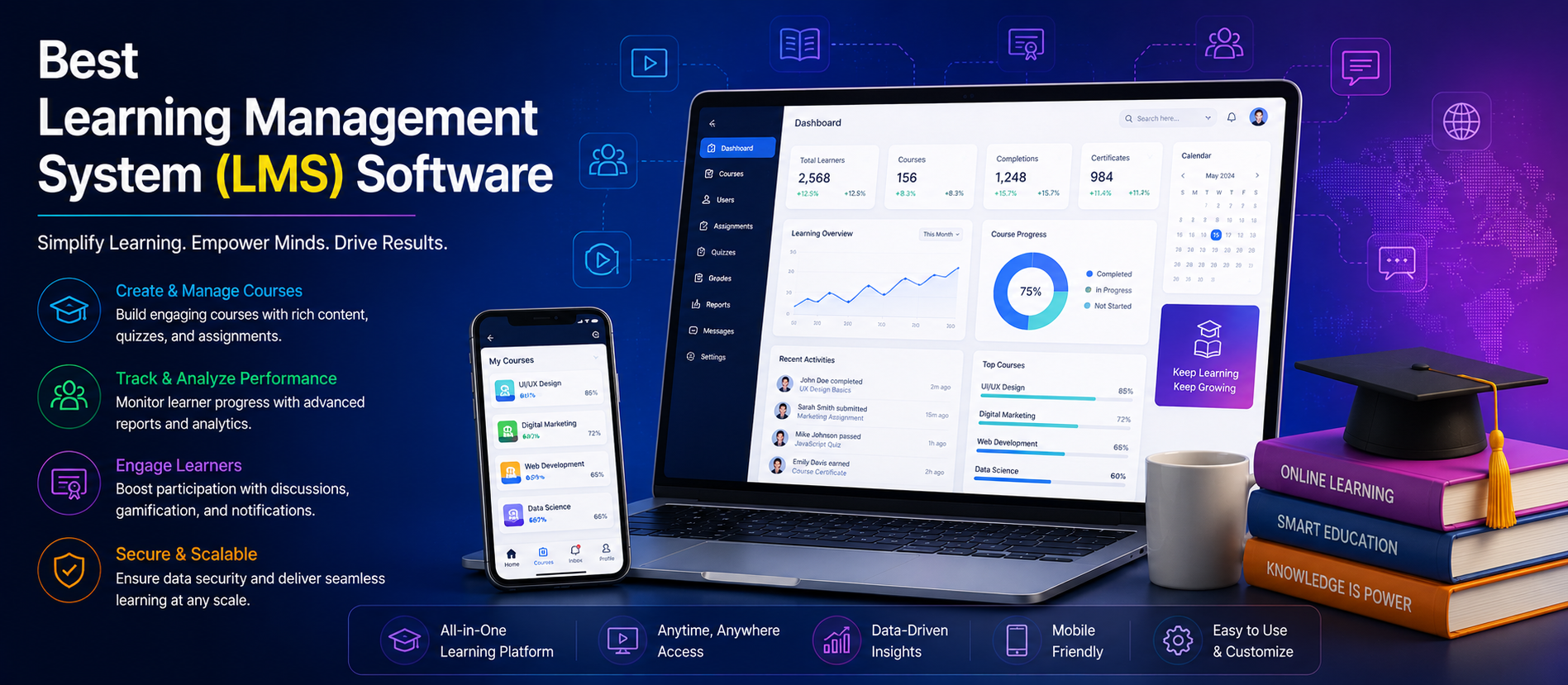
Learning Management System software is a digital platform that helps organizations create, manage, deliver, and monitor educational content and training programs.
- Course Management
- Content Delivery
- Student Tracking
- Assessment Tools
- Certification Management
- Reporting and Analytics
- Collaboration Features
LMS platforms serve as centralized learning hubs that support both learners and administrators.
Why LMS Software Matters
Traditional classroom-based training often faces limitations related to scalability, accessibility, cost, and flexibility. LMS software addresses these challenges by enabling organizations to deliver learning anytime and anywhere.
- Improved accessibility
- Lower training costs
- Scalable learning programs
- Consistent content delivery
- Better learner engagement
- Performance tracking
Core Features of Modern LMS Platforms
- Course creation tools
- User management
- Mobile learning support
- Video integration
- Assessments and quizzes
- Progress tracking
- Certificates and badges
- Learning analytics
- Discussion forums
- Cloud accessibility
Cloud-Based LMS Solutions
Cloud technology has significantly improved LMS adoption by reducing infrastructure requirements and enabling flexible access.
- Remote accessibility
- Automatic updates
- Reduced maintenance
- Scalable infrastructure
- Enhanced security
LMS Software for Businesses
Corporate learning is one of the fastest-growing LMS segments.
- Employee onboarding
- Compliance training
- Leadership development
- Product training
- Sales enablement
- Professional certifications
Businesses use LMS platforms to improve workforce skills and productivity.
LMS Software for Schools and Universities
Educational institutions increasingly rely on LMS platforms to support digital learning environments.
- Virtual classrooms
- Assignment management
- Online examinations
- Student collaboration
- Teacher communication
- Performance monitoring
Mobile Learning Capabilities
Modern learners expect access to educational content on mobile devices.
- Smartphone learning
- Tablet compatibility
- Offline access
- Microlearning support
- Flexible study schedules
AI-Powered LMS Platforms
Artificial Intelligence is transforming learning management systems.
- Personalized learning paths
- Automated assessments
- Content recommendations
- Learning analytics
- Predictive performance insights
- AI tutoring assistance
AI helps create more engaging and adaptive learning experiences.
Learning Analytics and Reporting
Data-driven insights help organizations improve learning outcomes.
- Course completion rates
- Learner engagement metrics
- Assessment performance
- Skill gap analysis
- Training ROI measurement
Gamification Features
Gamification increases learner motivation and participation.
- Achievement badges
- Points systems
- Leaderboards
- Progress rewards
- Interactive challenges
Collaboration and Social Learning
Modern LMS platforms increasingly support collaborative learning experiences.
- Discussion boards
- Peer learning
- Group projects
- Virtual communities
- Knowledge sharing
Security and Compliance
Organizations must protect learner data and training records.
- Data encryption
- User authentication
- Access controls
- Compliance reporting
- Privacy protection
Benefits of LMS Software
For Organizations
- Reduced training costs
- Improved efficiency
- Scalable learning programs
- Better compliance management
- Workforce development
For Learners
- Flexible learning schedules
- Personalized experiences
- Anywhere access
- Interactive content
- Skill development opportunities
Challenges in LMS Implementation
- User adoption
- Content development requirements
- Technical integration challenges
- Training needs
- Budget considerations
Proper planning helps maximize LMS success.
Future LMS Trends in 2026
AI-Personalized Learning
Learning experiences will become increasingly adaptive and individualized.
Microlearning
Short learning modules will continue growing in popularity.
Virtual and Augmented Reality
Immersive learning experiences will expand across industries.
Skills-Based Learning
Organizations will focus more on measurable workforce skills.
Learning Experience Platforms (LXP)
LMS and LXP technologies will increasingly converge.
How LMS Software Supports SEO, AEO, GEO and AI Search
SEO benefits from structured educational content, improved user engagement, and optimized learning resources.
AEO relies on well-organized information that can be easily surfaced as direct answers.
GEO requires educational content optimized for AI-powered search and generative engines.
LMS platforms help organizations deliver knowledge effectively across digital ecosystems.
Why Digiifrog Recommends Modern LMS Software
💡 Key Insight
At Digiifrog, we believe continuous learning is essential for organizational growth and digital transformation. Modern LMS platforms help businesses, schools, and training providers deliver scalable, engaging, and measurable learning experiences.
Website: www.digiifrog.com
Conclusion
Learning Management System software has become a cornerstone of modern education and workforce development. From AI-powered personalization and mobile learning to analytics and collaboration, today's LMS platforms provide powerful tools for improving learning outcomes.
Organizations that invest in modern LMS solutions will be better positioned to develop talent, improve productivity, and support lifelong learning in the digital age.
Ready to Grow?
Talk to us about a strategy tailored to your brand — we will help you stand out in search, AI discovery and social.

Comments (0)
Log in to leave a comment.