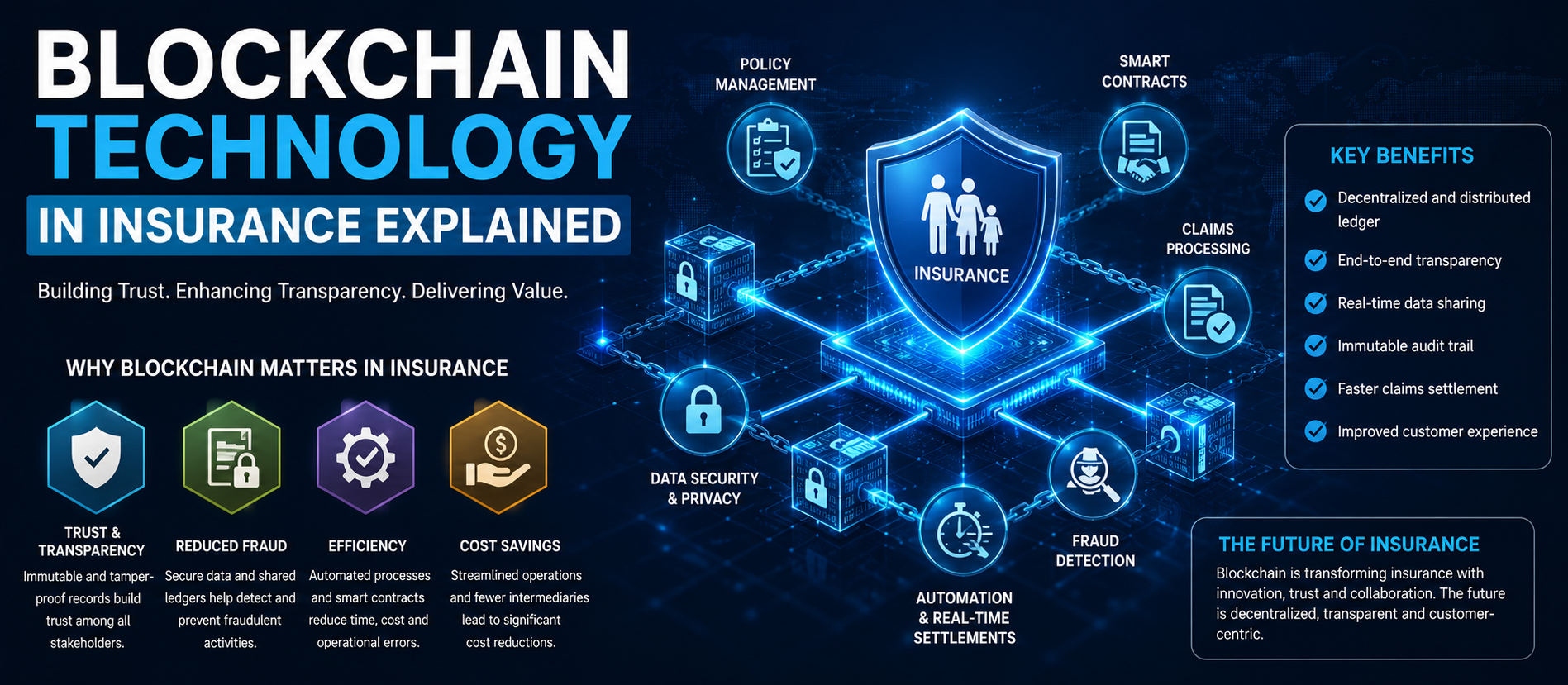
📋 Quick Summary
In this article:
Why the Insurance Industry Needs Blockchain
How Blockchain Works in Insurance
Benefits of Blockchain in Insurance
Blockchain and Fraud Prevention
Blockchain technology is transforming industries worldwide, and the insurance sector is no exception. Traditionally, insurance processes have relied on paper-based documentation, manual verification, multiple intermediaries, and lengthy claims procedures. In 2026, insurers are increasingly exploring blockchain to improve transparency, reduce fraud, automate claims, enhance customer trust, and streamline operations.
Website: www.digiifrog.com
What Is Blockchain?
Blockchain is a decentralized digital ledger that securely records transactions across multiple computers. Each transaction is stored in a block, linked chronologically to previous blocks, creating a tamper-resistant chain of records.
- Distributed ledger
- Cryptographic security
- Transparency
- Immutability
- Consensus validation
Why the Insurance Industry Needs Blockchain
Insurance companies face challenges such as fraud, duplicate claims, administrative inefficiencies, data silos, slow settlements, and regulatory complexity. Blockchain helps reduce these issues by creating trusted, verifiable records shared securely between authorized participants.
How Blockchain Works in Insurance
- Policy issuance
- Identity verification
- Premium payment records
- Claims management
- Smart contract automation
- Fraud detection
- Reinsurance data sharing
Smart Contracts Explained
Smart contracts are self-executing digital agreements stored on a blockchain. When predefined conditions are met, the contract automatically performs actions such as approving eligible claims or releasing payments.
Benefits of Blockchain in Insurance
- Greater transparency
- Reduced fraud
- Faster claims processing
- Lower administrative costs
- Improved data security
- Better customer trust
- Efficient compliance
Blockchain Applications
Health Insurance
Secure sharing of medical records and faster claim verification.
Life Insurance
Improved beneficiary verification and automated policy administration.
Auto Insurance
Vehicle history verification, accident records, and rapid claims settlement.
Property Insurance
Ownership validation, digital asset records, and disaster claims management.
Travel Insurance
Automated compensation for qualifying flight delays or cancellations through smart contracts.
Blockchain and Fraud Prevention
Insurance fraud costs billions each year. Blockchain creates immutable transaction histories, making document manipulation, duplicate claims, and identity fraud significantly more difficult.
Challenges
- Implementation costs
- Scalability concerns
- Integration with legacy systems
- Regulatory uncertainty
- Industry-wide adoption requirements
AI and Blockchain Together
Artificial intelligence complements blockchain by analyzing trusted data, detecting fraud, predicting risks, automating underwriting, and improving customer service while blockchain ensures secure, verifiable records.
Future Trends
- Digital identity verification
- Embedded insurance
- IoT-connected policies
- Real-time claim settlement
- Global blockchain insurance ecosystems
SEO, AEO, GEO & AI Search
Insurance providers increasingly publish authoritative educational content optimized for SEO, AEO, GEO, and AI Search Optimization, helping consumers understand emerging technologies such as blockchain.
Frequently Asked Questions
Is blockchain the same as cryptocurrency?
No. Blockchain is the underlying technology and has many applications beyond digital currencies.
Can blockchain eliminate insurance fraud?
It cannot eliminate fraud entirely but can significantly reduce many common forms through secure and transparent recordkeeping.
Will blockchain replace insurance companies?
No. It is expected to enhance insurance operations rather than replace insurers.
Final Thoughts
Blockchain technology is reshaping insurance by improving transparency, security, efficiency, and trust. Combined with AI, predictive analytics, and digital automation, blockchain enables insurers to build faster, smarter, and more customer-focused services. As adoption grows, both insurers and policyholders stand to benefit from reduced fraud, quicker claims, and more reliable data management.
For more insurance insights, AI Search optimization, SEO, AEO, GEO strategies, and digital marketing resources, visit Digiifrog at www.digiifrog.com.
Ready to Grow?
Talk to us about a strategy tailored to your brand — we will help you stand out in search, AI discovery and social.


Comments (0)
Log in to leave a comment.