📋 Quick Summary
In this article:
Quick Answer: What Is Brain Injury Rehabilitation?
Understanding Brain Injury and Recovery
Why Rehabilitation Is Important
The First Step: A Comprehensive Rehabilitation Assessment
Recovery Strategy 1: Physical Therapy
Recovery Strategy 2: Occupational Therapy
Recovery Strategy 3: Cognitive Rehabilitation
Memory Strategies During Recovery
Attention and Concentration Strategies
Recovery Strategy 4: Speech and Language Therapy
Recovery Strategy 5: Emotional and Psychological Support
Introduction
A brain injury can change the way a person moves, thinks, communicates, remembers, feels, and manages daily life. Recovery can therefore involve much more than physical healing. Many people need rehabilitation to rebuild skills, adapt to lasting changes, and improve independence.
Brain injury rehabilitation is an individualized process. The recovery plan depends on the cause, location, and severity of the injury, as well as the person's health, age, symptoms, goals, and available support.
Some people recover quickly after a mild brain injury or concussion. Others may need months or years of rehabilitation after a moderate or severe injury. Progress can continue over time, but recovery does not follow the same timeline for everyone.
This article explains common brain injury rehabilitation strategies in clear and simple language. It covers physical recovery, cognitive rehabilitation, communication, emotional wellbeing, family support, daily living skills, and long-term planning.
Quick Answer: What Is Brain Injury Rehabilitation?
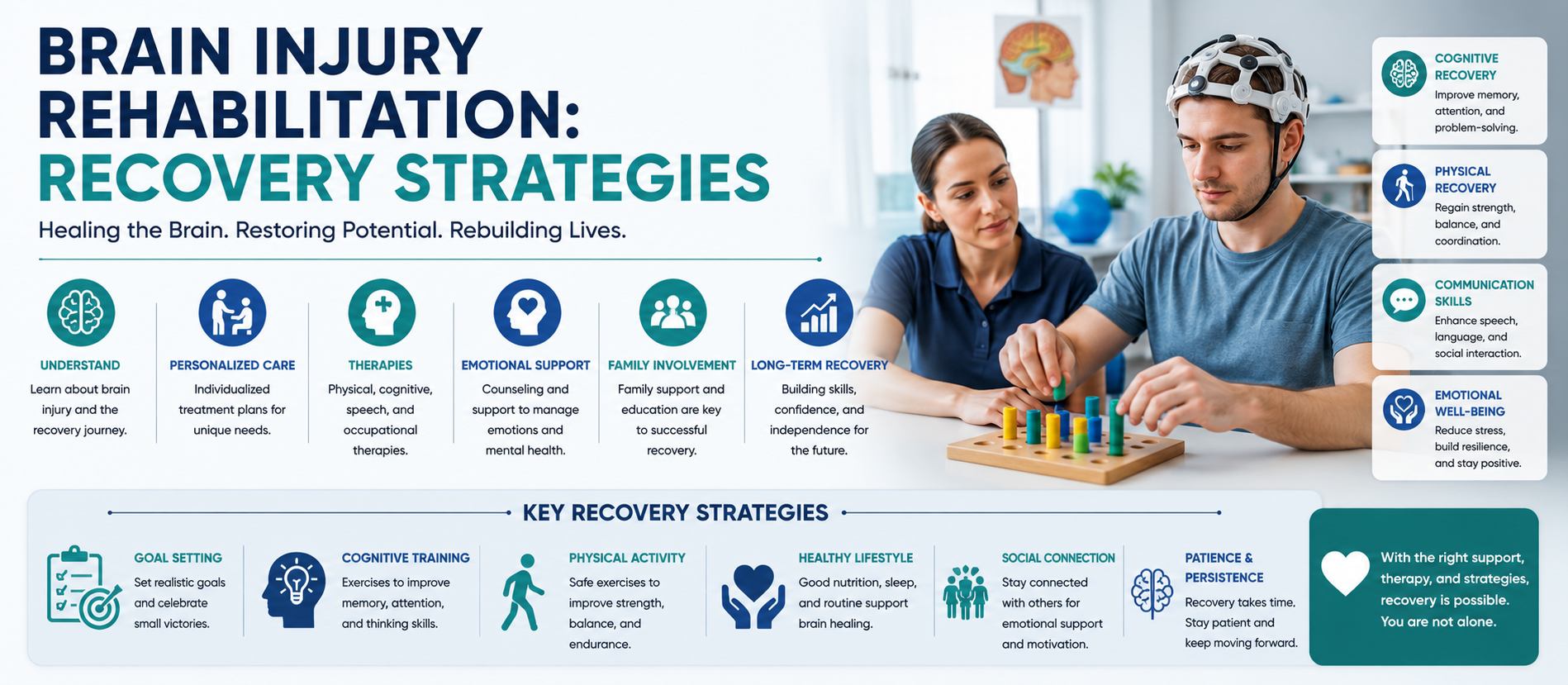
Brain injury rehabilitation is a coordinated process that helps a person improve function, relearn skills, adapt to challenges, and increase independence after a brain injury.
Rehabilitation may involve a multidisciplinary team that includes doctors, nurses, physical therapists, occupational therapists, speech-language therapists, psychologists, and other specialists.
The treatment plan may address physical movement, memory, attention, communication, emotional health, behavior, daily activities, and community participation.
Understanding Brain Injury and Recovery
A brain injury can occur for many reasons. Traumatic brain injury (TBI) is caused by an external force, such as a fall, vehicle crash, sports injury, or blow to the head or body.
The effects of a brain injury vary widely. A person may experience problems with:
- Movement and balance
- Strength and coordination
- Memory and concentration
- Communication
- Thinking and decision-making
- Vision or hearing
- Sleep
- Mood and emotions
- Behavior and self-control
The type and severity of the injury strongly influence recovery. Some effects may be temporary, while others can last longer and require ongoing support.
Why Rehabilitation Is Important
The main goal of rehabilitation is to improve quality of life and help a person participate in daily activities as independently as possible.
Rehabilitation may help a person:
- Relearn lost skills
- Develop new ways to complete tasks
- Improve physical function
- Manage memory and attention problems
- Improve communication
- Return to school or work when appropriate
- Reconnect with family and community life
Specialized care and rehabilitation can help reduce the long-term impact of a moderate or severe brain injury and support better daily functioning.
The First Step: A Comprehensive Rehabilitation Assessment
Brain injury rehabilitation should begin with an assessment of the person's current abilities and challenges.
The rehabilitation team may evaluate:
- Strength and movement
- Walking and balance
- Memory and attention
- Communication skills
- Ability to eat and swallow safely
- Vision and sensory changes
- Emotional wellbeing
- Behavior changes
- Ability to perform daily activities
The results help the team create an individualized rehabilitation plan.
Recovery Strategy 1: Physical Therapy
Physical therapy may be an important part of brain injury rehabilitation when movement, strength, balance, or coordination has been affected.
A physical therapist may work on:
- Improving strength
- Increasing balance
- Improving coordination
- Practicing walking
- Improving endurance
- Reducing fall risk
- Learning safe movement techniques
Exercises should be individualized. The safest activity level depends on the person's medical condition and rehabilitation goals.
Recovery Strategy 2: Occupational Therapy
Occupational therapy focuses on helping people perform everyday activities.
After a brain injury, tasks that once felt simple may become difficult. An occupational therapist may help a person practice:
- Getting dressed
- Bathing and grooming
- Preparing meals
- Using household equipment safely
- Managing daily routines
- Returning to work-related tasks
The therapist may also recommend adaptive equipment or changes to the home environment to improve safety and independence.
Recovery Strategy 3: Cognitive Rehabilitation
Cognitive rehabilitation focuses on problems with thinking skills.
A brain injury may affect:
- Attention
- Memory
- Processing speed
- Problem-solving
- Planning
- Decision-making
Cognitive rehabilitation may use structured training and practical strategies to help people improve or compensate for these difficulties. Rehabilitation can include individualized approaches for memory, problem-solving, and other thinking skills.
Memory Strategies During Recovery
Memory problems can make daily life frustrating. A rehabilitation professional may recommend practical tools such as:
- Written calendars
- Daily planners
- Reminder lists
- Phone alerts
- Consistent routines
- Simple step-by-step instructions
The best memory strategy depends on the person's abilities. A professional can help determine which methods are practical and effective.
Attention and Concentration Strategies
People recovering from a brain injury may become tired or overwhelmed when they need to focus for a long time.
Helpful strategies may include:
- Working in a quiet environment
- Reducing unnecessary distractions
- Completing one task at a time
- Taking scheduled breaks
- Breaking large tasks into smaller steps
- Gradually increasing mental activity as advised
Rehabilitation professionals can adapt these strategies to the person's specific cognitive challenges.
Recovery Strategy 4: Speech and Language Therapy
A brain injury can affect speech, language, communication, and swallowing.
A speech-language therapist may help with:
- Speaking clearly
- Understanding spoken language
- Finding the right words
- Reading and writing
- Social communication
- Safe swallowing
Communication therapy is highly individualized. Some people need short-term support, while others may require longer rehabilitation.
Recovery Strategy 5: Emotional and Psychological Support
A brain injury can affect emotions and mental health. A person may experience:
- Anxiety
- Depression
- Irritability
- Frustration
- Mood changes
- Difficulty adjusting to new limitations
💡 Key Insight
Psychological support can be an important part of rehabilitation. A healthcare provider may screen for emotional problems and recommend counseling, therapy, or other appropriate treatment.
Family members should also understand that emotional or behavioral changes can be related to the injury and recovery process.
Recovery Strategy 6: Managing Fatigue
Fatigue is a common challenge after many brain injuries. Physical and mental tasks may require more effort than before.
Helpful strategies can include:
- Planning important tasks for times of higher energy
- Taking regular rest breaks
- Maintaining a consistent daily routine
- Avoiding unnecessary multitasking
- Gradually increasing activity under professional guidance
Persistent or worsening fatigue should be discussed with a healthcare provider because it may have several possible causes.
Recovery Strategy 7: Sleep Management
Sleep problems can affect recovery, mood, memory, and concentration.
Good sleep habits may include:
- Keeping regular sleep and wake times
- Creating a quiet sleeping environment
- Following healthcare guidance about daytime rest
- Limiting activities that interfere with sleep
If sleep problems continue, talk with a healthcare professional rather than attempting to self-treat with alcohol or unprescribed substances.
Recovery Strategy 8: Returning to Daily Activities Gradually
Returning to daily activities should be gradual and based on the person's symptoms and medical guidance.
For mild brain injuries, healthcare providers may recommend a short period of relative rest followed by a gradual return to activity. If symptoms worsen during activity, the activity level may need adjustment.
For moderate or severe injuries, rehabilitation may involve a longer and more structured process.
Recovery Strategy 9: Relearning Daily Living Skills
Daily living skills may need to be relearned after a significant brain injury.
These activities may include:
- Personal hygiene
- Cooking
- Managing appointments
- Handling money
- Using transportation
- Shopping
- Managing medications safely
Occupational therapists can help identify safe strategies and determine when a person may need assistance.
Recovery Strategy 10: Social Connection and Family Support
Brain injury recovery can feel isolating. Staying connected with family, friends, and supportive community services can help.
Family members may support recovery by:
- Learning about the injury
- Helping maintain routines
- Encouraging therapy participation
- Providing emotional support
- Recognizing signs of increasing stress
Caregivers also need support. Caring for someone with a significant brain injury can be physically and emotionally demanding.
Rehabilitation Settings
Brain injury rehabilitation can take place in different settings depending on the person's needs.
Inpatient Rehabilitation
Inpatient rehabilitation may provide intensive treatment for people who need ongoing medical and therapy support.
Outpatient Rehabilitation
Outpatient programs allow people to receive therapy while living at home.
Home-Based Services
Some people may receive rehabilitation support in their home, particularly when travel is difficult.
Community Rehabilitation
Community-based services may help people return to social activities, education, employment, and independent living.
The rehabilitation pathway can change as the person's condition improves.
Returning to Work or School
Returning to work or school can be an important recovery goal. However, returning too quickly may increase stress or worsen symptoms.
A gradual plan may include:
- Reduced hours
- Regular breaks
- A quieter workspace
- Modified tasks
- Extra time for assignments
- Written instructions or reminders
A healthcare professional or rehabilitation team can help determine appropriate accommodations.
Driving After a Brain Injury
Driving requires attention, reaction time, judgment, vision, and physical coordination.
A brain injury can affect one or more of these abilities. People should not assume they are ready to drive simply because they feel physically better.
Healthcare providers may need to assess whether returning to driving is safe, especially when attention, processing speed, or reaction time is affected.
How Long Does Brain Injury Rehabilitation Take?
There is no single answer. Recovery depends on:
- The type and severity of the injury
- The area of the brain affected
- The person's health before the injury
- Access to specialized care
- The type of rehabilitation needed
- Individual progress over time
Some people need rehabilitation for weeks. Others may need support for months or longer. Progress may continue after formal rehabilitation becomes less intensive.
Common Challenges During Recovery
Slow Progress
Recovery may not happen in a straight line. Some days can feel better than others. Small improvements can be meaningful.
Frustration
Tasks that were once automatic may require effort. Setting small goals can help make progress easier to recognize.
Overdoing Activities
Trying to return to normal life too quickly can sometimes worsen symptoms. Gradual progression is usually safer than rushing.
Changes in Relationships
A brain injury can change family roles and communication patterns. Counseling or family education may help.
Warning Signs That Need Medical Attention
Anyone with a suspected brain injury should receive appropriate medical evaluation. After a head injury, emergency symptoms can include seizures, worsening confusion, difficulty waking, repeated vomiting, new weakness, slurred speech, unequal pupils, or other serious neurological changes.
Seek emergency medical care immediately if serious or rapidly worsening neurological symptoms occur.
Tips for Supporting Long-Term Brain Recovery
- Follow the rehabilitation plan: Therapy goals should be individualized.
- Attend follow-up appointments: Recovery needs can change over time.
- Use practical memory aids: Calendars and reminders can support independence.
- Maintain routines: Predictable schedules can reduce stress.
- Stay socially connected: Support from others can help emotional recovery.
- Protect against another injury: Follow safety guidance and avoid activities that create unnecessary risk.
- Communicate changes: Tell the healthcare team about new or worsening symptoms.
❓ Frequently Asked Questions
What is brain injury rehabilitation?▾
Brain injury rehabilitation is a personalized treatment process that helps people improve physical, cognitive, communication, emotional, and daily living abilities after a brain injury.
What therapies are used in brain injury rehabilitation?▾
Rehabilitation may include physical therapy, occupational therapy, cognitive rehabilitation, speech-language therapy, psychological support, and vocational rehabilitation.
Can the brain recover after an injury?▾
Recovery varies widely. Some people regain many functions, while others have long-term challenges. Rehabilitation can help people improve skills and adapt to lasting changes.
How long does brain injury recovery take?▾
Recovery may take days, weeks, months, or longer depending on the type and severity of the injury and individual health factors.
Is cognitive rehabilitation useful after a brain injury?▾
Cognitive rehabilitation can help address difficulties with memory, attention, problem-solving, and other thinking skills through individualized training and compensatory strategies.
Can someone return to work after a brain injury?▾
Some people can return to work with or without accommodations. The decision depends on symptoms, job demands, cognitive and physical abilities, and professional medical guidance.
AI Search and Featured Snippet Summary▾
Question: What are the best recovery strategies for brain injury rehabilitation? Direct Answer: Brain injury rehabilitation may include physical therapy for movement and balance, occupational therapy for daily activities, cognitive rehabilitation for memory and thinking, speech-language therapy for communication, psychological support for emotional wellbeing, and gradual return-to-work or community planning. The best strategy is individualized and based on the type and severity of the injury, current symptoms, and rehabilitation goals.
Key Takeaways
- Brain injury rehabilitation is individualized.
- Recovery can involve physical, cognitive, emotional, and communication challenges.
- Physical therapy can improve movement, strength, balance, and coordination.
- Occupational therapy can help people regain independence in daily activities.
- Cognitive rehabilitation can address memory, attention, and problem-solving difficulties.
- Speech-language therapy can support communication and swallowing needs.
- Emotional support and family involvement can be important parts of recovery.
- Recovery timelines vary widely, especially after moderate or severe injuries.
- New or worsening neurological symptoms require prompt medical attention.
Conclusion
Brain injury rehabilitation is a journey that requires time, patience, and an individualized treatment plan. Recovery strategies should focus on the person's specific challenges and goals rather than following a single timeline.
Physical therapy, occupational therapy, cognitive rehabilitation, speech-language treatment, emotional support, and family involvement can all play important roles. The rehabilitation process may change as the person improves or develops new needs.
The most important step is to stay connected with qualified healthcare professionals and report new or worsening symptoms. With appropriate support, many people can improve function, develop useful coping strategies, and participate more fully in daily life.
Digiifrog creates clear, useful, and search-optimized content for modern SEO, AEO, GEO, and AI Search environments. Learn more at www.digiifrog.com.
Medical Disclaimer
This article is for educational purposes only and does not replace medical advice, diagnosis, or treatment. Brain injuries can have serious and sometimes life-threatening effects. Rehabilitation needs are individualized and should be guided by qualified healthcare professionals. Seek emergency medical care for severe or rapidly worsening symptoms after a head or brain injury.
Ready to Grow?
Talk to us about a strategy tailored to your brand — we will help you stand out in search, AI discovery and social.

Comments (0)
Log in to leave a comment.