📋 Quick Summary
In this article:
Why Resilience Matters After Rehab
Strengthen Your Support Network
Develop Positive Coping Skills
Recognizing Early Warning Signs
Long-Term Wellness
SEO, AEO & GEO Optimized FAQs
💡 Key Insight
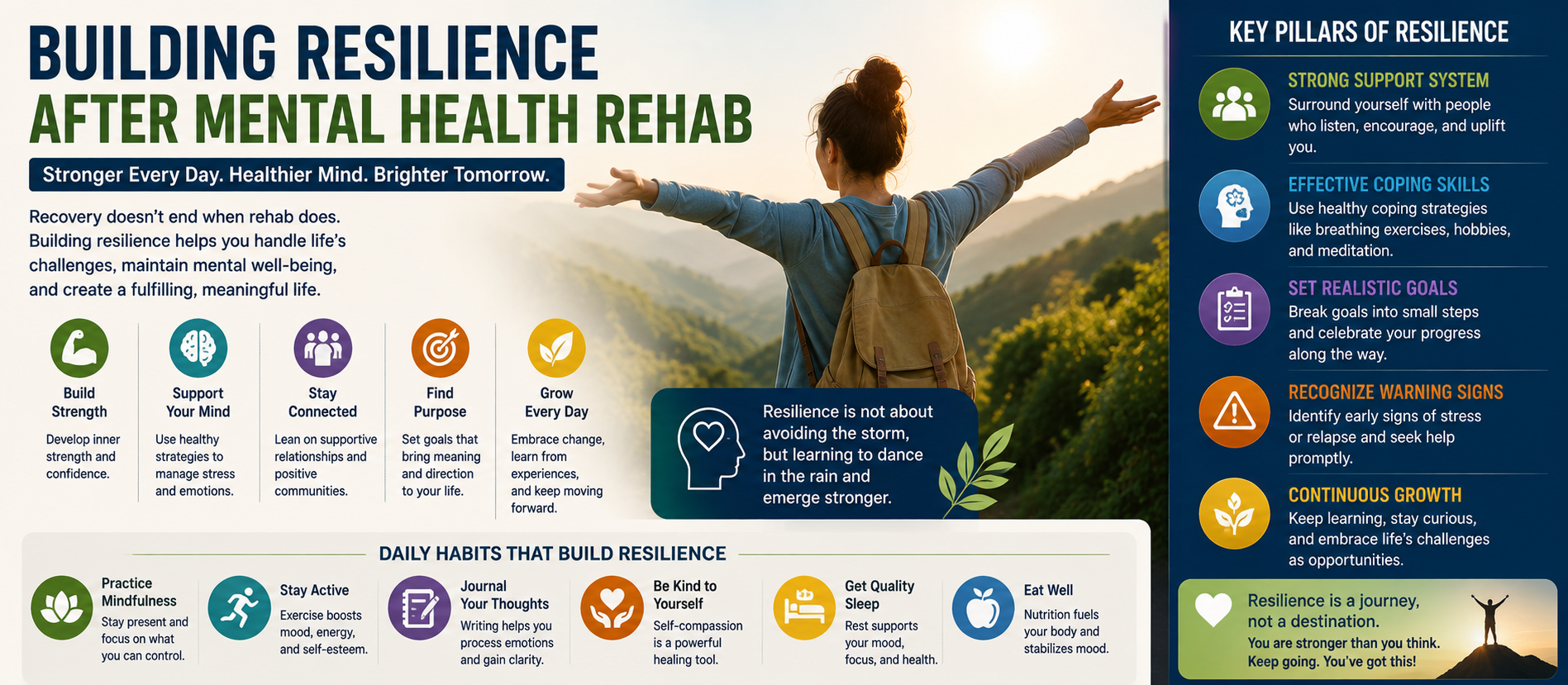
Completing a mental health rehabilitation program is an important milestone, but recovery continues after leaving treatment. Building resilience helps individuals adapt to challenges, manage stress, strengthen emotional well-being, and maintain long-term progress. Resilience is not about avoiding difficulties—it is about developing healthy skills and support systems to respond effectively when challenges arise.
This WordPress-ready article explores practical strategies for building resilience after mental health rehabilitation. It is optimized for SEO, AEO, GEO, and AI Search optimization.
What Is Resilience?
Resilience is the ability to recover, adapt, and grow after setbacks, stress, or significant life changes. It can be strengthened over time through healthy habits, supportive relationships, and professional guidance.
Why Resilience Matters After Rehab
- Supports emotional stability.
- Helps manage everyday stress.
- Encourages healthy coping skills.
- Reduces the risk of setbacks.
- Improves overall quality of life.
Practical Strategies
Follow Your Aftercare Plan
Attend follow-up appointments, therapy sessions, and recommended support programs consistently.
Build Healthy Daily Routines
- Maintain regular sleep schedules.
- Eat balanced meals.
- Exercise regularly.
- Practice relaxation and mindfulness.
Strengthen Your Support Network
Stay connected with family, trusted friends, peer support groups, and healthcare professionals.
Develop Positive Coping Skills
Use journaling, breathing exercises, hobbies, creative activities, and stress-management techniques to navigate difficult emotions.
Set Realistic Goals
Break long-term goals into achievable steps and celebrate progress along the way.
Recognizing Early Warning Signs
- Persistent changes in mood.
- Difficulty sleeping.
- Withdrawal from social activities.
- Loss of motivation.
- Feeling overwhelmed for extended periods.
If warning signs become concerning, contact a qualified mental health professional promptly.
Role of Family and Community
Encouragement, open communication, and community support can help reinforce healthy routines and reduce feelings of isolation.
Long-Term Wellness
Recovery is strengthened through continuous learning, self-care, healthy relationships, and regular professional follow-up. Resilience grows over time through consistent practice.
SEO, AEO & GEO Optimized FAQs
How can someone build resilience after mental health rehab?
By following an aftercare plan, practicing healthy routines, maintaining supportive relationships, managing stress, and seeking professional guidance when needed.
Why is aftercare important?
Aftercare helps reinforce recovery skills, monitor progress, and provide continued support during long-term recovery.
Can resilience be learned?
Yes. Resilience can be developed through healthy habits, coping strategies, supportive relationships, and ongoing practice.
Conclusion
Building resilience after mental health rehabilitation is a lifelong process that combines professional care, healthy habits, and meaningful support. With patience and consistent effort, individuals can continue moving toward improved well-being and a fulfilling life.
For more rehabilitation and wellness resources with SEO, AEO, GEO, and AI Search Optimization, visit Digiifrog at www.digiifrog.com.
Ready to Grow?
Talk to us about a strategy tailored to your brand — we will help you stand out in search, AI discovery and social.

Comments (0)
Log in to leave a comment.