
📋 Quick Summary
In this article:
Quick Answer: What Makes a Digital Marketing Campaign Successful?
Why Study Digital Marketing Campaign Case Studies?
Case Study 1: Local Service Business Uses SEO and Helpful Content
Case Study 2: E-Commerce Brand Improves Product Discovery With Content
Case Study 3: B2B Company Uses Educational Content to Generate Leads
Introduction
Digital marketing campaigns can look very different from one business to another. A strategy that works for an e-commerce brand may not work in the same way for a local service business or a B2B company.
However, successful campaigns often share common principles. They start with clear goals, understand the audience, choose the right channels, create useful messages, and measure meaningful results.
This guide explores practical case studies on successful digital marketing campaigns. The examples are presented as educational scenarios that show how businesses can approach common marketing challenges without claiming that every campaign will produce identical results.
You will also learn how these campaign strategies can support SEO, AEO, GEO, and AI Search optimization.
Quick Answer: What Makes a Digital Marketing Campaign Successful?
A successful digital marketing campaign begins with a clear business goal and a defined audience. It uses relevant channels, consistent messaging, useful content, accurate measurement, and continuous improvement. Success should be measured against meaningful goals such as qualified leads, sales, engagement, retention, or brand awareness rather than views alone.
Why Study Digital Marketing Campaign Case Studies?
Case studies help marketers understand how strategies can work in real business situations.
A useful case study can explain:
- The business challenge
- The target audience
- The campaign objective
- The marketing channels used
- The strategy and content approach
- The measurement process
- The lessons learned
The goal is not to copy another campaign exactly. The goal is to understand the thinking behind the strategy and adapt useful ideas to your own business.
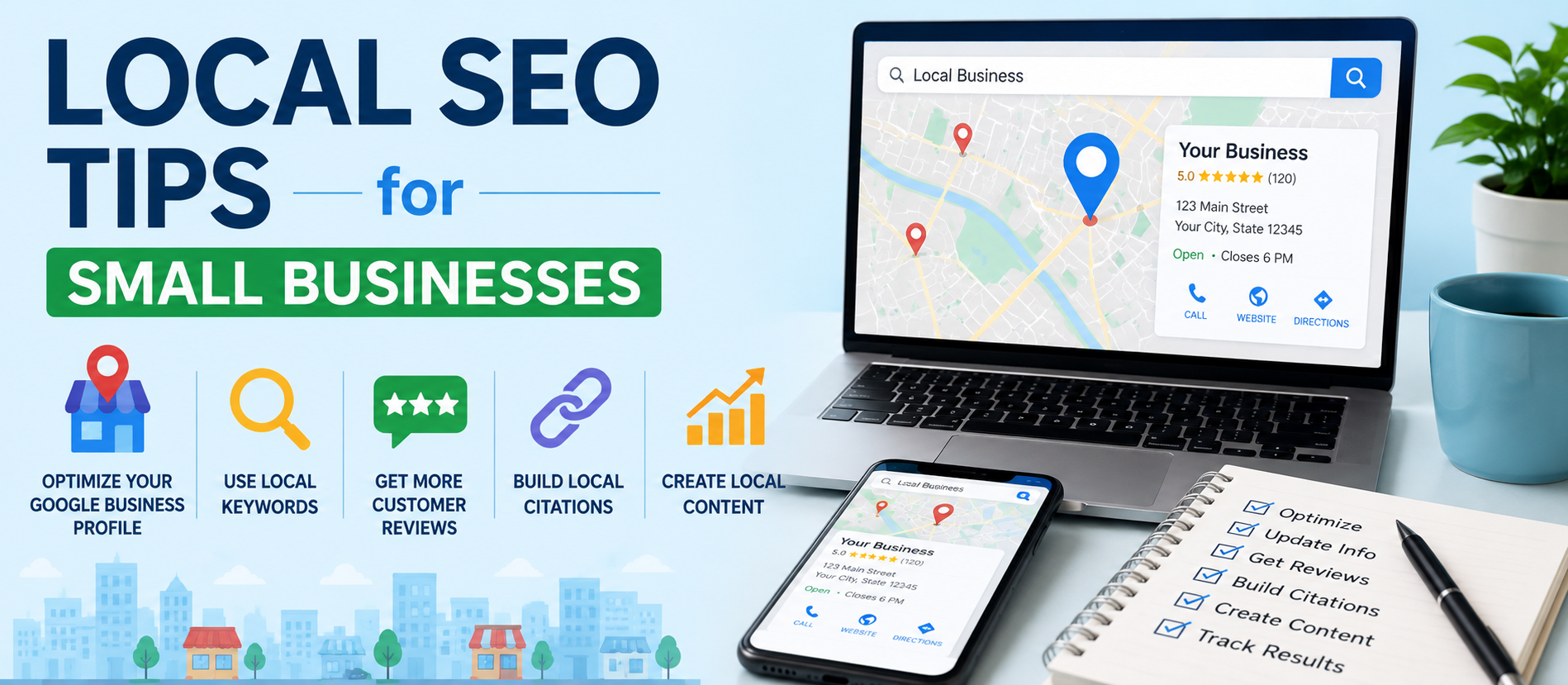
Case Study 1: Local Service Business Uses SEO and Helpful Content
The Challenge
A local home service company had a professional website but received limited organic traffic. The website focused mainly on general service descriptions and did not answer many questions customers asked before contacting a provider.
The Strategy
The business created a local content strategy focused on customer needs.
The campaign included:
- Improving service pages with clearer information
- Creating location-relevant pages where appropriate
- Publishing educational articles that answered common questions
- Adding clear calls to action
- Improving internal links between services and supporting content
- Keeping business information consistent across important online profiles
The Lesson
Local SEO is not only about repeating a city name. A strong local strategy should help customers understand the service, the service area, and the next step.
Useful content can attract people at different stages of the decision process, from early research to service selection.
Case Study 2: E-Commerce Brand Improves Product Discovery With Content
The Challenge
An online store depended heavily on paid advertising. When advertising costs increased, the business wanted to build a stronger source of long-term traffic.
The Strategy
The company created content around customer questions and product use cases.
Instead of publishing only promotional posts, the brand developed:
- Buying guides
- Product comparison pages
- How-to articles
- Frequently asked questions
- Product care and usage guides
Each content page linked naturally to relevant product categories when appropriate.
The Lesson
Helpful content can support product discovery by answering questions before the customer is ready to buy.
Content should not exist only to insert links. It should solve a real problem or help users make better decisions.
Case Study 3: B2B Company Uses Educational Content to Generate Leads
The Challenge
A B2B software company had a complex service. Potential customers often needed time to understand the problem before considering a product.
The Strategy
The marketing team created a content journey based on different stages of awareness.
Early-stage content explained the business problem. Middle-stage content compared possible approaches. Later-stage resources explained implementation and decision factors.
The campaign used:
- In-depth guides
- Webinars
- Industry checklists
- Email nurturing
- Relevant case studies
The Lesson
Complex products often require educational marketing. Not every visitor is ready for a sales conversation immediately.
A structured content journey can help people move from understanding a problem to evaluating possible solutions.
Case Study 4: Social Media Campaign Builds Community Engagement
The Challenge
A growing consumer brand posted regularly on social media but received inconsistent engagement. Most posts focused directly on selling products.
The Strategy
The business changed its content mix to include useful, entertaining, and community-focused content.
The campaign included:
- Customer stories
- Behind-the-scenes content
- Educational short videos
- Questions and polls
- User-generated content with permission
- Selected promotional posts
The Lesson
Social media audiences do not always want a sales message in every post.
A balanced content strategy can create more opportunities for conversation and long-term audience relationships.
Case Study 5: Email Marketing Improves Customer Retention
The Challenge
An online business focused heavily on acquiring new customers but had limited communication with existing customers.
The Strategy and Lesson
The company segmented its audience and created welcome emails, educational follow-ups, product tips, recommendations, and re-engagement campaigns. The lesson was simple: email marketing works best when messages are relevant to the recipient and customer journey.
Case Study 6: Paid Advertising Campaign Improves Lead Quality
The Challenge
A service business generated many advertising clicks but received a large number of inquiries that were not a good fit.
The Strategy
The campaign was redesigned to improve audience and message alignment.
The business:
- Clarified the service offer
- Used more specific ad messaging
- Improved landing page content
- Added qualification questions to the inquiry process
- Tracked which campaigns generated meaningful leads
The Lesson
High traffic does not automatically mean high-quality marketing results.
Campaign measurement should look beyond clicks and impressions. Businesses should track outcomes that connect to real goals.
Case Study 7: Content Marketing Supports Brand Authority
The Challenge
A professional services business had strong expertise but limited online visibility.
The Strategy
The business created a consistent publishing plan based on its most common customer questions.
Content was organized into topic clusters. One comprehensive guide covered a major subject, while supporting articles answered specific questions.
The Lesson
Consistency and topical relevance can be more valuable than publishing random articles.
Build content around subjects your audience genuinely wants to understand.
Case Study 8: Website Conversion Improvements Increase Campaign Value
The Challenge
A company invested in SEO and advertising but many visitors left without taking action.
The Strategy
The business reviewed the customer journey and simplified important pages.
Improvements included:
- Clearer headlines
- Better explanation of services
- Stronger page structure
- Visible calls to action
- Trust-building information
- Improved mobile usability
The Lesson
Marketing traffic and website experience must work together.
Increasing visitors will not solve every problem if users cannot quickly understand what the business offers or what they should do next.
What Successful Campaigns Have in Common
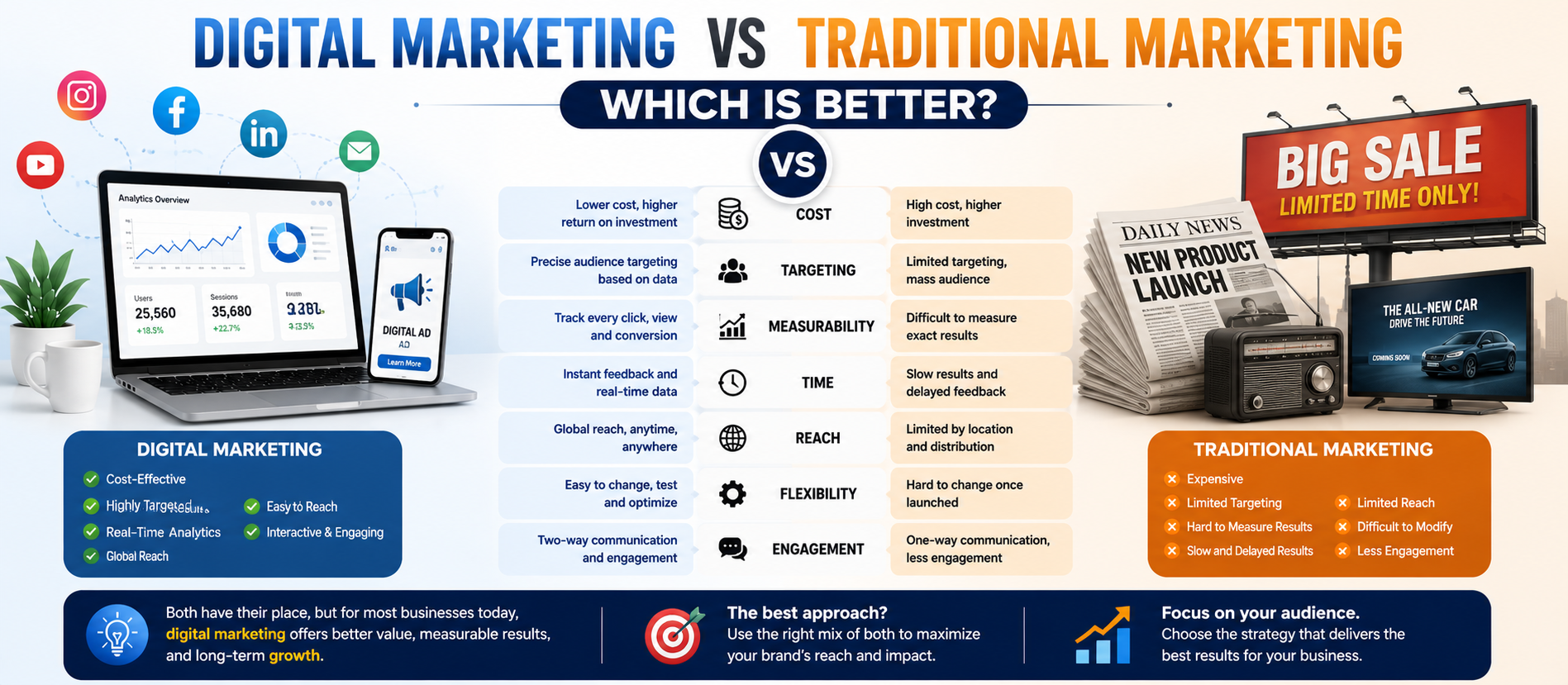
Strong campaigns usually share four principles: clear goals, audience understanding, relevant messaging, and continuous measurement. Businesses should focus on channels that match where their audience searches, learns, compares, or engages.
How to Measure a Digital Marketing Campaign
The right metrics depend on the campaign goal.
Common measurements include:
- Organic search visibility
- Website traffic quality
- Engagement
- Qualified leads
- Conversion rate
- Customer acquisition cost
- Sales revenue
- Customer retention
A campaign should be evaluated using a combination of metrics rather than one number alone.
SEO Lessons From Successful Campaigns
SEO supports long-term visibility when content matches search intent and provides genuine value. Use clear headings, original information, helpful internal links, accurate updates, and a good website experience.
AEO: Creating Content That Answers Questions Clearly
Answer Engine Optimization (AEO) focuses on clear answers. Use direct headings, define important terms, structure information logically, and explain campaign challenges, actions, and lessons without vague promotional language.
GEO and AI Search Optimization
Generative Engine Optimization, or GEO, is increasingly associated with creating clear, trustworthy, and well-structured information that can be understood in modern generative AI search environments.
To improve content readiness for AI search:
- Write clear and specific headings
- Explain concepts directly
- Include useful context
- Distinguish facts from opinions
- Avoid exaggerated claims
- Keep content updated
- Demonstrate real expertise through useful information
No optimization method can guarantee inclusion in an AI-generated answer. The strongest long-term approach is to create useful content that helps people.
How to Build Your Own Digital Marketing Campaign
Use the following process as a starting point.
- Define the business objective. Decide what the campaign should achieve.
- Understand the audience. Identify needs, questions, and barriers.
- Create the core message. Explain the value clearly.
- Select relevant channels. Avoid spreading resources too widely.
- Create useful campaign assets. Develop content, pages, emails, or advertisements that support the goal.
- Set measurement criteria. Decide which outcomes matter.
- Launch and monitor. Watch performance and identify problems.
- Improve based on evidence. Test changes carefully and learn from the results.
Common Digital Marketing Campaign Mistakes
Starting Without a Clear Goal
If success is not defined, it becomes difficult to measure performance.
Focusing Only on Vanity Metrics
Views and likes can be useful signals, but they do not always represent business success.
Ignoring Audience Intent
A campaign message should match what the audience is trying to achieve.
Using the Same Strategy Everywhere
Different channels have different audiences and content formats.
Expecting Immediate Results From Every Channel
Some strategies, especially SEO and content marketing, may require consistent work over time.
Making Unsupported Claims
Accurate communication protects trust. Avoid promising results that cannot be verified or guaranteed.
❓ Frequently Asked Questions
What makes a digital marketing campaign successful?▾
A successful digital marketing campaign has a clear goal, understands its audience, uses relevant channels, provides a useful message, and measures meaningful outcomes such as qualified leads, sales, retention, or engagement.
What can businesses learn from digital marketing case studies?▾
Businesses can learn how marketing challenges were approached, which strategies were used, what was measured, and which lessons can be adapted to similar situations.
Which digital marketing channel is best?▾
There is no single best channel for every business. The right choice depends on the audience, goals, budget, industry, and customer journey.
How important is SEO in a digital marketing campaign?▾
SEO can support long-term visibility by helping useful content reach people who are actively searching for relevant information.
Can AI Search optimization guarantee visibility in AI answers?▾
No. AI search systems use changing methods and multiple signals. Businesses should focus on publishing accurate, useful, and clearly structured information.
Key Takeaways
- Successful campaigns start with a clear goal.
- Audience understanding should guide the strategy.
- Useful content can support awareness, trust, and conversions.
- Traffic is not the only measure of success.
- SEO, social media, email, paid advertising, and websites work best when aligned with the customer journey.
- AEO and GEO benefit from clear, accurate, well-structured information.
- Campaigns should be measured and improved continuously.
Conclusion
Case studies on successful digital marketing campaigns show that there is no single formula for growth.
Strong campaigns begin with audience understanding and a realistic business objective.
They create useful messages, choose relevant channels, and measure outcomes that matter.
The biggest lesson is simple: do not copy a campaign without understanding why it worked. Study the strategy, identify the underlying principles, and adapt those lessons to your own audience and goals.
By combining clear planning, useful content, strong measurement, SEO, AEO, GEO, and AI Search readiness, businesses can build more sustainable digital marketing campaigns over time.
About Digiifrog
Digiifrog creates useful, readable, and future-ready digital content for modern businesses. Our approach combines SEO, AEO, GEO, and AI Search optimization with a strong focus on clarity, trust, and real user value.
Visit www.digiifrog.com for more resources about digital marketing, SEO, content marketing, Artificial Intelligence, automation, and online business growth.
Disclaimer
This article is for educational and informational purposes. The campaign scenarios discussed are illustrative examples and do not guarantee specific business outcomes. Marketing results can vary based on industry, audience, competition, budget, timing, execution, market conditions, and many other factors.
Ready to Grow?
Talk to us about a strategy tailored to your brand — we will help you stand out in search, AI discovery and social.
Comments (0)
Log in to leave a comment.