📋 Quick Summary
In this article:
What Is Commercial Property Insurance?
Why Commercial Property Insurance Matters
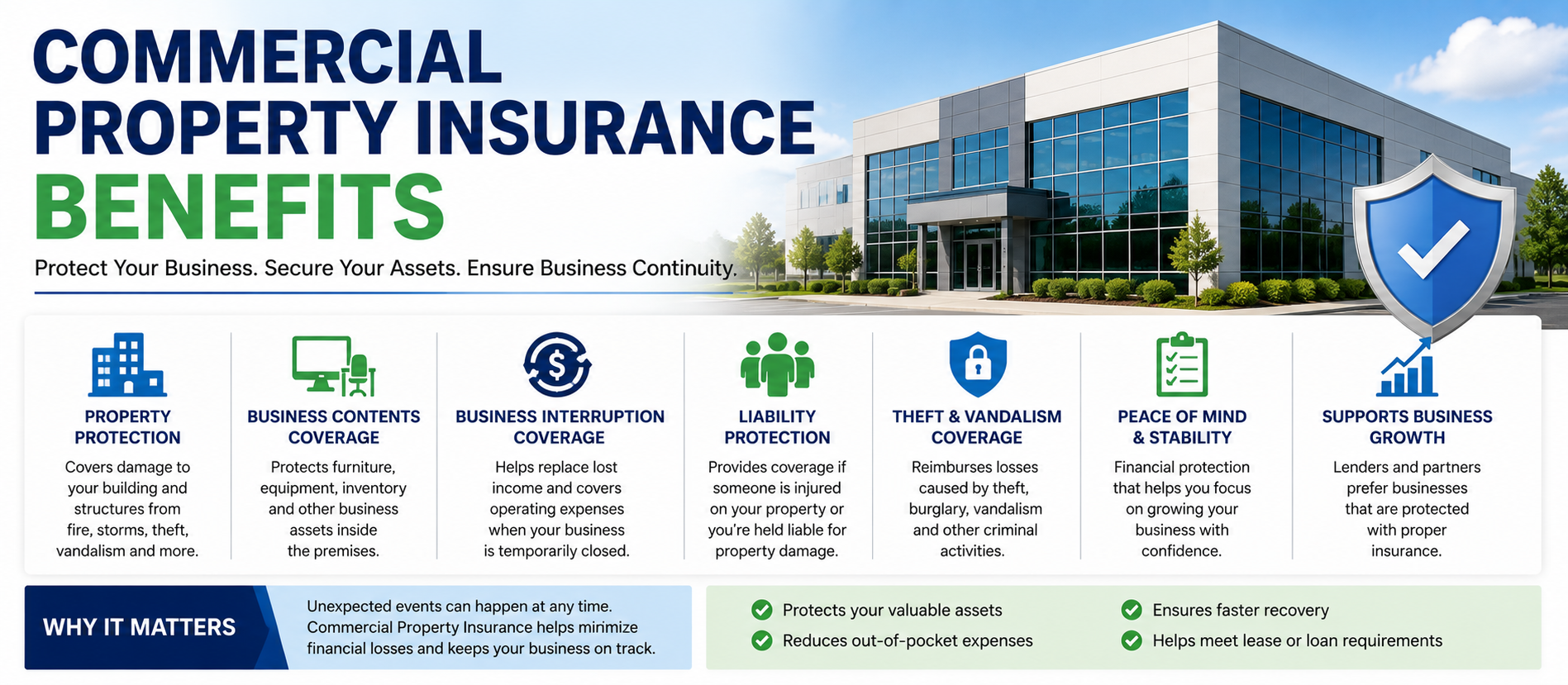
1. Protects Business Buildings
2. Protects Business Equipment
3. Helps Protect Inventory
4. Covers Furniture and Office Contents
5. Supports Business Continuity
6. Helps Pay for Temporary Relocation
7. Protects Against Certain Theft and Vandalism Losses
8. Can Protect Property of Others
9. Helps Businesses Recover From Physical Disasters
10. Can Be Combined With Liability Protection
Introduction
Businesses depend on physical assets every day. Buildings, offices, warehouses, inventory, machinery, computers, furniture, equipment, signs, and other property can represent a substantial investment. A serious fire, storm, theft, vandalism event, or another covered loss can interrupt operations and create expenses that are difficult for a business to absorb on its own. Commercial property insurance is designed to help businesses manage some of these financial risks.
Commercial property insurance generally protects business property against covered causes of loss, subject to the policy's terms, exclusions, deductibles, limits, and conditions. The National Association of Insurance Commissioners (NAIC) describes commercial property insurance as coverage sold to commercial ventures and explains that business property can include buildings, inventory, furniture, equipment, machinery, computers, documents, signs, fences, and other business assets. citeturn0search1turn0search2
💡 Key Insight
This WordPress-ready guide from Digiifrog explains the major benefits of commercial property insurance, how it can support business continuity, what property may be protected, important coverage options, common gaps, and practical buying considerations. It is optimized for SEO, AEO, GEO, and AI Search Optimization.
Website: www.digiifrog.com
What Is Commercial Property Insurance?
Commercial property insurance is designed to protect a business's physical property against covered losses. Depending on the policy, covered property can include the building itself, business personal property, inventory, machinery, office equipment, furniture, signs, and certain property belonging to others.
The precise protection depends on the policy form. Some policies use named perils, while broader forms can cover direct physical loss unless the cause is specifically excluded. Limits, deductibles, valuation methods, endorsements, and conditions determine how a claim is ultimately handled.
Why Commercial Property Insurance Matters
Businesses often have significant financial exposure tied to physical property. Even a company that leases its premises may own expensive equipment, inventory, computers, furniture, or specialized tools. A landlord's policy generally protects the building owner's interests, not everything a tenant owns inside the property. NAIC guidance advises businesses that lease their buildings not to rely on the landlord's insurance to protect business property and to review lease requirements carefully. citeturn0search1
1. Protects Business Buildings
If a company owns its commercial building, property insurance can help cover repair or rebuilding costs after a covered physical loss. Depending on the policy, covered causes can include events such as fire, lightning, windstorm, hail, explosion, vandalism, or other specified perils.
⚠ Watch Out
The actual coverage depends on the selected causes-of-loss form and policy wording. A business should never assume that every natural disaster or event is automatically covered.
2. Protects Business Equipment
Modern businesses depend heavily on physical equipment. Computers, servers, machinery, tools, printers, point-of-sale systems, production equipment, and specialized devices can be expensive to replace. Commercial property insurance can help pay for repair or replacement of covered equipment following an insured loss, subject to the applicable limit, deductible, valuation method, and exclusions.
3. Helps Protect Inventory
Retailers, wholesalers, manufacturers, restaurants, distributors, and e-commerce businesses may hold substantial inventory. A covered loss affecting stock can create both an immediate replacement expense and a disruption in sales. Businesses should regularly review inventory values because seasonal changes, new product lines, growth, and supply-chain conditions can change the amount of protection needed.
4. Covers Furniture and Office Contents
Desks, chairs, shelving, cabinets, fixtures, office appliances, and other business contents may also represent meaningful investments. Commercial property coverage can help protect eligible contents against covered losses. Maintain invoices, photographs, serial numbers, and inventory records to make it easier to document ownership and value if a claim occurs.
5. Supports Business Continuity
Property damage can do more than destroy physical assets. It can prevent a business from operating normally. Business interruption or business income coverage can work alongside commercial property insurance to address certain financial losses following a covered physical loss.
According to NAIC, business interruption insurance can help cover lost income and certain continuing expenses when a covered event causes physical property damage and operations are suspended. Depending on the policy, covered expenses can include payroll, rent, relocation costs, taxes, and loan payments. citeturn0search0turn0search3
6. Helps Pay for Temporary Relocation
Some business interruption coverage can help with costs associated with operating from an alternative location after covered property damage. This can be valuable for customer-facing businesses, manufacturers, professional offices, and retailers that cannot operate normally while repairs are underway. The exact relocation benefits, limits, waiting periods, and covered circumstances vary by policy.
7. Protects Against Certain Theft and Vandalism Losses
Commercial property policies can provide protection for certain theft, burglary, vandalism, and malicious damage losses, depending on the selected coverage and policy conditions. NAIC identifies burglary and theft coverage as a recognized commercial insurance coverage category. citeturn0search2
Businesses should also use alarms, cameras, access controls, secure storage, and employee procedures. Insurance and risk management work best together.
8. Can Protect Property of Others
Some businesses temporarily hold property belonging to customers, vendors, or other parties. Depending on the policy, certain property of others may be covered while in the insured's care, custody, or control, but special rules can apply. Repair shops, storage facilities, manufacturers, and service providers should specifically discuss third-party property exposure with an insurance professional.
9. Helps Businesses Recover From Physical Disasters
A commercial property policy can provide a financial recovery mechanism after a covered physical loss. Without insurance, the business may have to fund repairs, replacement equipment, cleanup, and inventory replacement entirely from cash reserves or borrowing. Insurance cannot eliminate operational disruption, but appropriate coverage can reduce the financial shock of a major covered event.
10. Can Be Combined With Liability Protection
Commercial property insurance protects property exposures, while general liability insurance addresses certain third-party claims involving bodily injury, property damage, personal injury, or advertising injury. Small businesses often combine property, liability, and business interruption protection in a businessowners policy (BOP) when eligible.
NAIC describes a BOP as a package that typically includes property, business interruption/continuation, and liability coverage. However, a BOP does not automatically include every type of business insurance, such as commercial auto, workers' compensation, health or disability insurance, or professional liability. citeturn0search1
11. Can Provide Replacement Cost or Actual Cash Value Options
Property can be valued in different ways. Actual cash value generally considers depreciation when determining the value of damaged property. Replacement cost coverage is designed to pay the amount needed to repair, rebuild, or replace covered property with materials of similar kind and quality, subject to policy conditions and limits.
NAIC explains that business property policies may use actual cash value or replacement cost valuation. Businesses should understand which valuation method applies before purchasing coverage. citeturn0search1
12. Can Include Specialized Coverage
Businesses often have unique exposures that require endorsements or specialized policies. Depending on the industry and insurer, options can include equipment breakdown, spoilage, ordinance or law coverage, flood, earthquake, business income, valuable papers, outdoor property, peak-season inventory, and other specialized protections.
NAIC commercial property guidance identifies endorsements such as ordinance-or-law, spoilage, flood, earthquake and volcanic eruption, peak-season limits, and value reporting as examples of ways commercial property coverage can be modified. citeturn0search13
13. Helps Meet Lease or Lender Requirements
Commercial landlords and lenders may require tenants or borrowers to maintain specific insurance limits and provide certificates of insurance. Appropriate commercial property coverage can help a business meet contractual requirements while protecting its own financial interests. Always read the lease or loan agreement carefully because insurance requirements can differ significantly.
14. Protects Against Underinsured Property Risks
Business growth can make an old insurance limit inadequate. New equipment, additional inventory, renovations, new locations, and higher replacement costs can all change the amount of insurance needed. NAIC recommends periodically assessing business property values and keeping records of equipment, furniture, inventory, and other assets. citeturn0search1
15. Encourages Better Risk Management
The process of purchasing commercial property insurance encourages businesses to identify their most important physical risks. Insurers may consider factors such as building construction, location, fire protection, security systems, occupancy, industry, claims history, and other characteristics when evaluating risk.
Businesses can complement insurance with prevention measures such as fire alarms, sprinkler systems, electrical inspections, backup systems, secure storage, maintenance programs, emergency plans, and documented asset inventories.
What Commercial Property Insurance May Cover
- Commercial buildings.
- Business equipment.
- Furniture and fixtures.
- Inventory and stock.
- Computers and technology hardware.
- Machinery and tools.
- Signs and certain outdoor property.
- Business personal property.
- Certain property belonging to others.
- Covered cleanup and recovery expenses where provided by the policy.
What May Be Excluded?
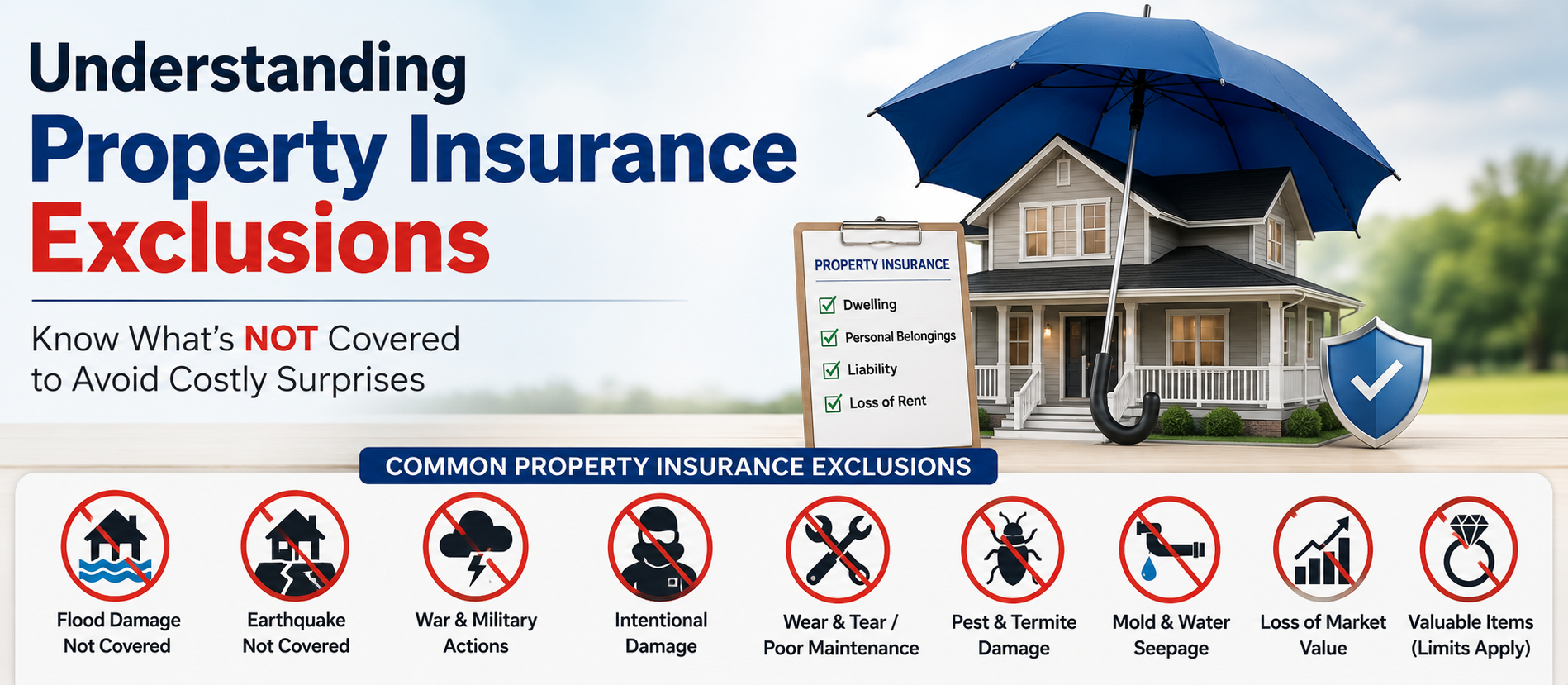
Commercial property insurance does not automatically cover every type of loss. Common exclusions or limitations can involve flood, earthquake, wear and tear, certain pollution losses, intentional acts, war, cyber incidents, maintenance problems, and other specifically excluded causes.
Business interruption coverage can also have important conditions. NAIC notes that business interruption coverage typically relates to covered physical property damage and may not respond to losses unrelated to physical damage. citeturn0search0
Always read the exclusions, definitions, conditions, endorsements, and causes-of-loss form instead of relying on a policy name alone.
Commercial Property Insurance vs. Businessowners Policy
Commercial property insurance focuses primarily on physical property exposures. A businessowners policy combines several common coverages into one package, typically including property, liability, and business interruption protection.
A BOP can be convenient and cost-effective for eligible small businesses, but not every company qualifies. Businesses with unusual risks, large operations, specialized facilities, or complex exposures may need a commercial package policy or customized insurance program. citeturn0search1
How to Choose the Right Coverage
- List every physical business asset.
- Estimate current replacement values.
- Identify the building ownership or lease arrangement.
- Review inventory fluctuations.
- Identify industry-specific risks.
- Assess flood, earthquake, storm, fire, theft, and other local hazards.
- Compare actual cash value and replacement cost options.
- Choose appropriate limits and deductibles.
- Evaluate business income needs.
- Review available endorsements.
- Check contractual insurance requirements.
- Review the policy annually.
Important Documents and Records to Maintain
- Purchase receipts.
- Equipment invoices.
- Inventory reports.
- Serial numbers.
- Property photographs and videos.
- Building improvement records.
- Lease agreements.
- Insurance declarations pages.
- Policy endorsements.
- Prior claim records.
- Business financial statements for interruption coverage.
Common Commercial Property Insurance Mistakes
- Insuring property based on outdated values.
- Assuming the landlord's policy covers a tenant's assets.
- Ignoring business interruption coverage.
- Failing to review exclusions.
- Underestimating seasonal inventory.
- Ignoring flood or earthquake exposure.
- Failing to insure newly purchased equipment.
- Choosing limits based only on current book value.
- Not maintaining an asset inventory.
- Failing to review coverage after expansion or renovation.
Frequently Asked Questions
What are the main benefits of commercial property insurance?
It can protect eligible business buildings, equipment, inventory, furniture, and other physical assets against covered losses and can work alongside business interruption coverage to support recovery.
Does commercial property insurance cover inventory?
Business inventory can be covered when it qualifies as covered property and the loss results from a covered cause, subject to limits, deductibles, exclusions, and valuation provisions.
Does commercial property insurance cover business interruption?
Commercial property coverage and business interruption coverage are related but distinct. Business interruption coverage can address certain lost income and continuing expenses following a covered physical loss.
Does commercial property insurance cover flood?
Not necessarily. Flood may be excluded or require separate coverage or an endorsement, depending on the policy and location.
What is a BOP?
A businessowners policy is a package policy that typically combines property, business interruption, and liability coverage for eligible small businesses.
Should a business tenant buy commercial property insurance?
Yes, a tenant may still need coverage for its inventory, equipment, furniture, improvements, and other business property because the landlord's insurance generally protects the building owner's interests.
What is replacement cost?
Replacement cost is a valuation method intended to cover the cost to repair or replace covered property with materials of similar kind and quality, subject to policy terms and limits.
How often should commercial property insurance be reviewed?
At least annually and whenever the business adds equipment, changes locations, expands inventory, renovates, changes operations, or experiences significant growth.
Conclusion
Commercial property insurance is an important risk-management tool for businesses that depend on physical assets. Its benefits can extend from protecting buildings and equipment to helping replace damaged inventory and supporting business continuity after a covered physical loss.
The most effective insurance strategy begins with an accurate understanding of the business's assets and risks. Review property values, inventory, replacement costs, deductibles, exclusions, business income needs, and specialized exposures. If the business leases its premises, review the lease and do not assume that the landlord's insurance protects your company's property.
A strong insurance program should evolve as the business grows. Annual reviews, accurate asset records, risk-reduction measures, and appropriate endorsements can help prevent coverage gaps and make recovery easier when a covered loss occurs.
Digiifrog
Website: www.digiifrog.com
Commercial insurance coverage, exclusions, limits, deductibles, eligibility, valuation methods, and legal requirements vary by country, state, insurer, business type, and policy. This article is educational and is not personalized insurance, legal, or financial advice. Always review the current policy and consult a qualified insurance professional for business-specific guidance.
Ready to Grow?
Talk to us about a strategy tailored to your brand — we will help you stand out in search, AI discovery and social.
Comments (0)
Log in to leave a comment.