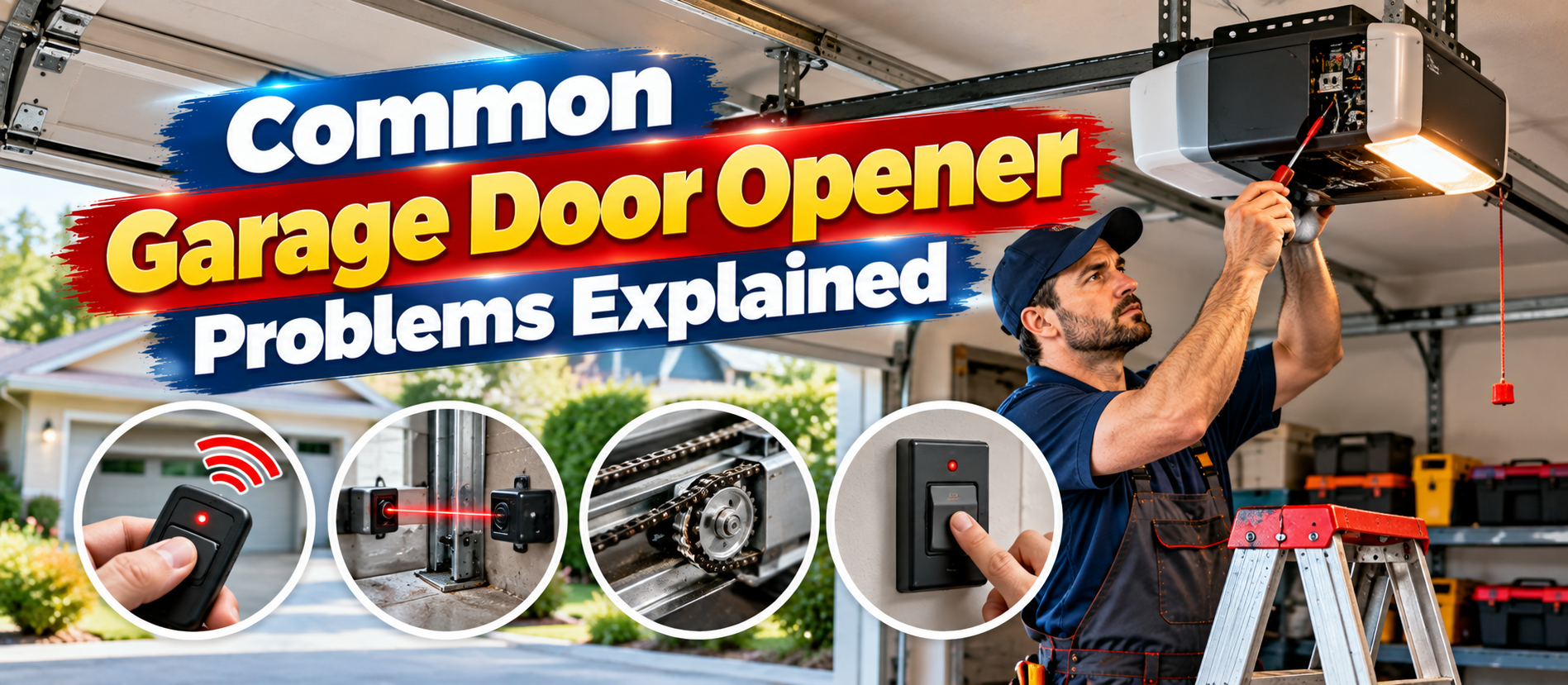
📋 Quick Summary
In this article:
How a Garage Door Opener Works
1. Garage Door Opener Does Not Work at All
2. The Remote Control Does Not Work
3. The Wall Button Does Not Work
4. The Garage Door Starts to Close and Then Reverses
5. Safety Sensors Are Misaligned
6. The Garage Door Closes Only When You Hold the Wall Button
7. The Opener Motor Runs but the Door Does Not Move
8. The Opener Hums but Does Not Move the Door
9. The Garage Door Is Heavy or Hard to Lift Manually
10. The Garage Door Opens Partway and Stops
11. The Garage Door Does Not Open Fully
Common Garage Door Opener Problems Explained Digiifrog | www.digiifrog.com WordPress-ready HTML article Approximate word count: 4035 SEO + AEO + GEO + AI Search optimized Readability-focused: clear, direct sentences
A garage door opener makes daily life easier. With one button, you can open or close a heavy garage door without leaving your vehicle. Modern openers may also include safety sensors, battery backup, smartphone control, lighting, wireless keypads, and smart-home features.
But like any mechanical and electrical system, a garage door opener can develop problems. The door may refuse to open. It may close and immediately reverse. The remote may stop working. The motor may hum without moving the door. The opener may make unusual noises, flash lights, or lose its Wi-Fi connection.
This guide explains the common garage door opener problems homeowners face and what each symptom may mean. It also explains which basic checks are reasonable for a homeowner and which problems should be handled by a trained garage door professional.
Safety is the most important point. A garage door is heavy, and the springs, cables, rollers, tracks, and other hardware can store or carry significant mechanical energy. The U.S. Consumer Product Safety Commission warns that unbalanced or binding garage doors can be dangerous and recommends professional service when the door does not operate correctly. CPSC garage door safety guidance provides additional information.
How a Garage Door Opener Works
Before troubleshooting, it helps to understand the basic system.
A typical automatic garage door system includes:
- Opener motor unit: Provides the power used to move the door.
- Drive system: Transfers motor movement through a chain, belt, screw, or another mechanism.
- Rail or drive mechanism: Guides the trolley or moving assembly.
- Trolley: Connects the opener mechanism to the garage door.
- Wall control: Allows operation from inside the garage.
- Remote control: Allows wireless operation.
- Safety reversing sensors: Detect objects in the door opening and help prevent the door from closing when the beam is interrupted.
- Travel and force settings: Tell the opener how far and how strongly it should operate.
- Emergency release: Allows the door to be disconnected from the opener for manual operation.
Different brands and models use different components and diagnostic systems. Always use the manual for your exact opener model when a repair or adjustment is required.
1. Garage Door Opener Does Not Work at All
One of the most common complaints is simple: nothing happens when you press the remote or wall button.
Start with basic observations.
- Is the opener plugged into power?
- Is the garage electrical outlet working?
- Is a circuit breaker tripped?
- Is the opener's light or display active?
- Does the wall control work?
- Does the remote work?
- Is the opener showing an error light or diagnostic code?
If the opener has no signs of power, the issue may be electrical rather than mechanical. Do not open electrical components or attempt live electrical repairs unless you are qualified to do so.
Chamberlain's support guidance recommends having the opener model number, installation date or purchase information, and a clear description of the problem available when contacting technical support. Chamberlain support resources also provide model-specific troubleshooting tools.
2. The Remote Control Does Not Work
A dead or weak remote battery is one of the easiest problems to solve.
If the wall control works but the remote does not, try these checks:
- Replace the remote battery with the correct type.
- Check whether the remote button feels normal.
- Move closer to the opener and test again.
- Check whether the remote has been damaged.
- Reprogram the remote using the opener's instructions if necessary.
Remote compatibility varies by opener model and technology. Do not assume every replacement remote will work with every opener.
For example, Chamberlain lists specific opener families and compatibility requirements for its remotes. Chamberlain remote compatibility information shows why checking the opener model and learn-button system matters.
3. The Wall Button Does Not Work
If the remote works but the wall control does not, the issue may involve the wall control, its wiring, or the connection to the opener.
Possible causes include:
- Damaged wall control
- Loose or damaged wiring
- Shorted control wires
- Incorrect connection
- Problem with the opener control board
Do not randomly connect or disconnect wires while the opener is powered. Use the manufacturer's instructions or call a qualified technician if the wiring needs diagnosis.
4. The Garage Door Starts to Close and Then Reverses
This is a very common garage door opener problem.
In many systems, unexpected reversal while closing is related to the safety sensors, travel settings, an obstruction, door binding, or another mechanical issue.
First, inspect the area around the door. Remove objects that could interfere with movement.
Then look at the two safety sensor units near the bottom of the door tracks. Their indicator lights should normally show the condition specified by the manufacturer. Sensors can become misaligned after being bumped, or their lenses can become dirty.
LiftMaster troubleshooting documentation identifies sensor wiring problems, shorted sensor wires, and sensor misalignment as causes of certain opener diagnostic conditions. It recommends checking wiring, alignment, and sensor condition. LiftMaster troubleshooting documentation provides an example of model-specific diagnostic codes.
5. Safety Sensors Are Misaligned
Safety sensors are designed to create an invisible beam across the garage door opening. If the beam is interrupted or the sensors are not correctly aligned, many openers will not allow the door to close normally.
Common signs include:
- The door opens normally but refuses to close.
- The opener lights flash.
- The sensor LEDs do not show the expected steady condition.
- The door starts closing and reverses.
Check whether anything is blocking the sensor path. Clean the sensor lenses gently. Also check whether one sensor has been bumped or its mounting bracket has moved.
Do not bypass or disable the safety sensors. They are an important part of the entrapment-protection system.
6. The Garage Door Closes Only When You Hold the Wall Button
Some garage door openers behave differently when the safety system detects a fault. A door that will only close while a control button is held may be indicating a safety-sensor or related problem.
Check the sensor condition and the manufacturer's diagnostic information.
Do not treat this behavior as a reason to bypass the sensors. A garage door should not be operated with a known safety-system fault.
7. The Opener Motor Runs but the Door Does Not Move
If you hear the motor running but the garage door does not move, the problem may be mechanical or related to the connection between the opener and the door.
Possible causes include:
- Emergency release has been activated.
- Trolley is disconnected.
- Drive mechanism is damaged.
- Door hardware is binding.
- Internal opener components have failed.
Check whether the emergency release has accidentally been pulled. If the door is disconnected from the opener, follow the manufacturer's procedure for reconnecting it.
If the door itself is heavy, stuck, crooked, or difficult to move manually, stop troubleshooting the opener and call a trained door technician.
8. The Opener Hums but Does Not Move the Door
A humming motor without door movement can indicate several problems. The door may be binding, the drive mechanism may have a problem, or the motor may be operating without successfully transferring movement to the door.
LiftMaster documentation recommends manually checking whether the door opens and closes properly and notes that a binding door should be handled by a trained door systems technician. LiftMaster maintenance and troubleshooting guidance provides model-specific examples.
Do not assume that replacing the opener motor will solve the problem. A poorly balanced or mechanically damaged door can overload an opener.
9. The Garage Door Is Heavy or Hard to Lift Manually
This is an important warning sign.
A properly functioning garage door should generally be balanced by its spring system. CPSC guidance explains that a balanced door should remain in place when stopped in a partially open position and warns that a severely unbalanced door can fall unexpectedly. CPSC garage door safety guidance provides further details.
Do not attempt to adjust or replace torsion springs or extension springs unless you are trained and equipped for the work. Garage door springs can release significant stored energy.
10. The Garage Door Opens Partway and Stops
A door that only opens partway may have a travel-limit problem, force-setting issue, obstruction, binding, or mechanical problem.
Start with a visual inspection. Look for objects in the tracks and obvious damage.
If the opener displays a diagnostic code, record the code before changing any settings.
Some LiftMaster models use flash codes to indicate limit and force programming issues. The exact meaning varies by model, so always consult the correct manual. LiftMaster diagnostic chart illustrates how model-specific flash codes can guide troubleshooting.
11. The Garage Door Does Not Open Fully
If the door opens but stops before reaching the normal position, the opener may have a travel-setting issue or the door may have a mechanical obstruction.
Do not increase force settings simply to make a damaged or binding door move farther.
Force settings are part of the safety system. Incorrect adjustment can create unsafe operating conditions.
12. The Door Closes Too Far or Hits the Floor Hard
A door that travels too far downward may have incorrect travel limits or another control issue.
If the door slams into the floor, do not keep testing it repeatedly. The problem should be evaluated before continued operation.
Follow the manufacturer's adjustment procedure for the exact model. If you are unsure about limit or force adjustments, use a trained technician.
13. The Garage Door Opens and Then Closes by Itself
Unexpected operation can have several possible causes:
- A remote button is stuck.
- A remote is accidentally being pressed.
- Another programmed device is sending a signal.
- A wall control has a problem.
- There is an issue with smart-home or Wi-Fi integration.
- An old or incompatible control device is interfering with operation.
Security is also important. If a remote has been lost or stolen, erase it from the opener's memory and program replacement controls according to the manufacturer's instructions.
14. The Garage Door Opener Light Flashes
Flashing lights can be a diagnostic signal. Some opener models use a specific number of flashes to indicate a particular problem.
For example, LiftMaster documentation lists different flash counts for sensor wiring, door-control wiring, sensor alignment, motor RPM recognition, and limit or force issues. LiftMaster diagnostic chart shows why counting the flashes can be useful.
Write down the number of flashes and the exact behavior of the door. Then check the manual for your model.
15. The Opener Makes Grinding or Straining Noises
Unusual sounds should not be ignored.
Possible causes include:
- Worn drive components
- Loose hardware
- Door rollers or hinges needing service
- Track problems
- Door imbalance
- Motor or gearbox wear
Do not lubricate every component simply because you hear a noise. Some components require specific lubricants, while others should not be lubricated at all. Follow the manufacturer's maintenance instructions.
16. The Garage Door Opener Vibrates Excessively
Excessive vibration can result from loose mounting hardware, worn components, an unbalanced door, or problems with the drive system.
Visible loose hardware can be a reason to schedule service. Do not climb onto the opener or attempt structural repairs while the system is operating.
17. The Garage Door Moves Slowly
A slow door can be caused by mechanical resistance, cold weather in some climates, worn components, an overloaded system, or opener-related problems.
First determine whether the door itself moves smoothly when disconnected from the opener using the manufacturer's safe manual-release procedure.
If the door is difficult to move manually, the problem is likely not just the opener.
18. The Remote Works Only From Very Close Range
A remote that works only when you stand close to the opener may have a weak battery, damaged electronics, interference, or another issue.
Try a fresh battery first. If the problem remains, test another compatible remote if available.
Do not assume the opener motor is failing just because the remote range is poor.
19. The Garage Door Opener Loses Wi-Fi
Smart garage door openers depend on both the opener and the home network.
Common causes include:
- Weak Wi-Fi signal in the garage
- Changed Wi-Fi password
- Router replacement
- Network configuration changes
- Temporary internet outage
- App account or setup issues
Check the manufacturer's app and support documentation for the exact model. Avoid resetting the opener repeatedly without first understanding what the reset will erase.
20. Smartphone Control Stops Working
If the physical wall control and remote work but the smartphone app does not, the issue may be with the network, app, account, or smart-home connection rather than the door opener itself.
Check whether the app reports the opener as offline. Confirm that your phone has internet access. Then follow the manufacturer's current connection procedure.
21. The Keypad Does Not Work
A wireless garage keypad can stop working because of a weak battery, programming issue, incorrect code, or communication problem.
Start with the battery and keypad condition. If necessary, reprogram the keypad using the opener manufacturer's instructions.
When programming any remote or keypad, keep people, pets, vehicles, and other objects clear of the door because the door can activate during the process. Chamberlain's programming instructions specifically warn users to ensure the door area is clear before programming. Chamberlain programming guidance provides an example.
22. The Garage Door Reverses When It Touches the Floor
A door that reaches the floor and then reverses can have a limit-setting issue, obstruction, binding, or safety-related problem.
Do not keep increasing the force to overcome the symptom. The correct fix depends on the cause and the opener model.
Check for obstructions and inspect the door's movement. If the problem persists, have the system evaluated.
23. The Safety Reversal Test Fails
The safety reversal system is one of the most important parts of an automatic garage door.
Manufacturer instructions commonly require periodic testing. For example, LiftMaster instructions call for monthly testing and describe using a 1.5-inch test object or a 2x4 laid flat, depending on the model and procedure. LiftMaster safety reversal test instructions explain the procedure for that model.
If the door does not reverse as required, stop using the automatic opener until the problem is corrected by following the manufacturer's instructions or by contacting a trained technician.
24. The Garage Door Is Noisy After Opener Installation
A new opener does not automatically eliminate noise. The garage door itself contains rollers, hinges, springs, tracks, and other moving parts.
If the door is noisy, the source should be identified rather than assuming the opener is defective.
A professional can determine whether the noise comes from the opener or the door hardware.
25. When the Garage Door Problem Is Actually the Door
One of the biggest troubleshooting mistakes is blaming the opener for every problem.
The opener provides automated movement, but the door must also be mechanically sound.
Problems with springs, cables, rollers, hinges, tracks, bearings, or door sections can make a good opener appear to be failing.
If the door is crooked, binding, unusually heavy, or difficult to move manually, have the door system inspected.
Basic Garage Door Opener Troubleshooting Checklist
| Symptom Possible Cause First Safe Check | ||
| No response | Power, control, or opener fault | Check power and wall control |
| Remote does not work | Battery or programming | Replace battery and check compatibility |
| Door reverses | Sensor, obstruction, travel, or door issue | Check sensors and door path |
| Motor runs but door does not move | Release, drive, or mechanical issue | Check emergency-release condition |
| Door opens partly | Travel, force, or mechanical issue | Check for obstruction and diagnostic code |
| Flashing lights | Diagnostic condition | Count flashes and check manual |
| Weak remote range | Battery, interference, remote issue | Replace battery |
| Wi-Fi offline | Network or app issue | Check home network and app |
| Heavy manual operation | Door balance or hardware issue | Stop and call a professional |
What Homeowners Can Usually Check
Simple visual and user-level checks may include:
- Checking whether the opener has power.
- Replacing a remote battery.
- Cleaning safety sensor lenses.
- Checking whether the sensor path is blocked.
- Checking whether the emergency release has been activated.
- Removing obvious objects from the door path.
- Checking the manufacturer's diagnostic indicator.
- Checking the remote and keypad batteries.
- Checking basic Wi-Fi connectivity for smart features.
These checks should not involve dismantling the opener, adjusting springs, bypassing sensors, or making unsafe electrical repairs.
Problems That Usually Need a Professional
Call a trained garage door technician when the problem involves:
- Broken or damaged springs
- Loose or broken cables
- A badly unbalanced door
- Door sections that are damaged
- Severely bent tracks
- Repeated safety reversal failure
- Electrical wiring problems
- Internal opener electronics
- Major drive-system damage
- Persistent grinding or mechanical noise
- A door that is stuck or unsafe to move
Why You Should Not Adjust Garage Door Springs Yourself
Garage door springs store significant mechanical energy. An incorrect adjustment can cause serious injury or damage.
💡 Key Insight
CPSC guidance emphasizes checking springs, hardware, and fittings and recommends professional service when the door is unbalanced or binds. CPSC safety guidance is an important reference.
Do not attempt to solve an opener problem by adjusting spring tension unless you are trained to perform that work safely.
How to Maintain a Garage Door Opener
Preventive maintenance can reduce unexpected problems.
- Test the safety reversal system regularly according to the manufacturer's instructions.
- Inspect safety sensors and keep their lenses clean.
- Check that the door opens and closes smoothly.
- Listen for new or unusual noises.
- Inspect the opener and mounting hardware visually.
- Keep the door path clear.
- Replace weak remote or keypad batteries.
- Keep the manufacturer's manual accessible.
- Record the opener model and serial information.
- Schedule professional service when the door becomes heavy, noisy, crooked, or unreliable.
Monthly Garage Door Safety Check
A simple monthly check can help identify problems early.
- Look at the door, tracks, rollers, springs, and cables from a safe position.
- Open and close the door while observing its movement.
- Check whether the door appears balanced and moves smoothly.
- Inspect the safety sensor area.
- Test the safety reversal system according to the manufacturer's instructions.
- Test the wall control and remote.
- Look for new noises, vibration, or unusual behavior.
LiftMaster maintenance guidance recommends monthly manual operation checks and monthly safety reversal testing for its systems. LiftMaster maintenance guidance provides a model-specific example.
Should You Repair or Replace the Garage Door Opener?
Repair may make sense when the opener has a minor, identifiable problem and the unit is otherwise in good condition.
Replacement may make more sense when the opener is very old, repeatedly fails, lacks important safety features, or has a major internal failure.
Safety should be considered alongside repair cost. Chamberlain notes that openers made before 1993 generally lack the external entrapment-protection devices found on newer systems and recommends replacing such older units rather than repairing them. Chamberlain safety information provides its position on older openers.
Requirements and product standards can vary by market and installation date. Check applicable local requirements and manufacturer guidance.
How Smart Garage Door Openers Change Troubleshooting
Smart openers can make troubleshooting easier because apps may show connection status, activity, notifications, and other information.
However, smart features add another layer of possible problems. A door can work correctly while the Wi-Fi connection fails, or the internet can work while the opener loses its network connection.
Treat mechanical, electrical, and network symptoms separately. This makes troubleshooting faster and avoids replacing a working opener for a simple network problem.
How to Prepare Before Calling a Garage Door Technician
You can save time by collecting a few details before requesting service.
- Opener brand
- Model number
- Approximate installation date
- Exact symptom
- Whether the wall button works
- Whether the remote works
- Whether the door opens manually
- Whether lights flash
- Number of diagnostic flashes
- Recent power outages or storms
- Recent repairs or changes
Chamberlain's support guidance also recommends having the model number and a clear description of the problem available. Chamberlain support is an example of manufacturer-specific troubleshooting support.
Common Garage Door Opener Mistakes to Avoid
- Ignoring repeated safety-sensor faults.
- Increasing force settings without identifying the cause.
- Bypassing safety sensors.
- Adjusting springs without proper training.
- Continuing to operate a severely damaged door.
- Assuming every problem is caused by the opener.
- Ignoring unusual grinding or straining sounds.
- Using incompatible remotes or parts.
- Resetting smart features without understanding the consequences.
- Waiting until a small problem becomes a complete failure.
Frequently Asked Questions
Why does my garage door opener run but the door does not move?
The emergency release may be disconnected, or there may be a problem with the drive mechanism or garage door hardware. Check the release condition according to the manual. If the door is heavy or binding, call a professional.
Why does my garage door open but not close?
Safety sensors are a common cause. Check for an obstruction, dirty sensor lenses, or sensor misalignment. If the problem continues, consult the opener manual or a trained technician.
Why does my garage door reverse after closing?
Possible causes include safety-sensor problems, travel settings, an obstruction, door binding, or another mechanical issue. Do not simply increase force settings without diagnosing the cause.
Why is my garage door opener flashing lights?
Many openers use flashing lights as diagnostic signals. Count the flashes and compare them with the exact manual for your model.
How often should I test garage door safety reversal?
Many manufacturers recommend monthly testing. Follow the exact test procedure in your opener manual. LiftMaster documentation, for example, specifies monthly safety-reversal testing.
Can I fix a garage door opener myself?
You can often handle simple checks such as replacing remote batteries, cleaning sensor lenses, checking for obstructions, and reviewing diagnostic codes. Spring, cable, electrical, structural, and major mechanical repairs should be handled by trained professionals.
Why is my garage door suddenly very heavy?
A heavy door can indicate a spring, balance, cable, roller, track, or other mechanical problem. Do not force the door or attempt spring adjustments yourself.
Should I replace an old garage door opener?
Replacement can be sensible when an opener is very old, repeatedly fails, lacks modern safety features, or requires an expensive repair. Older openers may not have the external entrapment protection found on newer systems.
Final Thoughts
Common garage door opener problems often have recognizable symptoms. A dead remote may need a battery. A door that refuses to close may have a sensor issue. A flashing diagnostic light may point toward a specific fault. A humming motor may indicate a mechanical problem. A heavy or binding door may need professional attention rather than an opener adjustment.
⚠ Watch Out
The safest approach is to start with simple, non-invasive checks. Identify the exact symptom. Check the manufacturer's manual. Never bypass safety features. Never adjust springs or other high-energy components without proper training.
Regular maintenance also matters. Test the safety reversal system according to the manufacturer's schedule, keep sensor areas clear, watch for changes in door balance and movement, and address unusual noises early.
A garage door opener is not just a convenience device. It is part of a larger mechanical safety system. Keeping the opener and door properly maintained can improve reliability, reduce unexpected failures, and help keep your household safer.
Digiifrog creates search-friendly digital content that explains complex home-service topics in clear, useful language. Learn more at www.digiifrog.com.
Sources and Further Reading
- U.S. Consumer Product Safety Commission — Garage Door Safety
- U.S. CPSC — Automatic Residential Garage Door Operators
- Chamberlain — Support and Troubleshooting
- Chamberlain — Safety and Compliance
- Lift Master — Troubleshooting and Diagnostic Chart
- Lift Master — Safety Reversal Test
Ready to Grow?
Talk to us about a strategy tailored to your brand — we will help you stand out in search, AI discovery and social.

Comments (0)
Log in to leave a comment.