📋 Quick Summary
In this article:
Quick Answer: How Can You Prevent Common Household Pests?
Why Do Household Pests Enter Homes?
1. Ants
2. Cockroaches
How to Help Prevent Cockroaches
3. Rodents
4. Mosquitoes
How to Reduce Mosquito Breeding Areas
5. House Flies
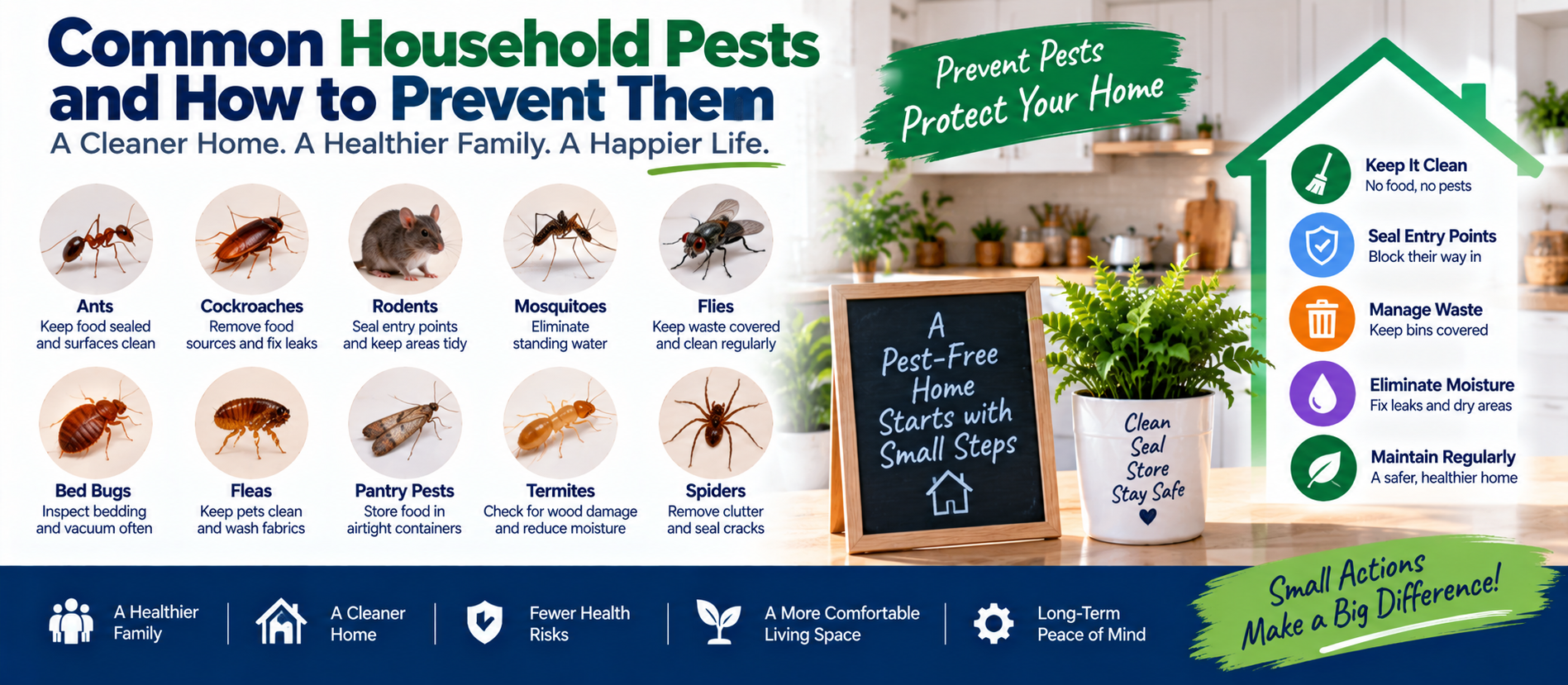
Household pests can create problems in almost any home. Ants may enter in search of food. Cockroaches can hide in warm and damp spaces. Rodents may damage stored materials, while mosquitoes and flies can become a nuisance around the home.
The best approach to pest prevention is simple: reduce food sources, remove standing water, seal entry points, maintain cleanliness, and inspect the home regularly. Early prevention can help reduce the chance of a larger infestation.
This guide explains the most common household pests and how to prevent them using practical and easy-to-understand home maintenance strategies.
Quick Answer: How Can You Prevent Common Household Pests?
You can help prevent household pests by keeping food properly stored, cleaning crumbs and spills, reducing moisture, removing standing water, sealing cracks and gaps, managing waste, and inspecting your home regularly.
If you suspect a significant infestation or cannot safely identify the pest, contact a qualified pest management professional.
Why Do Household Pests Enter Homes?
Most pests enter homes because they are looking for basic needs such as food, water, shelter, warmth, and safe places to hide or reproduce.
A small food spill, an open garbage container, excess moisture, or a gap near a door can create an opportunity for pests. Effective prevention focuses on making the home less attractive and less accessible.
1. Ants
Ants are among the most common household pests. They often enter kitchens, pantries, and other areas where food or moisture is available.
How to Help Prevent Ants
- Clean crumbs and food spills promptly.
- Store food in sealed containers.
- Keep pet food areas clean.
- Seal visible gaps around doors and windows.
- Reduce moisture around sinks and plumbing.
2. Cockroaches
Cockroaches often prefer dark, warm, and sheltered areas. Kitchens, bathrooms, utility spaces, and areas near plumbing may provide suitable hiding places.
How to Help Prevent Cockroaches
- Clean food preparation areas regularly.
- Do not leave dirty dishes for long periods.
- Remove food scraps from sinks.
- Store food securely.
- Repair leaks and reduce unnecessary moisture.
- Seal cracks and gaps where possible.
A repeated cockroach problem may require professional inspection and treatment.
3. Rodents
Rodents such as mice and rats may enter homes through surprisingly small openings. They can search for food, shelter, and nesting areas.
How to Help Prevent Rodents
- Store food in secure containers.
- Keep waste containers properly closed.
- Reduce clutter in storage areas.
- Inspect the home for gaps and openings.
- Keep vegetation and stored materials away from the building where practical.
⚠ Watch Out
If you see signs of rodents, use caution when cleaning affected areas and follow appropriate public health guidance.
4. Mosquitoes
Mosquitoes are commonly associated with standing water and outdoor environments.
How to Reduce Mosquito Breeding Areas
- Remove unnecessary standing water around the property.
- Regularly check containers that can collect rainwater.
- Maintain outdoor drainage.
- Follow local public health guidance for mosquito control.
5. House Flies
House flies are attracted to food, waste, and organic materials.
How to Help Prevent Flies
- Keep food covered when appropriate.
- Clean food spills quickly.
- Empty waste containers regularly.
- Keep recycling containers clean.
- Use properly fitted window and door screens where suitable.
6. Fruit Flies
Fruit flies can become noticeable when ripe or overripe produce is left exposed.
How to Help Prevent Fruit Flies
- Check fruits and vegetables regularly.
- Remove produce that is no longer suitable for use.
- Clean food residue from counters.
- Wash containers that hold food waste.
- Keep kitchen areas dry and clean.
7. Bed Bugs
Bed bugs can be difficult to identify and manage without professional assistance. They may be transported through belongings, furniture, or travel-related items.
How to Reduce the Risk
- Inspect second-hand furniture carefully.
- Follow appropriate inspection practices after travel.
- Pay attention to unexplained signs around sleeping areas.
💡 Key Insight
If you suspect bed bugs, consider contacting a qualified pest management professional. Correct identification is important.
8. Termites and Other Wood-Damaging Pests
Some pests can affect wooden structures or materials. Moisture problems and direct contact between wood and soil may increase certain risks depending on the region and building design.
Prevention Steps
- Address moisture problems.
- Inspect wooden areas for signs of damage.
- Maintain appropriate drainage around the property.
- Schedule professional inspections when recommended for your location.
9. Spiders
Spiders may enter homes while searching for shelter or prey. Regular cleaning and reducing clutter can help make hiding places less available.
How to Reduce Spider Activity
- Reduce clutter in storage areas.
- Inspect and clean quiet corners regularly.
- Repair damaged screens where practical.
- Seal obvious entry points.
Some spiders may be medically significant in certain locations. Avoid handling an unknown spider and seek local professional guidance when necessary.
10. Silverfish
Silverfish are often associated with humid or damp environments. Bathrooms, basements, and storage areas may provide suitable conditions.
How to Help Prevent Silverfish
- Improve ventilation where appropriate.
- Address persistent moisture problems.
- Reduce unnecessary paper and cardboard clutter.
- Store important paper materials carefully.
11. Pantry Pests
Pantry pests can affect stored dry foods and related products.
How to Help Prevent Pantry Pests
- Inspect dry food products before storage.
- Use suitable sealed containers.
- Clean pantry shelves regularly.
- Rotate food according to household needs.
- Remove affected products when contamination is suspected.
12. Fleas
Fleas may be associated with pets or other animals. Prevention may require attention to both the home environment and animals.
Helpful Prevention Measures
- Follow veterinary guidance for pet parasite prevention.
- Clean pet bedding according to care instructions.
- Vacuum appropriate areas regularly.
- Consult a veterinarian or qualified professional when a flea problem is suspected.
The Most Important Household Pest Prevention Habits
Keep Food Properly Stored
Open food containers can attract pests. Store suitable foods in secure containers and clean food storage areas regularly.
Clean Crumbs and Spills Quickly
Small food particles can attract pests. Wipe counters, tables, and food preparation areas regularly.
Manage Moisture
Many pests benefit from damp conditions. Repair plumbing leaks and improve ventilation where appropriate.
Seal Entry Points
Inspect around windows, doors, pipes, vents, and utility openings. Appropriate sealing can reduce access points.
Control Waste
Keep waste containers clean and use lids where appropriate. Follow local waste collection and recycling requirements.
Inspect Your Home Regularly
Regular inspections can help homeowners identify problems early.
- Gaps around doors and windows.
- Water leaks.
- Food spills or forgotten food.
- Damaged screens.
- Unusual pest activity.
- Signs of material damage.
Early action can be easier than responding after a pest population becomes established.
Kitchen Pest Prevention Tips
- Do not leave food scraps exposed.
- Clean under and around appliances when practical.
- Check the sink for food residue.
- Store pantry products properly.
- Empty trash regularly.
- Inspect areas near plumbing for moisture.
Bathroom Pest Prevention Tips
- Use ventilation when appropriate.
- Repair leaks.
- Keep surfaces reasonably dry.
- Reduce unnecessary clutter.
- Inspect gaps around pipes and fixtures.
Basement and Storage Area Pest Prevention
Basements and storage spaces can become attractive to pests when they are damp or cluttered.
- Organize stored belongings.
- Reduce excess cardboard where practical.
- Monitor moisture levels.
- Keep stored food appropriately protected.
- Inspect walls and entry points.
Outdoor Pest Prevention Around the Home
Pest prevention often begins outside the building.
- Maintain drainage.
- Remove unnecessary standing water.
- Manage outdoor waste.
- Keep vegetation maintained.
- Inspect the exterior for openings and damage.
Use Pest Control Products Carefully
Pesticides and other pest control products can present risks if used incorrectly.
- Read the complete label.
- Follow all safety instructions.
- Use only as directed.
- Keep products away from children and pets.
- Do not combine products unless specifically permitted by the manufacturer.
When in doubt, consult a qualified pest management professional.
Integrated Pest Management: A Practical Approach
Integrated Pest Management, often called IPM, is a prevention-focused approach that can include inspection, sanitation, exclusion, monitoring, and appropriate control methods.
A practical home approach may involve:
- Identifying the pest correctly.
- Removing food and water sources.
- Sealing entry points.
- Monitoring the situation.
- Using professional assistance when necessary.
When Should You Call a Pest Control Professional?
Professional help may be appropriate when:
- You see repeated pest activity.
- You suspect structural damage.
- The pest cannot be identified confidently.
- Home prevention efforts are not working.
- There may be a significant infestation.
- There is a potential health or safety concern.
Common Household Pest Prevention Mistakes
- Ignoring small signs of pest activity.
- Leaving food exposed overnight.
- Allowing moisture problems to continue.
- Using the wrong product without identifying the pest.
- Failing to inspect entry points.
- Overlooking outdoor conditions around the property.
- Using chemicals without reading the label.
A Simple Monthly Pest Prevention Checklist
- Inspect doors and windows for gaps.
- Check for plumbing leaks.
- Clean food storage areas.
- Review pantry products.
- Inspect outdoor drainage.
- Remove unnecessary standing water.
- Check waste containers.
- Reduce clutter in storage areas.
- Look for unusual pest activity.
SEO, AEO, GEO, and AI Search Optimization
This article uses clear structure and direct answers to help homeowners and modern search systems understand common household pests and how to prevent them.
For SEO, important keyword themes include common household pests, how to prevent pests at home, home pest prevention tips, and household pest control.
For AEO, direct answers address questions such as:
- What are the most common household pests?
- How can I prevent pests from entering my home?
- What attracts pests to a house?
For GEO and AI Search optimization, structured headings, concise explanations, practical prevention steps, and clear safety guidance make the content easier for AI-powered search systems to understand and summarize.
Frequently Asked Questions
What are the most common household pests?
Common household pests can include ants, cockroaches, rodents, flies, mosquitoes, pantry pests, spiders, silverfish, fleas, bed bugs, and wood-damaging pests.
What attracts pests to a home?
Pests may enter homes in search of food, water, shelter, warmth, and suitable hiding or breeding areas.
What is the best way to prevent household pests?
The best prevention strategy is to keep food stored properly, clean crumbs and spills, reduce moisture, manage waste, seal entry points, and inspect the property regularly.
Can cleaning alone prevent pests?
Cleaning is important, but pest prevention may also require moisture control, food storage, exclusion of entry points, outdoor maintenance, and professional assistance in some situations.
When should I contact a pest control professional?
Consider professional assistance if pest activity continues, you suspect a significant infestation or structural damage, the pest cannot be identified, or there is a health or safety concern.
Conclusion
Preventing household pests starts with simple and consistent home maintenance.
Clean food spills, proper storage, moisture control, waste management, and regular inspections can help make a home less attractive to many common pests.
No prevention method can guarantee that a home will never experience pest activity. However, early action and consistent maintenance can reduce risk and help homeowners respond quickly when problems appear.
If you are dealing with persistent or difficult pest activity, correct identification and professional advice can be important for safe and effective management.
For more practical insights into home maintenance, home services, cleaning strategies, SEO, AEO, GEO, and AI Search optimization, visit www.digiifrog.com.
Important Safety Note
Always follow product labels and local regulations when using pest control products. Keep pesticides and other hazardous products away from children and pets. Do not use chemicals in a way that conflicts with manufacturer instructions. For significant infestations, uncertain pest identification, structural concerns, or potential health risks, seek advice from a qualified professional or relevant local authority.
Ready to Grow?
Talk to us about a strategy tailored to your brand — we will help you stand out in search, AI discovery and social.

Comments (0)
Log in to leave a comment.