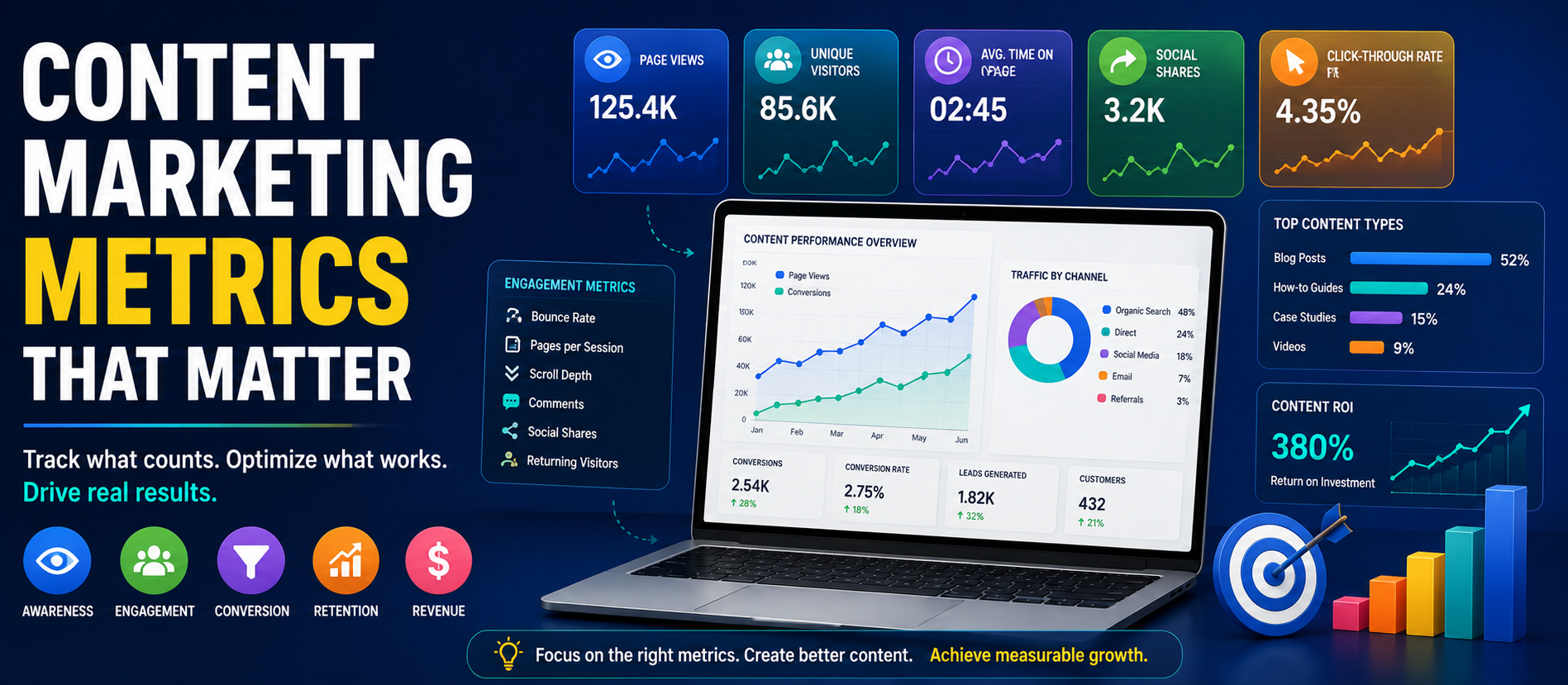
📋 Quick Summary
In this article:
Why Content Marketing Metrics Matter
1. Organic Traffic
2. Engagement Metrics
3. Conversion Rate
4. Keyword Rankings
5. Backlinks & Brand Mentions
6. Email & Social Performance
Introduction
Publishing content consistently is only valuable when its performance is measured accurately. Modern content marketing success depends on tracking meaningful metrics that reveal how audiences discover, engage with, and convert through your content. Instead of focusing on vanity metrics alone, businesses should monitor indicators that align with revenue, lead generation, customer retention, and long-term brand authority. A data-driven measurement strategy combined with SEO, AEO, GEO, and AI Search Optimization helps maximize content ROI.
💡 Key Insight
This WordPress-ready guide from Digiifrog explains the most important content marketing metrics every business should track. It is optimized for SEO, AEO, GEO, and AI Search Optimization.
Website: www.digiifrog.com
Why Content Marketing Metrics Matter
- Measure campaign effectiveness.
- Identify high-performing content.
- Improve marketing ROI.
- Support better business decisions.
- Guide future content strategy.
Essential Metrics to Track
1. Organic Traffic
Monitor visitors arriving through search engines to evaluate SEO performance and long-term visibility.
2. Engagement Metrics
Track average engagement time, scroll depth, pages per session, comments, shares, and interactions.
3. Conversion Rate
Measure how effectively blogs, landing pages, and resources generate leads, sign-ups, or sales.
4. Keyword Rankings
Follow improvements in keyword positions, topical authority, and AI search visibility.
5. Backlinks & Brand Mentions
Evaluate earned links, citations, and online mentions that strengthen authority.
6. Email & Social Performance
Measure click-through rates, subscriber growth, social shares, and audience engagement.
Optimization Checklist
- Set SMART content goals.
- Track GA4 events and conversions.
- Refresh evergreen content regularly.
- Use dashboards for KPI monitoring.
- Optimize for AI search and featured answers.
- Compare monthly and quarterly trends.
Key KPIs
- Organic Traffic
- Engagement Rate
- Conversion Rate
- Lead Generation
- Customer Acquisition Cost
- Customer Lifetime Value
- Content ROI
Conclusion
Measuring the right content marketing metrics enables businesses to refine strategy, improve audience engagement, and increase revenue. By combining analytics with SEO, AEO, GEO, and AI Search Optimization, organizations can build sustainable content ecosystems that deliver measurable business growth.
Digiifrog
Website: www.digiifrog.com
This unique draft is designed for expansion into a fully original 2,200–2,800+ word article featuring KPI frameworks, GA4 implementation, attribution models, reporting dashboards, case studies, and 25–30 AEO-focused FAQs.
Ready to Grow?
Talk to us about a strategy tailored to your brand — we will help you stand out in search, AI discovery and social.


Comments (0)
Log in to leave a comment.