
📋 Quick Summary
In this article:
Quick Answer: What Is a Content Marketing Strategy?
Why Create a Free Downloadable Content Marketing Guide?
Step 1: Define Your Content Marketing Goals
Step 2: Understand Your Target Audience
Create a Simple Audience Profile
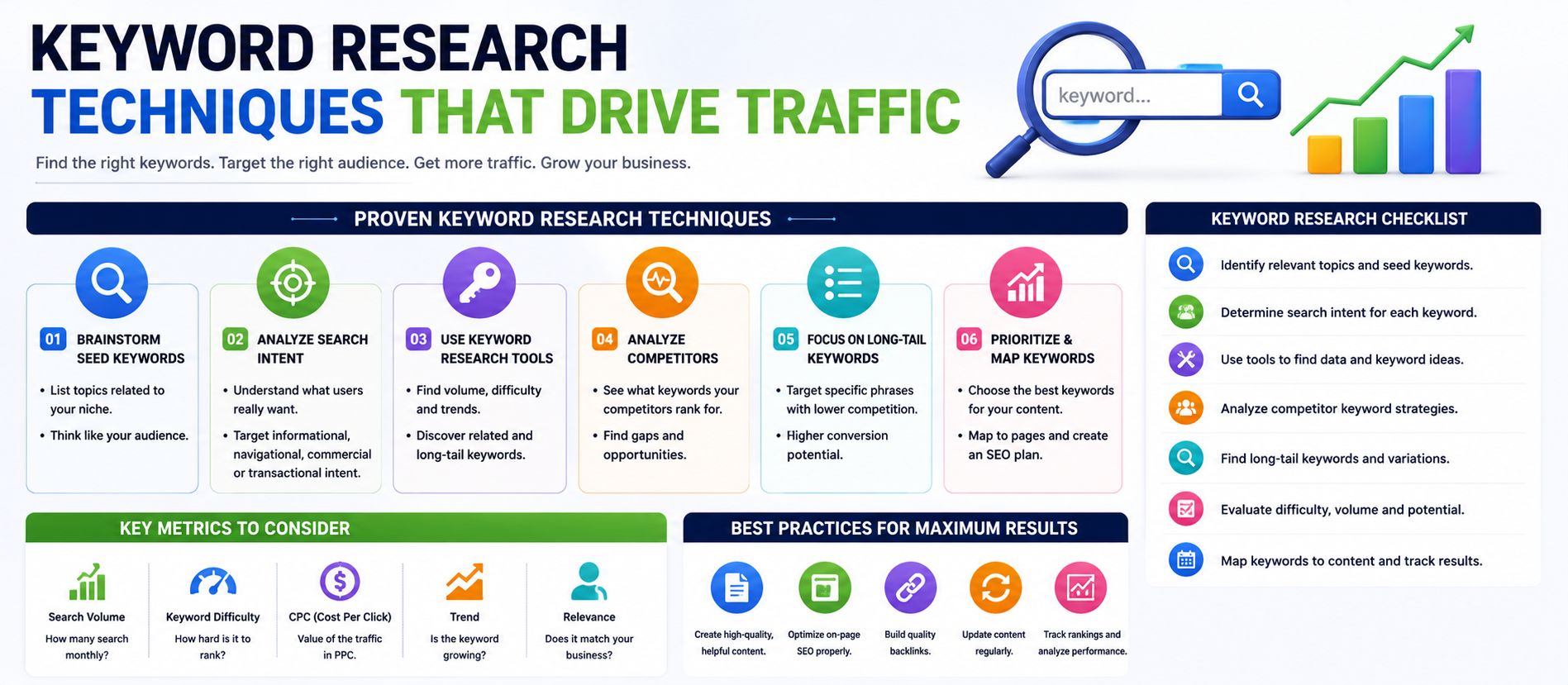
Step 3: Research Topics and Search Intent
Step 4: Build Topic Clusters
Step 5: Choose the Right Content Formats
Introduction
Content marketing is one of the most effective ways to attract an audience, build trust, and create long-term business growth. But publishing content without a clear strategy often leads to wasted time and weak results.
A strong content marketing strategy helps businesses understand who they want to reach, what information their audience needs, and how each piece of content supports a larger goal.
This guide explains how to develop a free downloadable guide on content marketing strategies. It also provides a practical framework that businesses, marketers, creators, and beginners can use to build a better content plan.
The focus is on clear steps and readable language. You will learn how to research your audience, choose content topics, create useful content, optimize for SEO, prepare for answer engines and AI search, promote your work, and measure results.
Quick Answer: What Is a Content Marketing Strategy?
A content marketing strategy is a structured plan for creating, publishing, distributing, and measuring useful content. It identifies the target audience, business goals, content topics, formats, publishing channels, and performance metrics.
The purpose is not simply to publish more content. The purpose is to publish the right content for the right audience at the right stage of their journey.
Why Create a Free Downloadable Content Marketing Guide?
A downloadable guide can provide value before a potential customer makes a purchase.
It can help you:
- Build trust with your audience
- Demonstrate expertise
- Generate leads
- Support email marketing
- Increase website engagement
- Create a useful resource that people can share
The guide must solve a real problem. A generic document with copied information is unlikely to create strong results.
Focus on practical advice, clear explanations, and useful steps.
Step 1: Define Your Content Marketing Goals
Every content strategy should begin with a goal.
Ask yourself what you want content to achieve.
Common goals include:
- Increase organic website traffic
- Generate qualified leads
- Build brand awareness
- Improve customer education
- Support sales teams
- Increase email subscribers
- Build authority in a specific industry
A clear goal makes it easier to choose the right topics and measure success.
Use Specific Goals
A vague goal such as "get more traffic" is difficult to measure.
💡 Key Insight
A better goal is to increase qualified organic traffic to important service pages or educational content over a defined period.
Your goals should connect content activity with a meaningful business outcome.
Step 2: Understand Your Target Audience
Good content begins with audience understanding.
Before choosing topics, learn what your audience wants to know.
Consider:
- Who are they?
- What problems do they face?
- What questions do they ask?
- What goals do they have?
- What information do they need before making a decision?
You can collect insights from customer conversations, sales teams, website search data, reviews, surveys, and search queries.
Create a Simple Audience Profile
Your audience profile does not need to be complicated.
Start with:
- Audience type
- Main challenges
- Main goals
- Frequently asked questions
- Preferred content formats
This information can guide your entire content strategy.
Step 3: Research Topics and Search Intent
Keyword research is useful, but keywords alone are not enough.
You also need to understand search intent.
Search intent explains why a person is searching for a topic.
Common Types of Search Intent
- Informational: The user wants to learn something.
- Navigational: The user wants to find a specific website or page.
- Commercial: The user is researching options before making a decision.
- Transactional: The user is ready to take action or buy.
Match your content to the user's likely intent.
For example, a beginner searching for "what is content marketing" needs an explanation. A business searching for "content marketing agency" may be closer to selecting a service provider.
Step 4: Build Topic Clusters
A topic cluster organizes related content around a broader subject.
For content marketing, a main guide could cover the overall strategy. Supporting articles could focus on specific areas.
Examples include:
- How to create a content calendar
- Content marketing ideas for small businesses
- How to measure content performance
- SEO content writing tips
- How to repurpose content
- Best content formats for lead generation
Topic clusters make your content easier to organize and can help readers discover related information.
Step 5: Choose the Right Content Formats
Different audiences consume content in different ways.
Common formats include:
- Blog articles
- Guides
- Checklists
- Case studies
- Videos
- Infographics
- Email newsletters
- Social media posts
- Webinars
You do not need to create every format.
Start with the formats that best match your audience, resources, and goals.
Step 6: Create a Strong Content Calendar
A content calendar helps you publish consistently.
Your calendar can include:
- Content title
- Target audience
- Primary topic or keyword
- Content format
- Publishing date
- Author or owner
- Promotion channels
- Current status
A simple calendar is often better than a complicated system that nobody uses.
Step 7: Create Helpful and Original Content
High-quality content should provide a clear benefit to the reader.
Before publishing, ask:
- Does this answer a real question?
- Is the information clear?
- Does the content provide practical value?
- Is the structure easy to scan?
- Does the article add something useful?
Originality matters.
Do not create content only by repeating information already available everywhere else. Add practical examples, expert insights, clear explanations, original research, or useful frameworks when possible.
Step 8: Write for Readability
Content should be easy to understand.
Use:
- Short paragraphs
- Clear headings
- Simple sentences
- Bullet points
- Direct language
Avoid unnecessary jargon.
Simple writing does not mean weak writing. It means the reader can understand the message quickly.
This approach is also useful for modern AI-powered search systems, which benefit from clear structure and direct explanations.
Step 9: Optimize Content for SEO
Search Engine Optimization, or SEO, helps search engines understand and discover your content.
Basic SEO practices include:
- Use a clear page title
- Write a helpful meta description
- Use descriptive headings
- Match content to search intent
- Include relevant internal links
- Use natural keyword placement
- Improve page experience and readability
Do not force keywords into every sentence.
Write naturally and focus on answering the user's question.
Step 10: Optimize for AEO
AEO means Answer Engine Optimization.
Answer engines and AI-powered search experiences often look for clear answers to specific questions.
To improve AEO readiness:
- Answer important questions directly
- Use clear question-based headings
- Place concise answers near the beginning of a section
- Include FAQ content when it provides genuine value
- Use structured and easy-to-read information
Do not create FAQs only for search engines. Every question should be useful to a real reader.
Step 11: Optimize for GEO and AI Search
GEO, or Generative Engine Optimization, focuses on making information easier for generative AI systems to understand and summarize.
AI search optimization should focus on quality and clarity.
Useful practices include:
- Write clear definitions
- Use logical heading structures
- Support important claims with reliable evidence
- Keep information accurate and updated
- Explain complex ideas in simple language
- Show real experience when possible
The goal is not to manipulate AI systems. The goal is to create information that is genuinely useful and easy to understand.
Step 12: Add Strong Calls to Action
Every content asset should help the reader understand what to do next.
Possible calls to action include:
- Download a free guide
- Subscribe to a newsletter
- Read a related article
- Request a consultation
- Explore a service
The call to action should match the content and the user's stage in the journey.
Step 13: Promote Your Content
Publishing is only the beginning.
You can promote useful content through:
- Email newsletters
- Social media
- Internal website links
- Industry communities
- Partnerships
- Repurposed content formats
Choose channels where your audience is already active.
Step 14: Repurpose High-Value Content
A strong guide can become several smaller content assets.
For example, one guide can be transformed into:
- A blog series
- Social media posts
- An email sequence
- A checklist
- A video script
- An infographic
Repurposing does not mean copying the same content everywhere.
Adapt the information to the format and audience.
Step 15: Measure Content Performance
You cannot improve a content strategy without measuring results.
Useful metrics may include:
- Organic traffic
- Engagement
- Time on page
- Email sign-ups
- Downloads
- Leads
- Conversions
- Keyword visibility
Choose metrics that connect with your original goals.
A page with high traffic is not always successful if it does not attract the right audience.
Common Content Marketing Mistakes to Avoid
Publishing Without a Strategy
Random content can create inconsistent results. Start with audience needs and clear goals.
Focusing Only on Keywords
Keywords are useful, but the content must answer the reader's actual question.
Creating Content That Is Too Generic
Generic content is easy to ignore. Add useful insights and practical examples.
Ignoring Content Promotion
Even excellent content may need active distribution.
Never Updating Old Content
Review important articles regularly. Update outdated information and improve weak sections.
A Simple Content Marketing Strategy Framework
You can remember the process using five steps:
Research → Plan → Create → Promote → Measure
Research
Understand your audience, questions, topics, and search intent.
Plan
Set goals and build a realistic content calendar.
Create
Develop helpful, original, readable content.
Promote
Share the content through relevant channels.
Measure
Track performance and improve future content.
How to Structure Your Free Downloadable Guide
A downloadable guide should be easy to navigate.
A useful structure can include:
- Introduction
- Who the guide is for
- Content marketing fundamentals
- Audience research
- Topic and keyword research
- Content planning
- Content creation
- SEO and AI search optimization
- Content promotion
- Performance measurement
- Checklist and next steps
Keep each section focused.
A good guide should help the reader take action, not simply provide definitions.
Content Marketing Checklist
- Define a clear goal.
- Identify the target audience.
- Research questions and search intent.
- Create topic clusters.
- Choose useful content formats.
- Build a realistic content calendar.
- Create helpful and original content.
- Optimize for SEO.
- Answer questions clearly for AEO.
- Use structured and accurate information for AI search readiness.
- Promote content through relevant channels.
- Measure results and improve.
❓ Frequently Asked Questions
What is the best content marketing strategy?▾
The best content marketing strategy depends on your audience and goals. A strong strategy usually includes audience research, clear goals, topic planning, useful content creation, distribution, SEO, and performance measurement.
How do I create a content marketing plan?▾
Start by defining your goals and target audience. Research audience questions and search intent. Then choose topics, content formats, publishing channels, and metrics for measuring success.
What makes content successful?▾
Successful content solves a real problem, matches audience needs, is easy to understand, reaches the right people, and supports a measurable business or communication goal.
What is SEO content marketing?▾
SEO content marketing is the process of creating useful content that is also optimized to help search engines understand and discover it. The focus should remain on user value and search intent.
What is AEO in content marketing?▾
AEO means Answer Engine Optimization. It focuses on creating clear and direct answers to common questions so answer engines and AI-powered search experiences can better understand the information.
What is GEO in content marketing?▾
GEO means Generative Engine Optimization. It focuses on creating clear, structured, accurate, and useful content that can be understood and summarized by generative AI systems.
Featured Snippet Answer▾
Question: How do you develop a successful content marketing strategy? Direct Answer: To develop a successful content marketing strategy, define clear goals, understand your target audience, research topics and search intent, create a content plan, publish helpful content, optimize it for SEO and answer-based search, promote it through relevant channels, and measure performance. Review the results regularly and improve your strategy over time.
Key Takeaways
- A content marketing strategy provides direction for content creation and distribution.
- Audience research should come before topic selection.
- Search intent helps you understand what users need.
- Topic clusters can organize related content.
- Simple and readable writing improves the user experience.
- SEO helps search engines discover and understand content.
- AEO focuses on direct answers to user questions.
- GEO supports clear, structured information for generative AI search environments.
- Content promotion is as important as content creation.
- Performance measurement helps improve future content decisions.
Conclusion
A successful content marketing strategy is not about publishing the largest possible amount of content.
It is about understanding your audience and consistently providing useful information.
Start with clear goals. Research the questions your audience is asking. Create content that solves problems. Use simple language and logical structure. Optimize for traditional search and modern answer-based experiences.
Then promote your content and measure the results.
Content marketing is an ongoing process. Your audience changes, search behavior changes, and technology changes.
The best strategy is one that can be reviewed, improved, and adapted over time.
About Digiifrog
Digiifrog creates useful, readable, and search-optimized content for modern digital environments. The Digiifrog approach combines SEO, AEO, GEO, and AI Search optimization with a strong focus on content quality and user experience.
Visit www.digiifrog.com to explore more resources about digital marketing, Artificial Intelligence, SEO, automation, and online business growth.
Disclaimer
This article is for educational and informational purposes only. Search algorithms, AI search systems, marketing platforms, and best practices can change over time. Results may vary based on your industry, audience, competition, website quality, budget, and implementation.
Ready to Grow?
Talk to us about a strategy tailored to your brand — we will help you stand out in search, AI discovery and social.
Comments (0)
Log in to leave a comment.