📋 Quick Summary
In this article:
What Is Digital Transformation in Insurance?
Why Digital Transformation Matters in Insurance
Key Technologies Driving Insurance Transformation
Application Programming Interfaces
Digital Transformation in Insurance Underwriting
Introduction
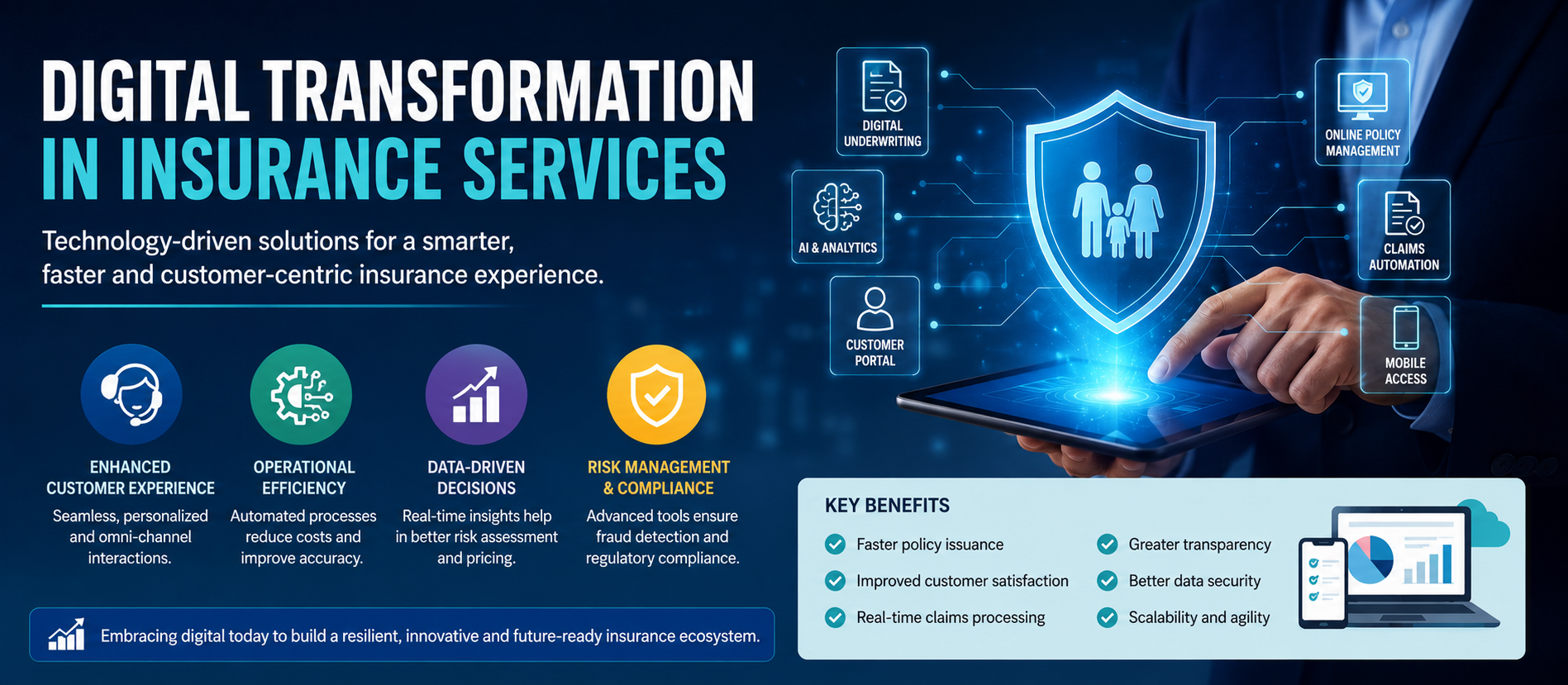
Digital transformation is changing how insurance companies design products, evaluate risk, sell policies, communicate with customers, process claims, detect fraud, and manage internal operations. What was once a paper-heavy and highly manual industry is increasingly becoming connected, data-driven, automated, mobile, and customer-focused. Digital transformation in insurance is not simply about replacing paperwork with software. It is about redesigning insurance processes around better data, faster decisions, intelligent automation, digital experiences, and stronger operational resilience.
The insurance industry is already using technologies such as artificial intelligence, cloud computing, connected devices, mobile applications, automation, advanced analytics, digital assistants, and image recognition. The National Association of Insurance Commissioners (NAIC) notes that insurtech is making insurance easier, faster, and more personalized while helping insurers streamline traditional processes. It also identifies AI, big data, connected devices, mobile tools, and automation as major forces reshaping insurance. NAIC Insurtech guidance.
AI is now being used across underwriting, pricing, customer service, claims, marketing, and fraud detection. NAIC's 2026 materials also show that regulators are increasingly focused on AI governance, cybersecurity, data quality, explainability, fairness, and third-party technology providers. NAIC Artificial Intelligence guidance.
This WordPress-ready guide from Digiifrog explains the meaning, benefits, technologies, implementation strategies, challenges, and future of digital transformation in insurance services. It is structured for SEO, AEO, GEO, and AI Search Optimization.
Website: www.digiifrog.com
What Is Digital Transformation in Insurance?
Digital transformation in insurance is the strategic use of digital technologies to redesign insurance products, workflows, customer experiences, decision-making, and business operations. It can involve converting paper processes into digital workflows, moving systems to cloud infrastructure, automating repetitive tasks, using AI to analyze data, creating mobile-first customer experiences, and connecting insurance operations through integrated platforms.
A simple example is a traditional claim process in which a customer calls an insurer, fills out paperwork, sends documents by email, waits for an adjuster, and receives updates manually. A digitally transformed process may allow the customer to report a claim through a mobile application, upload photographs, receive automated status notifications, have AI help classify the damage, and allow an adjuster to focus on complex cases.
The goal is not technology for its own sake. The goal is better outcomes: faster service, lower operational friction, improved risk management, more accurate decisions, stronger customer relationships, and sustainable business growth.
Why Digital Transformation Matters in Insurance
Insurance is fundamentally an information business. Applications, policy documents, claims records, customer interactions, financial data, property information, medical information, images, and risk data all influence insurance decisions.
Historically, much of this information was stored in disconnected systems or handled manually. Digital transformation creates opportunities to connect these information flows and turn them into usable intelligence.
Customers are also becoming accustomed to digital experiences in banking, retail, travel, healthcare, and other industries. They increasingly expect insurance companies to offer convenient online purchasing, mobile policy management, quick answers, digital payments, simple claims reporting, and transparent status updates.
NAIC notes that consumer expectations for faster digital services are contributing to insurance technology adoption. NAIC AI overview.
Key Technologies Driving Insurance Transformation
Artificial Intelligence
AI can analyze large volumes of structured and unstructured information. Insurance applications include underwriting, claims processing, customer service, pricing support, fraud detection, document analysis, and risk management.
Machine Learning
Machine-learning models can identify patterns in historical data and generate predictions or classifications. Insurers can use these models as decision-support tools, subject to appropriate validation, governance, and regulatory requirements.
Generative AI
Generative AI can summarize documents, draft communications, answer internal questions, extract information, and assist employees with knowledge-intensive tasks. It can be especially useful for navigating large policy manuals, claims files, underwriting submissions, and customer-service knowledge bases.
Cloud Computing
Cloud infrastructure can provide scalable computing, storage, analytics, application hosting, and integration capabilities. Cloud adoption can help insurers modernize legacy environments, although cybersecurity, data governance, vendor management, resilience, and regulatory requirements must be considered.
Internet of Things
Connected devices can provide information about driving, property conditions, equipment performance, health-related activity, or environmental conditions. NAIC identifies telematics, smart-home sensors, and wearable devices as examples of connected technologies influencing insurance. NAIC Insurtech overview.
Robotic Process Automation
Robotic process automation can automate repetitive, rule-based activities such as data entry, document routing, system updates, reconciliation, and administrative processing.
Application Programming Interfaces
APIs allow insurance systems to exchange data and services. They can connect policy administration systems, payment platforms, customer applications, external data providers, claims tools, and analytics systems.
Computer Vision
Computer vision allows software to interpret images and video. In insurance, it can support property inspections, vehicle damage assessment, document processing, and certain claims workflows.
Digital Transformation in Insurance Underwriting
Underwriting is one of the areas where digital transformation can have a major impact. Traditional underwriting often requires professionals to collect information from applications, inspections, documents, databases, and external sources.
Digital underwriting platforms can consolidate information into a single workflow. AI can extract relevant information from documents, identify missing fields, compare data sources, and highlight risk indicators for underwriter review.
Accelerated underwriting is another example. NAIC explains that some life insurers use external data, predictive models, and analytics to streamline applications, potentially reducing processing from weeks to hours for eligible applicants. NAIC Accelerated Underwriting.
💡 Key Insight
However, digital underwriting must be designed responsibly. Data quality, explainability, fairness, privacy, human oversight, and model validation are essential because underwriting decisions can directly affect consumers.
Digital Claims Processing
Claims are often the moment when customers most strongly judge an insurer. A fast and transparent claims experience can improve trust, while delays and repetitive paperwork can damage the relationship.
Digital claims platforms can allow customers to:
- Report a claim online or through a mobile app.
- Upload photographs and documents.
- Receive claim numbers immediately.
- Track claim status.
- Communicate with claims representatives digitally.
- Receive notifications about required actions.
- Access payment information.
AI can also support claims teams by analyzing photographs, extracting information from documents, estimating certain repair costs, identifying anomalies, and prioritizing cases. NAIC identifies AI-supported claims processing and image analysis as active insurance use cases. NAIC AI guidance.
Digital Customer Experience
Digital transformation changes the customer relationship from occasional interactions to continuous engagement. Customers can access policies, documents, payments, claims, and support through websites and mobile applications.
Useful digital customer features include:
- Online quotes.
- Digital policy issuance.
- Electronic documents.
- Mobile policy cards.
- Online payments.
- Automated reminders.
- Chat and virtual assistance.
- Digital claims reporting.
- Personalized recommendations.
- Self-service policy changes.
The best digital experience should not force every customer into automation. Customers should have an easy path to a human representative when a situation is complex, sensitive, or urgent.
AI-Powered Customer Service
AI assistants can answer common questions about billing, coverage terminology, policy documents, claim status, and administrative tasks. They can operate outside traditional business hours and reduce the workload of customer-service teams.
However, AI-generated answers can be inaccurate. NAIC specifically notes that generative AI systems can produce information that sounds correct but is wrong, so important insurance information should be reviewed carefully. NAIC AI guidance.
A strong model is therefore “AI first for simple tasks, human first for complex decisions.”
Digital Payments and Policy Administration
Digital payment systems can simplify premium collection, refunds, claim payments, and recurring transactions. Automated payment reminders can reduce missed payments, while electronic documents can reduce administrative costs and paper handling.
Modern policy administration platforms can also connect customer information, billing, underwriting, claims, and reporting into integrated workflows.
Personalization Through Data
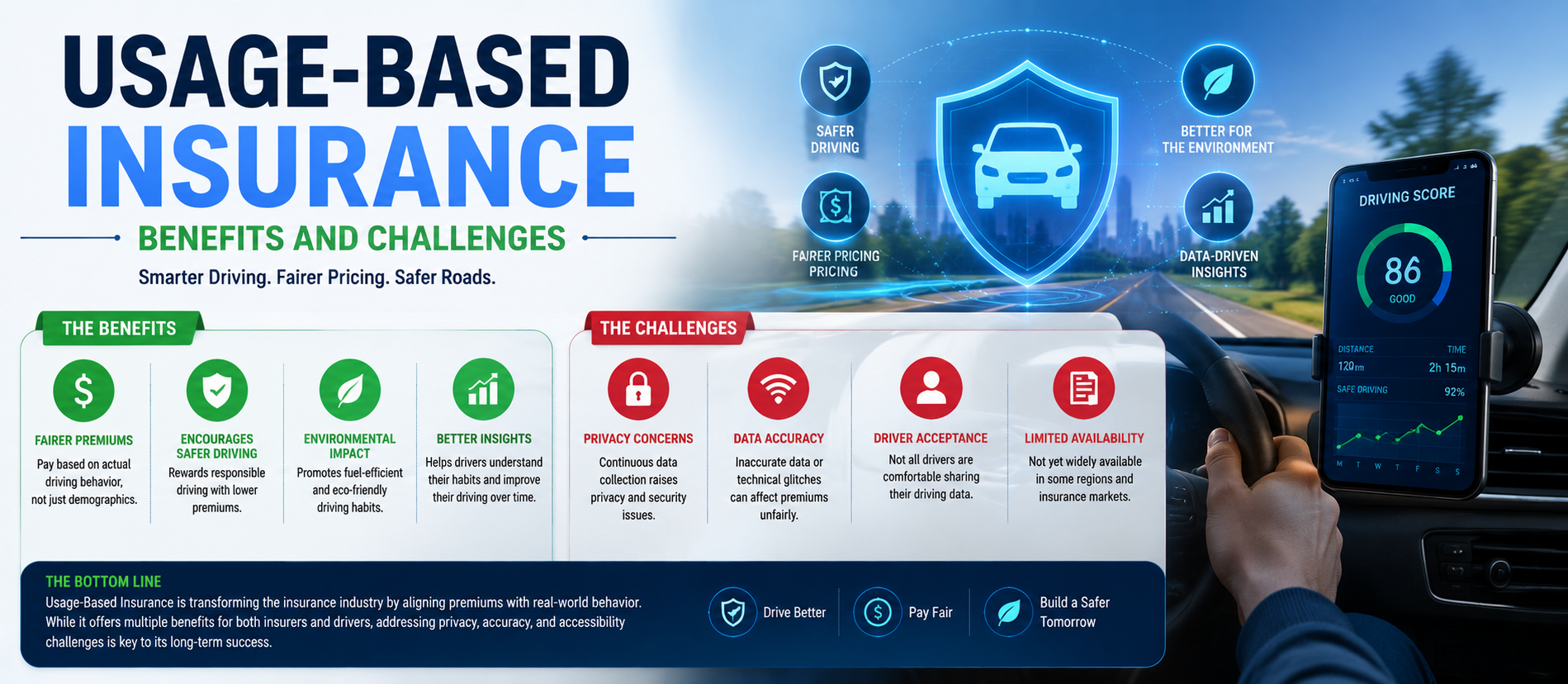
Digital insurance platforms can use permitted data to create more personalized experiences. For example, usage-based auto insurance can use telematics information to support behavior-based pricing. Smart-home technologies can identify leaks or smoke events and potentially help prevent losses.
Personalization must be balanced with privacy and transparency. Customers should understand how information is collected and used when required by applicable law.
Fraud Detection and Digital Risk Management
Fraud can create significant costs for insurers and policyholders. Digital analytics can help identify unusual claims patterns, duplicate information, suspicious documents, or other indicators that deserve investigation.
AI should generally be treated as a risk-detection tool rather than unquestionable proof of fraud. A suspicious model output should trigger appropriate investigation and human review rather than automatically labeling a customer as fraudulent.
Cybersecurity in Digital Insurance
Greater digital connectivity also creates greater cybersecurity exposure. Insurers hold sensitive personal, financial, health, property, and business information, making them attractive targets for cyberattacks.
A digital transformation strategy should therefore include:
- Strong identity and access management.
- Multi-factor authentication.
- Encryption.
- Network monitoring.
- Secure software development.
- Vendor risk management.
- Data-loss prevention.
- Incident-response plans.
- Backup and recovery systems.
- Employee cybersecurity training.
Cybersecurity should not be treated as a separate project that begins after digital transformation. It should be embedded into the architecture from the beginning.
Data Governance and Privacy
Data is one of the most valuable assets in a digital insurance organization, but it is also a major responsibility. Poor-quality data can create inaccurate decisions, while excessive data collection can increase privacy and security risks.
Effective data governance should define:
- Which data may be collected.
- Why the data is needed.
- Where the data is stored.
- Who can access it.
- How long it is retained.
- How its quality is monitored.
- How third-party data is evaluated.
- How customers' rights and privacy requirements are addressed.
Modernizing Legacy Insurance Systems
Legacy technology is one of the biggest obstacles to digital transformation. Many insurers operate core systems that were designed decades ago. These systems can contain critical business logic but may be difficult to integrate with modern applications.
A successful modernization program does not always require replacing everything at once. Insurers can use APIs, integration layers, cloud services, data platforms, and incremental modernization to connect older systems with newer capabilities.
The objective should be controlled modernization rather than disruption for its own sake.
Digital Transformation and Insurance Employees
Technology changes jobs, but digital transformation does not necessarily mean eliminating insurance professionals. AI can automate repetitive work while increasing the importance of skills such as judgment, communication, exception management, model oversight, compliance, data interpretation, and customer relationship management.
NAIC's current AI guidance similarly emphasizes that AI is more likely to support human workers than replace them entirely because professionals remain responsible for judgment and consumer interaction. NAIC AI guidance.
Benefits of Digital Transformation in Insurance
Faster Service
Automation and digital workflows can reduce processing time for quotes, policy changes, underwriting tasks, and claims.
Lower Operational Friction
Digital processes can reduce duplicate data entry, paper handling, manual routing, and repetitive administrative work.
Better Customer Experience
Mobile access, self-service, real-time notifications, and digital communication can make insurance easier to manage.
Improved Decision Support
Analytics and AI can help professionals analyze large volumes of information and identify relevant patterns.
Better Loss Prevention
Connected devices and predictive analytics can help insurers and customers identify risks before they become expensive claims.
Scalability
Cloud platforms and automation can help organizations process higher volumes without increasing every manual workload proportionally.
Challenges of Digital Transformation
Legacy Technology
Older systems can make integration expensive and complex.
Data Silos
Information spread across departments can make it difficult to create a reliable customer or risk view.
Change Management
Employees need training and clear communication when processes change.
Cybersecurity
More digital systems create more potential attack surfaces.
AI Bias
Models can produce unfair outcomes when training data, features, or processes contain bias.
Regulatory Requirements
Insurance is heavily regulated, and digital systems must comply with applicable consumer-protection, privacy, cybersecurity, and insurance requirements.
Third-Party Technology Risk
External data providers and technology vendors can become critical parts of insurance decision-making. NAIC's Third-Party Data and Models Working Group is examining governance, transparency, and accountability in this area. NAIC Big Data and AI Working Group.
AI Governance in Digital Insurance
As insurers use AI more extensively, governance becomes essential. NAIC adopted its Model Bulletin on the Use of Artificial Intelligence by Insurance Companies in December 2023. The framework emphasizes responsible AI use, governance, risk management, and compliance with applicable insurance laws.
In 2025 and 2026, NAIC has continued developing an AI Systems Evaluation Tool for regulators, including a pilot involving participating states. NAIC's 2026 strategic priorities also specifically include AI model governance, innovation oversight, and cyber threats. NAIC AI guidance and NAIC 2026 strategic priorities.
This means insurers should treat AI governance as part of core enterprise risk management rather than as a technology department responsibility alone.
How to Build a Digital Transformation Strategy
- Define business objectives: Decide whether the priority is claims speed, customer experience, underwriting efficiency, cost reduction, growth, or another measurable outcome.
- Map current workflows: Identify manual steps, bottlenecks, duplicate work, and customer pain points.
- Assess data quality: Determine which information is reliable, accessible, complete, and legally usable.
- Prioritize high-value use cases: Start with processes where automation can produce measurable benefits.
- Modernize integration: Connect core systems using APIs and appropriate integration architecture.
- Build governance: Establish privacy, security, AI, vendor, and data-management controls.
- Pilot before scaling: Test technology with a controlled group and measurable success criteria.
- Train employees: Give teams the skills needed to work effectively with new systems.
- Measure outcomes: Track customer, operational, financial, and risk metrics.
- Continuously improve: Review results and adjust processes as technology and regulations evolve.
Key Digital Insurance KPIs to Track
- Quote-to-bind conversion rate.
- Average policy issuance time.
- Average claim cycle time.
- Digital claims submission rate.
- Customer self-service adoption.
- Customer satisfaction.
- First-contact resolution rate.
- Automation rate.
- Manual processing time.
- Underwriting turnaround time.
- Fraud detection effectiveness.
- Digital payment adoption.
- System availability.
- Cybersecurity incidents.
- AI model accuracy and drift.
- Customer complaint rate.
Future of Digital Transformation in Insurance
The next stage of insurance transformation is likely to be more connected and intelligent. AI assistants may help employees navigate policies and claims. Computer vision may support faster inspections. Connected devices may provide more real-time risk information. Predictive analytics may help insurers move from responding to losses toward preventing them.
Generative AI and AI agents may also coordinate multiple workflow steps, such as collecting documents, summarizing submissions, identifying missing information, drafting communications, and routing cases. However, higher levels of automation will also increase the importance of human oversight, auditability, cybersecurity, and model governance.
NAIC's current regulatory work shows that the industry is moving toward more structured oversight of AI, external data, models, and technology-enabled decision-making. NAIC AI guidance.
Digital Transformation Checklist for Insurance Companies
- Define measurable transformation goals.
- Audit legacy systems.
- Map customer journeys.
- Identify manual workflows.
- Establish data governance.
- Implement cybersecurity by design.
- Evaluate cloud and API architecture.
- Prioritize AI use cases responsibly.
- Test AI models for accuracy and fairness.
- Maintain human oversight for high-impact decisions.
- Review third-party vendors.
- Train employees.
- Track digital KPIs.
- Review regulatory requirements regularly.
- Scale successful pilots systematically.
Frequently Asked Questions
What is digital transformation in insurance?
Digital transformation in insurance is the use of digital technologies to redesign insurance products, operations, customer experiences, risk assessment, claims, and business processes.
Why is digital transformation important for insurance companies?
It can improve processing speed, customer convenience, operational efficiency, decision support, data usage, and loss prevention while helping insurers compete in an increasingly digital marketplace.
How is AI used in insurance?
AI is used in underwriting, pricing, claims, customer service, marketing, fraud detection, document processing, image analysis, and other business functions.
Can digital transformation reduce insurance costs?
Automation and improved workflows can reduce some administrative costs, but transformation projects also require technology investment, employee training, cybersecurity, integration, and governance.
What role does cloud computing play in insurance transformation?
Cloud platforms can provide scalable infrastructure, data storage, analytics, application hosting, and integration capabilities that support modern digital insurance systems.
How does digital transformation improve claims?
Customers can report claims digitally, upload documents and photographs, receive status updates, and use self-service tools. AI can also assist with image analysis, document processing, and claim prioritization.
Is AI replacing insurance employees?
AI is more commonly being used to support and automate parts of insurance work. Human professionals remain important for judgment, complex cases, oversight, compliance, and customer relationships.
What are the biggest risks of digital insurance?
Major risks include cybersecurity, privacy problems, poor data quality, AI bias, model errors, legacy-system failures, third-party technology risk, and regulatory non-compliance.
What is the first step in insurance digital transformation?
Start by defining a specific business problem and measurable outcome, then map the existing workflow and identify where digital technology can create meaningful improvement.
Conclusion
Digital transformation in insurance services is changing the industry from a primarily transaction-based model toward a connected, data-driven, automated, and customer-centric model. AI, cloud computing, APIs, mobile applications, automation, connected devices, analytics, and digital claims platforms can improve many stages of the insurance lifecycle.
The most successful transformation programs, however, are not simply technology projects. They combine technology with process redesign, employee training, data governance, cybersecurity, customer experience, regulatory compliance, and measurable business outcomes.
Insurers that modernize responsibly can create faster service, better decision support, more efficient operations, and stronger customer relationships. At the same time, they must recognize that digital capabilities introduce new responsibilities around privacy, fairness, transparency, cybersecurity, and third-party risk.
The future of insurance will likely be increasingly digital, but the strongest organizations will be those that combine intelligent technology with human judgment and responsible governance.
Digiifrog
Website: www.digiifrog.com
Insurance technology, AI governance, privacy requirements, cybersecurity obligations, and regulatory standards vary by country, state, insurer, and insurance product. This article is educational and is not personalized insurance, legal, regulatory, or financial advice. Organizations should obtain appropriate professional guidance before implementing technology in regulated insurance workflows.
Ready to Grow?
Talk to us about a strategy tailored to your brand — we will help you stand out in search, AI discovery and social.

Comments (0)
Log in to leave a comment.