📋 Quick Summary
In this article:
What Is Usage-Based Insurance?
Best Practices Before Enrolling
Introduction
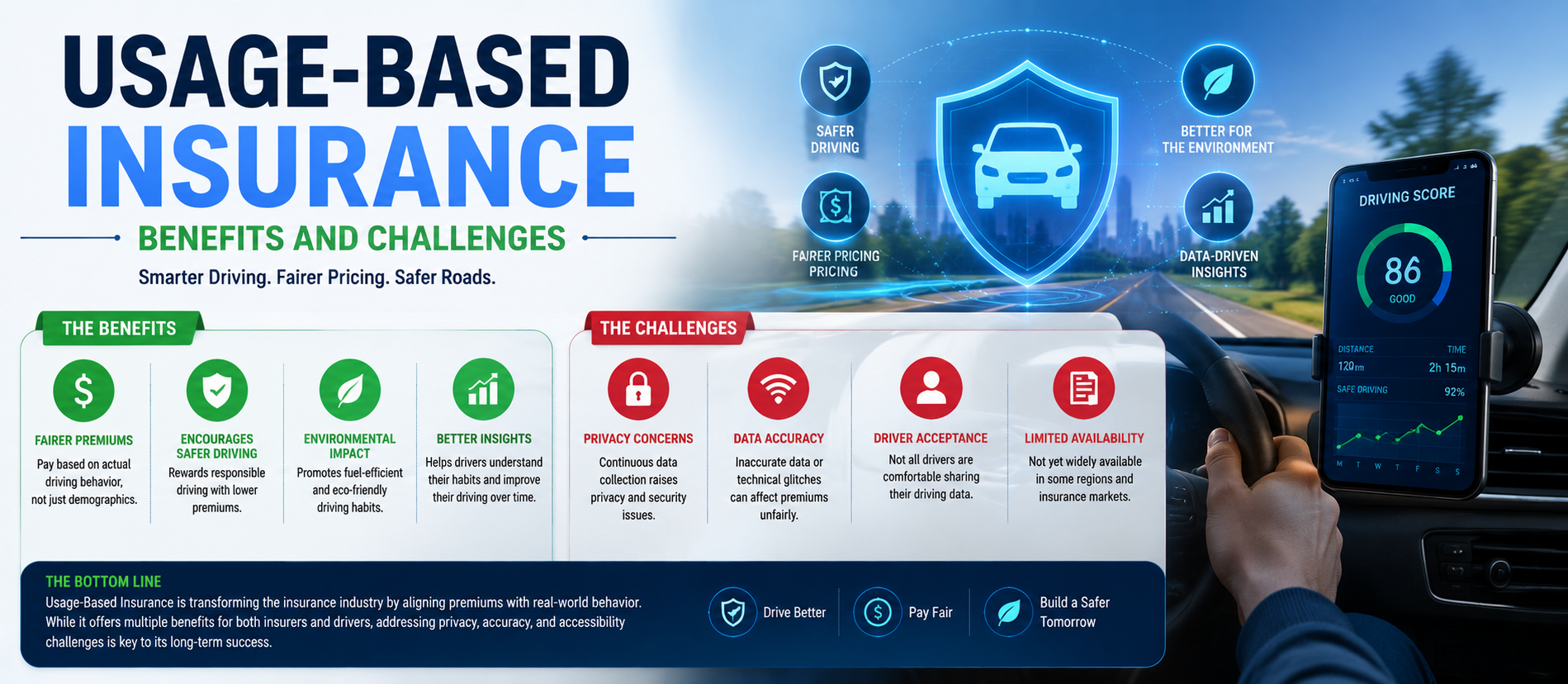
Usage-Based Insurance (UBI) is transforming the insurance industry by calculating premiums using real driving behavior instead of relying solely on traditional rating factors. Using telematics devices, smartphone apps, or connected vehicle technology, insurers can assess mileage, braking, acceleration, speed, time of travel, and other driving patterns. This approach creates opportunities for safer drivers to reduce premiums while helping insurers improve risk assessment.
This WordPress-ready guide from Digiifrog explores the benefits and challenges of Usage-Based Insurance. It is optimized for SEO, AEO, GEO, and AI Search Optimization.
Website: www.digiifrog.com
What Is Usage-Based Insurance?
Usage-Based Insurance is a pricing model where insurance premiums are influenced by how, when, and how much a vehicle is driven. Programs may use plug-in telematics devices, built-in vehicle systems, or mobile applications to collect driving data.
Key Benefits
- Potential discounts for safe driving.
- Fairer, behavior-based premium calculations.
- Encourages safer driving habits.
- Personalized insurance coverage.
- Improved accident response and vehicle tracking.
- Greater transparency into driving performance.
Common Challenges
- Privacy and data security concerns.
- Continuous monitoring may not suit every driver.
- Driving scores differ between insurers.
- Technology compatibility and connectivity issues.
- Premiums may increase for risky driving behavior.
Best Practices Before Enrolling
- Read the insurer's privacy policy.
- Understand how driving data affects premiums.
- Compare multiple UBI programs.
- Review policy exclusions and conditions.
- Monitor your driving score regularly.
Frequently Asked Questions
Can Usage-Based Insurance reduce my premium?
Many insurers offer discounts for consistently safe driving, although savings depend on the program and your driving behavior.
Does UBI track my location?
Some programs collect location information while others primarily evaluate driving behavior. Always review the insurer's data practices before enrolling.
Conclusion
Usage-Based Insurance represents a major shift toward personalized, data-driven insurance. Understanding both the advantages and limitations helps consumers choose policies that align with their driving habits, privacy preferences, and financial goals.
Digiifrog
Website: www.digiifrog.com
This draft is intended for expansion into a fully original 2,200–2,800+ word article with PAYD vs. PHYD comparisons, telematics technologies, privacy regulations, insurer case studies, implementation checklists, and 25+ AEO-focused FAQs.
Ready to Grow?
Talk to us about a strategy tailored to your brand — we will help you stand out in search, AI discovery and social.

Comments (0)
Log in to leave a comment.