📋 Quick Summary
In this article:
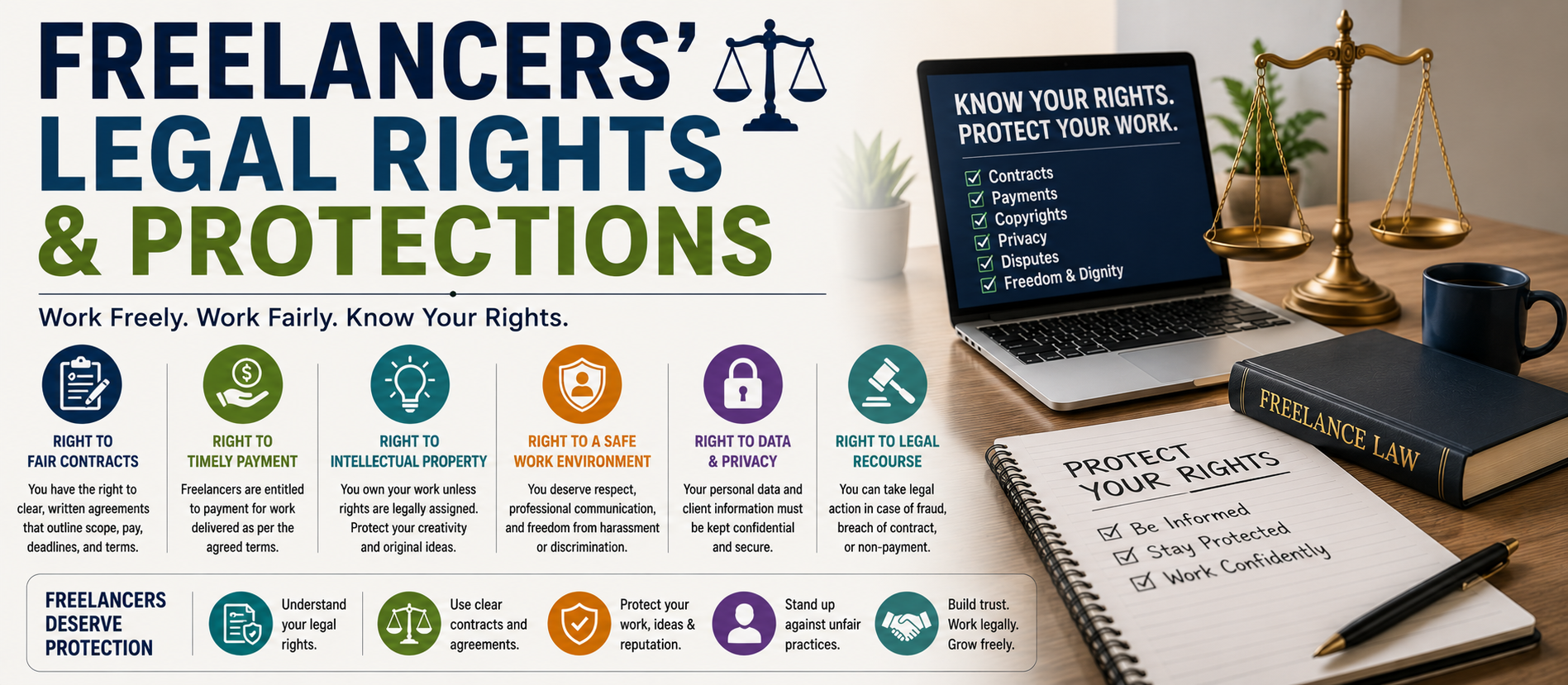
Key Legal Rights of Freelancers
SEO, AEO, GEO & AI Search Optimization
Should every freelancer use a contract?
Freelancing has become a major part of the global workforce. Designers, developers, writers, consultants, marketers, photographers, and many other professionals work independently for clients across the world. While freelancing offers flexibility and freedom, it also creates unique legal responsibilities and risks. Understanding your legal rights helps protect your income, intellectual property, reputation, and business relationships.
💡 Key Insight
This WordPress-ready guide explains the legal rights of freelancers, contract essentials, payment protection, intellectual property ownership, taxation, dispute resolution, and best practices for building a legally secure freelance business.
Who Is a Freelancer?
A freelancer is an independent professional who provides services to clients without being a permanent employee. Legal rights and obligations vary depending on local laws and the terms of each contract.
Key Legal Rights of Freelancers
- Right to receive agreed payment
- Right to negotiate contract terms
- Ownership or licensing of intellectual property as agreed
- Protection against unlawful discrimination where applicable
- Right to pursue legal remedies for contract breaches
Why Written Contracts Matter
- Define project scope
- Specify payment terms
- Set deadlines and milestones
- Clarify ownership of deliverables
- Include confidentiality provisions
- Establish dispute resolution procedures
Payment Protection
Invoices, deposits, milestone payments, and written acceptance criteria help reduce payment disputes. Keep detailed records of all communications and transactions.
Intellectual Property Rights
- Copyright ownership
- Work-for-hire provisions
- Trademark considerations
- Licensing agreements
- Portfolio usage rights
Tax and Business Compliance
- Register your business where required
- Maintain accounting records
- Meet tax filing obligations
- Comply with local licensing requirements
Handling Client Disputes
- Review the contract
- Communicate professionally
- Document all evidence
- Consider mediation or arbitration
- Seek qualified legal advice for significant claims
Common Mistakes to Avoid
- Working without a written agreement
- Ignoring tax obligations
- Failing to define intellectual property ownership
- Accepting vague project requirements
SEO, AEO, GEO & AI Search Optimization
SEO, AEO, GEO, and AI Search Optimization improve the visibility of educational legal content across Google, Bing, AI-powered search platforms, and answer engines.
Frequently Asked Questions
Should every freelancer use a contract?
Yes. Written agreements help clarify expectations and reduce disputes.
Who owns freelance work?
Ownership depends on applicable law and the terms agreed between the freelancer and the client.
Conclusion
Freelancers can protect their businesses by using clear contracts, maintaining accurate records, understanding intellectual property rights, and complying with tax and legal requirements. Professional legal advice is recommended for complex or high-value projects.
Digiifrog
Website: www.digiifrog.com
Digital Marketing, SEO, AEO, GEO & AI Search Solutions for Modern Businesses.
Ready to Grow?
Talk to us about a strategy tailored to your brand — we will help you stand out in search, AI discovery and social.


Comments (0)
Log in to leave a comment.