📋 Quick Summary
In this article:
Why Furnace Maintenance Is Important
Understanding How a Furnace Works
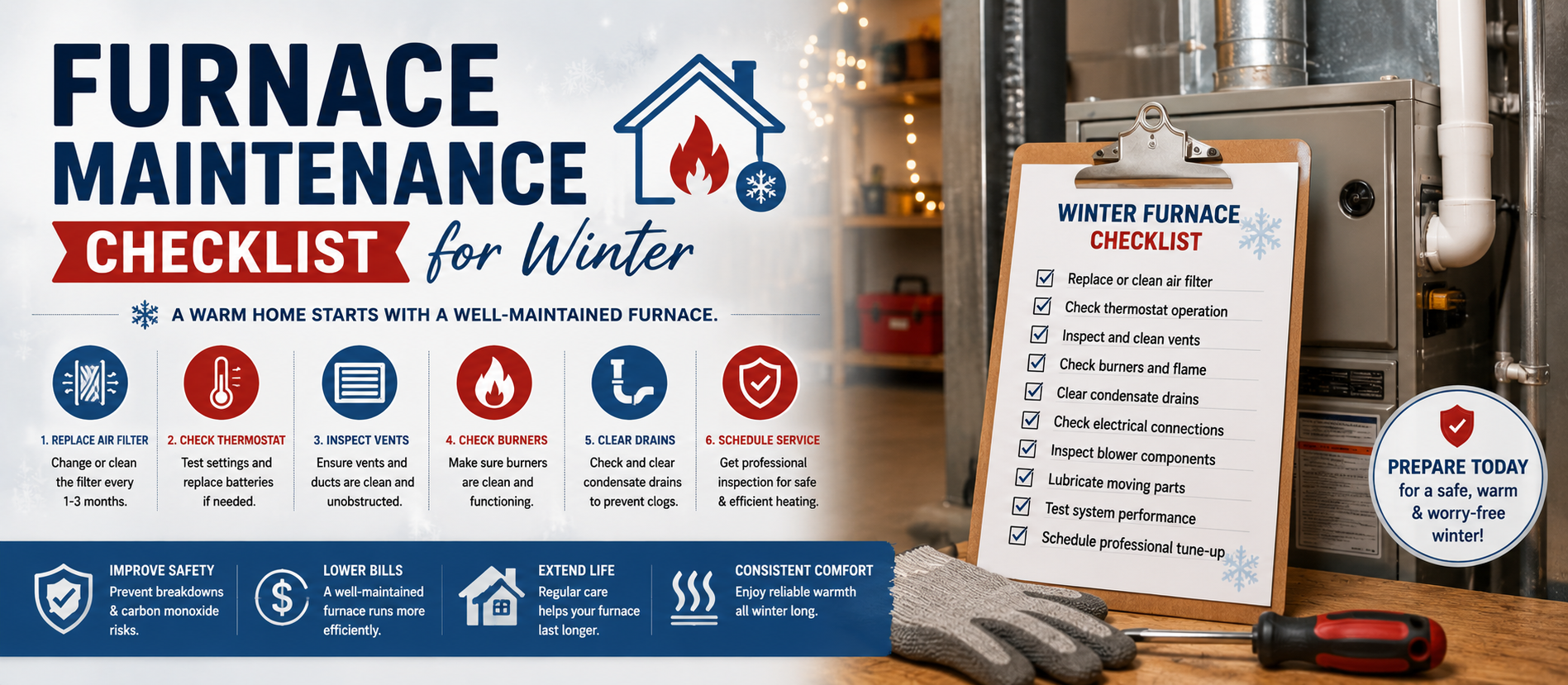
Winter Furnace Maintenance Checklist
1. Replace or Clean Air Filters
2. Test Your Thermostat
3. Inspect Furnace Vents and Registers
4. Clean Around the Furnace
5. Inspect the Blower Assembly
6. Check Electrical Connections
7. Examine the Heat Exchanger
8. Inspect Burners and Ignition Systems
9. Check Carbon Monoxide Detectors
As temperatures begin to drop, homeowners rely heavily on their heating systems to maintain comfort and safety throughout the winter months. A properly functioning furnace not only keeps your family warm but also improves energy efficiency, reduces utility costs, and minimizes the risk of unexpected breakdowns during the coldest days of the year.
💡 Key Insight
Unfortunately, many homeowners neglect furnace maintenance until problems arise. A poorly maintained furnace can lead to higher energy bills, uneven heating, reduced indoor air quality, costly repairs, and even safety hazards. Regular maintenance is essential for maximizing performance and extending the lifespan of your heating system.
This comprehensive furnace maintenance checklist will help homeowners prepare their heating systems for winter while improving efficiency, safety, and reliability.
Published by Digiifrog
Website: www.digiifrog.com
Why Furnace Maintenance Is Important
Your furnace operates continuously during winter, making it one of the hardest-working systems in your home. Preventive maintenance ensures the system functions efficiently while reducing wear and tear.
- Improves heating efficiency
- Reduces energy consumption
- Lowers utility bills
- Extends furnace lifespan
- Improves indoor air quality
- Reduces repair costs
- Enhances home safety
- Prevents unexpected breakdowns
Routine inspections can identify small issues before they become expensive emergencies.
Understanding How a Furnace Works
Before performing maintenance, homeowners should understand the basic components of a furnace.
- Thermostat
- Burners
- Heat exchanger
- Blower motor
- Air filters
- Flue system
- Electrical controls
- Ductwork
Each component plays a crucial role in heating performance and system efficiency.
Winter Furnace Maintenance Checklist
1. Replace or Clean Air Filters
Dirty filters restrict airflow and force the furnace to work harder.
- Check filters monthly
- Replace disposable filters regularly
- Clean reusable filters according to manufacturer recommendations
- Select the correct filter size
Clean filters improve efficiency, airflow, and indoor air quality.
2. Test Your Thermostat
The thermostat controls furnace operation and temperature regulation.
- Verify accurate temperature readings
- Check programmable schedules
- Replace batteries if needed
- Consider upgrading to a smart thermostat
A properly functioning thermostat improves comfort and energy savings.
3. Inspect Furnace Vents and Registers
Blocked vents can restrict airflow and reduce heating performance.
- Remove furniture blocking vents
- Clean dust accumulation
- Check for damaged registers
- Ensure balanced airflow throughout the home
4. Clean Around the Furnace
The area surrounding the furnace should remain clear.
- Remove clutter
- Keep flammable materials away
- Maintain adequate airflow space
- Vacuum dust accumulation nearby
5. Inspect the Blower Assembly
The blower distributes heated air throughout the home.
- Inspect for dust buildup
- Check motor operation
- Listen for unusual noises
- Verify proper airflow
A clean blower improves heating efficiency.
6. Check Electrical Connections
Electrical components must remain secure and functional.
- Inspect visible wiring
- Look for loose connections
- Monitor breaker performance
- Check control panels
Electrical issues should always be handled by qualified professionals.
7. Examine the Heat Exchanger
The heat exchanger is one of the most important furnace components.
- Check for visible cracks
- Inspect for corrosion
- Schedule professional evaluation
Damaged heat exchangers can create serious safety concerns.
8. Inspect Burners and Ignition Systems
Proper burner operation is essential for efficient heating.
- Check flame appearance
- Inspect ignition systems
- Monitor startup performance
- Clean burner surfaces if necessary
9. Check Carbon Monoxide Detectors
Carbon monoxide safety is critical during heating season.
- Test detectors monthly
- Replace batteries
- Install detectors near sleeping areas
- Replace aging detectors
10. Inspect the Flue and Venting System
Proper venting ensures safe exhaust removal.
- Look for blockages
- Inspect vent pipes
- Check for corrosion
- Ensure proper airflow
Improve Furnace Energy Efficiency
Energy efficiency reduces operating costs and environmental impact.
Efficiency Improvement Tips
- Seal air leaks around windows and doors
- Add insulation where necessary
- Use programmable thermostats
- Schedule annual tune-ups
- Keep filters clean
- Maintain balanced airflow
Even small improvements can significantly lower winter energy bills.
Signs Your Furnace Needs Professional Attention
- Uneven heating
- Frequent cycling
- Strange noises
- Persistent odors
- Higher utility bills
- Poor airflow
- Yellow burner flames
- Frequent repairs
⚠ Watch Out
Addressing these warning signs early can prevent major system failures.
Benefits of Professional Furnace Maintenance
While homeowners can perform many basic maintenance tasks, professional inspections provide additional protection.
- Comprehensive safety checks
- Advanced diagnostics
- Professional cleaning
- Performance optimization
- Warranty protection
- Longer equipment lifespan
Annual professional maintenance is highly recommended before winter begins.
Common Furnace Problems During Winter
Dirty Filters
Restricted airflow reduces efficiency and increases wear.
Thermostat Issues
Incorrect settings or malfunctioning controls can impact heating performance.
Pilot or Ignition Problems
Ignition failures may prevent the furnace from starting.
Mechanical Wear
Motors, belts, and bearings can deteriorate over time.
Airflow Restrictions
Blocked ducts and vents can reduce heating effectiveness.
Indoor Air Quality and Furnace Maintenance
Your furnace plays an important role in indoor air quality.
- Replace filters regularly
- Clean ductwork when needed
- Control humidity levels
- Reduce dust accumulation
- Use air purification systems
Cleaner indoor air contributes to healthier living conditions.
Smart Technology for Furnace Management
Modern heating systems increasingly incorporate smart technology.
- Smart thermostats
- Remote monitoring
- Energy usage tracking
- Predictive maintenance alerts
- Automated scheduling
These technologies help homeowners improve efficiency and convenience.
Seasonal Heating Preparation Tips
- Schedule maintenance before winter
- Test the heating system early
- Inspect insulation
- Check weather stripping
- Prepare emergency heating plans
Preparation reduces the likelihood of mid-winter emergencies.
Safety Tips for Homeowners
- Never store flammable materials near the furnace
- Install carbon monoxide detectors
- Keep vents unobstructed
- Follow manufacturer recommendations
- Schedule annual professional inspections
Safety should always be a priority during furnace operation.
AEO: Frequently Asked Questions
How often should furnace filters be replaced?
Most filters should be checked monthly and replaced every 1–3 months depending on usage and household conditions.
When should furnace maintenance be performed?
The ideal time is before winter begins, typically during autumn.
Can furnace maintenance lower energy bills?
Yes. Proper maintenance improves efficiency and reduces energy consumption.
How long does a furnace typically last?
Most furnaces last between 15 and 25 years with proper maintenance.
Should homeowners schedule professional inspections?
Yes. Annual professional inspections help identify safety concerns and optimize performance.
SEO, GEO, and AI Search Optimization Insights
Homeowners increasingly search phrases such as "winter furnace maintenance checklist," "how to maintain a furnace," and "ways to improve furnace efficiency." AI-powered search platforms prioritize comprehensive content that directly answers these questions while providing practical solutions.
Articles optimized for SEO, AEO, GEO, and AI Search benefit from structured headings, FAQs, actionable tips, and detailed explanations that satisfy both users and search engines.
Final Thoughts
Regular furnace maintenance is essential for keeping your home warm, comfortable, and safe throughout the winter season. By following a proactive maintenance checklist, homeowners can reduce energy costs, improve indoor air quality, prevent breakdowns, and extend the life of their heating systems.
Whether you perform basic maintenance yourself or schedule professional inspections, investing in furnace care before winter arrives is one of the smartest home maintenance decisions you can make.
Digiifrog
Website: www.digiifrog.com
Digiifrog specializes in SEO, AEO, GEO, AI Search optimization, content marketing, and digital growth strategies that help businesses thrive in the evolving search landscape.
Ready to Grow?
Talk to us about a strategy tailored to your brand — we will help you stand out in search, AI discovery and social.

Comments (0)
Log in to leave a comment.