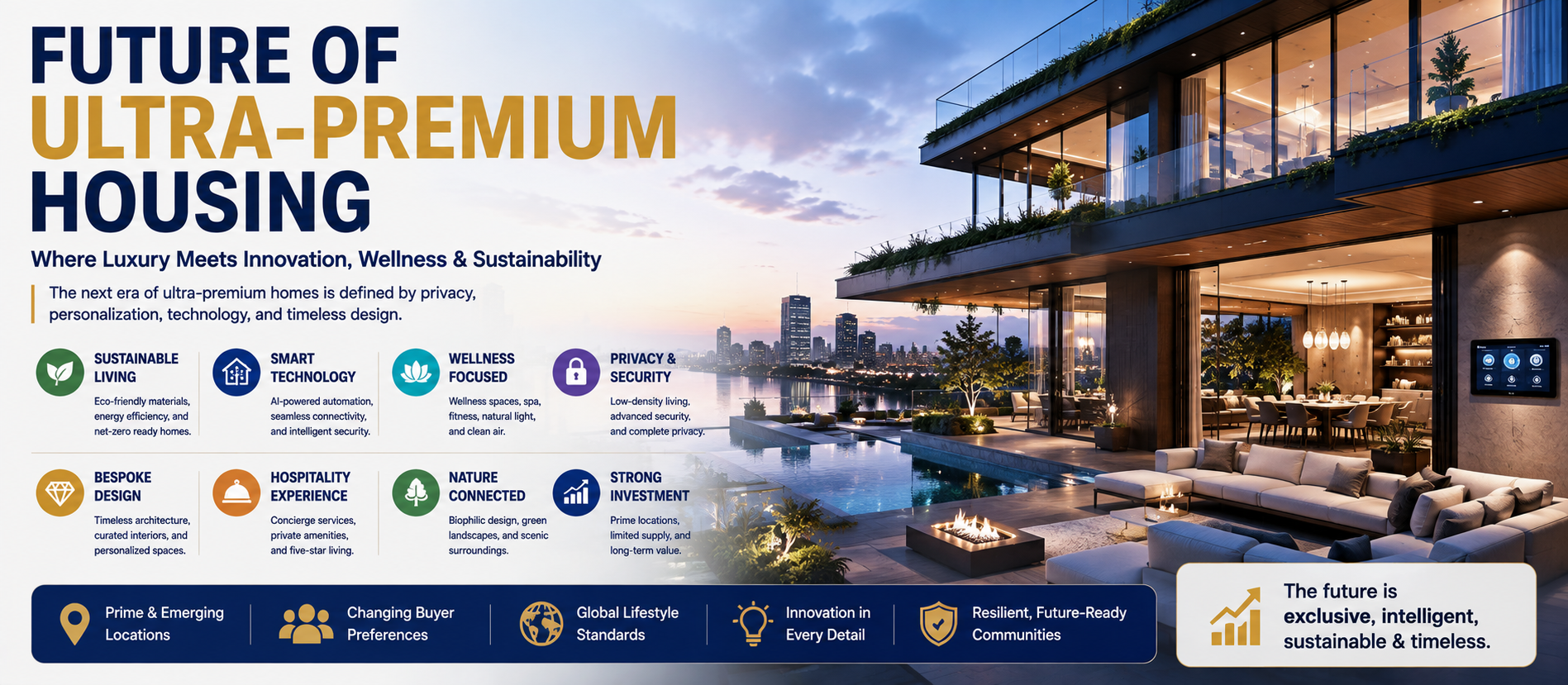
📋 Quick Summary
In this article:
What Is Ultra-Premium Housing?
1. Privacy Will Become a Major Luxury Feature
2. Quiet Luxury Will Influence Architecture
3. Wellness Will Move from Amenity to Infrastructure
4. Smart Homes Will Become More Invisible
5. AI Will Change How Luxury Homes Are Managed
6. Sustainability Will Become Part of Long-Term Value
7. Branded Residences Will Continue to Expand
8. Hospitality-Level Service Will Become More Important
9. Bespoke Design Will Challenge Standardized Luxury
10. Multigenerational Living Will Influence High-End Design
11. Location Will Remain Important, but Lifestyle Geography Will Expand
Focus Keyword: Future of Ultra-Premium Housing
Ultra-premium housing is entering a new phase. In the past, luxury was often defined by size, expensive materials, prestigious addresses, and visible symbols of wealth. These factors still matter, but they are no longer enough.
The future of ultra-premium housing is becoming more personal, private, technology-enabled, wellness-focused, and experience-driven. Wealthy buyers increasingly want homes that work as private retreats, productive spaces, family assets, and long-term lifestyle platforms.
A large penthouse or villa may still attract attention, but the next generation of luxury buyers is also asking different questions. How private is the residence? How healthy is the indoor environment? Can the home adapt to changing family needs? Is the technology simple and reliable? How secure is the building? What level of service is available? Can the property remain desirable over time?
These changing expectations are reshaping architecture, development, property management, and real estate marketing.
What Is Ultra-Premium Housing?
Ultra-premium housing represents the highest end of the residential property market. The exact price level differs between countries and cities. More importantly, this category is defined by a combination of scarcity, location, design quality, privacy, service, customization, and buyer experience.
An ultra-premium home may be a penthouse, waterfront residence, private villa, branded apartment, historic estate, or a low-density residential development. It may also be part of a carefully managed community with highly personalized services.
The future of this segment will depend less on simply adding more expensive finishes. Buyers increasingly expect a complete living experience.
1. Privacy Will Become a Major Luxury Feature
For ultra-high-net-worth buyers, privacy is becoming a form of value. A prestigious address may attract interest, but many buyers also want controlled access, discreet arrivals, private lifts, secure parking, low-density floors, and carefully designed separation from public areas.
Future projects may place greater emphasis on private circulation. Residents may move from secure arrival areas to their homes with minimal exposure. Buildings may also use layered access systems that allow residents, staff, guests, and service providers to enter different areas without creating unnecessary disruption.
Privacy will also affect digital design. Smart homes collect data, so future luxury projects will need to consider how resident information is stored, protected, and controlled.
2. Quiet Luxury Will Influence Architecture
The idea of luxury is moving away from unnecessary visual excess. Many affluent buyers now prefer refined materials, strong craftsmanship, comfortable layouts, and timeless design over spaces designed only to display wealth.
This does not mean ultra-premium homes will become simple. Instead, the complexity may move behind the walls. Climate systems, security, lighting, acoustics, automation, and service infrastructure can become highly sophisticated while the visible design remains calm and personal.
Natural stone, wood, metal, handcrafted finishes, and custom furniture may remain important. However, quality, provenance, durability, and design coherence will matter as much as the price of individual materials.
3. Wellness Will Move from Amenity to Infrastructure
Future ultra-premium homes will increasingly be designed around health and well-being. A gym and spa will no longer be the only wellness features. Buyers may expect natural light, fresh-air strategies, strong acoustic design, water quality, thermal comfort, green views, and spaces for exercise, recovery, and relaxation.
Private wellness rooms may include meditation areas, yoga spaces, saunas, treatment rooms, or recovery equipment. At the building level, residents may look for wellness clubs, landscaped walking areas, pools, sports facilities, and professionally managed health-oriented services.
The most successful projects will integrate wellness into architecture rather than treating it as a decorative addition.
4. Smart Homes Will Become More Invisible
Technology will remain important, but future luxury will not be defined by having the largest number of screens. Buyers will expect technology to work quietly in the background.
Smart systems may manage lighting, temperature, shading, entertainment, security, air quality, and energy consumption. Artificial intelligence may help automate routine preferences and identify unusual equipment performance.
💡 Key Insight
However, convenience must not create complexity. Residents should still be able to control essential parts of their home easily if an application, network, or automated system fails.
The best future smart homes will combine automation with reliability, cybersecurity, manual control, and simple user experiences.
5. AI Will Change How Luxury Homes Are Managed
Artificial intelligence can support the management of ultra-premium properties. AI-assisted systems may analyze energy use, monitor equipment patterns, support concierge operations, organize maintenance requests, and help property managers respond to recurring issues.
AI may also improve personalization. A home could adapt lighting or temperature based on preferences, while building services could use data to improve scheduling and maintenance.
Human judgment will remain important. Luxury living is highly personal, and automated systems should support residents rather than make unexplained decisions for them.
6. Sustainability Will Become Part of Long-Term Value
Future ultra-premium buyers will increasingly evaluate how efficiently a property uses energy and water. Climate resilience, responsible materials, durable construction, efficient systems, and landscape planning can affect both operating costs and long-term desirability.
Sustainability will also become more practical. Buyers may ask whether a property is prepared for heat, water stress, severe weather, or changing insurance and maintenance requirements.
Luxury developments may incorporate solar energy where suitable, efficient building systems, water management, shaded outdoor areas, native planting, and materials selected for durability.
The future opportunity is to combine sustainability with comfort. A sustainable home should not feel like a compromise. In the ultra-premium segment, environmental performance can become part of a better living experience.
7. Branded Residences Will Continue to Expand
Branded residences are becoming an important part of the luxury property market. These developments connect residential real estate with recognized hospitality, lifestyle, design, or luxury brands.
The attraction is not only the name. Buyers may value consistent design standards, professional services, curated amenities, and a familiar operating model. In the strongest projects, the brand supports the full experience instead of simply appearing in marketing materials.
The future will likely bring more specialized branded residences. Some may focus on hospitality, wellness, fashion, architecture, automotive design, or lifestyle communities.
However, a brand alone cannot guarantee long-term value. Buyers should understand the actual services, management structure, costs, brand commitments, and legal arrangements behind the project.
8. Hospitality-Level Service Will Become More Important
Ultra-premium residential projects increasingly compete with luxury hotels and private clubs for buyer attention. As a result, residents may expect concierge support, valet services, security, housekeeping options, private dining arrangements, event planning, and personalized assistance.
This service layer can become a major difference between an expensive apartment and a truly managed ultra-premium residence.
The challenge is maintaining service quality over time. Developers and operators will need strong management models, trained teams, realistic maintenance structures, and clear responsibilities.
9. Bespoke Design Will Challenge Standardized Luxury
Ultra-premium buyers often want homes that reflect individual needs. A standard luxury layout may not be suitable for a collector, entrepreneur, multigenerational family, global traveler, or buyer who works extensively from home.
Future projects may therefore offer more flexible planning. Some buyers may purchase unfinished or partially finished spaces and work with architects and designers to create highly customized interiors.
Possible bespoke spaces include private offices, libraries, art rooms, entertainment lounges, wine storage, wellness suites, family rooms, staff areas, and specialized storage.
Flexibility can also support long-term ownership. A room used as an office today may later become a guest suite, study, or care space.
10. Multigenerational Living Will Influence High-End Design
Many wealthy households are planning for longer-term family needs. Future ultra-premium homes may include separate suites, multiple living areas, flexible accessibility features, and private spaces that allow several generations to live together without losing independence.
This can influence floor plans, lift access, bathroom design, lighting, and the relationship between private and shared spaces.
Legacy planning may also become more important. Some buyers will evaluate properties not only as personal residences but as assets intended to remain useful for future family generations.
11. Location Will Remain Important, but Lifestyle Geography Will Expand
Traditional luxury locations will continue to matter. However, affluent buyers increasingly have the ability to divide their time across several cities or countries.
This may increase demand for homes in global business hubs, resort communities, waterfront locations, private countryside developments, and areas that combine connectivity with privacy.
The ideal location may therefore depend on lifestyle rather than commuting distance alone. Buyers may prioritize airport access, healthcare, schools, culture, natural surroundings, and the ability to move easily between multiple residences.
12. Security Will Become More Sophisticated
Security in ultra-premium housing will go beyond visible guards and gates. Future systems may combine trained personnel, secure building design, intelligent access control, cameras, sensors, and cybersecurity.
The goal should be effective security without making everyday life feel uncomfortable. The best systems can remain discreet while providing clear control over access.
Cybersecurity will become particularly important as more building and home systems become connected. A smart home can create new vulnerabilities if networks and devices are not properly protected.
13. Low Density Will Carry a Premium
In crowded urban markets, exclusivity can be created through limited density. Fewer homes per floor, private lobbies, larger terraces, dedicated lifts, and more space between residences can improve privacy and reduce noise.
Low-density developments may also provide larger landscaped areas and a greater sense of separation from surrounding city activity.
This does not mean every future ultra-premium project will be a villa. High-rise buildings can also create privacy through thoughtful planning and limited numbers of residences.
14. The Home Will Become a Personal Ecosystem
The future ultra-premium residence will not function only as a place to sleep. It may combine living, working, exercising, entertaining, recovering, learning, and family life.
This requires better planning. Instead of adding more rooms, architects may focus on adaptable spaces and smoother transitions between indoor and outdoor areas.
Private terraces, gardens, outdoor kitchens, shaded spaces, and green views can become important because they expand the usable experience of the home.
15. Data Will Improve Property Operations
Connected buildings can produce information about energy use, equipment performance, water consumption, and maintenance activity. When managed responsibly, this information can help operators identify inefficiencies and plan maintenance before problems become disruptive.
For ultra-premium buildings, the goal is reliability. Residents expect systems to work without repeated interruptions. Data-driven maintenance may therefore become an important part of luxury property management.
Data collection must also be balanced with privacy. Operators should define what information is collected, why it is needed, and how it is protected.
16. Digital Property Experiences Will Improve Sales
Future buyers will increasingly begin their research online. High-quality photography, architectural visualization, virtual tours, video walkthroughs, and digital documentation can make early property evaluation more efficient.
AI may also support property discovery and personalized recommendations. However, digital presentation must remain truthful. Virtual staging, enhanced imagery, and AI-generated visuals should not mislead buyers about the actual property.
For ultra-premium real estate, digital marketing can attract global interest, while private in-person experiences will remain essential for final decisions.
17. Sustainability and Climate Resilience Will Affect Investment Decisions
Climate-related risks can influence property desirability. Flood exposure, heat, wildfire risk, water availability, and rising insurance costs may affect how wealthy buyers evaluate locations.
Future ultra-premium projects may invest more heavily in resilient infrastructure, careful site selection, drainage, energy systems, backup power, and building materials suited to local conditions.
A beautiful home that becomes difficult or expensive to operate may lose some of its appeal. Resilience can therefore become part of long-term luxury value.
How Developers Can Prepare for the Future
Developers should begin by understanding the difference between expensive features and meaningful value.
Focus on the Buyer Experience
Map the entire resident journey, from first inquiry and property visit to move-in, daily living, maintenance, and resale support.
Design for Flexibility
Create spaces that can adapt to changing lifestyles and family needs.
Invest in Reliable Technology
Choose systems that are secure, maintainable, and easy to operate. Avoid technology that exists only as a marketing feature.
Build Real Wellness Value
Prioritize daylight, air quality, acoustics, outdoor space, movement, and recovery rather than adding isolated amenities.
Plan for Long-Term Operations
A luxury development should still deliver a high-quality experience years after handover. Management and maintenance strategy should be considered early.
SEO, AEO, GEO, and AI Search Optimization for Ultra-Premium Real Estate
Developers, brokers, and luxury property brands also need to explain their value clearly online. Traditional SEO helps important pages become discoverable. AEO focuses on answering direct questions. GEO and AI Search optimization focus on clear, structured, useful information that generative search systems can understand.
Useful content may answer questions such as:
- What makes a residence ultra-premium?
- What services are included in a branded residence?
- How does a smart luxury home improve daily living?
- Which wellness features are integrated into the project?
- What makes the location valuable?
Strong content should use clear headings, direct answers, accurate specifications, original project information, and transparent descriptions. AI Search optimization should never replace accurate information with exaggerated marketing language.
Frequently Asked Questions
What is ultra-premium housing?
Ultra-premium housing is the highest end of residential real estate, usually characterized by scarcity, exceptional location, privacy, design quality, customization, high-level services, and premium amenities.
What will define future luxury homes?
Future luxury homes are likely to place greater emphasis on privacy, wellness, smart technology, sustainability, bespoke design, resilience, and professionally managed services.
Are branded residences growing?
Branded residences are expanding in major luxury markets because buyers value recognizable standards, service, curated amenities, and differentiated residential experiences.
Will AI replace luxury property professionals?
AI can support research, personalization, operations, and routine tasks. Human expertise remains important for relationships, negotiations, design decisions, and complex real estate transactions.
Why is sustainability important in ultra-premium housing?
Sustainability can improve efficiency, comfort, resilience, and long-term property value while reducing unnecessary environmental impact.
Final Thoughts
The future of ultra-premium housing will not be defined only by how much a home costs or how large it is. The strongest projects will combine privacy, exceptional design, wellness, intelligent technology, resilient infrastructure, sustainability, and reliable service.
Luxury is becoming more personal. Buyers want spaces that fit their lifestyles and continue to provide value over time. They are increasingly comparing homes with the standards of luxury hotels, wellness destinations, private clubs, and highly personalized services.
For developers and real estate professionals, the opportunity is clear. Build homes that do more than look expensive. Create places that are comfortable, adaptable, secure, healthy, and carefully managed.
For practical content designed around SEO, AEO, GEO, and AI Search optimization, visit Digiifrog at www.digiifrog.com.
Disclaimer: This article is for general informational purposes only. Luxury property trends, market conditions, technology, regulations, and buyer preferences can change by location and over time. Buyers and developers should conduct appropriate financial, legal, technical, and market due diligence before making decisions.
Ready to Grow?
Talk to us about a strategy tailored to your brand — we will help you stand out in search, AI discovery and social.

Comments (0)
Log in to leave a comment.