
📋 Quick Summary
In this article:
Quick Answer: What Is a Future-Proof Career?
The Biggest Career Shift: From Doing Tasks to Solving Problems
1. AI and Data Careers
2. Cybersecurity Careers
3. Software Development and AI-Assisted Engineering
4. Healthcare and Care-Related Careers
5. Skilled Trades and Real-World Technical Work
6. Education and Learning Professionals
7. Creative Careers That Use AI as a Tool
8. Digital Marketing and Growth Careers
9. Product Management and Business Strategy
Artificial intelligence is changing the world of work. AI can now write text, analyze information, create images, assist with coding, automate workflows, answer customer questions, and support many business processes.
💡 Key Insight
This change creates an important question: Which careers will remain valuable in the age of AI?
The answer is not as simple as naming a few “safe” jobs. Technology will continue to improve. Tasks inside many jobs will change. Some routine work may become automated. At the same time, new roles and new types of work will appear.
⚠ Watch Out
The best strategy is not to search for a career that will never change. Instead, build a career that can adapt to change.
This guide explains future-proof careers in the age of AI, the skills that can help people stay valuable, industries with long-term opportunities, and practical steps for building an AI-ready career.
Digiifrog creates clear, structured, and search-friendly content using SEO, AEO, GEO, and AI Search Optimization.
Website: www.digiifrog.com
Quick Answer: What Is a Future-Proof Career?
A future-proof career is not a job that is guaranteed to remain unchanged forever. It is a career where a person can continue to create value as technology, business needs, and job requirements change.
Future-proof careers often involve one or more of these strengths:
- Human judgment and decision-making.
- Creativity and original problem-solving.
- Strong communication and relationship skills.
- Technical knowledge that evolves with technology.
- Physical or real-world work that is difficult to automate completely.
- Complex responsibility and accountability.
- The ability to work effectively with AI and other digital tools.
In other words, the most valuable workers may not be the people who compete against AI. They may be the people who learn how to use AI while developing skills that AI cannot easily replace.
Why AI Is Changing Careers
AI does not affect every job in the same way. It can automate some tasks, assist with others, and create entirely new workflows.
For example, a marketing professional may use AI to create first drafts, analyze customer data, and generate ideas. A software developer may use AI to assist with code. A teacher may use AI to create practice materials. A healthcare professional may use AI-supported systems to organize information.
The job still exists, but the way the work is completed changes.
This is why it is useful to think about tasks rather than only job titles. A single profession may contain:
- Routine tasks that can be automated.
- Tasks that can be improved with AI assistance.
- Human tasks that require judgment.
- Tasks that become more important because AI handles other work.
The Biggest Career Shift: From Doing Tasks to Solving Problems
When technology can perform routine tasks faster, the value of human work can move toward higher-level activities.
These include:
- Defining the real problem.
- Making difficult decisions.
- Understanding customer needs.
- Managing people and teams.
- Creating strategy.
- Checking the quality of AI output.
- Combining information from different sources.
- Taking responsibility for important outcomes.
AI can generate an answer. A skilled professional must still decide whether the answer is useful, accurate, safe, relevant, and appropriate.
1. AI and Data Careers
As more organizations use AI, they need people who understand data, systems, and technology.
Potential career paths include:
- Data Analyst.
- Data Scientist.
- Machine Learning Engineer.
- AI Engineer.
- AI Product Manager.
- Data Engineer.
- Business Intelligence Specialist.
- AI Operations Specialist.
These careers may require different levels of technical education. Not every AI-related role requires advanced mathematics or research-level programming.
Some roles focus more on business applications, implementation, operations, governance, or product strategy.
2. Cybersecurity Careers
As organizations become more digital, cybersecurity remains important. AI can help security teams, but attackers can also use advanced technology.
This creates an ongoing need for people who can protect systems, investigate risks, manage security processes, and respond to incidents.
Career options include:
- Cybersecurity Analyst.
- Security Engineer.
- Cloud Security Specialist.
- Security Operations Analyst.
- Digital Forensics Specialist.
- Security Architect.
- Governance, Risk, and Compliance Professional.
This field requires continuous learning because threats and technologies change.
3. Software Development and AI-Assisted Engineering
AI is changing software development, but software still needs people who understand requirements, systems, security, users, and business goals.
Future software professionals may spend less time writing repetitive code from scratch and more time on:
- System design.
- Architecture.
- Testing and validation.
- Security.
- Integration.
- Performance.
- Product requirements.
- Reviewing AI-generated code.
The ability to understand how software works remains valuable even when AI can generate parts of the code.
4. Healthcare and Care-Related Careers
Healthcare is likely to remain an important field because human health needs continue regardless of technological change.
AI can assist with administration, documentation, research, image analysis, and decision support. However, many healthcare roles also involve physical care, ethical responsibility, communication, and human trust.
Examples include:
- Doctors and medical specialists.
- Nurses.
- Therapists.
- Medical technicians.
- Healthcare administrators.
- Public health professionals.
- Medical researchers.
- Health informatics specialists.
Technology may change the workflow, but human expertise and responsibility remain essential.
5. Skilled Trades and Real-World Technical Work
Many jobs require work in changing physical environments. These roles can be difficult to automate completely.
Examples may include:
- Electricians.
- Plumbers.
- HVAC technicians.
- Industrial maintenance professionals.
- Construction specialists.
- Automotive technicians.
- Renewable energy technicians.
Technology can improve these professions through diagnostics, smart tools, sensors, and automation. This means future workers may need both practical skills and digital knowledge.
6. Education and Learning Professionals
AI can provide explanations and generate educational materials. However, education is more than delivering information.
Teachers and learning professionals help students develop understanding, confidence, discipline, communication, and critical thinking.
Future opportunities may include:
- Teachers.
- Instructional designers.
- Learning experience designers.
- Education technology specialists.
- Corporate trainers.
- AI learning facilitators.
- Curriculum specialists.
Education professionals who understand both pedagogy and technology may be especially well positioned for future changes.
7. Creative Careers That Use AI as a Tool
Generative AI has changed creative work. It can create images, text, music, video, and design concepts quickly.
But creative careers are not only about producing an output. They also involve understanding an audience, developing a concept, creating a brand, making choices, and communicating meaning.
Future-focused creative roles may include:
- Creative Director.
- Brand Strategist.
- UX and Product Designer.
- Content Strategist.
- Video Producer.
- Experience Designer.
- AI-Assisted Designer.
- Creative Technologist.
The strongest professionals will likely combine creative judgment with efficient use of modern tools.
8. Digital Marketing and Growth Careers
AI is changing digital marketing through automation, analytics, content generation, audience research, and campaign optimization.
However, businesses still need people who understand customers and business goals.
Important future-facing roles include:
- Digital Marketing Strategist.
- SEO Specialist.
- AI Search Optimization Specialist.
- AEO and GEO Content Strategist.
- Performance Marketing Specialist.
- Marketing Automation Specialist.
- Growth Strategist.
- Brand and Content Strategist.
A future-ready marketer should understand both strategy and technology. Knowing how to generate content is not enough. Professionals must understand audience intent, measurement, conversion, trust, and business results.
9. Product Management and Business Strategy
AI can analyze data and generate recommendations, but businesses still need people who can decide what should be built and why.
Product managers and strategists connect:
- Customer needs.
- Business goals.
- Technology.
- Market opportunities.
- Team execution.
This type of work requires communication, prioritization, negotiation, and judgment. AI can support these activities, but it does not remove the need for accountable decision-makers.
10. Human-Centered Careers
Some careers depend strongly on empathy, trust, negotiation, leadership, and personal relationships.
Examples include:
- Psychologists and counselors.
- Social workers.
- Human resources professionals.
- Sales leaders.
- Negotiators.
- Community managers.
- Customer success leaders.
- Leadership and organizational development professionals.
AI may support communication and administration, but meaningful human interaction remains valuable.
11. Sustainability and Green Technology Careers
The transition toward cleaner energy and more efficient systems can create new technical and business opportunities.
Potential areas include:
- Renewable energy.
- Energy management.
- Environmental engineering.
- Electric vehicle technology.
- Climate data analysis.
- Sustainable construction.
- Resource management.
Workers in these areas may need a combination of engineering, technology, regulation, and practical problem-solving skills.
Skills That Can Help Future-Proof Your Career
A job title alone does not make a career future-proof. Skills matter.
1. AI Literacy
You do not need to become an AI engineer to understand AI. AI literacy means understanding what AI can do, where it can fail, and how to use it responsibly.
Learn how to:
- Write clear instructions.
- Evaluate AI output.
- Verify important information.
- Protect sensitive information.
- Choose the right tool for a task.
- Combine AI with your professional knowledge.
2. Critical Thinking
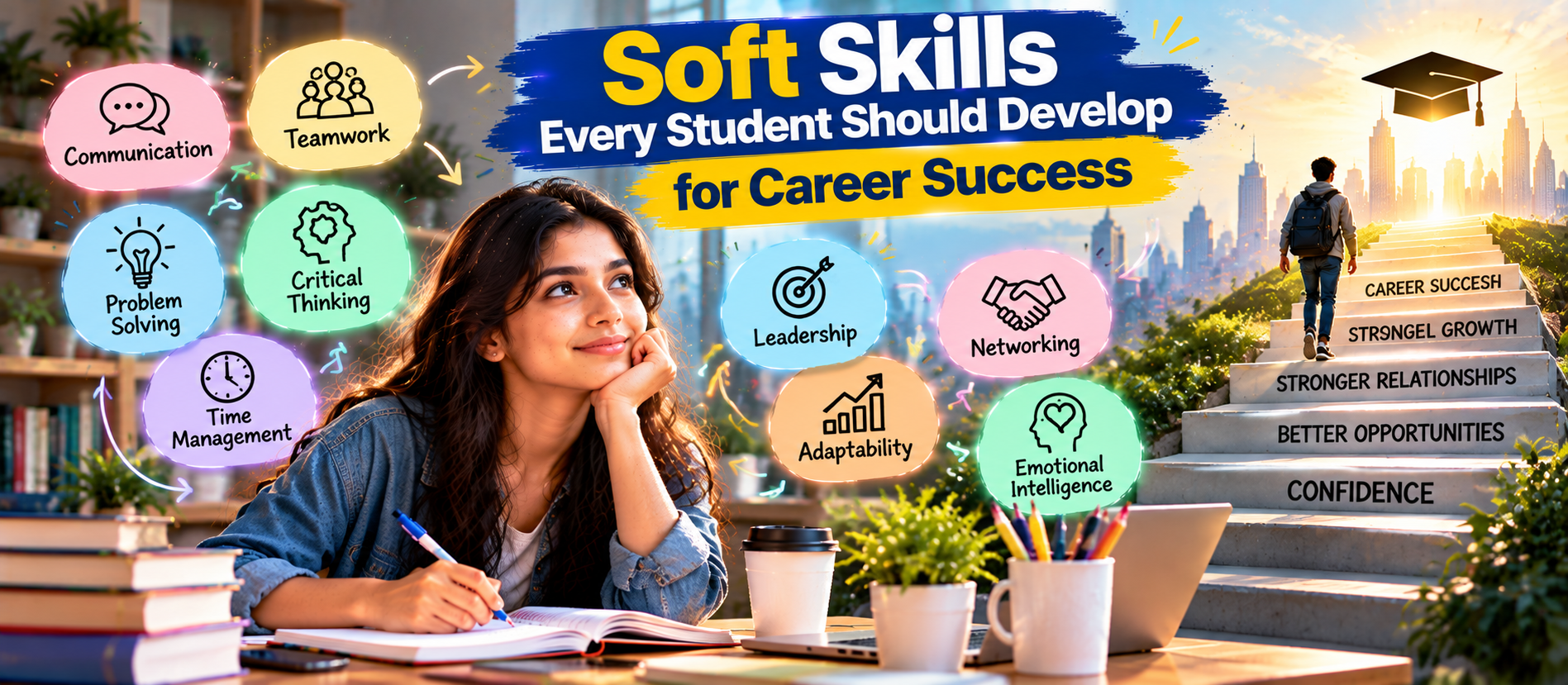
AI can produce confident answers that may contain mistakes. Critical thinking helps you question assumptions and evaluate evidence.
3. Communication
Clear communication remains valuable. Professionals need to explain ideas, work with teams, understand customers, and present decisions.
4. Problem-Solving
Technology is most useful when applied to a real problem. The ability to identify and solve meaningful problems can remain valuable across industries.
5. Adaptability
Tools and job requirements will change. People who can learn, unlearn, and update their skills can respond more effectively.
6. Domain Expertise
AI becomes more useful when combined with real knowledge. A person who understands finance, healthcare, education, law, engineering, marketing, or another field can use AI more effectively within that context.
7. Digital and Data Skills
Basic digital fluency is increasingly important. Depending on your career, useful skills may include spreadsheets, data analysis, automation, cloud platforms, or programming.
What Jobs Are Most at Risk of Major Change?
Jobs with highly repetitive, predictable, and information-based tasks may experience significant change.
However, “change” does not always mean complete replacement. AI may automate part of the work while increasing the value of other responsibilities.
Instead of asking, “Will my job disappear?” ask:
- Which tasks in my job are repetitive?
- Which tasks require human judgment?
- What tools are changing my industry?
- How can I learn to use those tools?
- What higher-value responsibilities can I develop?
How to Build a Future-Proof Career: A Practical Plan
Step 1: Understand Your Industry
Study how technology is changing your profession. Follow reliable industry sources, job descriptions, professional communities, and employer requirements.
Step 2: Identify Your Core Skills
List your current technical, business, and human skills. Identify what creates the most value in your work.
Step 3: Find Your Skill Gaps
Compare your skills with the direction of your industry. Choose one or two high-value gaps to address first.
Step 4: Learn by Building
Courses are useful, but practical projects can show what you can do.
Build a portfolio, case study, automation, website, analysis, design project, or other proof of skill.
Step 5: Learn AI for Your Profession
Do not learn AI only in theory. Ask how it can improve your specific workflow.
For example:
- A marketer can automate research and reporting.
- A designer can explore concepts faster.
- A developer can improve coding workflows.
- A teacher can create practice materials.
- A business professional can automate repetitive processes.
Step 6: Build a Combination of Skills
Career value often comes from combining abilities.
Examples:
- Marketing + AI + Analytics.
- Design + User Experience + AI Tools.
- Healthcare + Data + Technology.
- Education + Instructional Design + AI.
- Finance + Automation + Data Analysis.
- Software Development + Security + AI.
A useful skill combination can help you stand out more than a single isolated skill.
The Importance of Continuous Learning
In the past, some people could learn one professional skill and use it for decades with relatively small changes.
Today, learning is becoming a continuing process.
This does not mean studying all day. It means creating a regular habit of updating your knowledge.
A practical system may include:
- Learning one important skill each quarter.
- Following industry changes each week.
- Building small practical projects.
- Reviewing your career goals every six months.
- Updating your portfolio and resume.
How Students Can Prepare for an AI-Powered Future
Students should focus on strong foundations instead of trying to predict every future job.
Important areas include:
- Communication.
- Mathematical and analytical thinking.
- Digital literacy.
- AI literacy.
- Problem-solving.
- Creativity.
- Teamwork.
- Research and source evaluation.
Students should also build real projects. A portfolio can demonstrate practical ability more clearly than simply listing a course.
How Professionals Can Reskill Without Leaving Their Career
You do not always need to start from zero.
Start with your current expertise and add new capabilities around it.
A simple approach is:
- Identify one important industry trend.
- Choose one relevant tool or skill.
- Spend regular time learning it.
- Use it in a small real project.
- Measure the result.
- Add the project to your portfolio.
Small, consistent improvement can be more sustainable than trying to learn everything at once.
SEO, AEO, GEO, and AI Search Optimization for Career Content
People increasingly search for direct answers to career questions such as:
- What are the best careers in the age of AI?
- Which jobs are difficult to automate?
- How can I future-proof my career?
- What skills should I learn for AI?
- Will AI replace my job?
- How can I reskill for the future?
SEO helps career and education content become discoverable through traditional search engines.
AEO focuses on providing direct answers to clear questions.
GEO helps organize information for generative search experiences.
AI Search Optimization emphasizes clear writing, logical structure, direct answers, useful examples, and trustworthy content.
How Digiifrog Supports Future-Focused Digital Content
Digiifrog develops structured and readable content for businesses, education platforms, technology brands, and digital audiences.
- SEO Content Strategy
- AEO and Answer-Focused Content
- GEO and Generative Search Optimization
- AI Search Optimization
- Technology and Career Content Development
- Digital Branding Strategy
Frequently Asked Questions
What is a future-proof career?
A future-proof career is a career that can adapt as technology and job requirements change. It usually depends on a combination of technical skills, human judgment, problem-solving, communication, and continuous learning.
Will AI replace all jobs?
No single answer applies to every profession. AI is more likely to automate or change specific tasks. Many jobs will evolve as people begin using AI tools in their daily workflows.
Which skills are most important in the age of AI?
Useful skills include AI literacy, critical thinking, communication, problem-solving, adaptability, domain expertise, and relevant digital or data skills.
Should I learn coding to future-proof my career?
Coding can be useful, especially for technology-related careers, but it is not required for every future-ready career. Choose skills based on your industry and goals.
How can I use AI without becoming dependent on it?
Use AI to support research, brainstorming, practice, automation, and first drafts. Continue checking important information, developing your own expertise, and making independent decisions.
Are creative careers still valuable?
Yes. AI can accelerate content and asset creation, but creative strategy, audience understanding, brand thinking, storytelling, and human judgment remain important.
How often should I update my skills?
Learning should be continuous. A practical approach is to review industry changes regularly and add relevant skills or projects throughout the year.
Conclusion
Future-proof careers in the age of AI are not built by avoiding technology. They are built by learning how technology changes work and developing the ability to adapt.
The strongest career strategy combines professional expertise with modern tools, critical thinking, communication, creativity, and practical problem-solving.
AI can automate parts of a job. It can also help people work faster and explore new possibilities. The key question is how you can move toward higher-value work.
Do not wait for the future to become clear before preparing for it. Start by understanding your industry, improving one useful skill, building practical experience, and learning how AI can support your work.
Learn continuously. Build real skills. Use AI intelligently. Stay adaptable.
Disclaimer: This article is for general educational and informational purposes. Career demand, technology, job requirements, and industry conditions can change over time. Before making an important career decision, review current job-market information, education requirements, and opportunities relevant to your location and professional goals.
Digiifrog
Website: www.digiifrog.com
Ready to Grow?
Talk to us about a strategy tailored to your brand — we will help you stand out in search, AI discovery and social.
Comments (0)
Log in to leave a comment.