📋 Quick Summary
In this article:
Quick Answer: What Home Maintenance Should Be Done Each Season?
Why Seasonal Home Maintenance Is Important
How to Use This Seasonal Home Maintenance Checklist
Spring Home Maintenance Checklist
3. Check Exterior Walls and Siding
4. Inspect Windows and Doors
5. Test Outdoor Faucets
6. Service the Air Conditioning System
7. Check Smoke and Carbon Monoxide Alarms
8. Inspect the Foundation Area
⚠ Watch Out
Regular home maintenance helps protect your property, improve comfort, and reduce the risk of expensive repairs. Every season brings different weather conditions and maintenance challenges. A simple seasonal checklist can help homeowners stay organized and address small problems before they become larger ones.
From preparing your home for winter weather to checking cooling systems before summer, seasonal maintenance supports the long-term condition of your property. The exact tasks may vary depending on your location, climate, home type, and the age of your property.
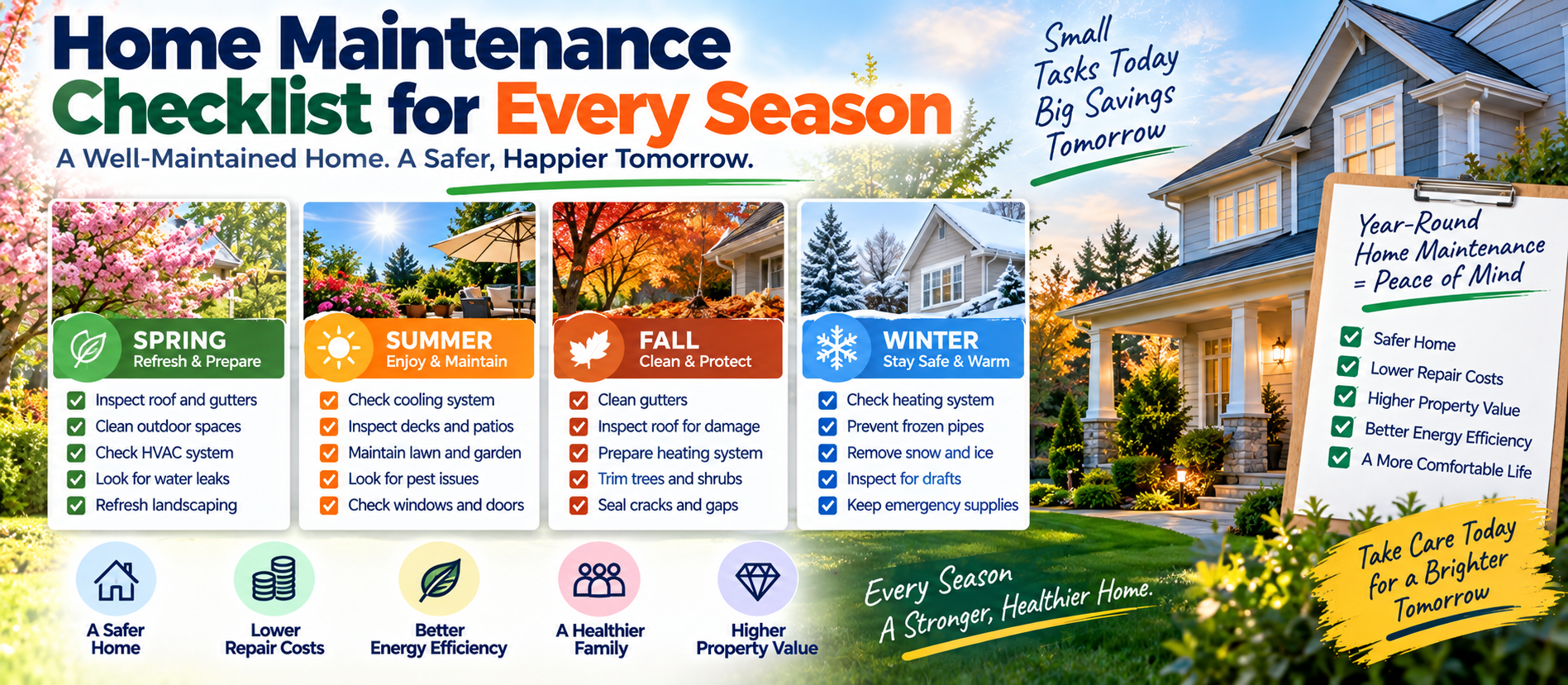
This complete guide provides a practical home maintenance checklist for every season. It includes spring, summer, fall, and winter maintenance tasks, along with year-round inspections and helpful planning tips.
Quick Answer: What Home Maintenance Should Be Done Each Season?
Seasonal home maintenance should focus on the weather and systems most affected during that time of year. Spring is ideal for inspecting winter damage and preparing outdoor spaces. Summer maintenance often focuses on cooling systems, landscaping, and exterior surfaces. Fall is the time to prepare for colder weather, while winter maintenance focuses on safety, heating, moisture control, and protecting the home from severe weather.
Why Seasonal Home Maintenance Is Important
A home contains many systems that require regular attention. Roofing, plumbing, electrical systems, heating and cooling equipment, gutters, appliances, and outdoor areas can all develop problems over time.
Regular maintenance can help homeowners:
- Identify visible problems early.
- Reduce the risk of preventable damage.
- Improve home comfort.
- Support energy efficiency.
- Protect important building components.
- Maintain a cleaner and safer living environment.
Not every maintenance task is appropriate for DIY work. Electrical, structural, roofing, gas, and complex mechanical issues may require qualified professionals.
How to Use This Seasonal Home Maintenance Checklist
You do not need to complete every task on the same day. Create a schedule based on your home's needs and local climate.
A simple approach is to divide tasks into:
- Monthly checks.
- Spring maintenance.
- Summer maintenance.
- Fall maintenance.
- Winter maintenance.
Keep notes about completed work, professional inspections, repairs, warranties, and replacement dates.
Spring Home Maintenance Checklist
Spring is an important time to inspect your home after winter. Rain, wind, snow, freezing temperatures, and temperature changes may affect exterior surfaces and building systems.
1. Inspect the Roof
Look for visible signs of damage from the ground or other safe locations. Check for missing or damaged roofing materials, loose flashing, debris, or signs of water problems.
Avoid walking on a roof unless you have the appropriate knowledge, equipment, and conditions. Contact a qualified roofing professional if you notice significant concerns.
2. Clean and Inspect Gutters
Remove leaves and debris that may block water flow. Check gutters and downspouts for visible damage or loose connections.
Make sure water is directed away from the foundation where appropriate.
3. Check Exterior Walls and Siding
Walk around the home and look for:
- Cracks.
- Loose materials.
- Peeling paint.
- Signs of moisture.
- Visible pest activity.
Address damage early to reduce the chance of further deterioration.
4. Inspect Windows and Doors
Check windows and doors for damaged weatherstripping, gaps, cracked caulking, or difficulty opening and closing.
Proper sealing can help improve comfort and reduce unwanted air movement.
5. Test Outdoor Faucets
After freezing weather has passed, inspect outdoor faucets and connected plumbing for leaks or damage.
If you suspect a plumbing problem, contact a qualified professional.
6. Service the Air Conditioning System
Spring is often a good time to prepare the cooling system for warmer months.
Depending on your equipment, maintenance may include:
- Replacing or checking filters.
- Removing debris around outdoor units.
- Checking visible components.
- Scheduling professional service when recommended.
Always follow the equipment manufacturer's maintenance instructions.
7. Check Smoke and Carbon Monoxide Alarms
Test alarms according to the manufacturer's instructions and applicable safety recommendations. Replace batteries or devices when required.
Do not ignore alarms that fail testing or show signs of malfunction.
8. Inspect the Foundation Area
Look for visible cracks, standing water, drainage concerns, or changes around the foundation.
Some minor surface issues may not indicate serious structural problems, but significant cracks or changes should be evaluated by an appropriate professional.
Spring Maintenance Checklist Summary
- Inspect visible roof conditions.
- Clean gutters and downspouts.
- Check siding and exterior surfaces.
- Inspect windows and doors.
- Check outdoor plumbing.
- Prepare the cooling system.
- Test safety alarms.
- Check drainage around the foundation.
Summer Home Maintenance Checklist
Summer often brings heat, strong sunlight, storms, and increased use of air conditioning systems. Outdoor areas also require more regular attention.
1. Maintain Your Air Conditioning System
Monitor how efficiently the cooling system is operating. Replace filters as recommended and keep vents unobstructed.
Contact a qualified HVAC professional if you notice unusual sounds, poor cooling performance, repeated cycling, or other concerns.
2. Inspect Exterior Paint and Trim
Summer light can make damage easier to identify. Look for:
- Peeling paint.
- Cracked caulk.
- Damaged trim.
- Exposed wood.
Maintaining exterior finishes can help protect underlying surfaces.
3. Check Decks, Patios, and Outdoor Structures
Inspect outdoor spaces for loose boards, damaged surfaces, unstable railings, or other visible safety concerns.
Repair or professionally evaluate damaged structures before heavy use.
4. Maintain Landscaping
Keep plants and trees appropriately maintained. Remove dead branches when it is safe to do so or hire qualified professionals for larger work.
Do not allow vegetation to create unnecessary moisture or pest concerns near the home.
5. Check for Pest Activity
Warm weather may increase pest activity. Look for signs around:
- Windows.
- Doors.
- Garages.
- Basements.
- Attics.
- Outdoor storage areas.
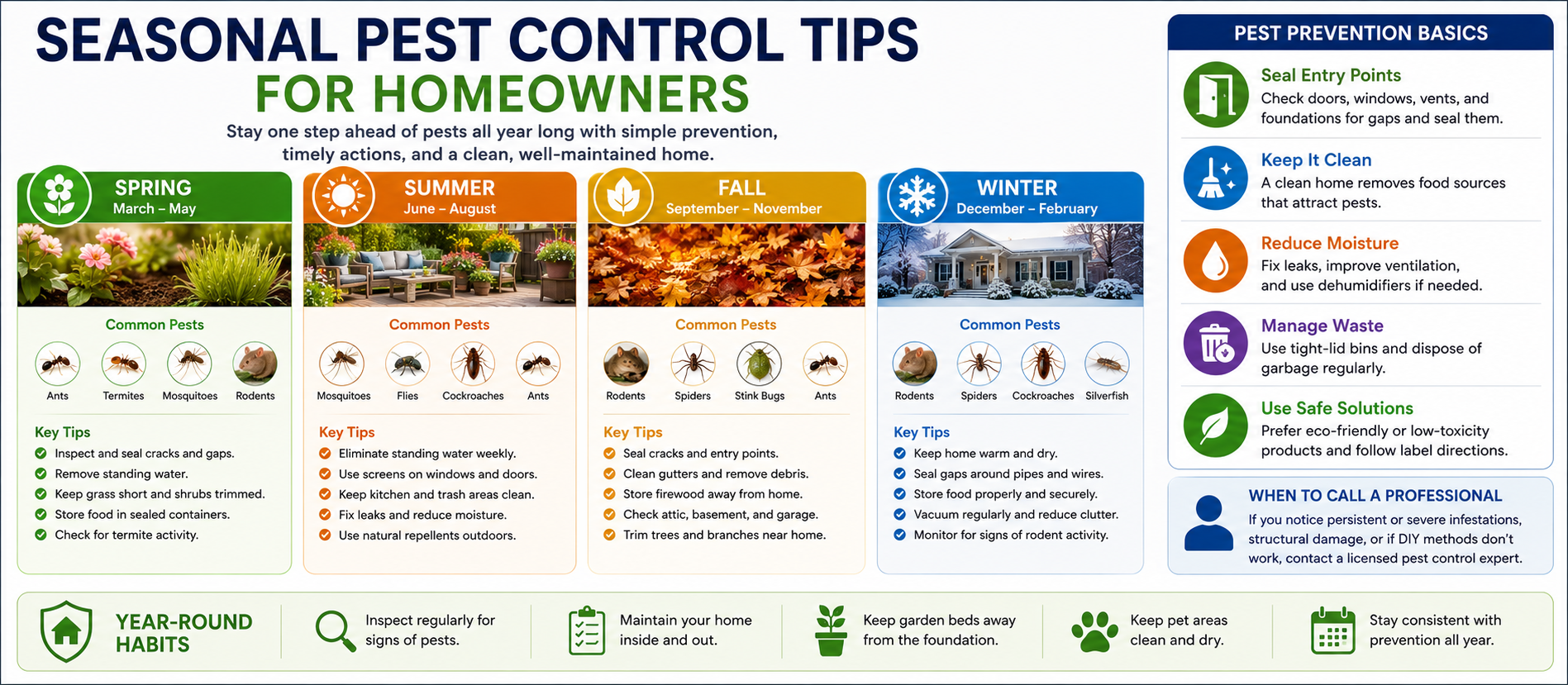
Address potential entry points and seek professional pest control support when necessary.
6. Inspect Outdoor Lighting
Check exterior lights, motion sensors, and visible wiring fixtures.
Electrical repairs should be handled by qualified professionals when necessary.
7. Monitor Water Use
Check for dripping outdoor faucets, irrigation leaks, or unusual water use.
Address leaks quickly because small water problems can become more expensive over time.
8. Inspect the Garage
Check the garage door, weather seals, storage areas, and visible hardware.
Garage door springs and related components can be dangerous. Avoid attempting complex repairs without appropriate training.
Summer Maintenance Checklist Summary
- Maintain the air conditioning system.
- Inspect paint and exterior trim.
- Check decks and patios.
- Maintain landscaping.
- Look for pest activity.
- Test outdoor lighting.
- Check outdoor water systems.
- Inspect the garage.
Fall Home Maintenance Checklist
Fall maintenance is mainly about preparing the property for colder temperatures and changing weather conditions.
1. Inspect the Heating System
Before colder weather arrives, check that the heating system is operating correctly.
Recommended tasks may include:
- Replacing filters as recommended.
- Checking visible vents.
- Scheduling professional maintenance where appropriate.
- Reviewing manufacturer instructions.
2. Clean Gutters Again
Falling leaves can quickly block gutters and downspouts. Regular cleaning helps maintain proper drainage.
Use safe equipment and avoid working at dangerous heights.
3. Check the Roof Before Winter
Inspect visible roof areas for signs of damage before severe winter weather arrives.
Professional inspection may be appropriate if the roof is older or has experienced storms.
4. Seal Windows and Doors
Check weatherstripping and caulking for visible damage.
Proper sealing can improve comfort during cold weather.
5. Prepare Outdoor Plumbing
Freezing temperatures can damage exposed plumbing. Follow appropriate local and manufacturer recommendations for winterizing outdoor faucets and irrigation systems.
6. Inspect Chimneys and Fireplaces
If you use a fireplace or heating appliance, arrange appropriate inspection and maintenance before the heating season.
Follow all safety guidance and have chimneys or fuel-burning appliances serviced by qualified professionals when required.
7. Check Insulation and Ventilation
Inspect accessible attic areas for visible insulation problems, moisture, or ventilation concerns.
Do not disturb materials that may require specialized handling.
8. Prepare Outdoor Equipment
Store or protect seasonal equipment according to manufacturer recommendations.
Fall Maintenance Checklist Summary
- Prepare the heating system.
- Replace or inspect filters.
- Clean gutters and downspouts.
- Inspect visible roof conditions.
- Check windows and doors.
- Prepare outdoor plumbing.
- Inspect fireplaces and chimneys.
- Review insulation and ventilation.
Winter Home Maintenance Checklist
Winter maintenance focuses on heating, moisture, ice, safety, and protecting the home during severe weather.
1. Monitor the Heating System
Pay attention to changes in heating performance, unusual noises, or inconsistent temperatures.
Keep vents clear and follow equipment maintenance guidance.
2. Watch for Ice and Water Problems
Snow and ice can create roof, drainage, and walkway concerns.
Use safe methods for snow and ice management. Avoid dangerous roof work and contact professionals when conditions create significant risks.
3. Protect Indoor Plumbing
Cold temperatures can increase the risk of frozen pipes in vulnerable areas.
Know where the main water shutoff is located and understand basic emergency procedures for your property.
4. Check for Drafts and Moisture
Look for cold air leaks, condensation, or moisture around windows and doors.
Persistent moisture should be investigated because it may contribute to material damage.
5. Test Safety Devices
Continue testing smoke and carbon monoxide alarms according to manufacturer instructions and local safety guidance.
6. Keep Emergency Supplies Available
Severe winter weather can cause power outages and travel disruptions. Prepare appropriate emergency supplies based on local risks and household needs.
7. Inspect After Major Storms
After severe weather, inspect the property from safe locations.
Look for:
- Visible roof damage.
- Broken branches.
- Damaged gutters.
- Water entry.
- Downed power lines.
Stay away from electrical hazards and report dangerous conditions to the appropriate authority.
Winter Maintenance Checklist Summary
- Monitor heating performance.
- Watch for ice and water problems.
- Protect vulnerable plumbing.
- Check for drafts and moisture.
- Test safety alarms.
- Prepare emergency supplies.
- Inspect safely after major storms.
Monthly Home Maintenance Tasks
Some home maintenance tasks should be checked more frequently than once per season.
Check HVAC Filters
Review filters according to the equipment and manufacturer recommendations. Replacement schedules vary depending on system type and household conditions.
Look for Plumbing Leaks
Check visible pipes, sinks, toilets, and appliances for signs of leaking or water damage.
Inspect Safety Alarms
Follow the manufacturer's instructions for testing and maintaining smoke and carbon monoxide alarms.
Clean High-Use Areas
Regular cleaning can help prevent buildup around appliances, vents, kitchens, and bathrooms.
Check for Unusual Changes
Pay attention to new noises, odors, stains, cracks, or changes in how home systems operate.
Annual Home Maintenance Tasks
Some maintenance tasks are usually completed annually or according to manufacturer recommendations.
- Professional HVAC servicing where appropriate.
- Roof inspection when needed.
- Gutter inspection and cleaning.
- Appliance maintenance.
- Fireplace and chimney servicing when applicable.
- Water heater inspection based on manufacturer guidance.
- Reviewing home safety equipment.
Exterior Home Maintenance Tips
The exterior of a home is constantly exposed to weather. Regular inspection can help identify visible concerns.
Roof
Check for visible damage from safe locations and seek professional help for significant concerns.
Gutters
Keep gutters and downspouts clear enough to support proper water flow.
Siding
Inspect for cracks, loose sections, peeling finishes, or moisture damage.
Foundation
Monitor for visible cracks, drainage problems, or standing water.
Driveways and Walkways
Check for trip hazards, cracks, and areas that collect water.
Interior Home Maintenance Tips
Kitchen
Check appliances, sinks, visible plumbing, cabinets, and ventilation areas.
Bathrooms
Monitor for leaks, damaged caulking, persistent moisture, and ventilation problems.
Basement
Look for water entry, unusual odors, humidity, and visible foundation concerns.
Attic
Check accessible areas for visible moisture, insulation problems, ventilation concerns, or pest activity.
How Climate and Location Affect Home Maintenance
Home maintenance requirements are not identical in every location.
For example:
- Cold climates may require more winterization.
- Coastal areas may face moisture and salt exposure.
- Hot climates may place greater demands on cooling systems.
- Storm-prone areas may require more frequent roof and exterior inspections.
- Humid regions may require greater attention to moisture and ventilation.
Always adapt your maintenance schedule to local weather patterns and property conditions.
When Should You Call a Professional?
Homeowners can perform many simple maintenance tasks. However, professional help is recommended for complex, dangerous, or regulated work.
Consider contacting a qualified professional for:
- Electrical problems.
- Gas-related concerns.
- Major plumbing leaks.
- Structural damage.
- Significant roof problems.
- HVAC failures.
- Major pest infestations.
- Persistent moisture or mold concerns.
Do not attempt repairs that could create a safety risk.
How to Create Your Own Home Maintenance Calendar
A maintenance calendar makes recurring tasks easier to remember.
You can use:
- A paper calendar.
- A spreadsheet.
- A home management app.
- Digital reminders.
Record:
- The maintenance task.
- Date completed.
- Professional service information.
- Replacement dates.
- Notes about problems.
Simple Year-Round Home Maintenance Checklist
- □ Spring: Inspect winter damage and prepare cooling systems.
- □ Summer: Maintain outdoor spaces and monitor cooling systems.
- □ Fall: Prepare heating systems and protect the home for winter.
- □ Winter: Monitor heating, moisture, plumbing, and storm conditions.
- □ Monthly: Check filters, visible leaks, alarms, and unusual changes.
- □ Yearly: Schedule recommended professional inspections and maintenance.
Common Home Maintenance Mistakes to Avoid
Ignoring Small Problems
A small leak, crack, or unusual sound may become more serious over time. Early evaluation can help prevent additional damage.
Skipping Seasonal Inspections
Seasonal weather can affect different parts of a home. Regular checks can help identify visible concerns.
Using Unsafe DIY Methods
Roofing, electrical, gas, structural, and other high-risk work should be handled by qualified professionals.
Forgetting About Drainage
Water management around a property is important. Blocked gutters, poor drainage, and standing water should not be ignored.
Not Keeping Maintenance Records
Records can help homeowners track maintenance schedules, warranties, repairs, and replacement needs.
SEO, AEO, GEO, and AI Search Optimization
This guide is structured to provide direct and useful answers about home maintenance checklists for every season.
For SEO, relevant search topics include seasonal home maintenance checklist, spring home maintenance, summer home maintenance checklist, fall home maintenance, and winter home maintenance tips.
For AEO, the article directly answers common questions, including:
- What home maintenance should be done each season?
- What should I check around my home in spring?
- How do I prepare my home for winter?
- What maintenance tasks should homeowners do every month?
For GEO and AI Search optimization, the content uses clear sections, direct answers, seasonal checklists, practical instructions, and location-aware information. Climate and local weather can affect maintenance needs, so homeowners should adapt this checklist to their region.
Frequently Asked Questions
What home maintenance should be done every season?
Every season, homeowners should inspect major systems and exterior areas affected by current weather conditions. Common tasks include checking the roof, gutters, HVAC equipment, plumbing, windows, doors, drainage, and safety devices.
What is the best season for home maintenance?
Every season has important maintenance tasks. Spring and fall are often useful for larger inspections and preparing HVAC systems for changing temperatures.
How often should gutters be cleaned?
The appropriate cleaning frequency depends on nearby trees, weather conditions, and debris buildup. Gutters should be inspected regularly and cleaned when necessary to maintain proper drainage.
What should I do to prepare my home for winter?
Common winter preparation tasks include inspecting the heating system, checking windows and doors, preparing outdoor plumbing, cleaning gutters, and addressing visible roof concerns.
What are the most important monthly home maintenance tasks?
Monthly checks may include reviewing HVAC filters, looking for visible leaks, testing safety alarms according to manufacturer instructions, and monitoring the home for unusual changes.
Can I do all home maintenance myself?
No. Simple tasks may be suitable for homeowners, but electrical, structural, gas, complex plumbing, roofing, and other high-risk work may require qualified professionals.
Final Thoughts
A seasonal home maintenance checklist makes property care easier and more organized. Spring, summer, fall, and winter each create different challenges, so adjusting maintenance tasks throughout the year can help homeowners protect their property.
The best maintenance plan is consistent and practical. You do not need to complete everything at once. Schedule tasks, inspect your home regularly, and address concerns before they become more difficult to manage.
💡 Key Insight
Remember that local climate, property age, building materials, and household needs can change the type of maintenance required. When a task involves safety risks or specialized knowledge, contact a qualified professional.
For more useful content about home improvement, home services, seasonal maintenance, technology, SEO, AEO, GEO, and AI Search optimization, visit www.digiifrog.com.
Disclaimer
This article provides general educational information and is not a substitute for professional home inspection, engineering, electrical, plumbing, HVAC, roofing, structural, or safety advice. Maintenance requirements vary by property, location, climate, and local regulations. Follow manufacturer instructions and applicable safety guidance. Consult qualified professionals for complex, dangerous, or regulated work.
Ready to Grow?
Talk to us about a strategy tailored to your brand — we will help you stand out in search, AI discovery and social.

Comments (0)
Log in to leave a comment.