📋 Quick Summary
In this article:
Renovation vs. Remodeling: The Simple Answer
The Biggest Difference: Does the Layout Change?
Renovation vs. Remodeling Comparison
Kitchen, Bathroom, Bedroom, Basement and Garage Examples
Home Renovation vs. Remodeling: What's the Difference? Digiifrog | www.digiifrog.com WordPress-ready HTML article Approximate word count: 2881 SEO + AEO + GEO + AI Search optimized Readability-focused: clear, direct sentences
Introduction
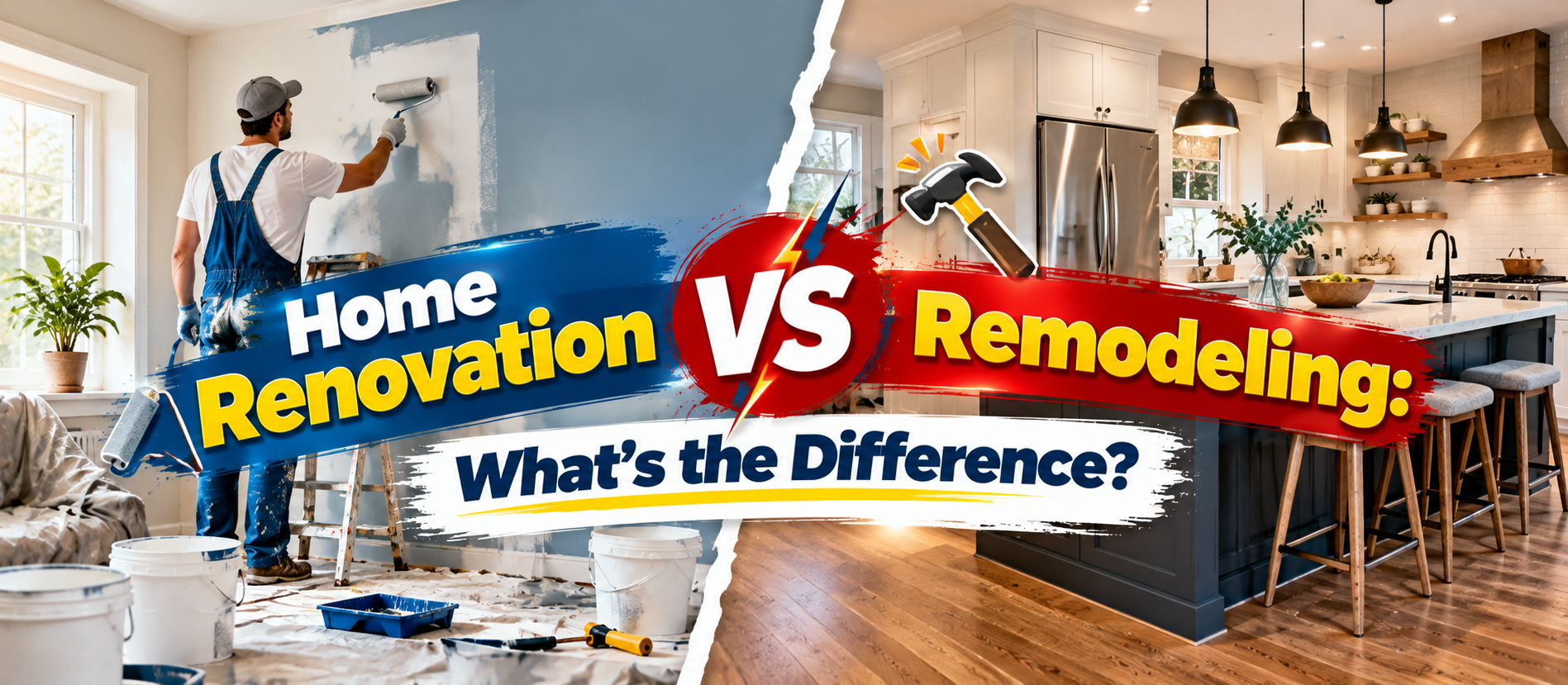
Homeowners often use the words renovation and remodeling as if they mean exactly the same thing. In everyday conversation, that is understandable. Both involve improving a home. Both can make a property more comfortable, attractive, efficient, and useful. However, there is an important difference. A renovation usually focuses on updating, repairing, restoring, or refreshing an existing space without changing its main layout or purpose. Remodeling usually goes further by changing the layout, structure, configuration, or function of the space. For example, repainting a bedroom, replacing old flooring, updating light fixtures, or installing a new vanity in the same bathroom layout would generally be considered renovation work. Removing a wall, moving plumbing, changing a kitchen layout, converting a garage into living space, or adding a room would generally be considered remodeling. The distinction matters because project scope can affect budget, timeline, design, permits, contractor requirements, materials, disruption, and the final result.
Renovation vs. Remodeling: The Simple Answer
If you want a quick rule, use this: Renovation refreshes what already exists. Remodeling changes how the space is arranged, built, or used. A renovation might make an old kitchen look modern while keeping the sink, cabinets, walls, and basic layout in the same positions. A remodel might remove cabinets, move the sink, open a wall, change electrical and plumbing locations, and create a completely different kitchen layout. Real projects can include both. A homeowner might renovate the existing bedrooms while remodeling the kitchen and adding a bathroom. Therefore, the most useful question is not simply whether a project is a renovation or remodel. Ask which parts are cosmetic updates and which parts change the space.
What Is Home Renovation?
Home renovation generally means restoring, repairing, refreshing, or updating an existing space while keeping its fundamental layout and purpose. The word renovation can cover projects of very different sizes. Some are small and simple. Others can involve substantial planning and investment. Common renovation projects include:
- Painting walls and ceilings
- Replacing flooring
- Updating cabinet hardware
- Refinishing cabinets
- Replacing countertops without changing the kitchen layout
- Installing new light fixtures
- Replacing bathroom fixtures
- Replacing a vanity in the same location
- Updating doors and trim
- Replacing windows
- Replacing a garage door
- Refreshing exterior finishes
- Improving insulation or energy efficiency where appropriate
Not every renovation is cosmetic. A renovation can also improve safety, comfort, energy efficiency, accessibility, or maintenance. The National Association of Home Builders notes that home improvement and remodeling projects can include energy-efficiency upgrades such as windows, doors, insulation, and heating and cooling improvements. This shows why the exact scope matters more than the label.
What Is Home Remodeling?
Home remodeling usually means changing the layout, structure, design, configuration, or function of a space. A remodel can transform how a room works. It may involve demolition, new walls, structural changes, plumbing relocation, electrical changes, new HVAC routes, or changes to how people move through the home. Examples include:
- Removing a wall to create an open-plan kitchen
- Moving a kitchen sink or plumbing fixtures
- Changing the location of a bathroom
- Converting a garage into living space
- Finishing an attic or basement
- Adding a new room
- Combining two rooms into one
- Changing a bedroom into a home office
- Adding a bathroom
- Expanding a kitchen
- Changing a home's floor plan
- Building an addition
Because remodeling can involve structural, electrical, plumbing, mechanical, or code-related work, professional planning is often more important than it is for a simple cosmetic renovation.
The Biggest Difference: Does the Layout Change?
One of the easiest ways to distinguish renovation from remodeling is to ask whether the basic layout changes. If a bathroom remains in the same location, the toilet stays where it is, the shower stays where it is, and you simply replace the vanity, flooring, lighting, paint, and fixtures, the project is generally a renovation. If you remove a wall, move the toilet, relocate the shower, expand the room, or change the bathroom's configuration, the project becomes more like a remodel. This is not a universal legal definition. Building departments and contractors may classify work differently depending on local rules and project details. The important point is that changes to structure, layout, plumbing, electrical systems, or use usually make a project more complex.
Renovation vs. Remodeling Comparison
| FactorRenovationRemodeling | ||
| Main goal | Update, repair, refresh, or restore | Change layout, structure, design, or function |
| Floor plan | Usually remains the same | Often changes |
| Typical work | Paint, flooring, fixtures, finishes | Walls, plumbing relocation, additions, reconfiguration |
| Complexity | Low to moderate, depending on scope | Moderate to high, depending on scope |
| Permits | May not be required for cosmetic work; local rules apply | More likely when structure or systems change |
| Design impact | Refreshes existing design | Can create a new design and function |
| Construction disruption | Often lower | Often higher |
| Professional involvement | Depends on the work | Often more important |
Kitchen, Bathroom, Bedroom, Basement and Garage Examples
Kitchen
Renovation: Repaint cabinets, replace handles, install a backsplash, improve lighting, and replace a countertop while keeping the existing layout.
Remodel: Remove cabinets, move the sink, relocate appliances, open a wall, add an island, and redesign the room.
Bathroom
Renovation: Replace the vanity, mirror, flooring, fixtures, and paint while keeping plumbing locations unchanged.
Remodel: Move the shower, relocate the toilet, expand the room, remove a wall, or change the room configuration.
Bedroom
Renovation: New paint, flooring, lighting, trim, doors, and storage.
Remodel: Combine bedrooms, move walls, change the room's purpose, or create a new room from another area.
Basement
Renovation: Repaint an existing finished basement, replace flooring, and update fixtures.
Remodel: Convert an unfinished basement into living space, add walls, insulation, a bathroom, electrical systems, or new rooms.
Garage
Renovation: Replace the garage door, paint the walls, improve lighting, or add storage.
Remodel: Convert the garage into an office, bedroom, studio, or living area.
When Renovation Is the Better Choice
Renovation may be the better option when the existing layout already works. Ask yourself:
- Do I like the current floor plan?
- Is the room large enough?
- Are plumbing and electrical locations working well?
- Is the main problem appearance rather than function?
- Can new finishes solve the problem?
- Do I want to complete the project in stages?
- Do I want to minimize disruption?
If most answers are yes, renovation may provide the improvement you need without the complexity of a full remodel.
When Remodeling Is the Better Choice
Remodeling becomes more attractive when the current space does not work for your needs. You may need a remodel if:
- The kitchen layout creates poor traffic flow.
- The bathroom is too small.
- You need an additional bedroom.
- You want to combine rooms.
- You need a new bathroom.
- You want to convert unused space.
- The current floor plan does not fit your lifestyle.
- You need improved accessibility.
- You want to change how a space is used.
The National Association of Home Builders recommends starting a remodeling project by identifying needs and wants, considering traffic patterns and furniture placement, and setting a budget before work begins.
Budget Differences
There is no single price for renovation or remodeling. Costs vary by location, labor, materials, project size, property condition, design choices, and contractor scope. However, remodeling often has more cost variables because changing a layout can affect multiple systems at once. For example, moving a kitchen sink may require changes to plumbing supply lines, drainage, cabinets, countertops, electrical outlets, lighting, flooring, walls, and finishes. A renovation that keeps the sink in place may avoid many of these changes. This is why scope matters more than the label. Contractors price the actual work, not whether the homeowner calls it a renovation or remodel. Remodeling can also expose hidden conditions behind walls, floors, ceilings, or cabinets. Examples include old wiring, damaged plumbing, moisture damage, structural problems, outdated materials, unexpected framing conditions, or code-related issues. A contingency budget can help handle unexpected work.
Permits and Professional Help
Permit requirements depend on local building rules and the exact work being performed. Cosmetic work such as painting may not require a building permit in many locations. Structural changes, additions, electrical work, plumbing changes, major mechanical work, or changes in occupancy can trigger permits or inspections. Do not assume a project is permit-free because someone calls it a renovation. The work itself determines what rules may apply. Before starting, check with the relevant local building authority or ask a qualified contractor to confirm requirements. Some renovation tasks may be suitable for experienced homeowners. Painting, simple decorating, hardware changes, and certain flooring projects may be manageable depending on skill and local rules. Professional help is especially important for load-bearing walls, major electrical systems, gas lines, structural framing, major plumbing relocation, roof structure, foundation work, major HVAC changes, hazardous materials, and permit-related work.
Renovation vs. Remodeling and Home Value
Both renovation and remodeling can improve a home's usefulness and appeal. Neither automatically guarantees a specific return on investment. The value of a project depends on the local housing market, project quality, neighborhood, property condition, buyer preferences, and total cost. If you plan to sell soon, small repairs and targeted updates may make more sense than highly personal remodeling. If you plan to stay for many years, comfort and functionality may be more important than resale value. NAHB notes that homeowners remodel for many reasons, including adding space, improving lifestyle fit, increasing energy efficiency, and potentially increasing resale value.
Energy Efficiency and Accessibility
Energy improvements can be part of a renovation or a larger remodel. Possible improvements include better insulation, efficient windows and doors, efficient lighting, heating and cooling upgrades, smart thermostats, air sealing, and water-efficient fixtures. The right priorities depend on the home's climate, existing systems, condition, and budget. Accessibility improvements can also fall into either category. Replacing hardware with easier-to-use handles may be renovation work. Creating a wider doorway, changing a bathroom layout, or building a more accessible shower may involve remodeling. The goal should be safe, comfortable, and practical use of the home.
Timeline Planning
There is no universal renovation or remodeling timeline. A single-room cosmetic renovation may take days or weeks. A whole-home renovation can take much longer. Remodeling may take longer when demolition, structural work, plumbing, electrical work, HVAC, inspections, and several trades are involved. Timeline depends on project scope, room count, material availability, labor availability, permit requirements, inspections, unexpected repairs, design changes, weather for exterior work, and contractor scheduling. Make important material decisions early. Define responsibilities for permits, inspections, payments, and scheduling. Build a realistic sequence with the contractor rather than relying on a generic number of days.
How to Decide: A Five-Question Test
Use this simple decision test:
- Does the current layout work? If yes, renovation may be enough.
- Do you need more space? If yes, remodeling may be more appropriate.
- Do walls or plumbing need to move? If yes, expect greater remodeling complexity.
- Is the problem mostly appearance? Renovation may solve it.
- Is the problem how the space functions? Remodeling may be necessary.
Project Planning Checklist
- Identify the problem: Define what is not working.
- Define the goal: Decide what the finished space should do better.
- List what must stay: Keeping useful walls, plumbing, or fixtures can reduce changes.
- Separate renovation from remodeling work: Make one list for finishes and another for layout or system changes.
- Set a budget: Include labor, materials, permits, design, temporary living costs, and contingency.
- Check local requirements: Confirm permits and inspections before work begins.
- Compare qualified contractors: Ask for detailed written scopes.
- Finalize materials early: Long-lead products can delay construction.
- Document changes: Keep written records of costs, approvals, and schedule changes.
Questions to Ask a Contractor
Before hiring a renovation or remodeling contractor, ask:
- Have you completed similar projects?
- What exactly is included in the estimate?
- Who handles permits?
- Who performs electrical and plumbing work?
- How are unexpected conditions handled?
- What is the expected schedule?
- How are change orders priced?
- What payment schedule is used?
- What warranties are provided?
- Who manages subcontractors?
- How will the work area be protected?
- How will debris be removed?
- What happens if materials are delayed?
Be cautious if a contractor refuses to provide a written scope, pressures you to sign immediately, offers an unusually low price without explaining the scope, cannot explain permit responsibilities, requests an unusual upfront payment, lacks verifiable references, or suggests skipping required inspections.
Can One Project Be Both?
Yes. Many real projects contain both renovation and remodeling work. Imagine a kitchen project with new paint, flooring, cabinet doors, lighting, a relocated sink, a removed wall, and a new island. Painting, flooring, cabinet refreshes, and lighting are renovation-type work. Moving the sink, removing the wall, and changing the layout are remodeling-type work. Calling the entire project a kitchen remodel is reasonable. But separating the individual scopes helps with budgeting, scheduling, permits, and contractor communication. The same principle applies to whole-home projects. A homeowner may renovate bedrooms and bathrooms while remodeling the kitchen and adding a new room.
Common Mistakes
- Choosing the label before defining the work: Describe what will change instead.
- Starting demolition too early: Plan before opening walls or removing fixtures.
- Ignoring hidden systems: Old plumbing, wiring, moisture, and structural conditions can affect cost.
- Choosing materials too late: Long-lead products can delay construction.
- Focusing only on appearance: Finishes cannot solve structural or functional problems.
- Comparing contractors only by price: Compare scope, materials, schedule, qualifications, warranty, and responsibilities.
- Changing the design constantly: Frequent changes can increase cost and delay the project.
Frequently Asked Questions
What is the difference between home renovation and remodeling?
Renovation generally updates, repairs, restores, or refreshes an existing space while keeping its basic layout or purpose. Remodeling generally changes the layout, structure, configuration, or function.
Is painting a renovation?
Yes. Painting is commonly considered renovation or home improvement because it refreshes an existing space without changing its structure.
Is removing a wall remodeling?
Usually, yes. Removing a wall changes the configuration of the space. If it is load-bearing, careful structural planning is required.
Is replacing a bathroom vanity a renovation?
Usually, yes, if the vanity remains in the same general location and the bathroom layout does not change.
Is moving plumbing remodeling?
Moving plumbing is generally associated with remodeling because it changes the configuration of the space and may require new plumbing, finishes, and inspections.
Is remodeling more expensive than renovation?
It can be because remodeling often involves more labor, trades, demolition, structural work, and system changes. Actual cost depends on scope.
Do renovations require permits?
Some do and some do not. Requirements depend on local rules and the specific work. Structural, electrical, plumbing, mechanical, or occupancy-related changes may require permits or inspections.
Can a renovation increase home value?
It can improve condition, appearance, comfort, and market appeal. The financial return depends on the project, property, neighborhood, market, and cost.
Should I renovate before selling?
It depends on the home's condition and local buyer expectations. Targeted repairs and updates may make sense, while expensive personalized remodeling may not recover its full cost.
Can I combine renovation and remodeling?
Yes. Many projects contain both. A kitchen project, for example, may include cosmetic renovation plus layout changes that qualify as remodeling.
When should I hire a professional?
Professional help is especially important for structural changes, major plumbing or electrical work, additions, complex remodeling, permit-related work, and projects involving several trades.
Final Thoughts
The difference between home renovation and remodeling becomes much easier to understand when you focus on what is changing. Renovation generally improves what is already there. It can restore, refresh, repair, modernize, or improve a space while keeping its fundamental layout and purpose. Remodeling changes the space itself. It can alter the floor plan, structure, function, plumbing arrangement, room configuration, or overall way the home is used. The two approaches are not competitors. They are tools for solving different problems. A well-planned project may use both. Before starting, define your goals, measure the space, identify what works and what does not, create a realistic budget, check local requirements, and compare contractors based on detailed scope rather than price alone. Most importantly, do not start with demolition. Start with a clear plan. A good plan can help prevent unnecessary changes, reduce surprises, improve communication, and create a better final result. Digiifrog creates search-friendly digital content that explains complex home-service topics in clear, direct language. Learn more at www.digiifrog.com.
Sources and Further Reading
- Angi — Remodel vs. Renovation: What's the Difference?
- National Association of Home Builders — Thinking About Home Remodeling? Start Here
- NAHB — Why Hire a Professional Home Remodeler
- Lowe's — Renovate vs. Remodel
- The Home Depot — Renovation vs. Remodel
Ready to Grow?
Talk to us about a strategy tailored to your brand — we will help you stand out in search, AI discovery and social.


Comments (0)
Log in to leave a comment.