
📋 Quick Summary
In this article:
What Is AI-Powered Digital Marketing?
Why AI Is Transforming Marketing So Quickly
The Rise of AI Search Optimization
AI Is Turning Content Marketing Into a Quality Game
What High-Value AI-Assisted Content Looks Like
AI Is Revolutionizing Personalization
AI Is Making Marketing Automation More Intelligent
Examples of AI-Enhanced Automation
AI Is Changing Paid Advertising
AI Is Changing Social Media Marketing
AI Is Improving Customer Experience
Artificial intelligence is no longer a futuristic concept for digital marketers. It has become part of the everyday marketing workflow, influencing how businesses research audiences, create content, personalize campaigns, manage advertising, analyze data, communicate with customers, and measure results. In 2026, the biggest change is not simply that marketers have access to AI tools; it is that AI is changing how marketing decisions are made.
From AI-powered search experiences to predictive analytics, automated customer journeys, intelligent advertising, and conversational shopping, the modern marketing environment is becoming faster and more personalized. Google is also introducing new AI-driven advertising experiences, including conversational discovery and AI-powered shopping formats, demonstrating how search and advertising are moving toward more interactive experiences.
This transformation creates significant opportunities for businesses. However, it also introduces new challenges. Brands now compete not only for search rankings and advertising impressions, but also for visibility inside AI-generated answers, recommendations, summaries, and conversational experiences.
Company: Designfo
Website: www.designfo.in
Contact: +91 9831037463
What Is AI-Powered Digital Marketing?
AI-powered digital marketing uses artificial intelligence, machine learning, natural language processing, predictive analytics, and automation to improve marketing decisions and customer experiences. AI can process large amounts of information much faster than a human team, allowing marketers to identify patterns, predict behavior, personalize communication, and optimize campaigns.
AI can support nearly every stage of the marketing funnel. It can help discover potential audiences, identify search intent, recommend content topics, generate creative variations, personalize emails, prioritize leads, and analyze campaign performance.
💡 Key Insight
The important distinction is that successful AI marketing is not simply about generating more content. It is about making better decisions, delivering greater relevance, and creating stronger customer experiences.
Why AI Is Transforming Marketing So Quickly
Traditional digital marketing often required marketers to work through separate tools and manual processes. Research, campaign planning, content creation, advertising, reporting, and optimization could each require different platforms and teams.
AI connects many of these activities. A marketer can use customer data to identify a segment, generate campaign concepts, create variations, test messaging, analyze results, and refine the next campaign much faster than before.
- Faster research and analysis
- More personalized customer experiences
- Automated repetitive marketing tasks
- Better prediction of customer behavior
- Faster content and creative production
- More intelligent campaign optimization
- Real-time decision support
AI Is Changing Search Forever
One of the most important changes is happening in search. Traditional search generally required users to enter a query, review a list of results, and visit several websites. AI-powered search can instead provide a synthesized response, ask follow-up questions, compare information, and help users move toward a decision.
This means traditional SEO is becoming part of a broader visibility strategy that includes AEO, GEO, entity optimization, digital PR, structured content, and AI Search Optimization.
The Rise of AI Search Optimization
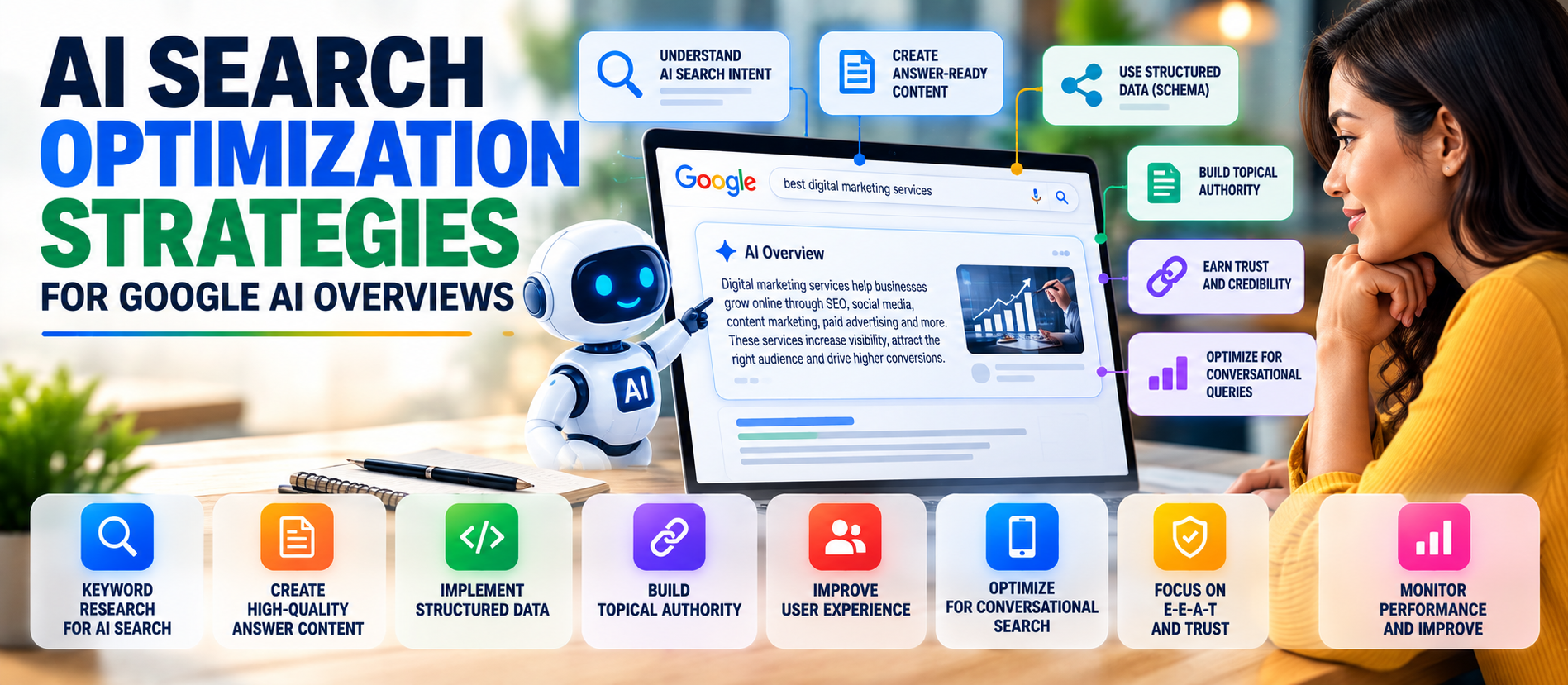
AI Search Optimization focuses on making a brand's information easy for AI-powered systems to understand, evaluate, and potentially reference. The goal is to build a trustworthy digital footprint that clearly communicates who the business is, what it offers, who it serves, and why its information is credible.
- Clear and accurate business information
- Original expert content
- Strong topical authority
- Helpful answers to customer questions
- Consistent brand and entity information
- Structured website architecture
- Authentic reviews and third-party mentions
- Fast, accessible websites
AI Is Turning Content Marketing Into a Quality Game
Generative AI has made content production dramatically easier. A marketer can create outlines, drafts, summaries, social posts, email variations, and creative concepts in minutes. This creates a major advantage for productivity, but it also creates a new problem: content saturation.
When everyone can produce generic content quickly, generic content becomes less valuable. The competitive advantage shifts toward original experience, expertise, useful data, strong opinions, practical examples, case studies, and unique brand perspectives.
What High-Value AI-Assisted Content Looks Like
- Original research and analysis
- Real customer examples
- Expert commentary
- Detailed case studies
- Original frameworks and processes
- Practical tutorials
- Useful comparisons
- Evidence-backed recommendations
AI should accelerate the content workflow, but human expertise should determine the final message, accuracy, positioning, and editorial quality.
AI Is Revolutionizing Personalization
Personalization has always been a goal of digital marketing, but AI makes it possible to personalize experiences at a much larger scale. Instead of creating one campaign for an entire audience, AI can help marketers adapt messaging according to customer behavior, interests, purchase history, lifecycle stage, and predicted intent.
Examples include personalized product recommendations, dynamic email content, audience-specific landing pages, tailored advertising messages, and automated follow-up sequences.
The result is a shift from mass marketing toward contextual marketing. Customers increasingly expect brands to understand what they need without forcing them through irrelevant communication.
AI Is Making Marketing Automation More Intelligent
Marketing automation traditionally followed predefined rules. A customer performs an action, and the system performs a predetermined response. AI adds another layer of intelligence by helping systems identify patterns and recommend what should happen next.
Examples of AI-Enhanced Automation
- Predicting which leads are most likely to convert.
- Recommending the next best marketing action.
- Personalizing email content.
- Identifying inactive customers.
- Predicting customer churn.
- Recommending products or services.
- Optimizing campaign timing.
This creates a transition from basic automation toward marketing intelligence, where systems continuously learn from customer interactions and campaign performance.
AI Is Changing Paid Advertising
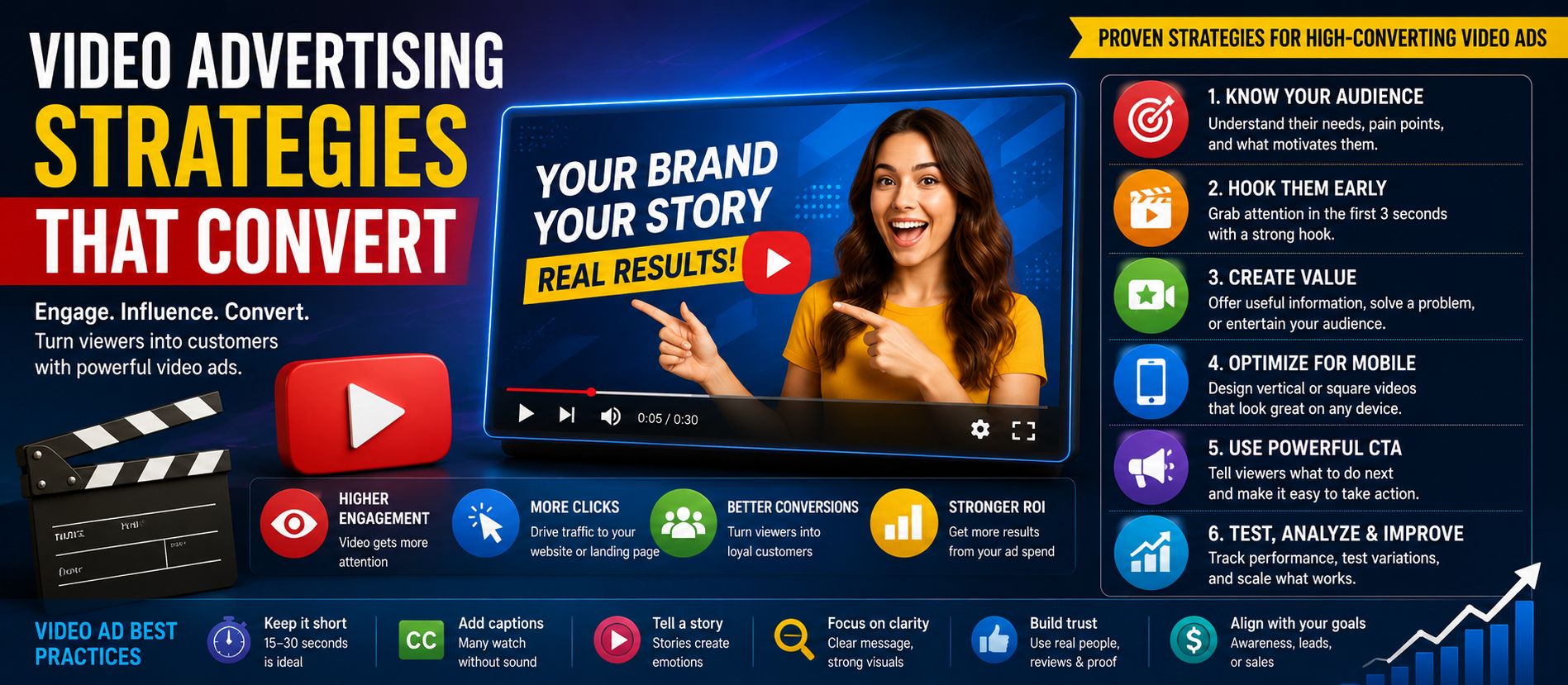
Advertising platforms are increasingly incorporating AI into targeting, bidding, creative generation, search matching, and campaign optimization. Google's 2026 product updates show a clear move toward AI-powered Search campaigns and conversational ad experiences.
For marketers, this means campaign success increasingly depends on the quality of inputs: accurate business data, strong creative assets, clear positioning, compelling offers, conversion-ready landing pages, and reliable measurement.
AI Is Changing Social Media Marketing
Social media teams can use AI to analyze audience conversations, identify trends, generate creative variations, summarize comments, and personalize campaigns. AI can also help marketers adapt one core idea into multiple formats for different platforms.
However, automation does not eliminate the need for human creativity. Social media depends heavily on cultural awareness, humor, timing, emotion, and authentic communication. AI can accelerate production, but strong brands still require human judgment.
AI Is Improving Customer Experience
AI-powered chatbots, virtual assistants, recommendation systems, and automated support workflows are changing how customers interact with businesses. Customers can receive immediate answers at any time, while human support teams can focus on complex issues that require empathy or specialized knowledge.
The best approach is not to automate every customer interaction. Instead, businesses should create a balanced model where AI handles repetitive questions and humans handle high-value conversations.
AI Is Changing Marketing Analytics
Traditional reporting often tells marketers what happened. AI can help marketers move closer to understanding why something happened and what may happen next.
- Which audience segment is most likely to convert?
- Which campaign is losing efficiency?
- Which customers may stop purchasing?
- Which content topics are gaining interest?
- Which products are likely to receive increased demand?
Predictive analytics can help teams move from reactive reporting to proactive decision-making. The value, however, depends on data quality. Poor or incomplete data can produce misleading conclusions, making strong data governance essential.
First-Party Data Is Becoming More Important
As businesses face changing privacy expectations and increasingly fragmented advertising environments, first-party data is becoming strategically important. Email subscribers, CRM records, customer purchase history, website interactions, and consented behavioral information can help businesses understand their audiences without depending entirely on rented platform data.
AI can turn this first-party data into useful insights while helping marketers personalize experiences. Businesses should always follow applicable privacy laws, obtain appropriate consent, and use customer data responsibly.
AI Is Creating New Roles for Marketers
AI is not simply eliminating marketing tasks. It is changing what marketers spend their time doing. Routine execution can increasingly be assisted by software, while human professionals focus more on strategy, brand positioning, creativity, experimentation, customer understanding, and decision-making.
Skills Marketers Need in the AI Era
- Strategic thinking
- Data literacy
- Prompt and AI workflow design
- Brand storytelling
- Customer research
- Experimentation
- Content judgment
- AI ethics and responsible data use
The Human Advantage Still Matters
The idea that AI will completely replace marketers oversimplifies the transformation. AI is exceptionally useful for pattern recognition, automation, summarization, prediction, and content assistance. Human marketers remain essential for understanding culture, emotion, customer psychology, brand identity, ethics, and business context.
The strongest model is therefore human-led, AI-enabled marketing. AI provides scale and speed; humans provide judgment and meaning.
How Businesses Should Adapt
Businesses do not need to adopt every AI tool available. A better approach is to identify repetitive processes, customer experience gaps, and decision-making bottlenecks where AI can create measurable value.
- Identify your most time-consuming marketing tasks.
- Audit your customer and marketing data.
- Choose AI applications tied to business objectives.
- Start with controlled pilot projects.
- Measure productivity and revenue impact.
- Document successful workflows.
- Train employees to use AI responsibly.
- Continuously review quality and accuracy.
SEO + AEO + GEO + AI Search Strategy
The future of digital visibility requires an integrated approach. SEO helps businesses appear in traditional search results. AEO focuses on direct answers. GEO focuses on visibility within generative search experiences. AI Search Optimization brings these disciplines together around content quality, intent, authority, structure, and machine understanding.
Key Optimization Priorities
- Create authoritative topic clusters.
- Answer important customer questions directly.
- Use descriptive headings and structured content.
- Publish original research and experience-based insights.
- Maintain accurate organization and author information.
- Strengthen internal linking and entity relationships.
- Improve technical performance and accessibility.
- Earn legitimate third-party mentions and citations.
- Refresh important content regularly.
Common AI Marketing Mistakes
- Publishing large amounts of generic AI-generated content.
- Trusting AI output without human review.
- Using inaccurate or outdated information.
- Ignoring customer privacy.
- Automating customer communication excessively.
- Measuring AI activity instead of business outcomes.
- Using AI without a clear strategic objective.
How Designfo Helps Businesses Adapt to AI Marketing
Designfo helps businesses build future-ready digital marketing strategies that combine human expertise with intelligent technology. Our approach can bring together SEO, AEO, GEO, AI Search Optimization, content marketing, marketing automation, website development, analytics, and conversion optimization.
Instead of treating AI as a standalone tool, businesses can use it as part of a broader growth system. The objective is to attract the right audience, deliver useful experiences, automate repetitive processes, and turn data into better marketing decisions.
Designfo Digital Growth Services
- AI Search Optimization
- SEO and Technical SEO
- AEO and GEO Strategy
- Marketing Automation
- Content Strategy
- Website Design and Development
- Digital Marketing
- Conversion Optimization
- Analytics and Performance Strategy
Frequently Asked Questions
How is AI changing digital marketing?
AI is changing digital marketing by improving personalization, automation, customer analysis, advertising optimization, content workflows, predictive analytics, and search experiences.
Will AI replace digital marketers?
AI is more likely to change marketing roles than eliminate the need for marketers entirely. Human strategy, creativity, brand judgment, customer understanding, and ethical decision-making remain essential.
What is AI Search Optimization?
AI Search Optimization is the practice of making a brand's information clear, authoritative, structured, and useful so it can be better understood and potentially surfaced within AI-powered search experiences.
Is SEO still important in the AI era?
Yes. SEO remains an important foundation for discoverability. Businesses should expand traditional SEO with AEO, GEO, structured content, digital PR, entity optimization, and AI Search Optimization.
How can small businesses use AI in marketing?
Small businesses can begin with practical applications such as email personalization, content research, customer support, lead qualification, social media assistance, reporting, and marketing automation. The best starting point is a measurable business problem rather than adopting AI simply because it is popular.
Conclusion
AI is changing digital marketing at a fundamental level. Search is becoming more conversational, advertising platforms are becoming more automated, customer experiences are becoming more personalized, and marketing teams are gaining access to powerful predictive and generative capabilities.
But the future of marketing will not belong to businesses that simply produce the most AI-generated content. It will belong to businesses that use AI intelligently while maintaining strong brands, trustworthy information, original expertise, excellent customer experiences, and meaningful human judgment.
The most effective strategy is to treat AI as an amplifier. Use it to move faster, understand customers better, automate repetitive work, discover opportunities, and improve decisions—but keep people responsible for strategy, creativity, accuracy, ethics, and relationships.
For businesses preparing for the next era of digital growth, the opportunity is clear: combine AI with SEO, AEO, GEO, AI Search Optimization, marketing automation, and high-quality content to build a digital presence that can adapt as technology continues to evolve.
Company: Designfo
Website: www.designfo.in
Contact: +91 9831037463
Ready to Grow?
Talk to us about a strategy tailored to your brand — we will help you stand out in search, AI discovery and social.
Comments (0)
Log in to leave a comment.