📋 Quick Summary
In this article:
What Is Healthcare Data Analytics?
Why Data Analytics Matters in Patient Recovery
Electronic Health Records (EHRs)
Patient-Reported Outcomes
How Analytics Improves Recovery
Artificial Intelligence and Predictive Analytics
Benefits for Healthcare Organizations
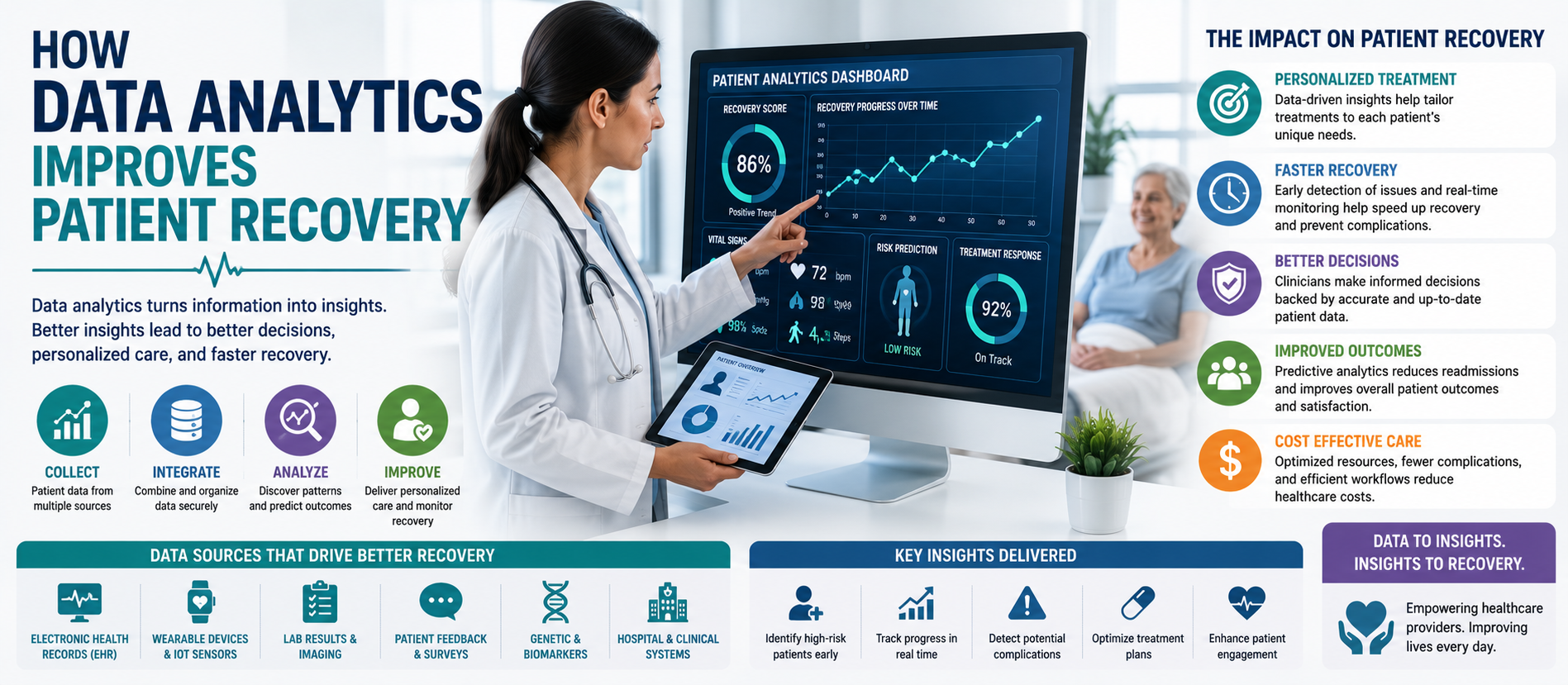
Data analytics is transforming modern healthcare by helping clinicians make better decisions, personalize treatment plans, and improve patient recovery outcomes. Hospitals, rehabilitation centers, and outpatient clinics increasingly rely on data-driven insights to monitor progress, identify risks early, and deliver more effective care. From wearable devices to electronic health records (EHRs), data analytics enables healthcare providers to improve both patient experiences and clinical results.
What Is Healthcare Data Analytics?
Healthcare data analytics is the process of collecting, organizing, analyzing, and interpreting medical and operational data to improve patient care, treatment decisions, and healthcare efficiency. It combines information from electronic health records, diagnostic reports, laboratory systems, wearable devices, imaging, and patient-reported outcomes.
Why Data Analytics Matters in Patient Recovery
- Supports personalized treatment plans.
- Identifies recovery trends earlier.
- Improves communication among care teams.
- Helps reduce preventable complications.
- Encourages evidence-based decision making.
- Enhances long-term patient engagement.
Key Sources of Recovery Data
Electronic Health Records (EHRs)
EHRs provide a comprehensive history of diagnoses, medications, procedures, allergies, and clinical notes that help guide recovery planning.
Wearable Health Devices
Fitness trackers and medical monitoring devices collect information about activity levels, heart rate, sleep quality, and other health indicators.
Remote Patient Monitoring
Connected devices allow clinicians to monitor patients recovering at home and respond quickly when concerning trends appear.
Patient-Reported Outcomes
Questionnaires and digital health apps help measure pain, mobility, mental well-being, and quality of life during rehabilitation.
How Analytics Improves Recovery
- Detects high-risk patients earlier.
- Measures rehabilitation progress objectively.
- Optimizes therapy schedules.
- Supports medication management.
- Improves discharge planning.
- Reduces hospital readmissions.
Artificial Intelligence and Predictive Analytics
AI-powered analytics can identify patterns within large healthcare datasets, predict recovery risks, prioritize interventions, and assist clinicians in making faster, more informed decisions. These tools support—not replace—professional clinical judgment.
Benefits for Healthcare Organizations
- Higher quality of care.
- Better resource utilization.
- Improved operational efficiency.
- Enhanced patient satisfaction.
- More accurate clinical reporting.
Challenges and Best Practices
- Protect patient privacy and data security.
- Ensure high-quality, accurate data.
- Train healthcare staff in analytics tools.
- Use interoperable healthcare systems.
- Continuously evaluate clinical outcomes.
Future Trends
Future recovery programs will increasingly integrate AI, machine learning, wearable technology, cloud computing, telehealth, and predictive analytics to deliver more proactive and personalized patient care.
SEO, AEO & GEO Optimized FAQs
How does data analytics improve patient recovery?
It helps clinicians monitor progress, personalize treatments, identify risks earlier, and improve overall recovery outcomes.
Can wearable devices support rehabilitation?
Yes. Wearables provide continuous health information that helps clinicians evaluate recovery and encourage patient engagement.
What role does AI play in healthcare analytics?
AI assists with pattern recognition, predictive risk analysis, and clinical decision support while complementing healthcare professionals.
Why is data quality important?
Accurate and complete information enables better clinical decisions and more reliable patient care.
Conclusion
Data analytics is reshaping patient recovery by enabling smarter clinical decisions, personalized rehabilitation plans, and continuous monitoring. Organizations that combine quality data, modern technology, skilled healthcare professionals, and patient-centered care can improve recovery outcomes and build more efficient healthcare systems.
For more expert insights on Healthcare Technology, Rehabilitation, SEO, AEO, GEO, and AI Search Optimization, visit Digiifrog at www.digiifrog.com.
Ready to Grow?
Talk to us about a strategy tailored to your brand — we will help you stand out in search, AI discovery and social.

Comments (0)
Log in to leave a comment.