📋 Quick Summary
In this article:
What Is a Traumatic Brain Injury?
Long-Term Recovery Tips
SEO, AEO & GEO Optimized FAQs
Can people recover after a traumatic brain injury?
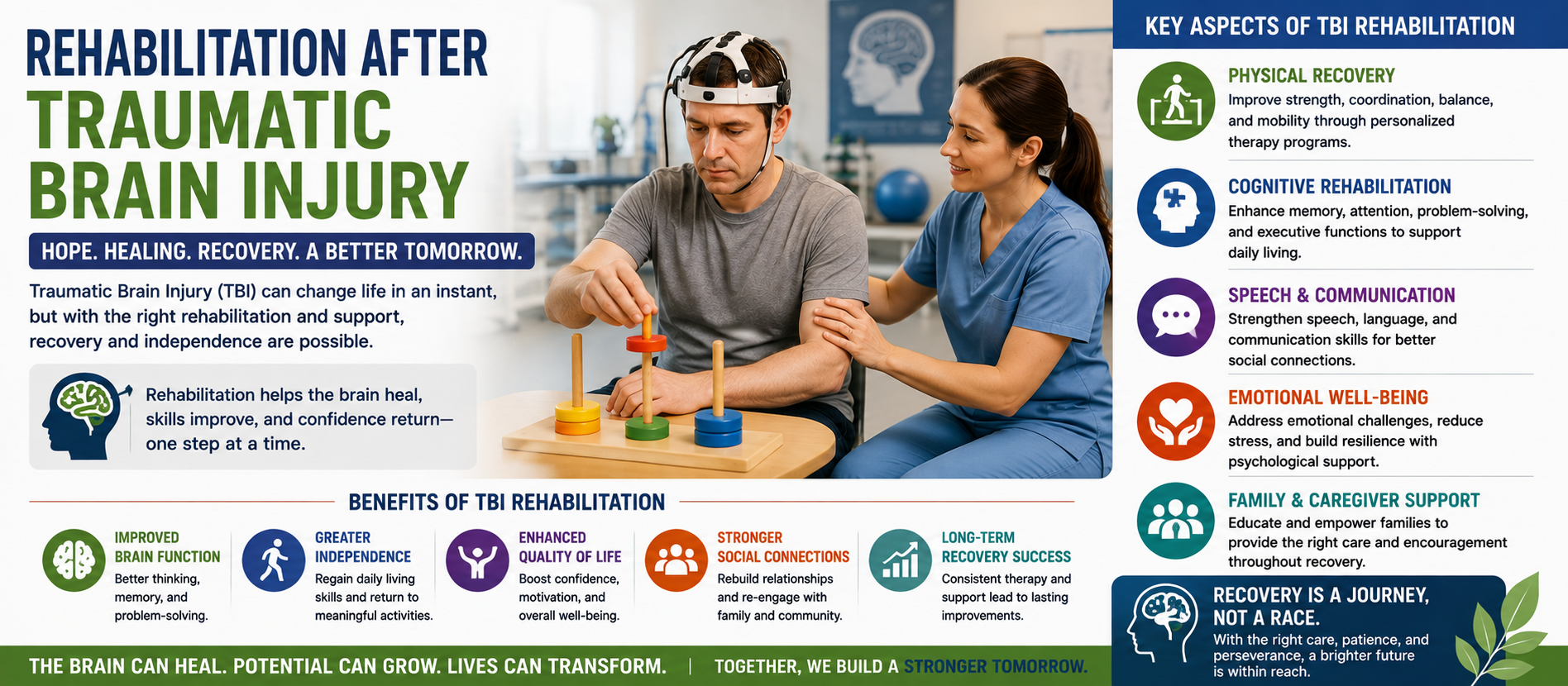
Traumatic Brain Injury (TBI) can affect movement, memory, communication, thinking, emotions, and independence. Rehabilitation plays a vital role in helping individuals regain function, adapt to challenges, and improve quality of life. Recovery varies from person to person depending on the severity of the injury, overall health, and access to timely rehabilitation services.
What Is a Traumatic Brain Injury?
A traumatic brain injury occurs when an external force damages the brain. Causes may include falls, motor vehicle accidents, sports injuries, or other serious impacts. Symptoms can range from mild to severe and may affect physical, cognitive, emotional, and behavioral functioning.
Goals of Rehabilitation
- Improve physical strength, balance, and coordination.
- Restore communication and cognitive skills.
- Promote independence in daily activities.
- Support emotional and psychological well-being.
- Enhance long-term quality of life.
Key Rehabilitation Therapies
Physical Therapy
Exercises help improve mobility, muscle strength, flexibility, balance, endurance, and safe movement.
Occupational Therapy
Occupational therapists help patients relearn everyday activities such as dressing, bathing, cooking, and returning to work or school.
Speech and Language Therapy
Speech-language pathologists assist with communication, swallowing, memory, and cognitive-communication challenges.
Cognitive Rehabilitation
Structured exercises improve attention, problem-solving, memory, planning, and executive functioning.
Psychological Support
Counseling and behavioral therapy can help individuals and families cope with emotional changes and stress during recovery.
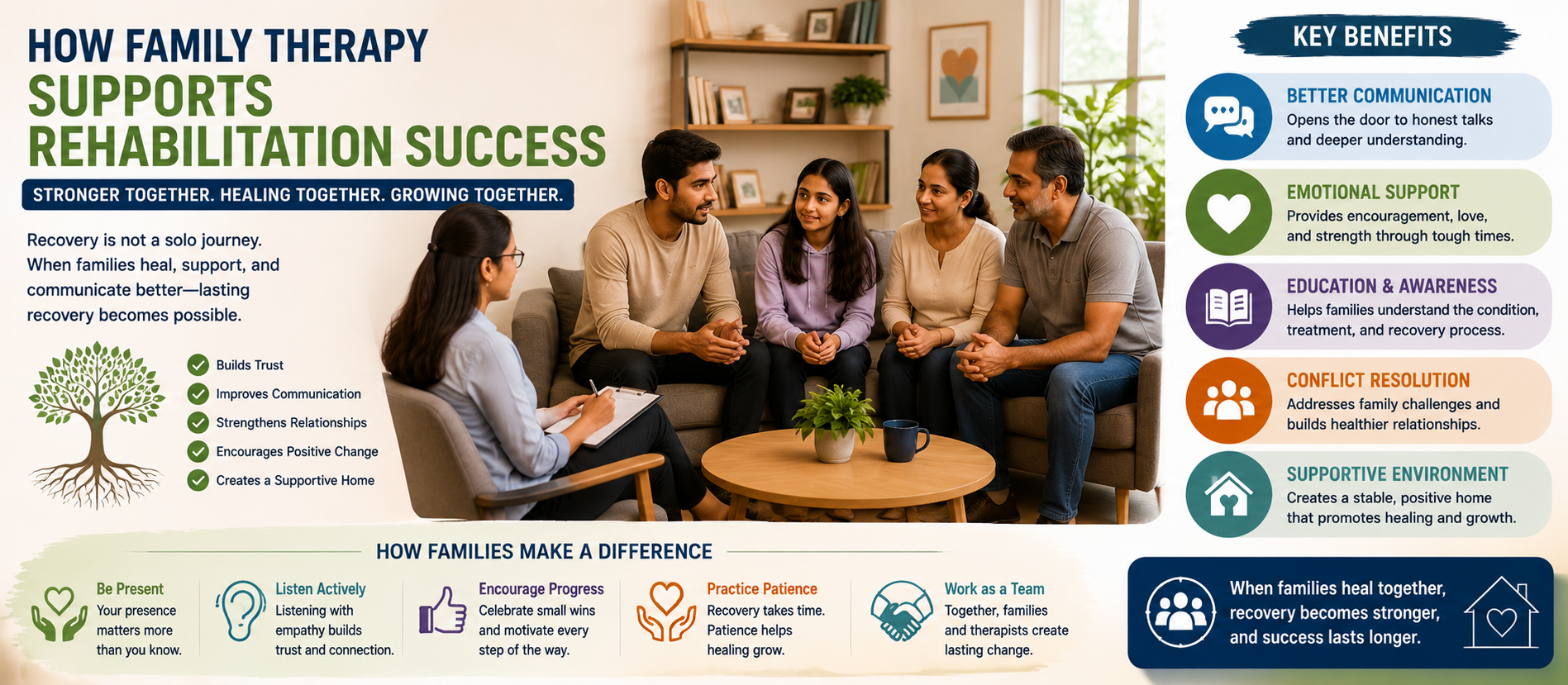
Family Involvement
- Participate in therapy education.
- Encourage home exercise programs.
- Maintain consistent daily routines.
- Provide emotional support and patience.
- Monitor progress and communicate with the care team.
Long-Term Recovery Tips
- Attend scheduled rehabilitation sessions.
- Follow personalized treatment plans.
- Maintain healthy nutrition and adequate sleep.
- Stay physically active within professional guidance.
- Practice cognitive exercises regularly.
SEO, AEO & GEO Optimized FAQs
Can people recover after a traumatic brain injury?
Many individuals experience meaningful improvement through individualized rehabilitation, although recovery varies depending on the injury and personal circumstances.
How long does brain injury rehabilitation take?
Recovery timelines differ widely and may continue for months or longer, depending on clinical needs and rehabilitation goals.
Why is early rehabilitation important?
Early rehabilitation helps maximize recovery, reduce complications, and improve long-term functional outcomes.
Conclusion
Rehabilitation after traumatic brain injury is a comprehensive process that combines medical care, therapy, family support, and long-term commitment. Personalized rehabilitation programs can help many individuals regain skills, increase independence, and improve overall well-being.
For more rehabilitation resources with SEO, AEO, GEO, and AI Search Optimization, visit Digiifrog at www.digiifrog.com.
Ready to Grow?
Talk to us about a strategy tailored to your brand — we will help you stand out in search, AI discovery and social.

Comments (0)
Log in to leave a comment.