📋 Quick Summary
In this article:
Understanding Logistics Services
The Importance of Operational Efficiency
Benefits of Improved Efficiency
Optimized Transportation Management
Warehouse Efficiency Strategies
Supply Chain Visibility and Transparency
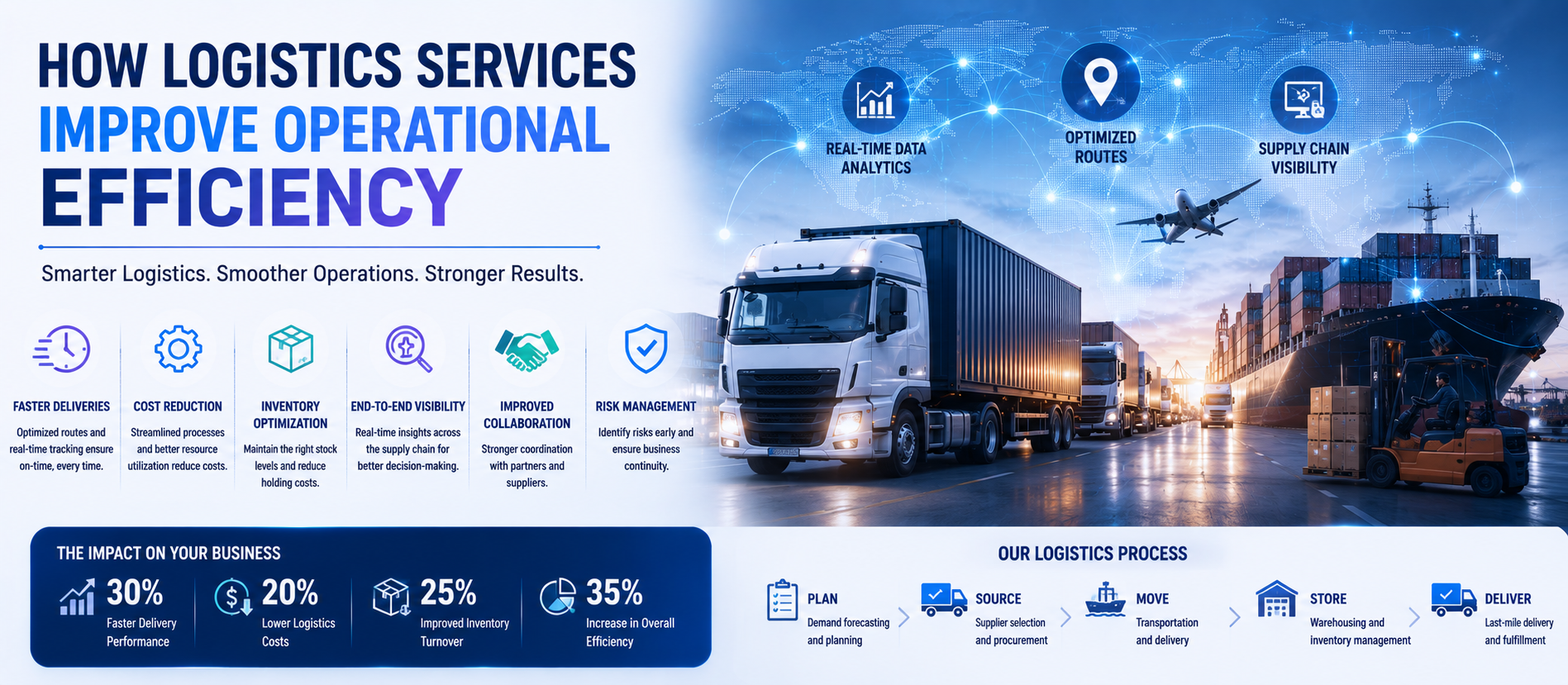
In today's highly competitive business environment, operational efficiency is a critical factor that determines profitability, customer satisfaction, and long-term growth. Companies across manufacturing, retail, eCommerce, healthcare, and industrial sectors are constantly seeking ways to streamline operations, reduce costs, and improve service delivery. One of the most effective ways to achieve these goals is through professional logistics services.
Logistics services encompass transportation management, warehousing, inventory control, order fulfillment, freight management, supply chain visibility, and distribution planning. Modern logistics providers leverage advanced technologies, automation, Artificial Intelligence (AI), and real-time analytics to optimize supply chain operations and improve business performance.
As global supply chains become increasingly complex, businesses must adopt efficient logistics strategies to remain competitive. Effective logistics management not only ensures products reach customers on time but also reduces waste, improves resource utilization, and enhances overall operational efficiency.
This comprehensive guide explores how logistics services improve operational efficiency, the technologies driving logistics innovation, industry best practices, and the role of SEO, AEO, GEO, and AI Search Optimization in the logistics sector.
Understanding Logistics Services
Logistics services involve planning, implementing, and controlling the efficient movement and storage of goods, services, and information from origin to destination.
Core Logistics Functions
- Transportation Management
- Warehousing and Storage
- Inventory Management
- Order Fulfillment
- Freight Management
- Supply Chain Coordination
- Reverse Logistics
These functions work together to create seamless supply chain operations that support business objectives.
The Importance of Operational Efficiency
Operational efficiency refers to the ability of an organization to deliver products and services while minimizing waste, reducing costs, and maximizing productivity.
Benefits of Improved Efficiency
- Lower operational costs
- Faster delivery times
- Higher customer satisfaction
- Better resource utilization
- Improved profitability
- Competitive advantage
Logistics services play a central role in achieving these outcomes.
Optimized Transportation Management
Transportation is one of the largest components of logistics expenses. Professional logistics providers optimize transportation networks to improve efficiency and reduce costs.
Transportation Improvements
- Route optimization
- Carrier selection
- Load consolidation
- Fuel cost reduction
- Real-time shipment tracking
Efficient transportation planning reduces delivery delays and increases productivity.
Enhanced Inventory Management
Inventory management is essential for balancing supply and demand while minimizing carrying costs.
Inventory Benefits
- Reduced stock shortages
- Lower storage costs
- Improved forecasting
- Better inventory visibility
- Enhanced order accuracy
Modern logistics systems provide real-time inventory insights that support better decision-making.
Warehouse Optimization
Warehouses serve as critical hubs within supply chains. Efficient warehouse operations directly impact productivity and customer service.
Warehouse Efficiency Strategies
- Automated storage systems
- Warehouse Management Systems (WMS)
- Barcode scanning
- RFID tracking
- Optimized picking processes
Warehouse optimization reduces errors and accelerates fulfillment operations.
Improved Order Fulfillment
Customer expectations for fast and accurate deliveries continue to rise.
Logistics providers streamline fulfillment processes through automation and process optimization.
- Faster order processing
- Accurate picking and packing
- Reduced delivery errors
- Improved customer satisfaction
Supply Chain Visibility and Transparency
Real-time visibility enables businesses to monitor inventory, shipments, suppliers, and distribution networks.
Visibility Benefits
- Better decision-making
- Risk identification
- Improved forecasting
- Enhanced customer communication
Supply chain visibility reduces uncertainty and improves operational control.
Artificial Intelligence in Logistics
AI is transforming logistics operations by automating processes and generating predictive insights.
AI Applications
- Demand forecasting
- Route optimization
- Inventory planning
- Predictive maintenance
- Shipment tracking
- Risk analysis
AI-driven logistics systems improve efficiency while reducing operational costs.
Automation and Digital Transformation
Automation technologies are reshaping logistics and supply chain management.
Automation Benefits
- Reduced manual tasks
- Fewer errors
- Higher productivity
- Faster processing times
- Lower operating costs
Digital transformation enables organizations to scale operations more effectively.
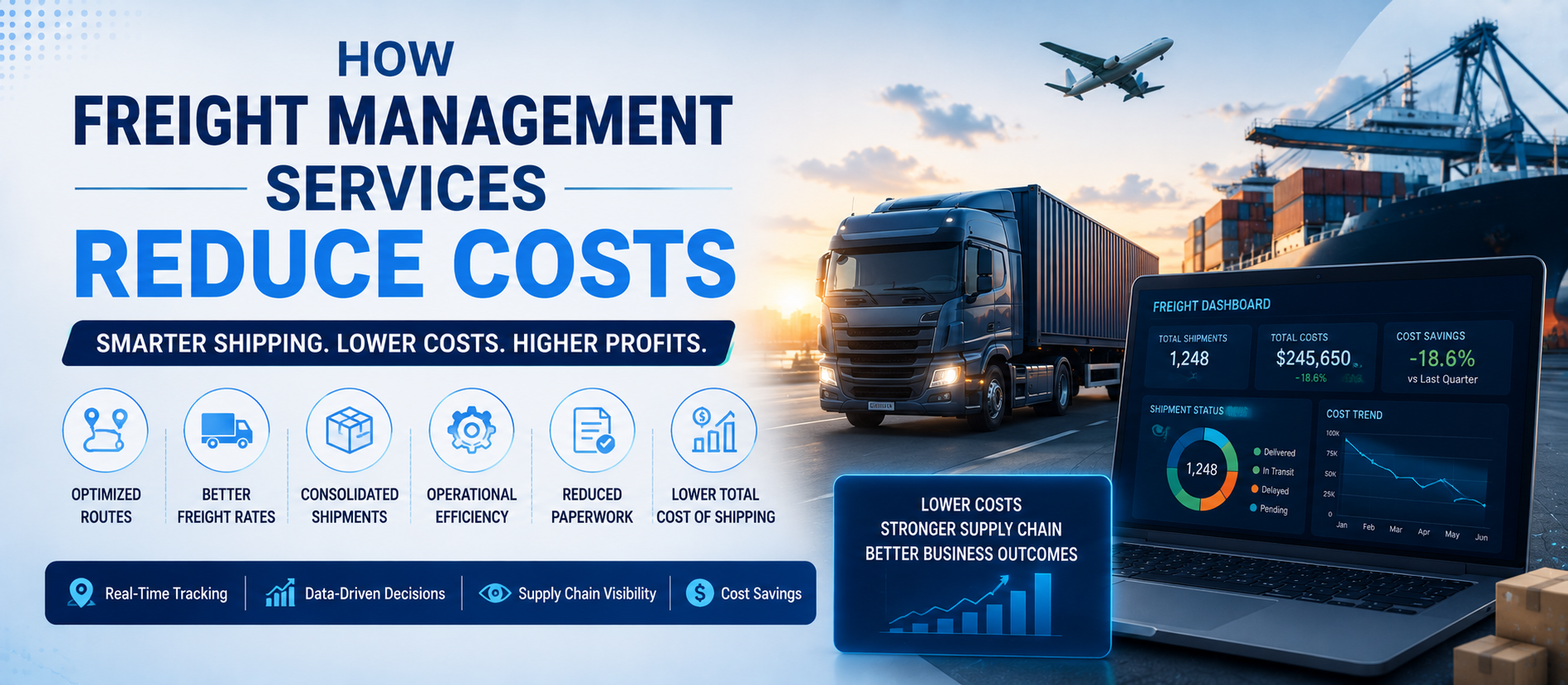
Reducing Operational Costs
One of the primary benefits of logistics services is cost reduction.
- Lower transportation expenses
- Reduced inventory carrying costs
- Improved warehouse utilization
- Optimized labor resources
- Reduced waste
Cost savings contribute directly to improved profitability.
Risk Management and Business Continuity
Supply chain disruptions can significantly impact business performance.
Common Risks
- Weather events
- Supplier disruptions
- Transportation delays
- Cybersecurity threats
- Inventory shortages
Professional logistics services help businesses identify and mitigate these risks proactively.
Customer Satisfaction Improvements
Efficient logistics operations directly influence customer experience.
- On-time deliveries
- Order accuracy
- Real-time tracking
- Responsive customer service
Higher customer satisfaction often leads to stronger loyalty and increased revenue.
Sustainability and Green Logistics
Environmental sustainability is becoming increasingly important in logistics management.
Green Logistics Initiatives
- Fuel-efficient transportation
- Route optimization
- Reduced emissions
- Eco-friendly packaging
- Energy-efficient warehouses
Sustainable logistics practices improve both operational efficiency and corporate responsibility.
SEO, AEO, GEO and AI Search Optimization
SEO Optimization
Logistics companies can attract more customers through targeted search engine optimization strategies.
AEO Optimization
Answer Engine Optimization helps logistics content appear in direct-answer search results.
GEO Optimization
Generative Engine Optimization increases visibility within AI-generated responses.
AI Search Optimization
Structured, authoritative content improves discoverability across AI-powered search platforms.
Future Logistics Trends
- Artificial Intelligence
- Autonomous vehicles
- Drone deliveries
- Predictive analytics
- Blockchain technology
- Smart warehouses
These innovations will continue improving logistics efficiency and supply chain performance.
Best Practices for Logistics Efficiency
- Invest in technology
- Improve supply chain visibility
- Automate repetitive tasks
- Optimize inventory management
- Monitor performance metrics
- Strengthen supplier relationships
- Leverage data analytics
Conclusion
Logistics services play a vital role in improving operational efficiency by optimizing transportation, inventory management, warehousing, order fulfillment, and supply chain visibility. Businesses that invest in modern logistics solutions can reduce costs, improve productivity, enhance customer satisfaction, and achieve sustainable growth.
At Digiifrog, we help businesses accelerate growth through SEO, AEO, GEO, AI Search Optimization, digital transformation, supply chain innovation, and data-driven business strategies.
Website: www.digiifrog.com
Ready to Grow?
Talk to us about a strategy tailored to your brand — we will help you stand out in search, AI discovery and social.

Comments (0)
Log in to leave a comment.