📋 Quick Summary
In this article:
Quick Answer: How Long Does It Take to Sell a Home?
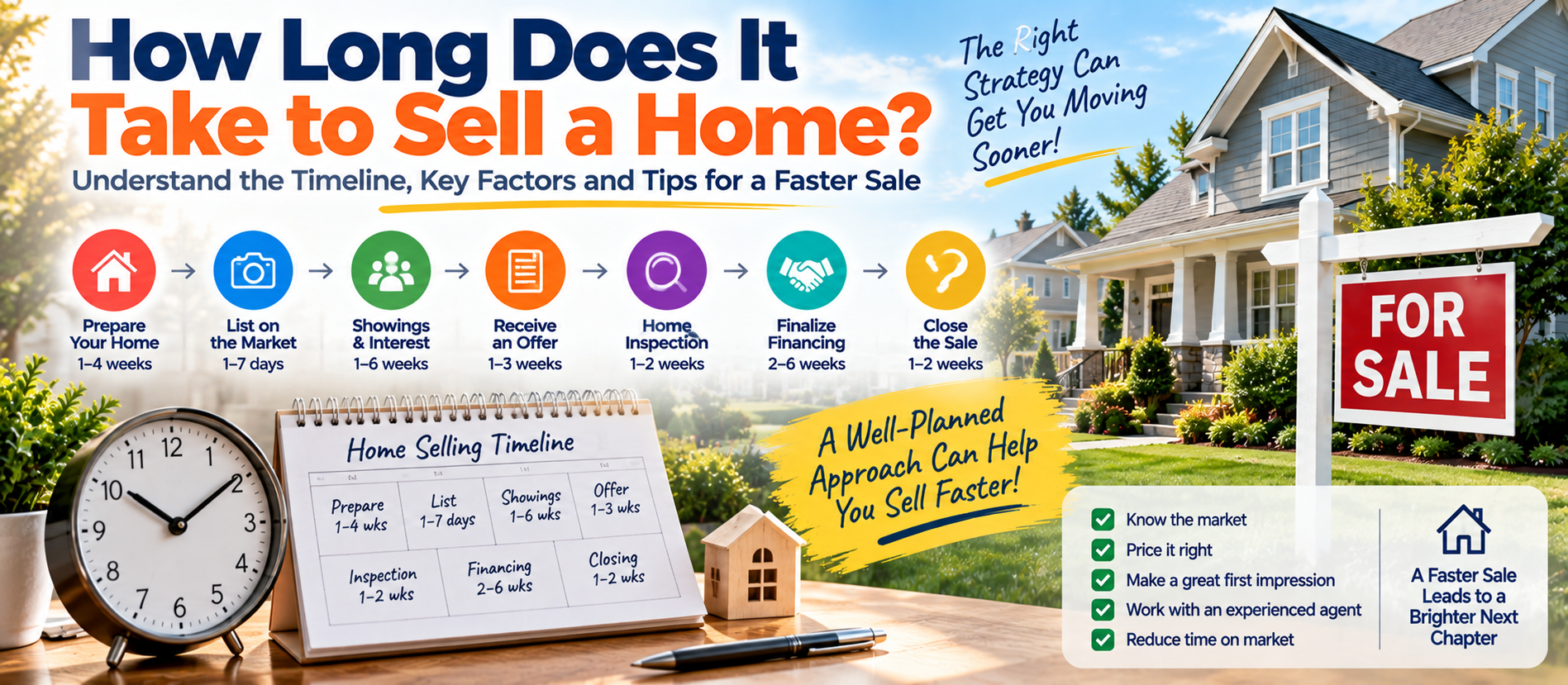
Understanding the Complete Home Selling Timeline
Stage 1: Preparing Your Home for Sale
Should You Repair Everything Before Selling?
Stage 2: Setting the Right Listing Price
Stage 3: Listing and Marketing the Home
How Long Does a Home Usually Stay on the Market?
Stage 4: Receiving and Negotiating an Offer
Stage 5: Home Inspection and Contingencies
Stage 6: The Buyer's Mortgage and Financing Process
Stage 7: Closing the Home Sale
Factors That Affect How Long It Takes to Sell a Home
How long it takes to sell a home depends on the local real estate market, the home's price, condition, location, marketing strategy, buyer demand, financing, and the closing process. Some homes receive offers quickly, while others remain on the market for weeks or months.
There is no single timeline that applies to every property. A home in a high-demand neighborhood may sell much faster than a similar home in an area with limited buyer activity. Market conditions can also change throughout the year.
This guide explains the typical stages involved in selling a home, the factors that influence the timeline, common reasons homes take longer to sell, and practical steps sellers can take to improve their chances of a successful sale.
Quick Answer: How Long Does It Take to Sell a Home?
The time required to sell a home can range from a few weeks to several months or longer. The total timeline usually includes preparing the property, listing it, finding a buyer, negotiating an offer, completing inspections and financing requirements, and closing the transaction.
The best way to estimate your home's selling timeline is to review current local market data with a qualified real estate professional. Conditions vary by city, neighborhood, property type, and price range.
Understanding the Complete Home Selling Timeline
Many people think a home is sold as soon as a buyer makes an offer. In reality, the process often includes several stages.
A typical home-selling journey may include:
- Preparing the home for sale.
- Determining a listing price.
- Listing and marketing the property.
- Scheduling showings and receiving offers.
- Negotiating with a buyer.
- Completing inspections and other contingencies.
- Completing the buyer's financing process.
- Addressing final transaction requirements.
- Closing the sale.
Each stage can affect the overall timeline.
Stage 1: Preparing Your Home for Sale
Preparing a home can take a few days, several weeks, or longer. The timeline depends on the condition of the property and the amount of work required.
Common preparation tasks include:
- Cleaning the home.
- Removing unnecessary clutter.
- Making minor repairs.
- Painting damaged or outdated areas.
- Improving curb appeal.
- Organizing storage spaces.
- Preparing the home for professional photography.
Some sellers need very little preparation. Others may decide to complete larger repairs or improvements before listing.
Should You Repair Everything Before Selling?
Not necessarily. Some repairs may improve buyer interest, while expensive renovations may not provide the expected return.
Focus first on visible maintenance problems, safety concerns, and issues that could discourage buyers. A qualified real estate professional can help evaluate which improvements may make sense in your local market.
Stage 2: Setting the Right Listing Price
Pricing is one of the most important factors affecting how quickly a home sells.
If a home is priced significantly above comparable properties, buyers may decide it does not offer enough value. The listing may receive fewer showings and remain on the market longer.
If a home is priced too low, the seller may sacrifice potential value.
A pricing strategy often considers:
- Recent sales of comparable homes.
- Current competing listings.
- Location.
- Property condition.
- Size and features.
- Buyer demand.
- Local inventory levels.
Local market analysis is especially important because national real estate trends may not reflect conditions in your neighborhood.
Stage 3: Listing and Marketing the Home
Once the property is ready, it can be photographed, described, listed, and promoted to potential buyers.
Effective marketing may include:
- Professional-quality photography.
- Clear property descriptions.
- Online real estate listings.
- Virtual tours or video content where appropriate.
- Open houses where appropriate.
- Targeted digital marketing.
- Real estate agent networks.
The goal is to make the property easy for qualified buyers to discover and understand.
How Long Does a Home Usually Stay on the Market?
The number of days a home remains listed before going under contract is often called days on market. This number can vary dramatically.
Homes may sell faster when:
- Buyer demand is strong.
- Inventory is limited.
- The home is competitively priced.
- The property is in excellent condition.
- The location is highly desirable.
Homes may take longer when:
- Buyer demand is weak.
- Many similar homes are available.
- The asking price is too high.
- The property needs significant work.
- The home has location-related disadvantages.
Because market conditions change, sellers should review current local data instead of relying on an old average.
Stage 4: Receiving and Negotiating an Offer
Receiving an offer does not automatically mean the sale is complete.
The buyer and seller may negotiate:
- The purchase price.
- Closing date.
- Inspection-related requests.
- Personal property included in the sale.
- Seller concessions.
- Other contract terms.
A simple transaction may move quickly. A complex negotiation may take longer.
Stage 5: Home Inspection and Contingencies
Many purchase agreements include contingencies that allow the buyer to complete certain reviews before the transaction becomes final.
A home inspection may identify issues involving:
- The roof.
- Electrical systems.
- Plumbing.
- Heating and cooling systems.
- Structural components.
- Other accessible areas.
If significant issues are identified, the buyer and seller may need to negotiate repairs, credits, price changes, or other solutions.
This process can extend the timeline, especially when contractors or additional inspections are needed.
Stage 6: The Buyer's Mortgage and Financing Process
If the buyer is using financing, the lender may require additional documentation and property-related steps.
The financing process may involve:
- Income and financial verification.
- Credit review.
- Property appraisal.
- Title-related requirements.
- Final loan approval.
Financing delays can affect the closing date. Sellers should understand the buyer's financing status when reviewing an offer.
Stage 7: Closing the Home Sale
Closing is the final stage where ownership is transferred according to the terms of the transaction.
The closing process may involve:
- Final document preparation.
- Title or legal requirements.
- Final loan documentation.
- A final walkthrough.
- Transfer of funds.
- Transfer of ownership.
Closing requirements vary by location and transaction type.
Factors That Affect How Long It Takes to Sell a Home
1. Location
Location is one of the strongest influences on buyer demand.
Important local factors may include:
- Employment opportunities.
- Transportation access.
- Schools and local services.
- Neighborhood development.
- Population trends.
- Local housing supply.
A home can be attractive and well-maintained but still take longer to sell if local demand is limited.
2. Asking Price
Pricing can strongly influence the number of buyers who schedule a showing.
Buyers often compare homes within a specific price range. If a property is priced above similar options, it may receive less attention.
A realistic price based on current market evidence can improve the chances of attracting qualified buyers.
3. Property Condition
Homes in good condition may appeal to more buyers.
Common issues that can affect buyer interest include:
- Visible water damage.
- Outdated systems.
- Roof problems.
- Poor maintenance.
- Unfinished repairs.
- Unpleasant odors.
- Excessive clutter.
Sellers do not always need to renovate the entire property. However, obvious problems should be carefully considered before listing.
4. Local Housing Inventory
When many similar homes are available, buyers have more choices. This can increase competition and lengthen selling times.
When inventory is limited and demand is strong, sellers may receive offers more quickly.
5. Seasonality
Real estate activity can change throughout the year.
In some locations, buyer activity increases during certain seasons. Weather, school schedules, holidays, employment patterns, and local customs can influence demand.
However, there is no universally best month to sell a home. Local market conditions are more important than general assumptions.
6. Interest Rates and Affordability
Mortgage rates and lending conditions can affect how much buyers can afford.
Changes in borrowing costs may influence buyer demand, competition, and the types of homes buyers consider.
7. Marketing Quality
Good marketing helps qualified buyers find the property.
Important elements include:
- Accurate listing information.
- High-quality images.
- Clear descriptions.
- Correct property details.
- Wide online visibility.
Poor photography or incomplete information can reduce buyer interest.
How to Sell Your Home Faster
Price the Home Competitively
Use current local market information to develop a realistic pricing strategy.
Improve First Impressions
Buyers often form opinions quickly. Focus on:
- The front entrance.
- Landscaping.
- Clean windows.
- Fresh and neutral spaces.
- Good lighting.
Complete Important Repairs
Address obvious maintenance problems that may concern buyers or complicate inspections.
Declutter the Home
A clean and organized home can help buyers understand the available space.
Use Professional-Quality Photos
Online listings are often the first place buyers see a property. Strong visual presentation can increase interest.
Make Showings Convenient
More flexible showing availability can allow more potential buyers to view the property.
Why Some Homes Take a Long Time to Sell
If a property remains on the market longer than expected, sellers should review the situation objectively.
The Price May Be Too High
A price that does not match current buyer expectations can reduce showings and offers.
The Property May Need Work
Major repairs or visible maintenance issues can discourage buyers.
The Marketing May Be Weak
Limited exposure, poor images, or incomplete property information can affect interest.
The Home May Have a Unique Challenge
Factors such as a busy road, unusual layout, limited parking, or location-specific concerns can affect buyer demand.
The Market May Have Changed
A property listed during one set of market conditions may face different conditions a few weeks later.
What Happens If Your Home Does Not Sell?
A home that does not sell is not necessarily a bad property. It may simply mean that the current strategy needs adjustment.
Sellers may consider reviewing:
- The asking price.
- Buyer feedback.
- Comparable properties.
- The condition of the home.
- Marketing quality.
- Local market changes.
Work with qualified professionals to determine whether changes are appropriate.
Cash Buyers vs. Financed Buyers: Does It Affect the Timeline?
The type of buyer can affect the transaction timeline.
⚠ Watch Out
A cash purchase may avoid some mortgage-related steps. However, cash transactions can still require inspections, title work, negotiations, legal documents, and other closing procedures.
A financed transaction may take longer because the buyer's lender has additional requirements.
The fastest offer is not always the best offer. Sellers should consider price, financing strength, contingencies, closing terms, and overall reliability.
How Long Does It Take to Sell a House After Accepting an Offer?
After accepting an offer, the transaction may still take several weeks or longer to reach closing.
The timeline can depend on:
- Inspection contingencies.
- Appraisal requirements.
- Mortgage approval.
- Title work.
- Negotiations after inspection.
- The agreed closing date.
Unexpected issues can cause delays or, in some cases, prevent the transaction from closing.
Should You Sell Before Buying Another Home?
This decision depends on your financial situation, local market conditions, housing needs, and tolerance for risk.
Selling first may provide a clearer understanding of available funds. Buying first may reduce the need to move twice, but it can create financial pressure if the existing home takes longer to sell.
Discuss your options with qualified real estate and financial professionals before making a decision.
Location-Based Differences in Home Selling Timelines
Home selling timelines are highly geographic.
A property in a major city may experience different demand than a home in a rural area. Even two neighborhoods within the same city can have very different selling conditions.
Important local factors include:
- Population growth.
- Job opportunities.
- Housing supply.
- New construction.
- Local taxes.
- School and transportation demand.
- Weather and seasonal patterns.
This is why sellers should use local data whenever possible.
How to Estimate Your Own Home Selling Timeline
To create a realistic estimate, consider the following steps:
- Review comparable homes currently for sale.
- Study recent sales in your neighborhood.
- Check how long similar properties took to sell.
- Evaluate your home's condition.
- Consider current buyer demand.
- Ask a qualified local professional for a market analysis.
- Add time for preparation and closing.
Remember that estimates are not guarantees. Real estate transactions can change quickly.
A Practical Home Selling Timeline Checklist
Before Listing
- Review your financial goals.
- Research local market conditions.
- Inspect the property for visible issues.
- Complete important repairs.
- Clean and declutter.
- Develop a pricing strategy.
During the Listing Period
- Keep the property clean.
- Make showings available when practical.
- Review buyer feedback.
- Monitor market activity.
- Stay flexible when appropriate.
After Receiving an Offer
- Review the full contract.
- Consider financing and contingencies.
- Understand the proposed closing timeline.
- Prepare for inspections and appraisals.
- Respond promptly to reasonable requests.
Common Mistakes That Can Delay a Home Sale
Overpricing the Property
Overpricing can reduce buyer interest and cause the home to sit on the market longer.
Ignoring Buyer Feedback
Repeated feedback about price, condition, or presentation may reveal an issue that needs attention.
Using Poor Listing Photos
Weak images can reduce online interest before buyers ever schedule a showing.
Making Showings Difficult
If qualified buyers cannot easily view the home, the seller may miss opportunities.
Ignoring Needed Repairs
Visible problems can create concerns about larger hidden issues.
SEO, AEO, GEO, and AI Search Optimization
This guide is structured to answer the question How long does it take to sell a home? using clear, direct language that is easy for readers and AI-powered search systems to understand.
💡 Key Insight
For SEO, important search topics include how long does it take to sell a house, home selling timeline, how to sell a house faster, and days on market explained.
For AEO, the article directly answers questions such as:
- How long does it normally take to sell a home?
- What affects how quickly a house sells?
- How can I sell my house faster?
- How long does closing take after accepting an offer?
For GEO and AI Search optimization, the article emphasizes local relevance. Home selling timelines vary by city, neighborhood, property type, price range, buyer demand, inventory, and local regulations.
Frequently Asked Questions
How long does it take to sell a home from start to finish?
The total process can take a few weeks to several months or longer. Preparation, listing time, negotiations, inspections, financing, and closing all affect the final timeline.
What makes a house sell quickly?
A competitive price, desirable location, good property condition, strong buyer demand, effective marketing, and convenient showings can help a home attract buyers more quickly.
What is the biggest reason a home does not sell?
Pricing is often a major factor, but property condition, location, marketing quality, competition, and changing market conditions can also affect the result.
How long does closing take after accepting an offer?
The timeline varies based on financing, inspections, appraisals, title requirements, and the terms of the purchase agreement. Some transactions close faster than others.
Does a cash buyer make the process faster?
A cash buyer may avoid some mortgage-related delays, but inspections, negotiations, title work, legal requirements, and other closing steps may still be necessary.
Can I speed up the sale of my home?
You may improve your chances by pricing competitively, completing important repairs, improving presentation, using strong marketing, and making the home accessible for showings.
Final Thoughts
There is no exact answer to how long it takes to sell a home. Every property and market is different. The selling timeline depends on preparation, pricing, demand, location, property condition, marketing, buyer financing, and the closing process.
The best strategy is to prepare carefully and base decisions on current local market information. Avoid assuming that a national average applies directly to your neighborhood.
A well-presented home with realistic pricing and effective marketing may attract qualified buyers more efficiently. At the same time, sellers should remain prepared for inspections, negotiations, financing requirements, and unexpected delays.
For more useful information about real estate, homeownership, property trends, business, technology, SEO, AEO, GEO, and AI Search optimization, visit www.digiifrog.com.
Disclaimer
This article provides general educational information and is not legal, financial, tax, mortgage, or real estate advice. Home selling timelines and transaction requirements vary by location, property type, market conditions, financing, contracts, and individual circumstances. Consult qualified local real estate, legal, financial, and tax professionals before making important decisions about selling a property.
Ready to Grow?
Talk to us about a strategy tailored to your brand — we will help you stand out in search, AI discovery and social.

Comments (0)
Log in to leave a comment.