📋 Quick Summary
In this article:
The Evolution of Banking Technology
1. Better Financial Visibility
2. Personalized Financial Services
3. Faster Loan Approvals
4. Improved Money Management
5. Enhanced Competition
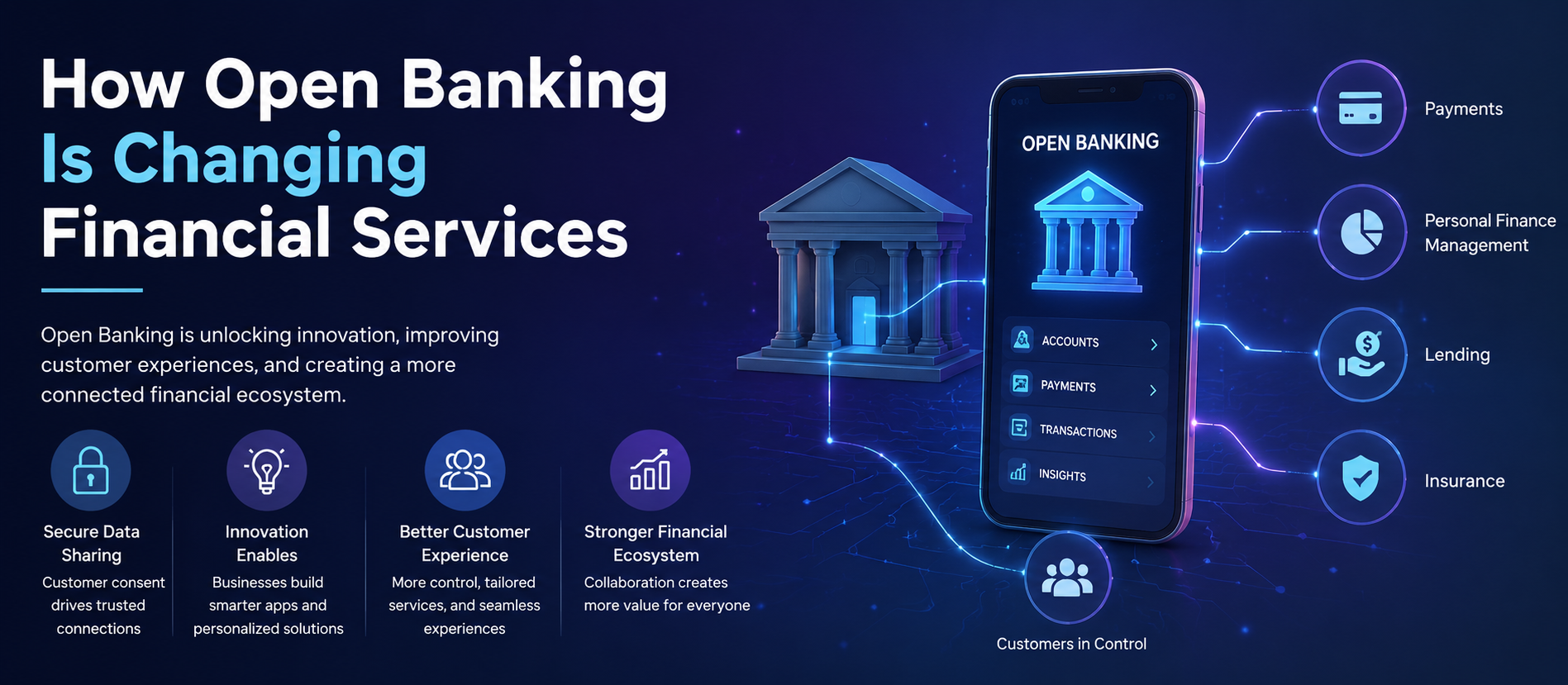
Open Banking is transforming the global financial ecosystem by enabling secure data sharing between banks, fintech companies, businesses, and consumers. What once required lengthy paperwork, manual verification, and isolated banking systems can now be accomplished through secure APIs, real-time connectivity, and intelligent financial applications. As digital transformation accelerates, Open Banking is becoming one of the most influential innovations in modern finance.
For consumers, Open Banking offers greater control over financial data, personalized services, improved transparency, and enhanced convenience. For businesses, it creates opportunities for faster payments, smarter lending, and data-driven decision-making. For financial institutions, it opens the door to innovation, partnerships, and new revenue models.
This comprehensive guide from Digiifrog explores how Open Banking is changing financial services, why it matters, its benefits, challenges, future trends, and its growing role in SEO, AEO, GEO, and AI-powered search experiences.
What Is Open Banking?
Open Banking refers to a system where banks and financial institutions allow secure access to customer financial data through Application Programming Interfaces (APIs). Customers explicitly grant permission for third-party providers to access specific financial information or initiate transactions on their behalf.
Rather than keeping financial data locked inside a single institution, Open Banking creates a connected ecosystem where authorized services can work together to provide better financial experiences.
Examples include:
- Budgeting applications that connect multiple bank accounts.
- Personal finance management tools.
- Alternative lending platforms.
- Investment management applications.
- Real-time payment solutions.
- Digital wallets and fintech services.
The Evolution of Banking Technology
Traditional banking operated through closed systems. Customers depended entirely on their bank for financial products and services. Information sharing was limited, transactions often required manual intervention, and innovation progressed slowly.
Digital banking introduced online portals and mobile apps. However, many institutions still maintained isolated infrastructures.
Open Banking represents the next phase of digital finance by creating interoperability between financial institutions and third-party providers. Through APIs, data can flow securely between systems while maintaining customer consent and regulatory compliance.
This shift has fundamentally altered how consumers interact with financial services.
How Open Banking Works
The Open Banking framework typically follows a simple process:
- A customer chooses a third-party financial service.
- The customer grants permission to access specific banking information.
- The bank verifies customer consent.
- Secure APIs transfer authorized information.
- The third-party provider delivers personalized financial services.
💡 Key Insight
Importantly, customers remain in control. Access permissions can usually be modified or revoked at any time.
Major Benefits for Consumers
1. Better Financial Visibility
Consumers often maintain accounts across multiple banks, credit cards, investment platforms, and loan providers. Open Banking allows all this information to be viewed through a single dashboard.
This centralized view helps users understand spending habits, savings progress, debt levels, and overall financial health.
2. Personalized Financial Services
Financial products are increasingly tailored to individual needs. By analyzing transaction history and spending behavior, providers can offer customized recommendations for savings accounts, insurance policies, loans, and investments.
3. Faster Loan Approvals
Traditional lending processes can take days or weeks. Open Banking allows lenders to access verified financial information instantly, reducing paperwork and accelerating approvals.
Borrowers benefit from quicker decisions and more accurate risk assessments.
4. Improved Money Management
Budgeting apps powered by Open Banking can categorize expenses automatically, identify spending trends, and provide alerts to help users stay within budget.
5. Enhanced Competition
Consumers gain access to a wider range of innovative financial products rather than being limited to offerings from a single bank.
Benefits for Businesses
Streamlined Payments
Businesses can accept direct account-to-account payments without relying heavily on traditional card networks.
Improved Cash Flow Management
Real-time transaction visibility helps organizations monitor finances more effectively.
Faster Credit Decisions
Open Banking enables lenders to assess business finances quickly, supporting faster access to working capital.
Reduced Fraud Risks
Enhanced verification and authentication mechanisms contribute to stronger security and reduced fraud exposure.
Operational Efficiency
Automated financial data integration reduces manual processes and administrative burdens.
The Impact on Banks
Open Banking has fundamentally changed the role of banks.
Instead of serving as the sole provider of financial services, banks increasingly act as platforms that facilitate innovation through partnerships.
Leading institutions now collaborate with fintech companies to:
- Develop digital payment solutions.
- Create advanced financial management tools.
- Offer embedded finance products.
- Improve customer experiences.
- Expand digital ecosystems.
Although competition has increased, banks also gain opportunities to create new revenue streams through API services and strategic partnerships.
Open Banking and Fintech Innovation
Fintech companies are among the biggest beneficiaries of Open Banking.
Access to banking data enables startups to develop innovative services that address customer pain points more effectively than traditional models.
Examples include:
- Automated savings platforms.
- AI-driven investment advisors.
- Alternative credit scoring systems.
- Expense tracking applications.
- Subscription management tools.
- Digital accounting platforms.
This innovation encourages competition and improves financial accessibility.
The Role of APIs in Open Banking
APIs are the technological foundation of Open Banking.
They serve as secure communication channels between banks and authorized providers.
Key API benefits include:
- Real-time data access.
- Standardized communication.
- Improved security.
- Scalability.
- Faster integration.
- Enhanced user experiences.
As API technology continues evolving, Open Banking capabilities will become even more sophisticated.
Security and Privacy Considerations
Security remains a central concern for Open Banking adoption.
Financial institutions implement multiple safeguards, including:
- Strong customer authentication.
- Encryption protocols.
- Consent management systems.
- Continuous monitoring.
- Fraud detection tools.
- Regulatory compliance frameworks.
Consumers should always verify provider legitimacy and understand how their data will be used before granting access.
Open Banking and Artificial Intelligence
Artificial Intelligence is amplifying the value of Open Banking.
AI systems can analyze financial data to provide:
- Personalized budgeting advice.
- Predictive cash flow forecasting.
- Fraud detection.
- Investment recommendations.
- Credit risk assessment.
- Financial wellness insights.
The combination of Open Banking and AI creates highly intelligent financial experiences that adapt to individual needs.
Embedded Finance and Open Banking
Embedded finance allows financial services to be integrated directly into non-financial platforms.
Examples include:
- E-commerce checkout financing.
- Ride-sharing payment systems.
- Business software with integrated banking features.
- Marketplace lending solutions.
Open Banking makes embedded finance possible by enabling secure access to financial infrastructure.
Open Banking and Financial Inclusion
Millions of individuals and small businesses struggle to access traditional financial products.
Open Banking can improve inclusion by providing alternative methods for evaluating creditworthiness.
Instead of relying solely on traditional credit scores, lenders can analyze income patterns, transaction histories, and financial behavior.
This creates opportunities for underserved populations to access loans, savings products, and other financial services.
Challenges Facing Open Banking
Consumer Awareness
Many consumers still do not fully understand Open Banking or its benefits.
Data Privacy Concerns
Users may hesitate to share financial information with third-party providers.
Regulatory Complexity
Different regions maintain varying compliance requirements.
Technical Standardization
Achieving consistent API standards across institutions remains a challenge.
Cybersecurity Risks
As connectivity increases, organizations must continuously strengthen security measures.
Global Adoption Trends
Open Banking adoption continues accelerating across the world.
Governments, regulators, banks, and fintech companies increasingly recognize the economic benefits of connected financial ecosystems.
Organizations are investing heavily in digital transformation initiatives that support Open Banking infrastructure and innovation.
The movement is evolving from Open Banking toward broader Open Finance models that include investments, insurance, pensions, and additional financial products.
Future Trends in Open Banking
- AI-powered financial assistants.
- Real-time payment networks.
- Embedded finance expansion.
- Open Finance ecosystems.
- Personalized banking experiences.
- Enhanced fraud prevention.
- Cross-border financial connectivity.
- Digital identity integration.
These developments will continue reshaping the future of financial services over the coming decade.
SEO, AEO, GEO, and AI Search Implications
Businesses operating in Open Banking must optimize digital content for modern discovery channels.
SEO (Search Engine Optimization)
Create authoritative content addressing customer questions about Open Banking, APIs, fintech innovation, security, compliance, and digital payments.
AEO (Answer Engine Optimization)
Structure content using clear headings, concise answers, FAQs, and schema-friendly formatting to improve visibility in answer engines.
GEO (Generative Engine Optimization)
Provide comprehensive, trustworthy, and context-rich content that AI systems can reference when generating responses.
AI Search Readiness
As AI-powered search grows, organizations should focus on expertise, transparency, factual accuracy, and user intent.
Financial content that demonstrates authority and trustworthiness is more likely to be surfaced by AI-driven search platforms.
Frequently Asked Questions (FAQ)
What is Open Banking?
Open Banking is a system that enables secure sharing of banking data between financial institutions and authorized third-party providers through APIs.
Is Open Banking safe?
Yes. Open Banking frameworks use strong authentication, encryption, customer consent mechanisms, and regulatory oversight to protect data.
How does Open Banking benefit consumers?
It improves financial visibility, personalization, budgeting, loan approvals, and access to innovative financial products.
How does Open Banking help businesses?
Businesses gain access to faster payments, better cash flow insights, streamlined operations, and improved lending opportunities.
What is the future of Open Banking?
The future includes Open Finance, embedded finance, AI-driven financial services, real-time payments, and expanded digital ecosystems.
Conclusion
Open Banking is redefining how financial services operate in the digital age. By enabling secure data sharing, encouraging innovation, improving personalization, and fostering competition, Open Banking creates value for consumers, businesses, fintech firms, and traditional financial institutions alike.
As technology advances and adoption expands, Open Banking will continue driving transformation across lending, payments, investments, insurance, and financial management. Organizations that embrace Open Banking, AI integration, SEO, AEO, GEO, and AI search optimization strategies will be well positioned to thrive in the future financial ecosystem.
Digiifrog
Website: www.digiifrog.com
Ready to Grow?
Talk to us about a strategy tailored to your brand — we will help you stand out in search, AI discovery and social.


Comments (0)
Log in to leave a comment.