📋 Quick Summary
In this article:
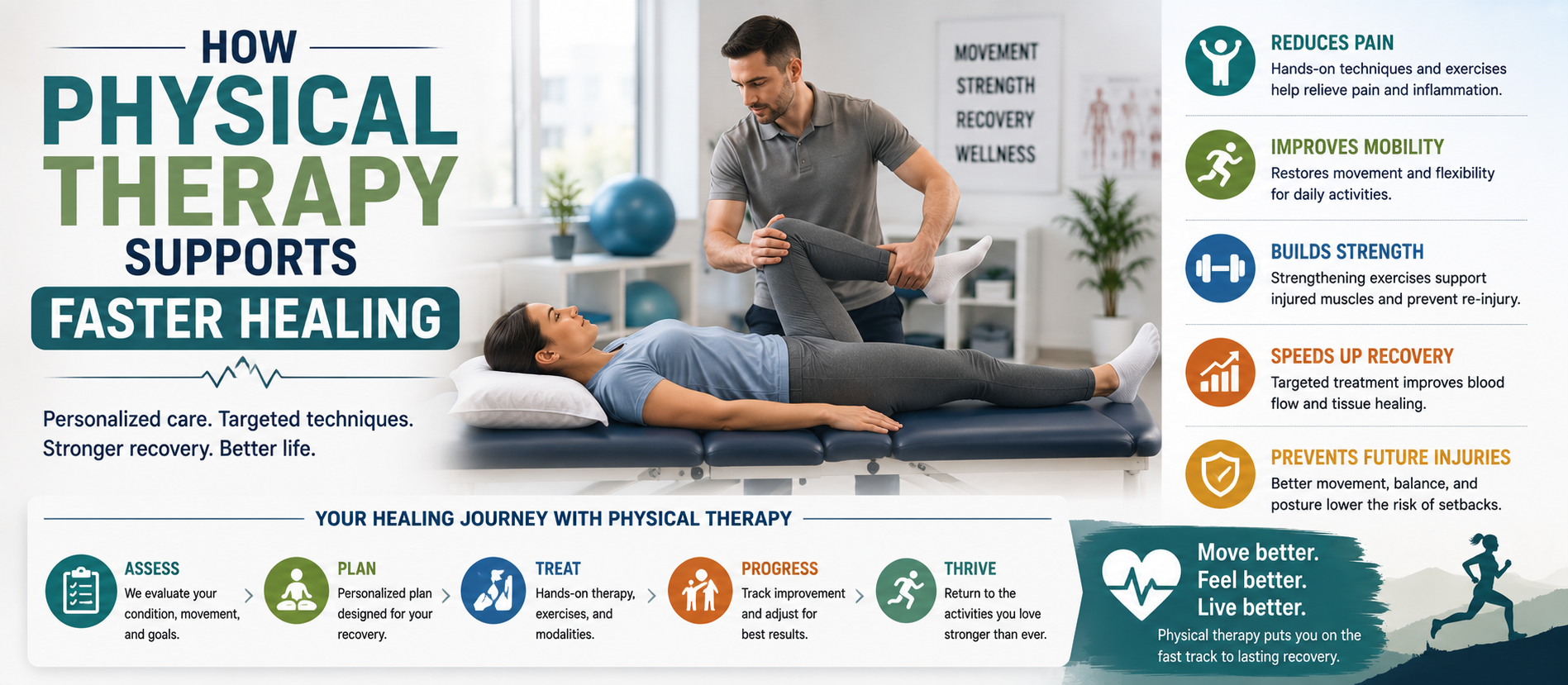
Why Physical Therapy Can Support Recovery
1. Reducing Pain Through Movement
2. Restoring Range of Motion
3. Rebuilding Muscle Strength
4. Improving Balance and Coordination
5. Preventing Deconditioning
6. Supporting Recovery After Surgery
7. Improving Walking and Functional Mobility
8. Helping Patients Return to Daily Activities
9. Teaching Patients How to Manage Their Condition
10. Creating a Personalized Exercise Program
💡 Key Insight
Physical therapy plays an important role in rehabilitation by helping people restore movement, strength, balance, coordination, and confidence after injury, surgery, illness, or periods of reduced activity. Rather than simply waiting for the body to heal, a properly designed rehabilitation program uses assessment, progressive movement, education, and functional training to help a person return safely to everyday activities.
The phrase “faster healing” should not be interpreted as a promise that physical therapy can instantly repair an injury. Healing depends on the type and severity of the condition, overall health, age, nutrition, sleep, medical treatment, and many other factors. Physical therapy can support the recovery process by addressing pain, stiffness, weakness, reduced mobility, and functional limitations while helping patients gradually return to appropriate activity.
What Is Physical Therapy?
Physical therapy is a healthcare profession focused on improving movement and physical function. A physical therapist evaluates a person's condition, identifies limitations, establishes goals, and develops an individualized treatment plan.
Treatment can include therapeutic exercise, mobility training, strengthening, balance activities, manual techniques, movement education, functional training, and home exercises. The exact combination depends on the diagnosis and the individual's goals.
Why Physical Therapy Can Support Recovery
Injury often creates a cycle of pain, reduced movement, weakness, and loss of confidence. Avoiding movement for too long can contribute to deconditioning and functional limitations. Physical therapy helps break this cycle by introducing appropriate movement at a level the patient can safely tolerate.
Evidence from post-acute care research involving more than 1.4 million Medicare cases found that physical and occupational therapy were associated with functional benefits, including improvements in activities such as walking, bathing, and dressing. The research also found lower hospital readmission among patients receiving therapy. citeturn0search1turn0search24
1. Reducing Pain Through Movement
Pain can make people afraid to move, but complete inactivity is not always the best strategy. Depending on the condition, carefully selected exercises can help improve physical capacity and reduce pain-related disability.
A recent umbrella review of exercise research found significant pain reduction across a wide range of conditions, although results vary between individuals and diagnoses. This supports the role of appropriately prescribed exercise as one component of pain management. citeturn0search0
A physical therapist can modify exercise intensity, repetitions, range of motion, and rest periods according to the person's response.
2. Restoring Range of Motion
Stiff joints and restricted movement are common after surgery, injury, prolonged immobilization, or certain medical conditions. Reduced range of motion can make simple tasks such as reaching, walking, climbing stairs, or getting dressed more difficult.
Physical therapy may use gentle mobility exercises, stretching, active movement, positioning, and functional activities to gradually restore usable motion. Progress should be appropriate to the injury and medical restrictions.
3. Rebuilding Muscle Strength
Muscles can become weaker after injury, surgery, bed rest, pain, or inactivity. Weakness may affect balance, walking, posture, lifting, and everyday activities.
Progressive strengthening allows muscles to adapt gradually. A therapist may begin with low-load exercises and increase resistance as strength and tolerance improve. The objective is not simply stronger muscles but improved functional ability.
4. Improving Balance and Coordination
Balance problems can increase the risk of falls and reduce confidence. Physical therapists can assess balance and develop exercises targeting stability, coordination, lower-limb control, and safe movement.
Balance training can be particularly important for older adults, people recovering from neurological conditions, and individuals returning to activity after injury.
5. Preventing Deconditioning
When someone remains inactive for an extended period, physical capacity can decline. Reduced endurance and strength may make recovery harder because everyday activities require more effort.
Rehabilitation can introduce progressive activity that matches the person's current ability. This approach helps rebuild tolerance without unnecessarily exceeding the body's capacity.
6. Supporting Recovery After Surgery
Physical therapy is frequently included after orthopedic procedures and other surgeries that affect mobility. Depending on the procedure, rehabilitation may focus on swelling management, range of motion, strength, gait, balance, and gradual return to functional activities.
The timing and intensity of therapy should follow the surgeon's restrictions and the patient's clinical condition. A faster return is not always better if tissues require a specific healing period.
7. Improving Walking and Functional Mobility
Walking is a complex activity requiring strength, balance, coordination, joint mobility, and confidence. Physical therapists can assess walking patterns and provide gait training when needed.
Rehabilitation may include walking drills, stair practice, transfers, assistive-device training, and exercises designed around real-life activities. The goal is to make everyday movement safer and more efficient.
8. Helping Patients Return to Daily Activities
Successful rehabilitation is measured by more than pain scores. A person may want to return to cooking, driving, working, exercising, caring for family members, or participating in hobbies.
Physical therapy can translate improvements in strength and mobility into practical tasks. Functional goals make treatment more relevant and can help patients recognize progress.
9. Teaching Patients How to Manage Their Condition
Education is a major part of modern physical therapy. Patients can learn about movement, exercise progression, posture, activity modification, pacing, and strategies for managing symptoms.
Evidence-based physical therapy integrates research evidence with clinical expertise and patient values and circumstances. This means treatment should be individualized rather than based on a one-size-fits-all routine. citeturn0search15
10. Creating a Personalized Exercise Program
A home exercise program can extend rehabilitation beyond clinic visits. Exercises should be selected according to the person's diagnosis, goals, ability, and stage of recovery.
Consistency is important, but more exercise is not automatically better. Overtraining can increase soreness or aggravate symptoms. Patients should follow professional instructions and report unusual or worsening symptoms.
11. Supporting Long-Term Pain Management
For persistent musculoskeletal pain, physical therapy may focus on gradually increasing activity, improving strength and function, building confidence with movement, and developing self-management skills.
Research on chronic low back pain suggests exercise therapy can reduce pain and disability compared with little or no treatment, although the size of benefit and certainty of evidence vary by intervention and patient group. citeturn0search14turn0search3
12. Improving Confidence and Independence
Physical limitations can make people dependent on family members or caregivers. As mobility and strength improve, patients may regain confidence in completing daily tasks independently.
Independence is an important rehabilitation outcome. The goal is to help people participate in meaningful activities as safely and independently as their condition allows.
13. Supporting Workplace Recovery
For people recovering from workplace injuries, physical therapy can address functional abilities related to job demands. Depending on the situation, treatment may include lifting mechanics, endurance, movement training, posture, and gradual return-to-work activities.
Work rehabilitation should be coordinated with appropriate medical professionals and workplace requirements. A safe return-to-work plan may involve modified duties or a gradual increase in responsibilities.
14. Physical Therapy for Different Conditions
Physical therapy may be used across many rehabilitation settings, including orthopedic injuries, sports injuries, post-surgical recovery, neurological conditions, balance disorders, chronic pain, and age-related mobility limitations.
The treatment approach differs substantially by diagnosis. A program appropriate for a knee injury may not be appropriate for someone recovering from a stroke or neurological disorder. Professional assessment is therefore essential.
15. The Importance of Gradual Progression
Recovery is rarely a straight line. Some days may feel better than others. Physical therapists often use progressive loading, graded activity, and functional milestones to help patients advance safely.
Gradual progression allows the body to adapt while giving the therapist an opportunity to monitor symptoms and modify the program. It can also help patients avoid the cycle of doing too much on a good day and then becoming excessively sore or inactive afterward.
16. Combining Physical Therapy With Other Care
Physical therapy may be one part of a broader rehabilitation plan. Depending on the condition, patients may also need medical care, occupational therapy, speech therapy, nutrition support, psychological services, medication, or surgical follow-up.
Multidisciplinary care can be especially valuable when an injury or illness affects multiple aspects of daily life.
How to Get Better Results From Physical Therapy
- Attend scheduled appointments consistently.
- Follow the prescribed home exercise program.
- Ask questions when an exercise is unclear.
- Report unusual pain, swelling, dizziness, or other concerning symptoms.
- Respect medical restrictions and recovery timelines.
- Maintain appropriate sleep, nutrition, and hydration.
- Set realistic functional goals with the therapist.
- Track progress rather than expecting instant results.
Common Mistakes to Avoid
One common mistake is assuming that pain always means damage or that complete rest is always the fastest route to recovery. Another is performing exercises copied from the internet without considering the specific diagnosis.
Patients should also avoid progressing resistance, repetitions, or activity too quickly without professional guidance. Rehabilitation should be challenging enough to promote adaptation but appropriate for the person's current condition.
When Should You See a Physical Therapist?
A healthcare professional can help determine whether physical therapy is appropriate for persistent pain, limited movement, weakness, balance problems, recovery after surgery, injury, or difficulty performing daily activities.
Urgent symptoms such as severe trauma, sudden loss of function, chest pain, significant breathing difficulty, new neurological deficits, or other emergency symptoms require appropriate urgent medical evaluation rather than routine physical therapy alone.
SEO, AEO, GEO & AI Search FAQs
How does physical therapy help healing?
Physical therapy supports recovery by improving mobility, strength, balance, function, and confidence while helping patients gradually return to appropriate activity.
Can physical therapy make recovery faster?
Physical therapy can support efficient functional recovery, but it cannot guarantee a specific healing time. Recovery depends on the condition, tissue healing, overall health, treatment adherence, and other factors.
Does physical therapy reduce pain?
Appropriately prescribed exercise and rehabilitation can reduce pain and improve function for many conditions, although results vary by diagnosis and individual circumstances.
How often should I attend physical therapy?
Frequency depends on the diagnosis, goals, stage of recovery, and treatment plan. A physical therapist can recommend an appropriate schedule.
Are home exercises important?
Yes. When prescribed appropriately, home exercises can reinforce skills practiced during therapy and support continued progress between appointments.
Can physical therapy prevent future injuries?
Physical therapy can address strength, mobility, balance, movement patterns, and activity habits that may contribute to functional limitations. Prevention depends on the condition and individual risk factors.
Conclusion
Physical therapy supports faster healing not by rushing the body's biological healing process, but by helping people restore movement and function safely and progressively. Through individualized assessment, therapeutic exercise, mobility work, strengthening, balance training, education, and functional practice, physical therapy can help patients move from injury or illness toward greater independence.
The most effective rehabilitation plan is personalized to the person's condition and goals. Working with a qualified physical therapist, following an appropriate exercise plan, communicating openly about symptoms, and maintaining healthy daily habits can create a strong foundation for recovery.
Important: This article is educational and does not replace diagnosis or individualized medical advice. Exercise and rehabilitation should be selected according to the person's condition and any medical or surgical restrictions.
For more rehabilitation and wellness content with SEO, AEO, GEO, and AI Search Optimization, visit Digiifrog at www.digiifrog.com.
Research basis: The article incorporates evidence and professional resources from the American Physical Therapy Association, National Academies/NCBI resources, and recent systematic reviews of exercise and rehabilitation outcomes.
Ready to Grow?
Talk to us about a strategy tailored to your brand — we will help you stand out in search, AI discovery and social.

Comments (0)
Log in to leave a comment.