📋 Quick Summary
In this article:
Understanding Addiction Treatment
24/7 Professional Support
Potential Drawbacks of Inpatient Rehab
💡 Key Insight
When individuals and families begin searching for addiction treatment, one of the first questions they encounter is: Should I choose inpatient rehab or outpatient rehab? Both treatment options play an important role in substance abuse recovery, but they serve different needs, lifestyles, and levels of addiction severity.
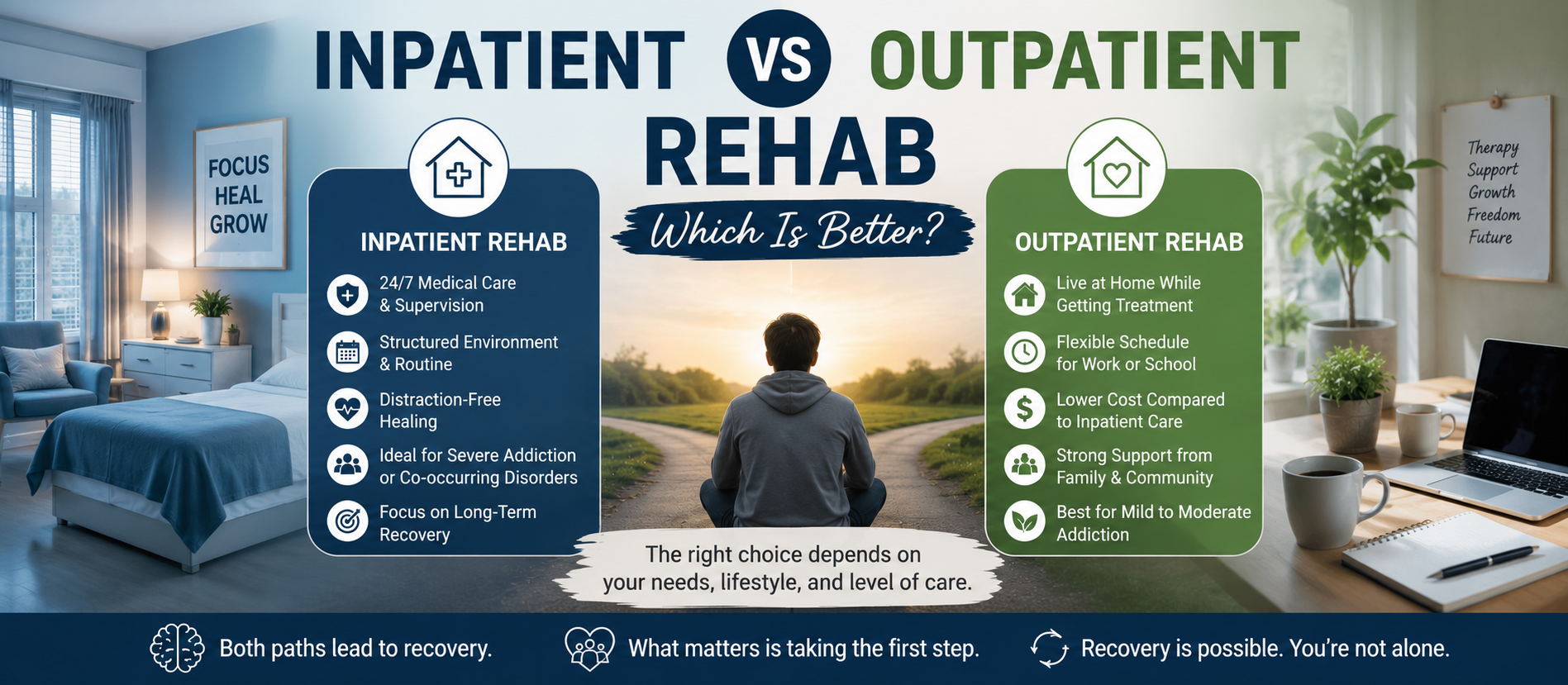
Choosing the right rehabilitation program can significantly influence recovery outcomes. While inpatient rehab provides a highly structured environment with around-the-clock support, outpatient rehab offers flexibility and allows individuals to continue managing daily responsibilities while receiving treatment.
In this comprehensive guide, Digiifrog explores the differences between inpatient and outpatient rehabilitation, their advantages and disadvantages, treatment approaches, costs, success factors, and how to determine which option may be most appropriate for a particular recovery journey.
Website: www.digiifrog.com
Understanding Addiction Treatment
Substance Use Disorder (SUD) is a complex condition affecting physical health, mental well-being, relationships, employment, and overall quality of life. Effective treatment typically involves more than simply stopping substance use. It requires addressing the psychological, behavioral, emotional, and social factors that contribute to addiction.
Modern rehabilitation programs use evidence-based therapies, counseling, education, relapse prevention strategies, and long-term support systems to help individuals achieve sustainable recovery.
The two primary treatment settings are:
- Inpatient Rehabilitation Programs
- Outpatient Rehabilitation Programs
What Is Inpatient Rehab?
Inpatient rehab, also known as residential treatment, requires patients to live at a rehabilitation facility for a designated period while receiving comprehensive addiction treatment.
Individuals remain on-site 24 hours a day and participate in structured treatment activities under professional supervision.
Typical Length of Stay
- 30-day programs
- 60-day programs
- 90-day programs
- Extended residential treatment
The duration depends on the severity of addiction, individual needs, treatment progress, and clinical recommendations.
How Inpatient Rehab Works
Residential rehabilitation programs typically provide a highly structured daily schedule.
- Individual counseling
- Group therapy
- Family therapy
- Educational workshops
- Relapse prevention training
- Life skills development
- Wellness activities
- Medical monitoring
The controlled environment reduces exposure to triggers and provides continuous support throughout the recovery process.
Advantages of Inpatient Rehab
24/7 Professional Support
⚠ Watch Out
Patients have immediate access to healthcare professionals, therapists, and support staff whenever assistance is needed.
Structured Environment
Structured schedules help individuals focus entirely on recovery without daily distractions.
Reduced Exposure to Triggers
Living away from environments associated with substance use decreases temptation and relapse risk.
Comprehensive Care
Residential treatment often combines medical care, therapy, wellness programs, and aftercare planning.
Peer Support
Living with others in recovery creates a strong sense of community and accountability.
Potential Drawbacks of Inpatient Rehab
- Higher treatment costs
- Temporary separation from family
- Time away from work or school
- Limited personal freedom during treatment
Despite these challenges, inpatient care may be the most effective option for individuals with severe addiction.
What Is Outpatient Rehab?
Outpatient rehab allows individuals to receive addiction treatment while continuing to live at home and maintain many of their regular responsibilities.
Patients attend scheduled therapy sessions, counseling appointments, educational programs, and support groups but do not reside at the treatment facility.
Types of Outpatient Programs
Standard Outpatient Programs
Patients attend treatment sessions a few times per week.
Intensive Outpatient Programs (IOPs)
IOPs provide a higher level of care with multiple weekly treatment sessions.
Partial Hospitalization Programs (PHPs)
PHPs offer structured daytime treatment while allowing patients to return home each evening.
How Outpatient Rehab Works
Outpatient programs typically include:
- Individual therapy
- Group counseling
- Family counseling
- Recovery education
- Medication management
- Mental health treatment
- Relapse prevention planning
Treatment schedules vary depending on individual needs and program intensity.
Advantages of Outpatient Rehab
Flexibility
Patients can continue working, attending school, and caring for family responsibilities.
Lower Cost
Outpatient treatment is generally less expensive than residential care.
Real-World Application
Patients immediately apply recovery skills in everyday situations.
Family Involvement
Remaining at home may facilitate stronger family participation in treatment.
Greater Accessibility
Outpatient programs are often more widely available and easier to access.
Potential Drawbacks of Outpatient Rehab
- Continued exposure to triggers
- Less supervision
- Greater relapse risk for severe addiction
- Requires strong personal motivation
- Potential distractions from daily life
Individuals with unstable living situations may struggle to benefit fully from outpatient treatment.
Comparing Inpatient and Outpatient Rehab
Living Arrangements
Inpatient: Patients live at the treatment facility.
Outpatient: Patients continue living at home.
Intensity of Care
Inpatient: High-intensity, around-the-clock support.
Outpatient: Moderate to low-intensity treatment depending on program type.
Cost
Inpatient: Generally higher costs due to housing and full-time care.
Outpatient: Usually more affordable.
Flexibility
Inpatient: Limited flexibility.
Outpatient: Greater scheduling flexibility.
Relapse Protection
Inpatient: Reduced access to substances and triggers.
Outpatient: Requires stronger self-management skills.
Who Benefits Most from Inpatient Rehab?
Inpatient treatment may be ideal for individuals who:
- Have severe substance use disorders
- Require medical detoxification
- Experience repeated relapses
- Have co-occurring mental health conditions
- Lack stable housing
- Need intensive therapeutic support
- Face significant environmental triggers
Residential care provides a safe environment for individuals requiring comprehensive treatment.
Who Benefits Most from Outpatient Rehab?
Outpatient treatment may be appropriate for individuals who:
- Have mild to moderate addiction
- Possess strong motivation for recovery
- Have stable housing
- Maintain employment or educational commitments
- Have supportive family members
- Do not require constant supervision
Outpatient programs can be highly effective when matched appropriately to patient needs.
The Importance of Dual Diagnosis Treatment
Many individuals struggling with addiction also experience mental health conditions such as:
- Depression
- Anxiety
- PTSD
- Bipolar disorder
- Trauma-related disorders
Modern treatment programs increasingly provide integrated care that addresses both addiction and mental health simultaneously.
This dual-diagnosis approach often improves long-term recovery outcomes.
Family Support and Recovery Success
Family involvement can significantly improve treatment outcomes in both inpatient and outpatient settings.
Recovery programs frequently include:
- Family counseling
- Educational sessions
- Communication skills training
- Conflict resolution strategies
- Recovery planning
Strong family support often contributes to higher treatment retention and lower relapse rates.
Technology and Modern Rehab Programs
Technology is transforming addiction treatment.
Many modern outpatient and inpatient programs incorporate:
- Telehealth counseling
- Recovery tracking apps
- Virtual support groups
- Online educational resources
- Digital relapse prevention tools
These technologies increase accessibility and support long-term engagement.
Aftercare: The Key to Long-Term Recovery
Regardless of whether someone chooses inpatient or outpatient treatment, aftercare remains critical.
Effective aftercare may include:
- Ongoing therapy
- Peer support groups
- Sober living homes
- Recovery coaching
- Regular check-ins with providers
Recovery is an ongoing process that continues well beyond formal treatment.
Cost Considerations
Financial considerations often influence treatment decisions.
Factors affecting costs include:
- Program duration
- Facility type
- Location
- Medical services
- Insurance coverage
- Additional therapies
While inpatient treatment generally costs more, its intensive support may prevent future healthcare expenses associated with relapse.
SEO, AEO, GEO and AI Search Perspective
As more individuals search online for addiction treatment options, educational content must address user intent effectively.
Popular SEO Keywords:
- Inpatient rehab vs outpatient rehab
- Best addiction treatment options
- Residential rehab benefits
- Outpatient rehab programs
- Addiction recovery treatment
AEO (Answer Engine Optimization):
- Which rehab program is better?
- How does inpatient rehab work?
- Can outpatient rehab be effective?
- Who needs residential treatment?
GEO (Generative Engine Optimization):
AI-powered search engines prioritize comprehensive, authoritative content that directly answers user questions and provides practical guidance.
Frequently Asked Questions
Is inpatient rehab more effective than outpatient rehab?
Effectiveness depends on individual circumstances. Inpatient treatment may provide better outcomes for severe addiction, while outpatient treatment can be highly effective for motivated individuals with strong support systems.
Can outpatient rehab work for severe addiction?
Some individuals benefit from intensive outpatient programs, but severe cases often require residential treatment.
How long does rehab usually last?
Treatment duration varies but may range from several weeks to several months depending on individual needs.
Does insurance cover rehab?
Many insurance plans provide coverage for addiction treatment, though benefits vary by provider and policy.
Can I work while attending rehab?
Outpatient programs often allow individuals to continue working, while inpatient programs typically require a temporary leave from employment.
Conclusion
When comparing inpatient vs outpatient rehab, there is no universal answer regarding which option is better. The best choice depends on addiction severity, mental health needs, living environment, support systems, financial considerations, and personal recovery goals.
Inpatient rehabilitation offers intensive support, structure, and protection from triggers, making it ideal for many individuals with severe substance use disorders. Outpatient rehabilitation provides flexibility, affordability, and the ability to maintain daily responsibilities while receiving treatment.
The most successful treatment plans are personalized, evidence-based, and supported by ongoing aftercare. By choosing the appropriate level of care and remaining committed to recovery, individuals can build healthier, substance-free lives.
Digiifrog remains dedicated to providing educational resources on addiction recovery, wellness, rehabilitation, SEO, AEO, GEO, and AI-powered healthcare content.
Visit www.digiifrog.com for more informative articles and recovery-focused insights.
Ready to Grow?
Talk to us about a strategy tailored to your brand — we will help you stand out in search, AI discovery and social.
Comments (0)
Log in to leave a comment.