📋 Quick Summary
In this article:
Why Tough Stains Need a Different Approach
1. Identify the Stain
2. Identify the Surface
3. Remove Loose Material First
4. Blot Instead of Aggressive Scrubbing
5. Use the Least Aggressive Effective Method
6. Test the Method First
7. Coffee and Tea Stains
8. Grease and Oil Stains
9. Wine and Colored Drinks
10. Food and Protein Stains
Introduction
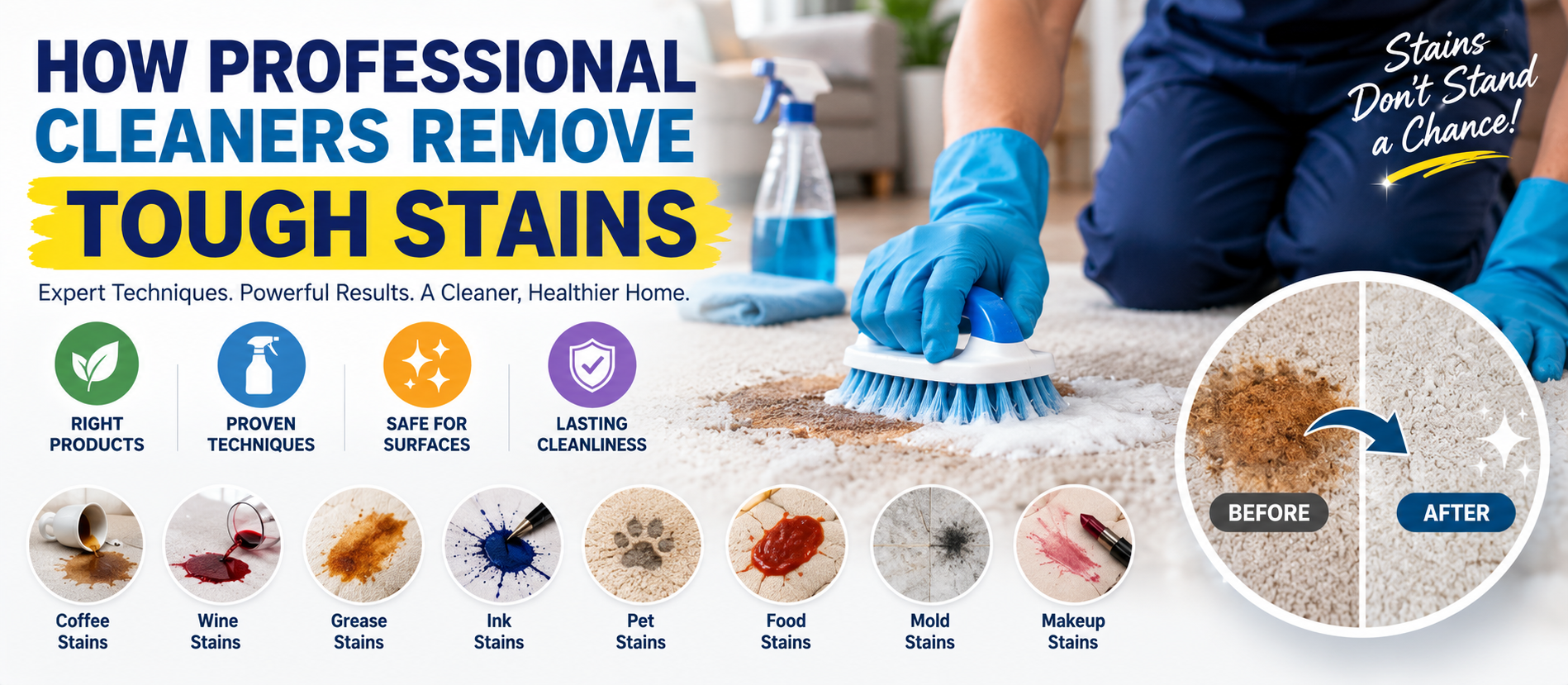
Tough stains can make a clean home look neglected. Coffee, grease, wine, ink, food, mud, pet accidents, soap buildup, and mineral deposits can all become difficult when they are left untreated. Professional cleaners use a planned process instead of simply applying the strongest product they can find. They identify the stain, identify the surface, remove loose material, choose an appropriate method, test it when needed, and control moisture and cleaning time.
This guide explains how professional cleaners approach difficult stains. It also gives homeowners practical tips for safer stain removal, prevention, and deciding when professional help is useful. The goal is simple: remove stains effectively without creating new damage.
Why Tough Stains Need a Different Approach
A stain is not simply dirt. It may contain oil, pigment, protein, sugar, minerals, dye, or other material. Different stains react differently to cleaning products. The surface matters too. Carpet, upholstery, hardwood, natural stone, tile, grout, glass, painted walls, and stainless steel all require different care.
Professional stain removal starts with identification. This helps prevent the common mistake of using a product that is too strong or unsuitable for the surface.
1. Identify the Stain
Professionals first determine what caused the mark when possible. Coffee, tea, grease, pet accidents, ink, rust, hard-water deposits, and food stains have different characteristics. They also consider whether the stain is fresh or old. Fresh spills are often easier to treat because they may not have penetrated deeply.
2. Identify the Surface
Before treating a stain, the cleaner checks the material. Carpet fibers, upholstery fabrics, wood finishes, natural stone, ceramic tile, grout, laminate, and painted surfaces can react differently to moisture and chemicals. Manufacturer care instructions are important. When the material is delicate or expensive, professional assessment can reduce the risk of damage.
3. Remove Loose Material First
Loose dirt, food, dust, and debris should usually be removed before wet treatment. Professionals may vacuum, brush, scrape carefully with a suitable tool, or blot excess liquid. This prevents loose particles from spreading during cleaning.
4. Blot Instead of Aggressive Scrubbing
For many liquid stains, blotting is safer than vigorous scrubbing. Hard rubbing can push a stain deeper into carpet or fabric and can damage fibers. Professionals often use clean absorbent cloths and controlled pressure. When appropriate, they work from the outside of the stain toward the center to reduce spreading.
5. Use the Least Aggressive Effective Method
Professional cleaning does not always mean using powerful chemicals. A good cleaner uses the least aggressive method that can reasonably solve the problem. A mild surface-appropriate cleaner may be enough for a fresh mark. Stronger products or equipment are considered only when necessary and when the material can safely tolerate them.
6. Test the Method First
When a surface could react to a product, professionals may test a small hidden area. Testing can reveal discoloration, fading, finish changes, or other reactions before the visible area is treated. Homeowners can use the same principle. A small test is safer than applying an unfamiliar product across an entire carpet, sofa, floor, or wall.
7. Coffee and Tea Stains
Coffee and tea contain pigments that can leave visible marks. Professionals usually remove excess liquid first and then select a cleaning solution suitable for the material. They avoid excessive moisture and aggressive rubbing. Carpet and upholstery may require controlled extraction when a stain has penetrated deeply.
8. Grease and Oil Stains
Grease is difficult because water alone does not remove oil effectively. Professional cleaners select products designed to break down oily residue while remaining safe for the surface. Kitchen grease may require a different approach from oil on fabric or carpet. Small, controlled treatments can be safer than one aggressive application.
9. Wine and Colored Drinks
Colored drinks can leave strong pigments. Quick action is helpful. Professionals remove excess liquid without spreading it and then use a material-appropriate treatment. Homeowners should avoid combining random cleaning products. Valuable or delicate materials are often better handled by a professional.
10. Food and Protein Stains
Food stains may contain protein, fat, sugar, and pigment. Meat, dairy, eggs, sauces, and other foods can require different treatments. Professionals remove solid material carefully and then select a suitable cleaner. Excessive heat may be unsuitable for some protein-based stains, so product and surface instructions should be followed.
11. Pet Stains and Odors
Pet accidents can be difficult because the visible mark may not show the full extent of the problem. Liquid can move into carpet backing or padding. Professional cleaners may use extraction equipment and products designed for pet-related residue and odor. If contamination has reached padding or subfloor materials, cleaning alone may not solve every problem.
12. Ink Stains
Ink can contain dyes or pigments that bond strongly to materials. Treatment depends on the ink and the surface. Professionals work carefully to avoid spreading the mark. They may use controlled spot treatment and repeated blotting. Homeowners should never apply an unknown solvent to carpet or upholstery without confirming that it is suitable.
13. Mud and Dirt
Heavy mud is often easier to manage after it has dried enough for loose material to be removed. Trying to wash large amounts of wet mud immediately can spread it. Professionals may allow suitable surfaces to dry, vacuum loose dirt, and then treat the remaining mark according to the material.
14. Rust and Mineral Deposits
Rust and hard-water stains can require specialized products. They may appear around faucets, shower doors, fixtures, tiles, and metal components. A cleaner must first confirm that the product is safe for the surface. Some acidic products can damage natural stone and sensitive finishes.
15. Soap Scum and Bathroom Buildup
Soap scum can combine with body oils, minerals, and moisture. Over time, it can form a stubborn layer on showers, tubs, doors, and fixtures. Professionals use appropriate products, controlled agitation, and sometimes specialized tools. Regular cleaning is easier because a thin layer is simpler to remove than months of buildup.
16. Carpet Stain Extraction
Carpet cleaning may require more than surface treatment. Professional extraction machines can apply suitable cleaning solution and remove moisture and dissolved soil. This can help when a stain has moved below the surface. The amount of moisture must be controlled because over-wetting can create drying problems.
17. Upholstery Stain Removal
Upholstery requires careful treatment because some fabrics can shrink, bleed, fade, or develop water marks. Professionals identify the fabric and follow suitable care instructions. Depending on the material, they may use low-moisture methods or specialized upholstery equipment. Homeowners should avoid soaking furniture fabric unless the manufacturer allows it.
18. Hardwood and Wood Surfaces
Wood surfaces need careful moisture control. Professionals avoid excessive water and use products suitable for the finish. A mark on the finish may be removable, while a stain that has penetrated the wood may require refinishing. Cleaning cannot always restore damaged wood.
19. Tile and Grout
Tile may be durable, but grout can absorb dirt and discoloration. Professional cleaners may use suitable brushes, cleaning solutions, and specialized equipment. The treatment depends on the type of stain. Porous natural stone should not automatically be treated like ceramic tile.
20. Natural Stone Needs Special Care
Marble, limestone, travertine, and other natural stones can be sensitive to acidic or abrasive cleaners. A product that works on ceramic tile may etch natural stone. Professional stone cleaners use surface-specific methods. If a stain has changed the finish, honing or polishing may be needed instead of ordinary cleaning.
21. Walls and Painted Surfaces
Walls can develop fingerprints, food marks, scuffs, and stains. Paint type and finish affect how much cleaning a surface can tolerate. Professionals normally start gently and avoid excessive moisture or abrasion. A small test area can help determine whether a stubborn mark can be treated safely.
22. Steam and Specialized Equipment
Steam equipment can help with some cleaning tasks, but it is not suitable for every material. Heat and moisture can damage certain finishes, adhesives, fabrics, and electronics. Professional cleaners choose equipment based on the surface and the goal. Extraction machines, steam systems, floor machines, and specialized vacuums can improve results when used correctly.
23. Dwell Time Matters
Some cleaning products need time to loosen soil before agitation or extraction. Professionals may allow an appropriate dwell time. More time is not always better. Product instructions should be followed carefully so the surface is not exposed for longer than recommended.
24. Work From Cleaner Areas to Dirtier Areas
A planned cleaning sequence prevents clean areas from becoming dirty again. Professionals often work from high areas to low areas and from cleaner sections toward heavily soiled sections. They also change or rotate cloth sections as needed. This reduces the chance of spreading soil.
25. Professional Equipment Makes a Difference
Commercial vacuums, carpet extractors, upholstery machines, steam equipment, floor scrubbers, microfiber systems, brushes, and specialized stain tools can provide capabilities that ordinary household equipment may not have. However, equipment alone does not guarantee success. Correct technique, product selection, and material knowledge are equally important.
26. Some Stains Cannot Be Completely Removed
Not every stain can be removed completely. A substance may permanently alter dyes, fibers, finishes, or surfaces. A professional cleaner should explain limitations when possible. Sometimes the realistic goal is significant improvement rather than perfect restoration. In other cases, repair, refinishing, or replacement may be more appropriate.
27. Prevention Is Easier Than Restoration
Quickly cleaning spills, vacuuming regularly, using entrance mats, protecting upholstery, and maintaining kitchens and bathrooms can reduce difficult stains. Regular removal of grease, soap residue, and mineral deposits prevents buildup. For carpets and upholstery, prompt blotting can reduce penetration.
28. Cleaning Mistakes to Avoid
- Do not mix cleaning chemicals.
- Do not use the strongest product simply because a stain is difficult.
- Do not scrub delicate fabric aggressively.
- Do not soak wood or upholstery without checking care instructions.
- Do not keep applying stronger chemicals when the surface begins changing color.
- Do not use an unknown solvent on an expensive material without testing.
29. When to Hire Professional Cleaners
Professional help can make sense when a stain is large, old, deeply embedded, recurring, associated with strong odors, or located on a delicate or expensive surface. Professional service can also be useful after water damage, renovations, major events, or during move-in and move-out cleaning.
30. How to Prepare for Professional Stain Removal
Remove small personal items from the treatment area. Tell the cleaner what caused the stain if you know. Explain which products have already been used. Identify delicate materials, recent repairs, pets, or restricted areas. This information can help the cleaner choose a safer and more effective method.
31. How to Choose a Professional Cleaning Company
Ask whether the company handles your type of stain and material. Confirm the cleaning process, products, equipment, drying requirements, and limitations. Request a clear estimate and ask what is included. Be cautious of promises that every stain will disappear regardless of its age, cause, or surface. Professional cleaning involves variables that cannot always be predicted.
32. A Safe Homeowner Stain-Removal Routine
For a fresh spill, stay calm. Remove solid material carefully. Blot liquid instead of spreading it. Check surface care instructions. Use only a product that is suitable for the material. Test an inconspicuous area when appropriate. Follow label directions and allow proper drying.
If the stain remains, avoid repeatedly applying stronger chemicals. Uncontrolled treatment can damage the surface and may make professional restoration more difficult.
AEO: Frequently Asked Questions
How do professional cleaners remove tough stains?
They identify the stain and surface, remove loose material, select an appropriate method, test when needed, control moisture and product exposure, and use specialized equipment when appropriate.
Can professional cleaners remove every stain?
No. Some stains permanently alter dyes, finishes, fibers, or surfaces. Professional cleaners can often improve difficult stains, but complete removal cannot always be guaranteed.
Is professional stain removal worth it?
It can be useful for large, old, stubborn, or delicate stains. It is especially valuable when the surface is expensive or difficult to replace.
Should I scrub a stain hard?
Usually not. Aggressive scrubbing can spread a stain and damage fibers or finishes. Controlled blotting and surface-appropriate treatment are often safer.
Can I use the strongest cleaner on a tough stain?
No. Stronger is not always better. Select a product for both the stain and the surface and follow the label directions.
What should I do when I do not know what caused a stain?
Avoid random chemical treatments. Identify the surface, remove loose material, use a gentle approach when appropriate, and consider professional advice for valuable or delicate materials.
SEO, AEO, GEO & AI Search Optimization
This article is optimized for how professional cleaners remove tough stains, professional stain removal, tough stain cleaning, professional cleaning services, carpet stain removal, upholstery stain removal, grease stain removal, and home cleaning tips.
Short paragraphs, direct answers, descriptive headings, practical lists, question-based FAQs, and natural keyword placement improve readability. This structure is also designed to help search engines, answer engines, generative AI systems, and AI-powered search tools identify the article's main topic and supporting answers.
Final Thoughts
Professional stain removal is based on process rather than guesswork. The cleaner identifies the stain and surface, chooses a suitable method, controls moisture, tests when necessary, and uses specialized equipment when it is appropriate.
Homeowners can handle many small spills by acting quickly and using surface-appropriate methods. For stubborn, old, large, or delicate stains, professional cleaning can provide a safer and more systematic approach.
💡 Key Insight
The most important lesson is simple: do not make a difficult stain worse by rushing. Identify the problem, protect the surface, follow product instructions, and ask for professional help when specialized knowledge or equipment is needed.
Digiifrog
Website: www.digiifrog.com
Digiifrog specializes in SEO, AEO, GEO, AI Search optimization, content marketing, and digital growth strategies.
Ready to Grow?
Talk to us about a strategy tailored to your brand — we will help you stand out in search, AI discovery and social.


Comments (0)
Log in to leave a comment.