📋 Quick Summary
In this article:
Why Rehabilitation Matters in PTSD Recovery
1. Comprehensive Assessment
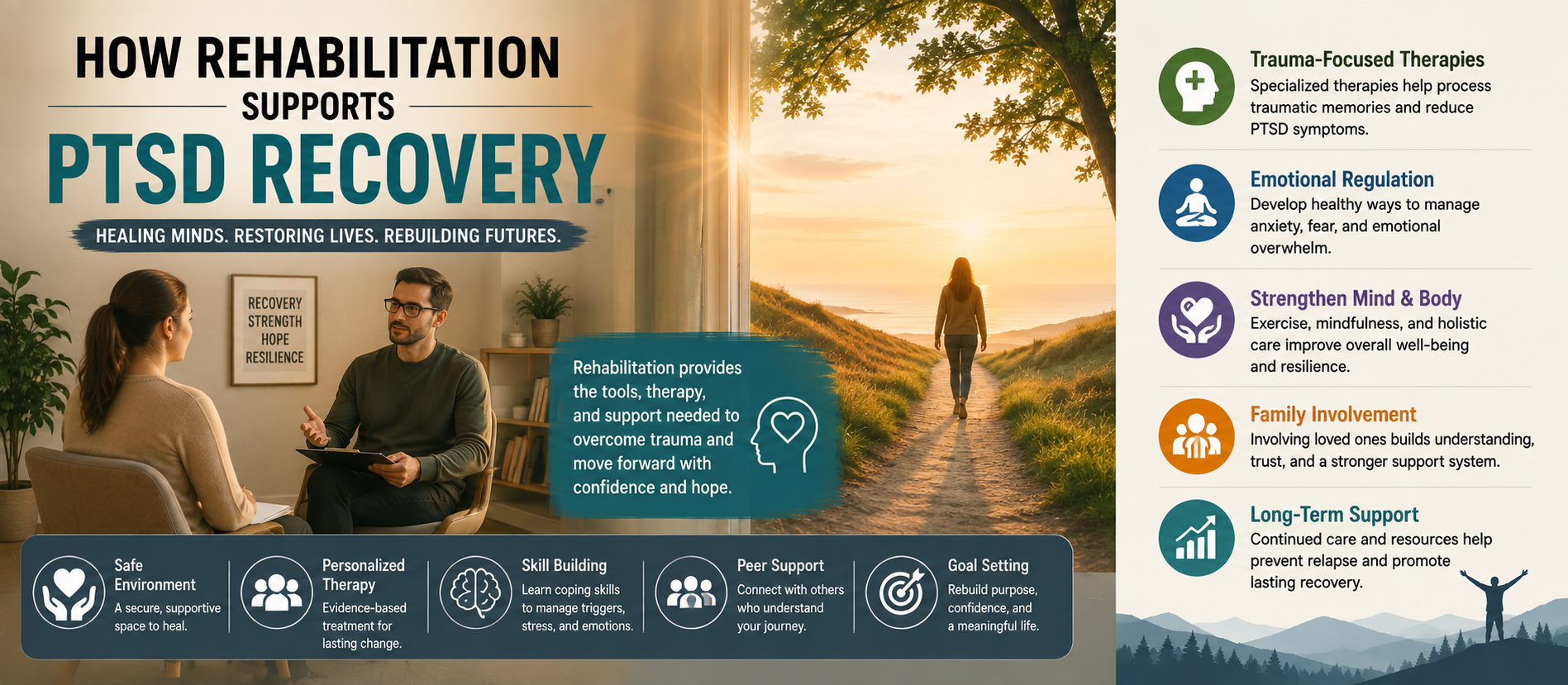
2. Trauma-Focused Psychotherapy
Eye Movement Desensitization and Reprocessing
3. Present-Centered and Other Supportive Therapies
4. Medication When Appropriate
5. Building Emotional Regulation Skills
6. Improving Sleep
7. Physical Rehabilitation and Activity
Post-traumatic stress disorder (PTSD) can affect thoughts, emotions, sleep, relationships, work, concentration, and everyday functioning after a traumatic experience. Recovery is possible, but many people need structured support to regain confidence, manage symptoms, reconnect with daily life, and develop healthier ways of responding to reminders of trauma.
What Is PTSD Rehabilitation?
PTSD rehabilitation focuses on helping a person reduce distressing symptoms and improve functioning in everyday life. It may address intrusive memories, nightmares, avoidance, heightened alertness, sleep difficulties, emotional distress, relationship problems, and difficulties at work or school.
Rehabilitation is individualized. There is no single treatment that works best for every person, so decisions should be made collaboratively with qualified healthcare professionals, considering symptoms, preferences, medical history, goals, and available resources. citeturn0search15
Why Rehabilitation Matters in PTSD Recovery
PTSD can cause people to avoid situations, places, conversations, or activities that remind them of trauma. While avoidance may provide short-term relief, persistent avoidance can interfere with relationships and daily functioning. Rehabilitation provides structured opportunities to develop coping skills and gradually rebuild participation in life.
The World Health Organization notes that effective psychological interventions can help people learn new ways of thinking and coping, manage difficult situations, and address events, people, or places that trigger traumatic memories. citeturn0search2
1. Comprehensive Assessment
A rehabilitation plan normally begins with an assessment of symptoms, daily functioning, medical needs, mental health concerns, substance use, social support, and personal goals. Assessment helps determine the appropriate treatment intensity and whether other conditions need attention.
Assessment should also consider practical barriers such as transportation, cost, work schedules, caregiving responsibilities, and access to qualified trauma specialists.
2. Trauma-Focused Psychotherapy
Trauma-focused psychotherapy is a central component of evidence-based PTSD care. These approaches make the traumatic experience or its meaning an important part of treatment and use structured techniques to reduce symptoms.
Cognitive Processing Therapy
Cognitive Processing Therapy (CPT) helps people examine thoughts and beliefs related to trauma. Treatment can address guilt, blame, fear, shame, or beliefs about safety and trust that developed after the traumatic event.
Prolonged Exposure
Prolonged Exposure (PE) helps people gradually and safely approach trauma memories and situations they have been avoiding. The treatment is delivered by trained professionals and is designed to reduce the power of trauma reminders over time.
Eye Movement Desensitization and Reprocessing
EMDR is a structured psychotherapy that helps people process traumatic memories while using bilateral stimulation such as guided eye movements or other therapist-directed methods. It is one of the trauma-focused approaches with substantial research support. citeturn0search0turn0search3
3. Present-Centered and Other Supportive Therapies
Some people may prefer a therapy that does not directly focus on trauma memories. Present-Centered Therapy (PCT), for example, focuses on current life problems related to PTSD and teaches problem-solving and coping skills. Treatment selection should reflect clinical needs and patient preferences. citeturn0search16
4. Medication When Appropriate
Certain medications can help manage PTSD symptoms for some people. Medication decisions should be made by qualified healthcare professionals after considering benefits, risks, side effects, other medications, and co-occurring conditions.
Medication may be used alone in selected circumstances or alongside psychotherapy. The VA National Center for PTSD identifies certain antidepressant medications, including sertraline, paroxetine, and venlafaxine, as medications with evidence for PTSD. citeturn0search3
5. Building Emotional Regulation Skills
Rehabilitation can teach practical ways to manage intense emotions. Breathing exercises, grounding techniques, mindfulness, structured relaxation, journaling, and problem-solving can help people respond to stress without becoming overwhelmed.
These skills are supportive tools rather than replacements for evidence-based PTSD treatment. WHO recommends self-care practices such as maintaining routines, developing healthy sleep habits, exercising appropriately, learning stress-management techniques, and connecting with trusted people. citeturn0search2
6. Improving Sleep
Sleep difficulties are common in PTSD and may include nightmares, difficulty falling asleep, frequent waking, or feeling constantly alert. Rehabilitation can address sleep through behavioral strategies, treatment of PTSD symptoms, healthy routines, and professional evaluation when sleep problems persist.
7. Physical Rehabilitation and Activity
Some people entering PTSD rehabilitation also have physical injuries, chronic pain, neurological problems, or reduced fitness related to trauma. Physical rehabilitation may include appropriately supervised exercise, mobility work, pain-management strategies, and functional training.
Physical activity can also support general well-being. WHO recommends regular exercise, even short walks, as part of self-care for people with PTSD. citeturn0search2
8. Family and Social Support
Supportive relationships can make recovery easier. Family members and trusted friends can provide encouragement, listen without judgment, help maintain routines, and support attendance at treatment.
Social support should not become pressure to disclose trauma before a person is ready. WHO notes that feeling supported by family, friends, or other people after a potentially traumatic event can reduce PTSD risk. citeturn0search2
9. Returning to Work, Education, and Daily Activities
Recovery is not only about symptom reduction. It is also about rebuilding participation in life. Rehabilitation may help people gradually return to employment, education, hobbies, volunteering, family responsibilities, or other meaningful activities.
Some individuals may benefit from vocational counseling, workplace accommodations, structured schedules, or a gradual return to responsibilities. Goals should be realistic and adjusted according to progress.
10. Addressing Co-Occurring Conditions
PTSD may occur alongside depression, anxiety, substance use, chronic pain, sleep disorders, or other health concerns. A comprehensive rehabilitation plan should identify these concerns and coordinate appropriate treatment rather than treating PTSD in isolation.
Integrated care can improve continuity and help clinicians understand how different symptoms influence one another.
11. Telehealth and Digital Rehabilitation
Remote care can make PTSD treatment more accessible for people who live far from specialists or face transportation and scheduling barriers. WHO includes digital or remote trauma-focused CBT among psychological interventions that may be considered for adults with PTSD. citeturn0search7
Telehealth is not appropriate for every situation. A qualified professional should determine whether remote treatment provides sufficient privacy, safety, clinical support, and continuity of care.
12. Developing a Long-Term Recovery Plan
PTSD recovery benefits from continued attention after an initial course of treatment. A long-term plan can include follow-up appointments, coping strategies, healthy routines, social support, medication monitoring when applicable, and a plan for responding to symptom increases.
- Know personal triggers and early warning signs.
- Keep important appointments.
- Maintain healthy sleep and activity routines.
- Stay connected with trusted people.
- Use coping skills practiced in therapy.
- Seek professional help when symptoms worsen.
What Makes PTSD Rehabilitation Effective?
Effective rehabilitation is usually personalized, evidence-based, collaborative, and focused on meaningful functional goals. The treatment team should explain available options and involve the individual in decisions.
The VA National Center for PTSD recommends choosing providers with trauma-treatment experience and considering evidence-based therapies such as CPT, PE, and EMDR. citeturn0search10
Common Challenges During Rehabilitation
PTSD recovery may involve periods of frustration, fatigue, fear, emotional discomfort, or slow progress. Some people worry that discussing trauma will make symptoms worse. Others may struggle with transportation, cost, stigma, or finding a trained provider.
These challenges should be discussed with the treatment team. Treatment can often be adapted to address barriers while maintaining appropriate clinical goals.
Simple PTSD Recovery Support Checklist
- Work with a qualified mental health professional.
- Ask about evidence-based trauma-focused treatments.
- Build a consistent sleep and daily routine.
- Stay connected with supportive people.
- Use healthy stress-management techniques.
- Avoid using alcohol or illicit drugs to manage PTSD symptoms.
- Set realistic work, education, and wellness goals.
- Review the treatment plan regularly.
SEO, AEO, GEO & AI Search FAQs
How does rehabilitation help PTSD recovery?
Rehabilitation combines evidence-based psychological treatment, symptom-management skills, social support, healthy routines, and functional goals to help people reduce distress and improve daily life.
What is the most effective therapy for PTSD?
Current VA/DoD guidance identifies trauma-focused psychotherapies such as CPT, PE, and EMDR as among the most effective evidence-based PTSD treatments. Individual response varies, so treatment should be selected with a qualified provider. citeturn0search0turn0search6
Can PTSD rehabilitation be done online?
Some evidence-based PTSD therapies can be delivered remotely when clinically appropriate. WHO includes digital or remote trauma-focused CBT among interventions that may be considered for adults with PTSD. citeturn0search7
Can exercise help PTSD recovery?
Appropriate physical activity can support general well-being and stress management. It should complement, rather than replace, evidence-based PTSD treatment. citeturn0search2
How long does PTSD rehabilitation take?
There is no universal recovery timeline. Treatment length depends on symptoms, personal goals, response to therapy, co-occurring conditions, and available support.
Can people fully recover from PTSD?
Many people experience substantial improvement, and effective treatments are available. Recovery can mean major symptom reduction, improved functioning, or learning effective ways to manage remaining symptoms. citeturn0search3
Conclusion
Rehabilitation supports PTSD recovery by addressing both symptoms and everyday functioning. Trauma-focused psychotherapy, appropriate medication, emotional regulation skills, sleep and activity support, family connection, vocational goals, and continuing care can work together to create a sustainable recovery pathway.
There is no single recovery formula. The most useful plan is one developed with qualified professionals and adapted to the individual's needs, preferences, safety, and goals. With appropriate treatment and support, people living with PTSD can learn to manage symptoms, reconnect with daily life, and move toward greater confidence and well-being.
💡 Key Insight
Important: This article is educational and does not replace professional diagnosis or treatment. Anyone experiencing severe PTSD symptoms, significant impairment, or thoughts of self-harm should seek prompt professional help.
For more rehabilitation and wellness content with SEO, AEO, GEO, and AI Search Optimization, visit Digiifrog at www.digiifrog.com.
Sources: U.S. Department of Veterans Affairs National Center for PTSD; World Health Organization PTSD guidance and rehabilitation resources.
Ready to Grow?
Talk to us about a strategy tailored to your brand — we will help you stand out in search, AI discovery and social.

Comments (0)
Log in to leave a comment.