📋 Quick Summary
In this article:
Practical Ways Teachers Can Use AI
1. Create Lesson Plans
2. Personalize Student Learning
3. Automate Grading
4. Generate Educational Content
5. Support Language Learning
6. Improve Accessibility
Frequently Asked Questions (AEO Section)
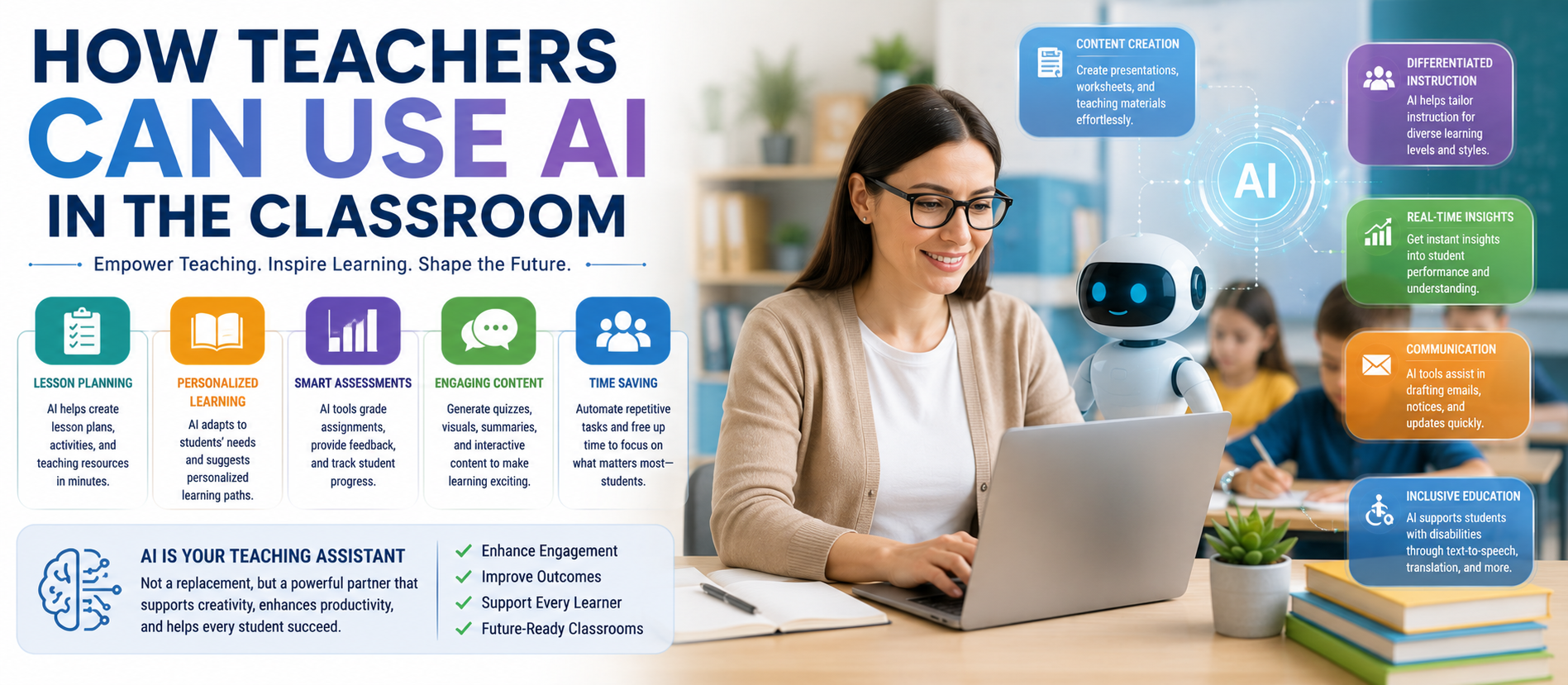
Artificial Intelligence (AI) is transforming education by helping teachers create engaging lessons, personalize learning, automate repetitive tasks, and provide better support for students. Rather than replacing educators, AI acts as a powerful teaching assistant that improves efficiency while allowing teachers to spend more time mentoring, inspiring, and guiding learners.
Website: www.digiifrog.com
Brand: Digiifrog – Education, AI, Technology & Digital Growth Insights
Why AI Matters in Education
- Personalizes learning experiences.
- Reduces administrative workload.
- Provides real-time feedback.
- Improves student engagement.
- Supports data-driven teaching.
Practical Ways Teachers Can Use AI
1. Create Lesson Plans
AI tools can generate lesson outlines, classroom activities, quizzes, and differentiated learning materials.
2. Personalize Student Learning
Adaptive learning platforms recommend content based on each student's progress and learning style.
3. Automate Grading
AI can assist with grading quizzes, identifying learning gaps, and generating performance reports.
4. Generate Educational Content
Teachers can create worksheets, presentations, flashcards, discussion questions, and summaries quickly.
5. Support Language Learning
AI-powered translation and writing assistants help multilingual learners improve communication skills.
6. Improve Accessibility
Speech-to-text, text-to-speech, captions, and reading support make learning more inclusive.
Benefits
- More time for teaching.
- Better classroom engagement.
- Improved assessment insights.
- Enhanced collaboration.
- Support for diverse learners.
Challenges
- Student data privacy.
- Responsible AI use.
- Teacher training.
- Technology access.
- Avoiding overreliance on AI.
Best Practices
- Verify AI-generated content.
- Protect student privacy.
- Teach AI literacy and ethics.
- Combine AI with human instruction.
- Continuously update digital skills.
Frequently Asked Questions (AEO Section)
How can teachers use AI in the classroom?
Teachers can use AI to create lesson plans, personalize instruction, automate grading, generate learning materials, and monitor student progress.
Will AI replace teachers?
No. AI is designed to support educators by handling repetitive tasks while teachers provide mentorship, creativity, and human interaction.
What are the benefits of AI in education?
AI improves efficiency, personalization, accessibility, and engagement while helping teachers make informed instructional decisions.
Conclusion
AI is becoming an essential educational tool that empowers teachers to deliver more personalized, engaging, and efficient learning experiences. When used responsibly, AI complements human expertise and prepares students for a technology-driven future.
For more education, AI, SEO, AEO, GEO, and technology insights, visit www.digiifrog.com.
Ready to Grow?
Talk to us about a strategy tailored to your brand — we will help you stand out in search, AI discovery and social.
Comments (0)
Log in to leave a comment.