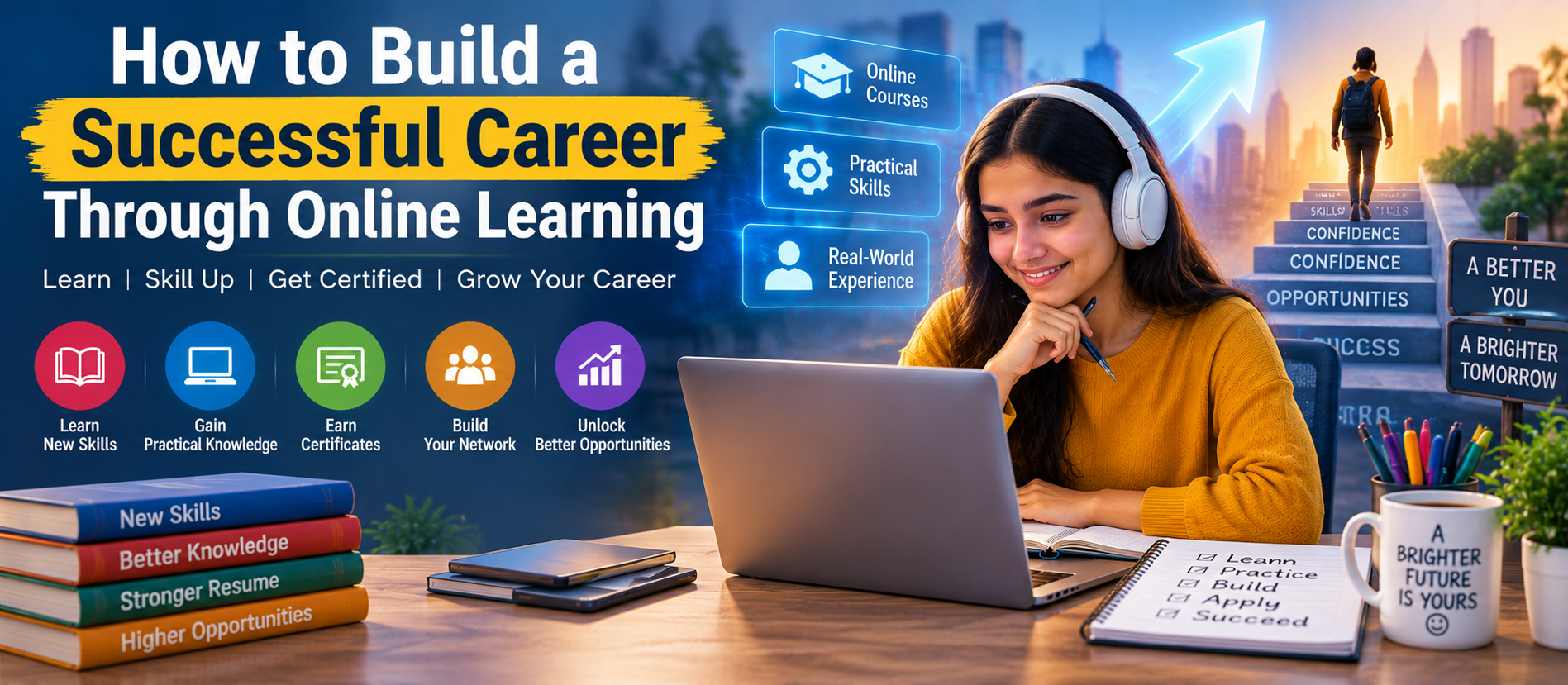
📋 Quick Summary
In this article:
Quick Answer: How Can Online Learning Help Build a Successful Career?
1. Start With a Clear Career Goal
2. Identify the Skills You Need
3. Choose Online Courses Carefully
Good Course Selection Checklist
4. Build a Personal Learning Roadmap
5. Create a Realistic Study Schedule
6. Learn by Doing, Not Only Watching
7. Build a Strong Portfolio
Introduction
Online learning has changed how people build skills and prepare for careers. Students, graduates, working professionals, and career changers can now learn from home through online courses, tutorials, virtual classrooms, professional certificates, and practical training programs.
The biggest advantage of online learning is flexibility. You can study around school, work, family responsibilities, or other commitments. You can also choose courses based on your career goals instead of following only one fixed path.
However, completing many courses does not automatically create a successful career. Career growth comes from combining knowledge with practical skills, projects, communication, experience, networking, and consistent action.
This guide explains how to build a successful career through online learning. It covers how to choose the right courses, create a learning plan, develop job-ready skills, build a portfolio, use certificates effectively, network online, prepare for interviews, and continue learning after getting a job. The article uses short, direct sentences for better readability and is structured for SEO, AEO, GEO, and AI Search.
Quick Answer: How Can Online Learning Help Build a Successful Career?
Online learning can help build a successful career by giving learners access to flexible education, practical skills, professional knowledge, certifications, projects, and career resources. The best results come when learners choose courses that match a clear career goal, practice what they learn, create evidence of their skills, and connect with employers or professional communities.
A strong online career-learning process can be summarized as: choose a goal, learn the skill, practice it, build projects, show your work, connect with people, apply for opportunities, and keep improving.
1. Start With a Clear Career Goal
Before enrolling in an online course, decide what you want to achieve. A clear goal makes it easier to choose useful learning material.
You might want to become a web developer, digital marketer, data analyst, graphic designer, project coordinator, content specialist, cybersecurity professional, teacher, or another type of professional.
You do not need to know your entire career path immediately. Start with a direction. Then identify the skills commonly needed for that type of work.
Ask Yourself These Questions
- What type of work interests me?
- Which skills are needed for this career?
- What skills do I already have?
- What skills am I missing?
- What type of job or freelance work do I want?
- How much time can I study each week?
These questions can turn online learning from random course consumption into focused career development.
2. Identify the Skills You Need
Once you have a career direction, create a skill map. Divide the skills into three groups: core skills, supporting skills, and workplace skills.
Core skills are directly related to the job. A web developer may need HTML, CSS, JavaScript, databases, and version control. A digital marketer may need SEO, analytics, content strategy, advertising, and social media skills.
Supporting skills can make you more effective. These may include research, presentation, data interpretation, project management, or basic design.
Workplace skills include communication, teamwork, time management, problem-solving, and professional writing. These skills matter across many careers.
3. Choose Online Courses Carefully
The internet offers thousands of courses. More choice does not always mean better learning.
Before joining a course, review the syllabus. Check whether it covers the skills you actually need. Look at the level, practical assignments, instructor information, learner feedback, and course outcomes.
Do not choose a course only because it has a popular title or a large number of students. A short, focused course can be more useful than a long course that contains information unrelated to your goal.
Good Course Selection Checklist
- Clear learning objectives.
- Relevant and current subject matter.
- Practical exercises or projects.
- Useful examples.
- Reasonable difficulty level.
- Credible instructor or institution.
- Clear course structure.
4. Build a Personal Learning Roadmap
A roadmap tells you what to learn first, what to learn next, and how to measure progress.
Start with foundational skills. Then move to intermediate topics. After that, learn advanced concepts and apply them through projects.
For example, someone learning digital marketing might start with marketing fundamentals, then study SEO and content marketing, followed by analytics, paid advertising, conversion optimization, and campaign projects.
A roadmap prevents learners from jumping randomly between unrelated topics.
5. Create a Realistic Study Schedule
Consistency is more useful than occasional long study sessions. Set a weekly schedule that matches your real life.
If you can study one hour on weekdays and two hours on weekends, build your plan around that time. Do not create a schedule that you cannot maintain.
Use focused sessions. Give each session one clear objective. For example, “complete two lessons and solve five practice problems” is more useful than “study programming.”
Track completed tasks. Seeing progress can help maintain motivation.
6. Learn by Doing, Not Only Watching
Watching lessons can create the feeling of progress without creating enough practical ability. Career skills become stronger when you use them.
After learning a concept, complete an exercise. After learning several concepts, build a small project.
A learner studying graphic design can create posters. A coding student can build a small website. A data learner can analyze a dataset. A marketing student can create a sample campaign plan.
Projects turn knowledge into evidence. They also reveal gaps that may not be visible during passive learning.
7. Build a Strong Portfolio
A portfolio shows what you can do. It can be especially useful when you have limited professional experience.
Your portfolio does not need dozens of projects. A few well-designed projects can demonstrate your skills clearly.
For each project, explain the goal, your role, tools used, process, challenges, and result. Where possible, include screenshots, links, data, or other evidence.
Portfolio Project Ideas
- Build a responsive website.
- Create a digital marketing campaign.
- Analyze a public dataset.
- Design a brand identity.
- Create a content strategy.
- Build a small software application.
- Write a research-based case study.
The project should demonstrate a real skill, not simply prove that you completed a course.
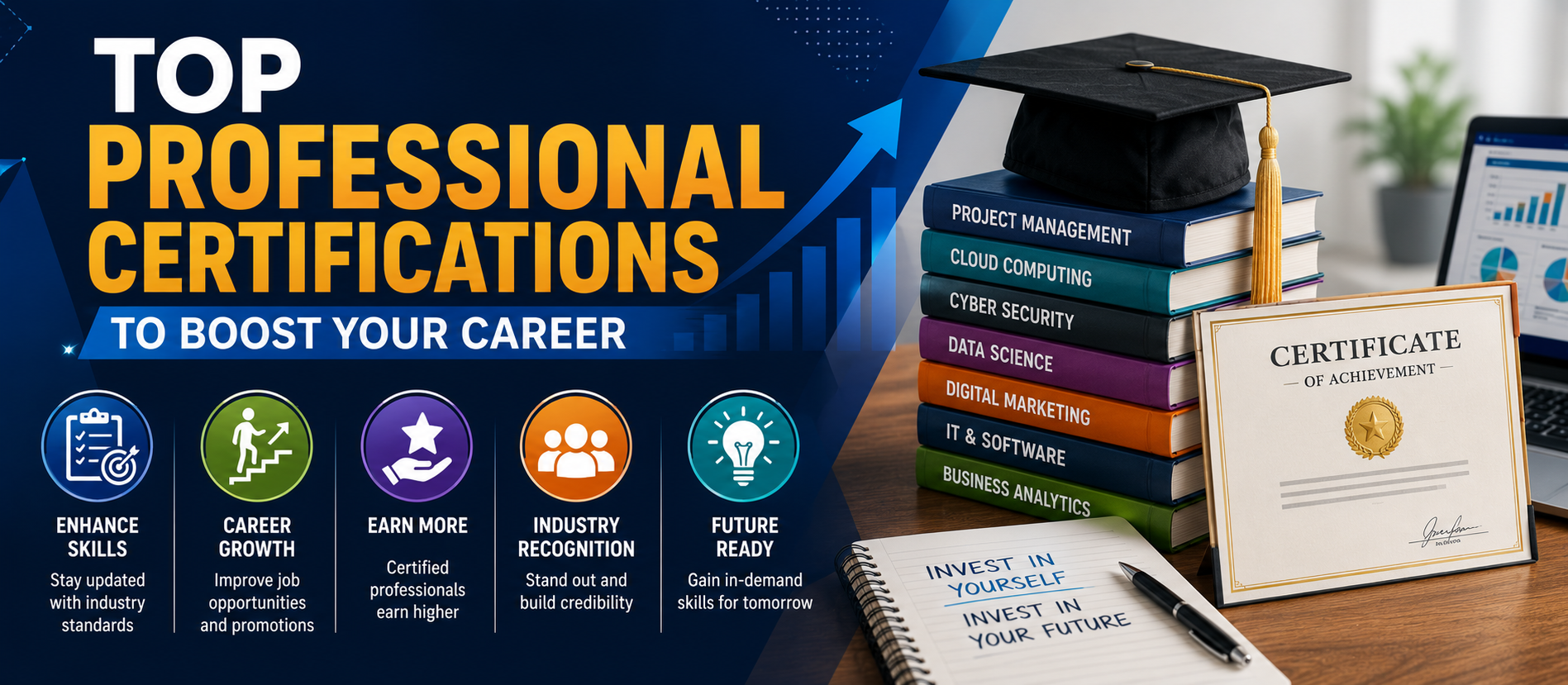
8. Use Certificates Strategically
Online certificates can show that you completed structured training. They may be useful when they come from a credible provider and match the role you want.
However, certificates are not a replacement for practical ability. Employers may want evidence that you can solve problems and complete real tasks.
Place relevant certificates on your resume or professional profile. Avoid filling your profile with every short course you have ever completed. Focus on credentials that support your career direction.
9. Develop Communication Skills
Technical knowledge is only one part of career development. Professionals also need to explain ideas clearly.
Practice writing emails, creating reports, presenting projects, explaining technical concepts, and participating in online discussions.
You can use online learning to improve communication as well. Join discussion forums, complete presentation assignments, record short explanations, or write summaries of what you learn.
Strong communication helps you show the value of your technical skills.
10. Use AI as a Learning Assistant
Artificial Intelligence can support online learning when used responsibly. AI tools can explain difficult concepts, generate practice questions, provide examples, help organize study plans, and give feedback on drafts.
For example, after studying a topic, you can ask an AI tool to create practice questions. Answer them independently and then review the explanations.
You can also ask AI to simulate an interview. Practice answering questions aloud, then improve your responses.
AI should support learning, not replace it. Verify important information and follow course or institutional rules about AI use.
11. Join Professional Communities
Online learning becomes more valuable when it connects you with other people. Join professional communities related to your field.
Participate in discussions. Ask useful questions. Share project lessons. Follow professionals and organizations in your industry.
Networking does not mean asking everyone for a job. Start by building genuine professional relationships and learning from people who work in the field.
12. Build an Online Professional Presence
A professional online presence can make it easier for recruiters, clients, collaborators, and other professionals to understand what you do.
Create a clear professional profile. Describe your skills, interests, projects, certifications, and career direction.
Link to your portfolio where appropriate. Share useful work or learning insights instead of posting only that you completed another course.
Your online profile should tell a simple story: what you know, what you can do, and what type of opportunity you are seeking.
13. Gain Experience Through Real Projects
Experience does not always begin with a full-time job. You can gain practical experience through internships, freelance projects, volunteer work, student projects, open-source contributions, or personal projects.
Start with manageable work. Focus on completing projects to a professional standard. Document what you learned and what you achieved.
Real projects teach skills that courses cannot fully reproduce. You learn how to handle unclear requirements, deadlines, revisions, feedback, and unexpected problems.
14. Learn How to Search for Jobs
Career success also requires knowing how to find suitable opportunities.
Read job descriptions carefully. Look for repeated skills across roles that interest you. If a skill appears frequently, consider adding it to your learning plan.
Customize your resume for relevant positions. Highlight projects and achievements that match the role. Use clear language and avoid unnecessary information.
15. Prepare for Online Interviews
Many employers use video interviews or online assessments. Practice before the interview.
Prepare answers for common questions about your background, projects, strengths, challenges, and career goals. Be ready to explain your portfolio projects clearly.
For technical roles, practice role-specific questions and practical tasks. For communication-heavy roles, practice explaining your ideas in a structured way.
Do not memorize every answer word for word. Understand your own experience so you can respond naturally.
16. Turn Online Learning Into a Career System
A successful learner should connect education with action.
- Choose a career direction.
- Identify required skills.
- Select relevant online courses.
- Create a weekly learning schedule.
- Practice each new skill.
- Build portfolio projects.
- Get feedback.
- Improve weak areas.
- Network with professionals.
- Apply for suitable opportunities.
This system creates a clear connection between learning and career progress.
17. Avoid Common Online Learning Mistakes
Collecting Too Many Courses
Buying or enrolling in many courses can create information overload. Finish important courses before adding more.
Ignoring Practice
Knowledge without practice may not become a usable skill. Apply what you learn.
Chasing Every New Trend
Technology changes quickly. You do not need to learn every new tool. Build strong fundamentals first.
Studying Without a Goal
Learning random topics can waste time. Connect each course with a skill or career objective.
Never Asking for Feedback
Feedback helps reveal mistakes. Ask teachers, peers, mentors, or professional communities to review your work when possible.
18. Keep Updating Your Skills
Career learning does not stop after getting a job. Industries change, tools evolve, and new responsibilities appear.
Continue learning through short courses, professional events, technical documentation, books, webinars, projects, and industry communities.
Focus on relevant changes instead of trying to follow every trend. The best learning plan is connected to the work you want to do.
19. Measure Your Career Learning Progress
Do not measure progress only by the number of courses completed. Use practical indicators.
- Can I perform the skill without step-by-step help?
- Can I explain what I learned?
- Have I built a project using the skill?
- Can I show evidence of my work?
- Have I received useful feedback?
- Am I applying for opportunities that match my skills?
These questions help you measure capability instead of simply collecting certificates.
20. The Future of Career Development Through Online Learning
Online learning is likely to become more personalized and interactive. AI can help learners identify skill gaps, create study plans, practice interviews, and discover relevant learning resources.
Learning platforms may increasingly connect courses with practical projects, assessments, professional communities, and career services.
💡 Key Insight
At the same time, human skills will remain important. Employers and teams need people who can communicate, collaborate, solve problems, make decisions, and adapt to change.
The future of career development is not only about collecting digital knowledge. It is about continuously turning knowledge into useful capability.
SEO, AEO, GEO, and AI Search Perspective
People increasingly use search engines, answer engines, AI assistants, and generative search to discover career and education advice. Clear content helps both readers and AI systems understand career-development topics.
Useful career content should answer questions directly, use descriptive headings, provide practical steps, define important terms, and include concise FAQs. This structure supports traditional SEO while making information easier to understand in AI-powered search experiences.
Frequently Asked Questions
Can online learning help build a successful career?
Yes. Online learning can help people develop job-related knowledge and skills, earn relevant credentials, build projects, and prepare for career opportunities. Results depend on how effectively the learner applies the knowledge.
How do I choose the right online course for my career?
Start with your career goal and required skills. Compare course objectives, syllabus, practical work, instructor credibility, level, and relevance before enrolling.
Are online certificates enough to get a job?
Certificates can support a job application, but they are usually more useful when combined with practical skills, projects, communication ability, and relevant experience.
How can I gain experience while learning online?
Build personal projects, join internships, complete freelance or volunteer work, contribute to open-source projects, and create practical case studies related to your target career.
How many online courses should I take?
There is no fixed number. Choose courses based on the skills you need. A smaller number of relevant courses combined with strong practice can be more useful than collecting many certificates.
Can AI help with online career learning?
AI can help explain concepts, generate practice questions, organize study plans, review drafts, and simulate interviews. Important information should be verified, and academic rules should be followed.
How long does it take to build a career through online learning?
The timeline varies by career, starting skill level, study time, course difficulty, practical experience, and job market conditions. Focus on measurable skills and projects rather than a fixed timeline.
Is online learning useful for career changers?
Yes. Online learning can help career changers build foundational knowledge, develop new skills, create relevant projects, and demonstrate commitment to a new field.
Key Takeaways
- Start with a clear career direction.
- Identify the skills required for your target role.
- Choose online courses based on those skills.
- Create a realistic weekly learning schedule.
- Practice every important skill.
- Build projects that demonstrate your abilities.
- Use certificates as supporting evidence, not as your only proof.
- Develop communication and workplace skills.
- Use AI as a learning assistant when appropriate.
- Build professional relationships and an online presence.
- Gain practical experience through projects, internships, freelance work, or other suitable opportunities.
- Keep updating your skills as your career develops.
Final Thoughts
Online learning can open many paths for career development. It gives learners flexible access to knowledge and skills that may not be available through traditional education alone.
But successful career development requires more than watching lessons or collecting certificates. The real value comes from applying knowledge, building projects, receiving feedback, communicating your abilities, and taking action.
Choose a clear goal. Learn the right skills. Practice consistently. Build evidence of what you can do. Connect with people in your field. Apply for opportunities and continue improving.
When online learning becomes part of a practical career system, it can help turn education into real professional capability and long-term growth.
For more education, AI, digital technology, SEO, AEO, GEO, and AI Search insights, visit www.digiifrog.com.
Ready to Grow?
Talk to us about a strategy tailored to your brand — we will help you stand out in search, AI discovery and social.
Comments (0)
Log in to leave a comment.