📋 Quick Summary
In this article:
What Does AI Mean in Education?
What Does Automation Mean in Education?
Why Education Is Adapting to AI and Automation
AI-Powered Tutoring and Learning Support
Automating Administrative Tasks
The Importance of Human Review
AI-Generated Learning Content
Artificial intelligence and automation are changing the way people work, communicate, search for information, and learn. Education is also changing. Schools, colleges, universities, training organizations, teachers, and students are beginning to use AI-powered tools and automated systems in many parts of the learning process.
💡 Key Insight
The question is no longer whether technology will influence education. The more important question is how education is adapting to AI and automation while protecting learning quality, human interaction, privacy, and academic integrity.
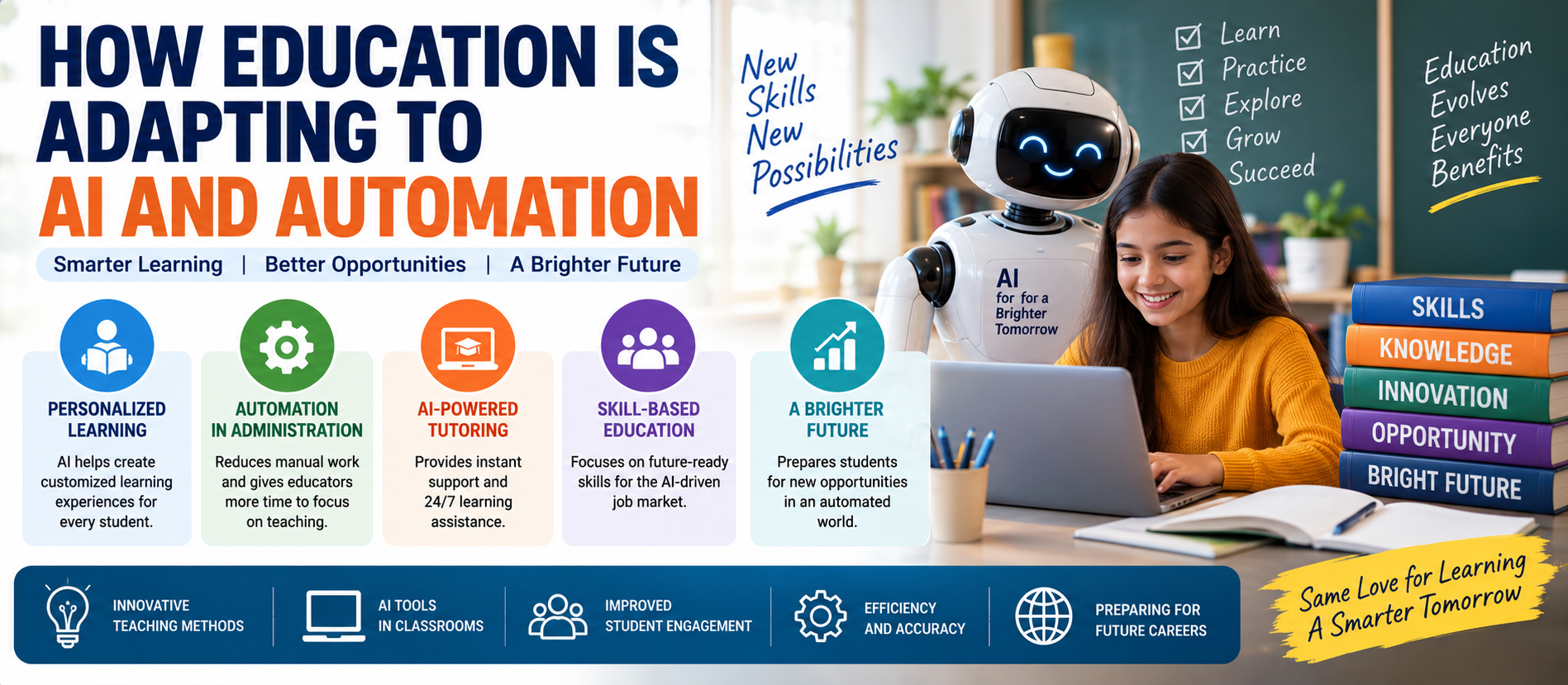
AI can help teachers create learning materials, provide practice activities, analyze patterns in student performance, and support personalized learning. Automation can reduce repetitive administrative work, manage routine processes, organize information, and improve communication.
However, AI and automation are not simple replacements for teachers. Education involves human guidance, judgment, encouragement, communication, and social development. Technology can support these processes, but successful education still requires responsible human involvement.
This complete guide explains how AI and automation are changing education, the benefits and challenges of these technologies, and what students and educators should expect in the future.
What Does AI Mean in Education?
Artificial intelligence in education refers to computer systems that can perform tasks involving pattern recognition, language processing, prediction, recommendations, or content generation.
AI tools can support education in different ways, including:
- Personalized learning recommendations.
- AI tutoring and question support.
- Practice question generation.
- Feedback assistance.
- Learning analytics.
- Content creation support.
- Language assistance.
The value of AI depends on how it is designed and used. An AI tool is not automatically educational simply because it uses advanced technology. The tool should support a clear learning goal.
What Does Automation Mean in Education?
Automation uses technology to complete repetitive or structured tasks with less manual work.
In education, automation may help with:
- Sending routine notifications.
- Organizing schedules.
- Managing student records.
- Tracking assignments.
- Generating basic reports.
- Managing registration processes.
Automation can save time, but important decisions should still receive appropriate human review.
Why Education Is Adapting to AI and Automation
Education systems face several challenges. Teachers often have limited time, classrooms may include students with different learning needs, and institutions manage large amounts of information.
AI and automation can potentially help address some of these challenges.
Students also expect more flexible access to learning resources. Digital tools can provide learning opportunities beyond a traditional classroom schedule.
Personalized Learning
One of the most important applications of AI in education is personalized learning.
Students learn at different speeds. One student may understand a topic quickly, while another may need additional explanation and practice.
AI-supported systems may analyze learning activity and recommend:
- Additional practice questions.
- Relevant learning resources.
- Topics for revision.
- Appropriate difficulty levels.
Personalization can be useful, but students should not be permanently defined by an algorithm or one set of performance data. Learning ability can change with practice and support.
AI-Powered Tutoring and Learning Support
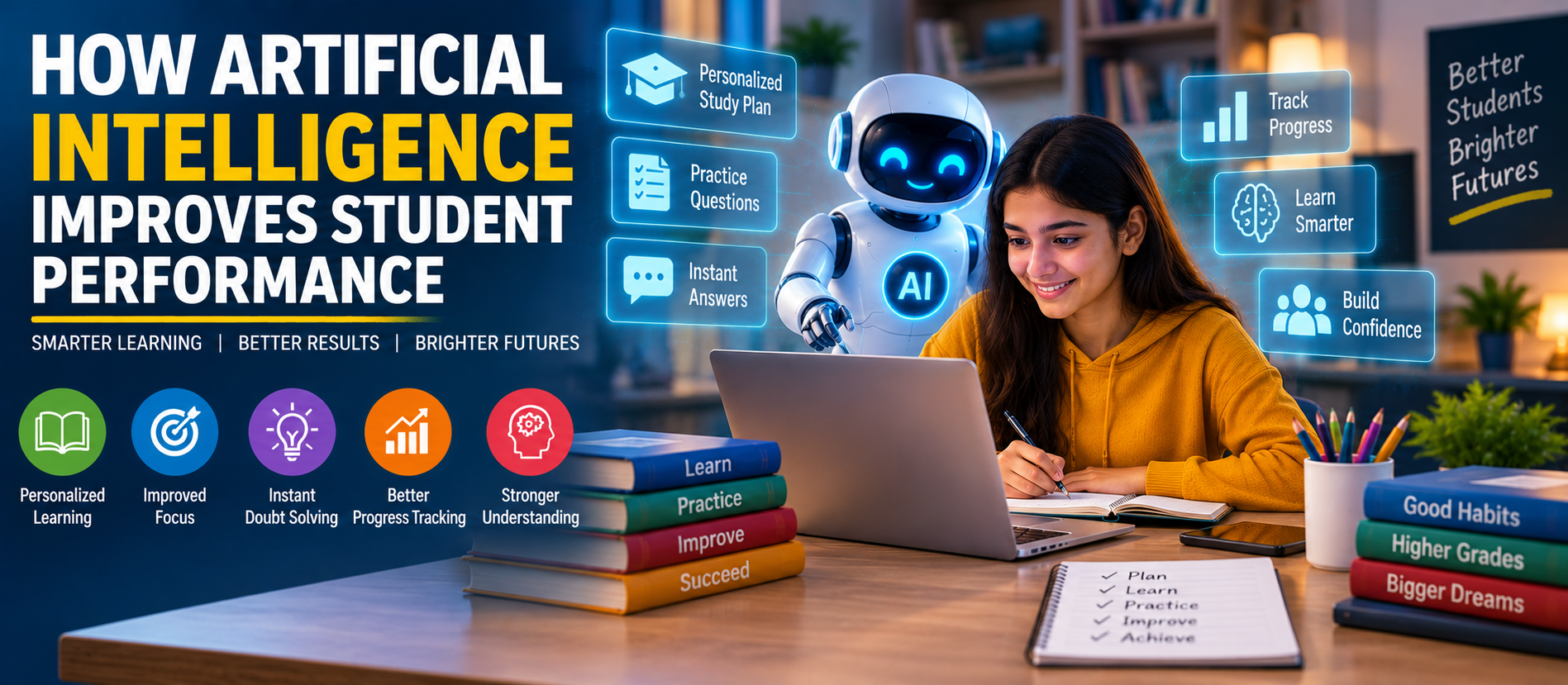
AI tools can provide students with additional learning support outside normal classroom hours.
A student may use an AI system to:
- Ask for a simple explanation.
- Request practice questions.
- Review a difficult concept.
- Receive examples.
- Organize study ideas.
AI can provide quick access to information, but students should learn how to evaluate answers. AI systems can produce incorrect, incomplete, or misleading information.
How Teachers Are Using AI
Teachers can use AI as a support tool for selected tasks.
Possible uses include:
- Generating lesson activity ideas.
- Creating practice exercises.
- Developing question examples.
- Preparing simplified explanations.
- Creating classroom discussion prompts.
Teachers should review AI-generated material before using it. Educational content must be accurate, age-appropriate, and suitable for the learning objective.
Automating Administrative Tasks
Teachers and education administrators often spend significant time on routine tasks.
Automation can help manage processes such as:
- Attendance records.
- Assignment reminders.
- Routine communication.
- Scheduling.
- Basic data organization.
Reducing repetitive work may give educators more time for teaching and student interaction.
AI and Assessment
Assessment is another area where technology is changing education.
Digital systems can help collect information about student performance and identify learning patterns.
For example, a system may show that many students struggle with the same topic.
This information can help teachers decide where additional instruction may be useful.
The Importance of Human Review
Automated assessment should be used carefully. Not every learning outcome can be measured accurately through automated scoring.
Human teachers remain important when evaluating creativity, complex reasoning, communication, and individual circumstances.
AI-Generated Learning Content
Generative AI can create drafts of explanations, summaries, questions, examples, and learning activities.
This can save time, but it also creates new responsibilities.
Teachers and students should check:
- Accuracy.
- Sources and evidence.
- Bias or missing perspectives.
- Appropriateness for the learner.
AI-generated content should be treated as material that may require verification, not as automatically correct information.
Changing the Role of Teachers
AI does not remove the need for teachers. Instead, technology may change how teachers spend their time.
Teachers can continue to focus on:
- Explaining complex ideas.
- Guiding discussions.
- Supporting students emotionally and academically.
- Providing context.
- Encouraging critical thinking.
Information is easier to access than ever before. However, students still need help understanding which information is reliable and how to apply it.
Teaching Students AI Literacy
Students need more than access to AI tools. They need AI literacy.
AI literacy can include understanding:
- What AI can do.
- What AI cannot reliably do.
- Why AI can make mistakes.
- How personal data may be used.
- How to verify AI-generated information.
Students should learn to use AI thoughtfully rather than becoming dependent on it for every task.
Critical Thinking in the AI Era
As AI-generated information becomes easier to access, critical thinking becomes even more important.
Students should ask:
- Is this information accurate?
- What evidence supports the answer?
- Could another explanation be correct?
- Is important context missing?
Education must continue to teach students how to think, not simply how to obtain answers.
AI and Accessibility
Technology can potentially make learning more accessible for many students.
Examples may include:
- Text-to-speech tools.
- Speech-to-text tools.
- Translation support.
- Alternative learning formats.
Accessibility tools should be selected carefully based on real student needs.
Automation in Educational Institutions
Schools and universities manage many processes every day.
Automation can support:
- Admissions workflows.
- Student communication.
- Document management.
- Course administration.
- Routine support requests.
Automated systems can improve efficiency when institutions maintain clear oversight and reliable processes.
AI Chatbots for Student Support
Educational organizations may use AI-powered chatbots to answer routine questions.
A chatbot may help students find information about:
- Course schedules.
- Application processes.
- General institutional procedures.
However, students should have access to human support for complex or sensitive issues.
Benefits of AI and Automation in Education
More Personalized Learning
Technology may help students access learning resources based on their progress and needs.
Faster Access to Support
AI tools can provide explanations and practice support quickly.
Reduced Repetitive Work
Automation may reduce time spent on routine administrative processes.
Better Learning Data
Digital systems can help educators identify learning patterns and possible gaps.
Flexible Learning Opportunities
Students may access some learning resources outside traditional classroom hours.
Challenges of AI in Education
AI also creates important challenges.
Accuracy Problems
AI systems can produce incorrect information. Students should not assume every generated answer is reliable.
Overdependence
If students use AI to complete every task, they may reduce opportunities to develop independent thinking and problem-solving skills.
Privacy Concerns
Educational technology may collect information about students and learning behavior. Institutions need responsible data practices.
Unequal Access
Not every student has equal access to devices, internet connections, or paid AI tools.
Technology should not increase existing educational inequalities.
Academic Integrity
AI can make it easier for students to generate answers without understanding the work.
Educational institutions need clear policies about acceptable and unacceptable uses of AI.
Academic Integrity in the Age of Generative AI
Traditional approaches to homework and assessment are changing.
Schools and universities may need to reconsider how learning is evaluated.
Possible approaches include:
- More practical assessments.
- Oral discussions.
- Project-based work.
- In-class activities.
- Clear disclosure rules for AI use.
The goal should be to evaluate real understanding rather than simply detect technology use.
How Students Can Use AI Responsibly
Students can use AI as a learning assistant rather than a replacement for thinking.
Responsible use may include:
- Asking for explanations.
- Requesting practice questions.
- Comparing different ideas.
- Checking understanding.
- Improving study organization.
Students should avoid submitting AI-generated work as their own when this violates academic rules.
How Teachers Can Prepare for AI
Teachers do not need to become AI engineers to use educational technology effectively.
Useful preparation may include:
- Learning the basic capabilities of AI.
- Understanding common risks.
- Testing tools before classroom use.
- Creating clear classroom policies.
- Teaching verification and critical thinking.
How Schools Can Implement AI Responsibly
Successful AI adoption requires planning.
Start With a Clear Problem
Schools should identify a real educational or administrative challenge before selecting a tool.
Protect Privacy
Institutions should understand how student information is collected, stored, and used.
Train Teachers and Staff
Technology works better when the people using it understand its strengths and limitations.
Keep Humans in Important Decisions
High-impact decisions about students should receive appropriate human oversight.
Review Results Regularly
Schools should evaluate whether an AI system is actually improving learning or efficiency.
AI and Personalized Career Learning
AI may also support career development and lifelong learning.
Learning systems may recommend skills, courses, or practice activities based on a person's goals.
Recommendations should be treated as support, not as final decisions about a student's future.
The Growth of Lifelong Learning
AI and automation are changing workplaces, which means people may need to learn new skills more frequently.
Education is becoming less limited to childhood or university years. Online learning, professional training, and short courses can support continuous skill development.
The Future Classroom
The future classroom may combine teachers, digital platforms, AI tools, interactive content, and collaborative learning.
However, the most important purpose of education will remain the same: helping people develop knowledge, skills, judgment, creativity, and the ability to solve problems.
Technology should support meaningful learning rather than simply make classrooms more automated.
A Practical AI Adoption Framework for Education
Schools and educators can use a simple process when evaluating AI tools.
Step 1: Identify the Goal
Define the learning or administrative problem clearly.
Step 2: Evaluate the Tool
Check its capabilities, limitations, privacy practices, and suitability.
Step 3: Start Small
Test the technology with a limited project before large-scale implementation.
Step 4: Train Users
Teachers and students should understand how to use the tool responsibly.
Step 5: Measure Results
Review whether the tool improves learning, efficiency, or access.
Why Human Skills Will Remain Important
As AI becomes more capable, human skills remain essential.
Education should continue developing:
- Critical thinking.
- Creativity.
- Communication.
- Collaboration.
- Ethical judgment.
- Adaptability.
These skills help students work effectively with technology and other people.
SEO, AEO, GEO and AI Search Optimization for Education Content
Education content is increasingly discovered through search engines, answer engines, AI assistants, and generative search experiences.
SEO, or Search Engine Optimization, helps educational resources become easier to discover. AEO, or Answer Engine Optimization, focuses on giving clear and direct answers to common questions. GEO, or Generative Engine Optimization, focuses on organizing information so generative AI systems can better understand topics and context.
Clear headings, simple language, direct explanations, practical examples, and useful frequently asked questions can improve readability. These practices can also help educational content become easier for modern AI-powered systems to understand.
Digiifrog focuses on modern digital growth through SEO, AEO, GEO, and AI Search optimization. As the way people search for information continues to change, useful and well-structured content will become increasingly important.
Frequently Asked Questions
How is AI changing education?
AI is supporting personalized learning, tutoring, learning analytics, content development, accessibility tools, and administrative processes.
Will AI replace teachers?
AI can support teachers, but education requires human judgment, guidance, communication, and social interaction. Teachers will continue to play an important role.
What are the benefits of automation in education?
Automation can reduce repetitive administrative work, improve routine communication, organize information, and support more efficient processes.
What are the risks of AI in education?
Important risks include inaccurate information, privacy concerns, unequal access, overdependence, bias, and academic integrity challenges.
How should students use AI?
Students should use AI to support learning, ask questions, practice concepts, and improve understanding while verifying important information and following academic rules.
Why is AI literacy important?
AI literacy helps students understand the strengths and limitations of AI, evaluate generated information, protect privacy, and use technology responsibly.
Conclusion
How education is adapting to AI and automation is not simply a technology story. It is a story about how teachers, students, and institutions can use new tools while protecting meaningful learning.
AI can support personalized learning, tutoring, practice, analytics, accessibility, and educational content. Automation can reduce repetitive work and improve routine processes.
At the same time, responsible implementation is essential. Education must address accuracy, privacy, access, academic integrity, and overdependence.
The strongest future for education will likely combine technology with human expertise. Teachers can use AI as a support system while continuing to guide students, encourage critical thinking, and create meaningful learning experiences.
The goal should not be to automate education completely. The goal should be to use AI and automation carefully so that students can learn better, educators can work more effectively, and education remains accessible and human-centered.
Digiifrog
Website: www.digiifrog.com
Digital Growth Through SEO, AEO, GEO & AI Search Optimization.
Ready to Grow?
Talk to us about a strategy tailored to your brand — we will help you stand out in search, AI discovery and social.
Comments (0)
Log in to leave a comment.