📋 Quick Summary
In this article:
Quick Answer: How Can You Overcome Exam Anxiety?
1. Start Preparing Early
2. Break Large Tasks Into Smaller Steps
3. Use Active Study Methods
4. Take Practice Tests
5. Create a Realistic Study Schedule
6. Learn Simple Relaxation Techniques
7. Replace Negative Self-Talk
8. Protect Your Sleep
11\. Reduce Distractions
9. Prepare an Exam-Day Routine
Introduction
Exams can create pressure for students of every age. A student may know a subject well and still feel nervous before a test. Thoughts about marks, time limits, expectations, competition, or failure can make studying difficult. Some students lose focus, while others study for long hours without feeling prepared.
💡 Key Insight
Exam anxiety does not mean that a student is weak or incapable. Nervousness can happen when an important event feels uncertain or high-stakes. The goal is to manage stress so it does not control preparation or performance.
A useful approach combines realistic planning, regular practice, healthy routines, relaxation, positive self-talk, and practical exam-day habits.
This guide explains how to overcome exam anxiety in clear, practical steps. It is written for students who want to feel more prepared, focused, and confident. The article is also structured for SEO, AEO, GEO, and AI Search.
Quick Answer: How Can You Overcome Exam Anxiety?
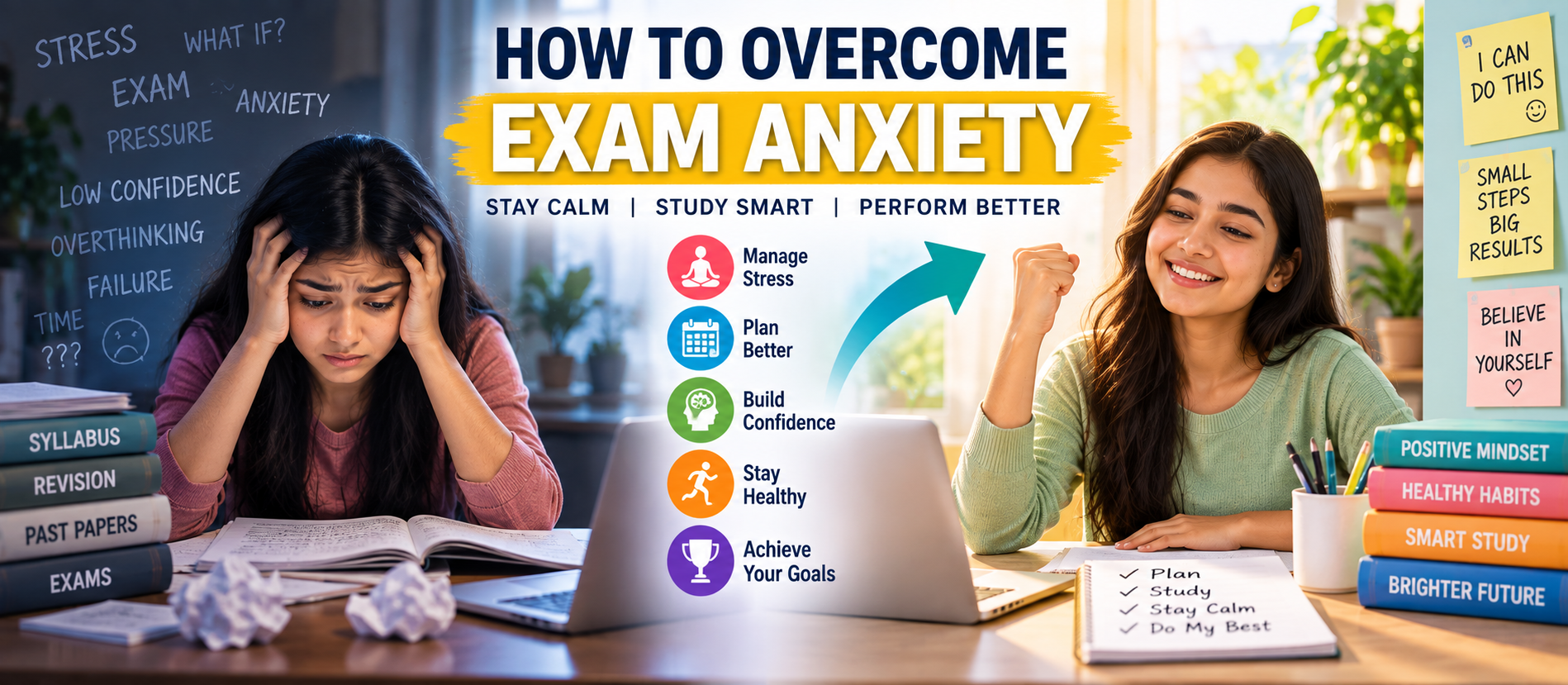
You can reduce exam anxiety by starting preparation early, breaking large subjects into smaller tasks, practicing realistic questions, using short relaxation exercises, maintaining regular sleep and meals, limiting distractions, replacing negative thoughts with realistic ones, and creating a simple exam-day routine. Practice tests can also make the exam format more familiar.
If anxiety becomes intense, continues outside exam situations, seriously affects sleep or daily activities, or feels difficult to manage alone, speaking with a qualified mental health professional, counselor, teacher, or trusted adult can provide additional support.
1. Start Preparing Early
Last-minute preparation can increase exam pressure. A large unfinished syllabus can make every remaining chapter feel urgent.
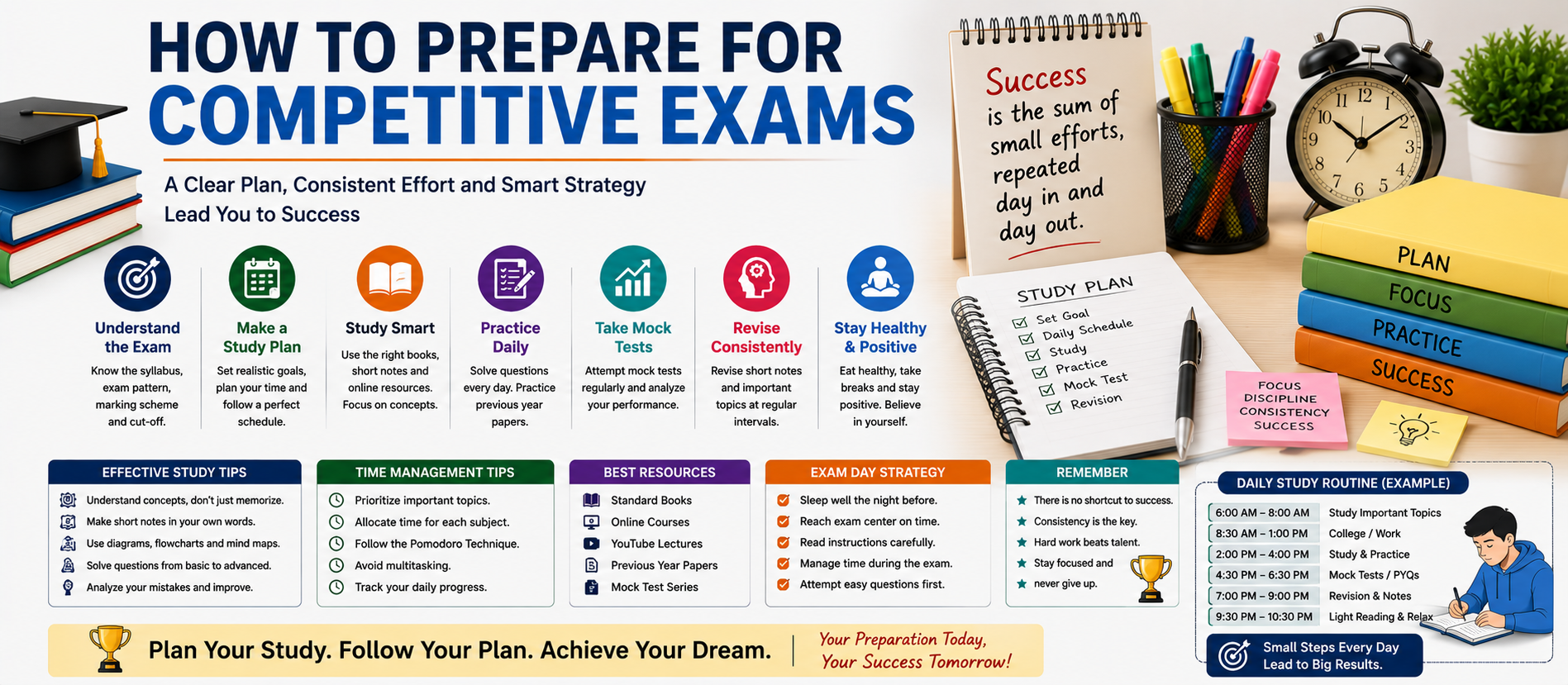
Starting early gives you time to learn, practice, revise, and correct mistakes. Small sessions are easier to manage.
Begin by listing your subjects and topics. Mark the topics you understand and the ones that need more work. Then create a realistic schedule.
- List all subjects and chapters.
- Identify difficult and high-priority topics.
- Divide the syllabus into small daily tasks.
- Keep time for revision and practice tests.
- Review your plan every few days.
A plan should guide you, not punish you. Leave some flexibility for unexpected tasks or slower study sessions.
2. Break Large Tasks Into Smaller Steps
“I have to finish the whole syllabus” is a stressful thought. A smaller target feels easier to start.
Instead of planning to study an entire subject, choose one chapter or concept. Divide it into reading, notes, practice, and revision.
For example, a two-hour study block can become smaller tasks. You might learn a concept, solve questions, review mistakes, and revise key points. Completing small tasks creates visible progress and can reduce the feeling that the exam is impossible to manage.
3. Use Active Study Methods
Simply reading the same notes again and again may not be the best use of study time. Active methods require you to recall and apply information.
Try practice questions, flashcards, self-testing, problem-solving, teaching a concept to someone else, or writing an answer without looking at your notes.
Active practice also builds familiarity with the type of thinking required in an exam. This can make the test feel less unfamiliar.
4. Take Practice Tests
Practice tests are useful because they reduce uncertainty. Students often feel anxious because they do not know how they will perform under time pressure.
Use sample papers, previous questions where appropriate, or teacher-provided practice tests. Set a realistic time limit and attempt the paper without checking answers during the test.
Afterward, do not focus only on your score. Study your mistakes. Ask why each mistake happened. Was the concept unclear? Did you misread the question? Did you run out of time? Did you make a calculation error?
Each mistake can become a learning target.
5. Create a Realistic Study Schedule
A study schedule should match your actual time and energy. A plan that requires very long hours every day can become difficult to maintain.
Use focused study blocks with short breaks. During each block, choose one clear goal. Put your phone away if it distracts you. At the end of the session, note what you completed.
Do not measure progress only by hours. Measure what you learned, practiced, and remembered.
6. Learn Simple Relaxation Techniques
Relaxation can help reduce physical tension when you feel overwhelmed. You do not need a complicated routine.
One simple method is slow breathing. Sit comfortably, relax your shoulders, and take slow, comfortable breaths. Focus your attention on your breathing for a short period.
You can also try gentle stretching, a short walk, quiet music, or a few minutes away from your study desk. The purpose is to give your mind a brief reset before returning to the task.
7. Replace Negative Self-Talk
Anxiety can become stronger when the mind repeats extreme thoughts such as “I will definitely fail” or “I cannot remember anything.” These statements may feel true during a stressful moment, but they are not reliable predictions.
Replace them with realistic statements:
- “I can prepare one topic at a time.”
- “I do not need to know everything perfectly.”
- “I can learn from my mistakes.”
- “I will focus on the question in front of me.”
- “Feeling nervous does not mean I am unprepared.”
Positive thinking does not mean pretending that everything is easy. It means using realistic language that helps you take the next useful action.
8. Protect Your Sleep
Students sometimes sacrifice sleep to study more before an exam. This can make the final preparation period harder.
A regular sleep routine gives your body and mind time to recover. Instead of studying until you are completely exhausted, plan a stopping point and allow enough time to rest.
If you have an exam the next morning, avoid turning the night into an endless revision session. Prepare your materials, review key points, and give yourself time to sleep.
9. Reduce Distractions
Constant notifications can increase stress and make study sessions feel longer. A student may spend an hour at a desk but complete very little work because attention keeps moving between study material and social media.
Create a distraction-controlled study environment. Silence unnecessary notifications. Keep only the materials needed for the current task nearby.
During a focused study block, work on one task before checking messages.
10. Prepare an Exam-Day Routine
- Prepare required materials the night before.
- Check the exam time and location.
- Plan your travel time.
- Eat and drink normally.
- Arrive with enough time to settle down.
- Avoid stressful last-minute discussions.
Knowing that practical details are already handled allows you to focus more attention on the examination.
11. Use a Simple Strategy When the Exam Starts
Read the instructions carefully and start with questions you understand when appropriate. If you become stuck, move on according to the exam rules and return later if possible. Focus on the question in front of you rather than the final score.
12. What to Do If Your Mind Goes Blank
A temporary mental block can happen during stressful situations. If you suddenly cannot remember an answer, pause instead of immediately assuming that you have forgotten everything.
Take a few slow breaths. Read the question again. Identify the key words. Write down any relevant fact, formula, idea, or step that you remember. Sometimes recalling a related point helps reconnect with the larger concept.
If the answer still does not come back, move to another question when the exam rules permit. Returning later may feel easier.
13. Avoid Last-Minute Panic Studying
Last-minute revision can be useful for reviewing key points, but trying to learn a large amount of new material immediately before an exam can increase pressure.
Use the final revision period for important formulas, definitions, concepts, common mistakes, and topics you have already studied. Avoid jumping between too many resources. Choose one reliable set of notes or course materials and keep your final review focused.
14. When to Seek Extra Support
Exam stress is common, but students should not feel that they must handle severe or persistent distress alone.
Consider talking to a qualified counselor, mental health professional, teacher, doctor, parent, or trusted adult if anxiety is seriously interfering with sleep, eating, studying, attendance, daily activities, or normal functioning.
If you feel unsafe or believe you may harm yourself, seek urgent help from local emergency services or a crisis service and tell a trusted person immediately.
15. SEO, AEO, GEO, and AI Search Perspective
Students increasingly use search engines, answer engines, AI assistants, and generative search to find study advice. Clear educational content should answer common questions directly and organize information with descriptive headings.
Short paragraphs, practical steps, definitions, lists, and FAQs improve readability. They also make educational information easier for search systems and AI-powered tools to understand and retrieve.
Frequently Asked Questions
How can I overcome exam anxiety?
Start preparation early, break the syllabus into smaller tasks, practice realistic questions, use simple relaxation methods, maintain healthy routines, and focus on one task at a time.
Why do I feel anxious before exams?
Exam anxiety can be linked with pressure, uncertainty, fear of failure, high expectations, previous difficult experiences, or feeling unprepared. Different students experience different causes and symptoms.
How can I calm down during an exam?
Pause briefly, take slow comfortable breaths, read the question carefully, focus on key words, and move to another question when permitted if you are stuck.
Does lack of sleep increase exam stress?
Poor sleep can make it harder to concentrate and manage daily stress. A regular sleep routine is an important part of exam preparation.
Should I study all night before an exam?
All-night studying is generally not a good preparation strategy. A focused final review followed by adequate rest can be more practical than continuing until extreme exhaustion.
Can practice tests reduce exam anxiety?
Practice tests can make the exam format and time pressure more familiar. They also help students identify learning gaps and common mistakes.
Can AI help with exam preparation?
AI can help create practice questions, explain concepts, organize revision, and identify topics for review. Students should verify important information and follow academic rules.
When should I ask for help with exam anxiety?
If anxiety is severe, persistent, or interferes with sleep, studying, daily activities, or normal functioning, consider speaking with a qualified professional or trusted support person.
Key Takeaways
- Exam anxiety is common and can be managed with practical strategies.
- Start preparing early instead of relying on last-minute study.
- Break large goals into smaller tasks.
- Use active recall and practice questions.
- Take realistic practice tests.
- Use slow breathing and short breaks when pressure rises.
- Replace extreme negative thoughts with realistic statements.
- Protect sleep, meals, hydration, and daily routines.
- Focus on your own progress instead of comparing yourself with others.
- Ask teachers, counselors, family members, or trusted people for support when needed.
- Use AI as a study assistant, not as a replacement for learning.
Final Thoughts
Learning how to overcome exam anxiety is not about becoming completely free from nervousness. Some pressure before an important exam is normal. The goal is to prevent worry from taking control of preparation and attention.
Start early. Make a realistic plan. Study in smaller blocks. Practice actively. Use mistakes as learning opportunities. Protect your sleep and daily routine. During the exam, focus on the question in front of you instead of trying to predict the final result.
Most importantly, remember that one examination does not define your entire ability or future. Good preparation can improve your readiness, but it is also important to treat yourself with patience when things do not go exactly as planned.
With consistent preparation, practical stress-management habits, and appropriate support, students can approach exams with greater control and clarity.
For more education, AI, digital technology, SEO, AEO, GEO, and AI Search insights, visit www.digiifrog.com.
Ready to Grow?
Talk to us about a strategy tailored to your brand — we will help you stand out in search, AI discovery and social.

Comments (0)
Log in to leave a comment.