
📋 Quick Summary
In this article:
Why Protecting Personal Data Online Matters
1. Use Strong and Unique Passwords
2. Turn On Multi-Factor Authentication
3. Protect Your Email Account
4. Be Careful With Phishing Messages
5. Limit What You Share on Social Media
6. Review App Permissions
7. Keep Your Devices and Apps Updated
9. Use Encryption and Secure Lock Screens
11. Think Before You Give Personal Information
12. Check Website Addresses Before Entering Data
Personal data is part of everyday digital life. Your name, email address, phone number, location, photographs, financial details, passwords, shopping history, and account information may exist across many websites and apps. This makes personal data useful not only to legitimate services, but also to scammers, identity thieves, and cybercriminals.
The good news is that online privacy does not require complicated technical skills. A few consistent habits can greatly reduce your exposure. The goal is not to become invisible online. The goal is to control what you share, secure the accounts that matter most, and make it harder for criminals to misuse your information.
What Is Personal Data?
Personal data is information that can identify you directly or indirectly. Some information is obvious, such as your name, address, phone number, email address, passport details, or government identification number. Other information can become sensitive when combined with other data.
This can include your date of birth, IP address, device information, location history, online purchases, photographs, contacts, browsing activity, employment details, and account activity. Health, financial, biometric, and authentication information can require even stronger protection.
Personal data can be exposed through phishing, weak passwords, breaches, malware, unsafe websites, oversharing, and unnecessary permissions. Protection therefore requires several layers.
Why Protecting Personal Data Online Matters
Stolen information can be used for identity theft, account takeover, financial fraud, targeted scams, impersonation, blackmail, or further phishing attempts. A criminal may not need every detail about you. A combination of your email address, phone number, old password, and publicly available information can sometimes be enough to make a scam convincing.
Your email account deserves special attention because it can be connected to password resets for many other services. If someone gains access to your email, they may try to reset passwords and take control of additional accounts.
Good security protects the links between your accounts, devices, and personal information.
1. Use Strong and Unique Passwords
One of the simplest ways to improve online security is to stop reusing passwords. Every important account should have its own password. If one website suffers a breach and your password is exposed, a unique password prevents criminals from using the same credential on other services.
⚠ Watch Out
Use long passwords or passphrases that are difficult to guess. Avoid names, birthdays, phone numbers, common words, or predictable patterns. A reputable password manager can generate and store unique passwords so you do not have to memorize every one.
Give extra attention to your email, banking, payment, cloud-storage, social-media, and primary device accounts. These accounts often provide access to other information or services.
2. Turn On Multi-Factor Authentication
A password is only one layer of protection. Multi-factor authentication, or MFA, adds another verification step. Depending on the service, this may involve an authenticator app, security key, biometric verification, or a one-time code.
If an attacker obtains your password, MFA can make account takeover much harder. Where multiple MFA options are available, consider stronger methods such as an authenticator app or security key rather than relying only on SMS.
Start with email, banking, cloud storage, social media, and payment accounts.
3. Protect Your Email Account
Your email account is often the recovery center for your digital identity. Password-reset messages, security alerts, invoices, account notifications, and private conversations may all be stored there.
Use a unique password and MFA. Review recovery email addresses and phone numbers. Remove recovery options that you no longer control. Check active sessions and signed-in devices from time to time. If you receive a security alert you did not expect, investigate it through the official service rather than clicking a suspicious link.
4. Be Careful With Phishing Messages
Phishing is one of the most common ways criminals try to steal personal information. A message may appear to come from a bank, delivery company, employer, government service, social network, or someone you know.
Do not trust a message simply because it looks professional. Check the sender, domain, wording, link destination, and request. Be especially careful when a message creates urgency, threatens account closure, asks for a password, requests a verification code, or tells you to transfer money.
When in doubt, do not use the link in the message. Open the official website or app yourself and check the account there. This simple habit can prevent many credential-stealing attacks.
5. Limit What You Share on Social Media
Public information can help attackers build convincing profiles. Avoid posting information that could help someone guess passwords, security-question answers, or account-recovery details.
Think carefully before sharing your full birth date, home address, travel plans, phone number, workplace details, family information, school details, or photographs showing documents and tickets.
Review your privacy settings regularly. Remember that privacy settings can change when platforms update their products. Check who can see your posts, profile information, friend list, location, and contact details.
6. Review App Permissions
Many apps request access to contacts, photos, microphones, cameras, location, calendars, or files. Some permissions are necessary for an app to work. Others may not be.
Review permissions on your phone and computer. Remove access an app does not need, especially for location, microphone, camera, contacts, and photos.
7. Keep Your Devices and Apps Updated
Security updates often fix known vulnerabilities. Delaying updates can leave devices exposed to weaknesses that attackers already know how to exploit.
Keep your operating system, browser, mobile apps, security software, and router firmware updated. Enable automatic updates when practical. Only install software from trusted sources and avoid pirated applications or unknown downloads.
9. Use Encryption and Secure Lock Screens
Device encryption can help protect stored information if a phone, laptop, tablet, or drive is lost or stolen. Use a strong device passcode, automatic screen locking, and secure storage for sensitive files.
11. Think Before You Give Personal Information
One of the best privacy tools is simply asking a question: Does this service really need this information?
Do not automatically provide every optional field on a form. If a website asks for information that seems unrelated to the service, check its privacy policy and decide whether sharing it is necessary.
Less information collected means less information that can later be exposed, misused, or sold. Data minimization is a practical privacy habit for individuals and businesses.
12. Check Website Addresses Before Entering Data
Before entering a password, payment card number, or other sensitive information, check that you are using the correct website or official application.
Look carefully at the domain name. Attackers can create websites that look almost identical to legitimate services. A familiar logo is not proof that a website is genuine.
For important services, save the official website as a bookmark or type the address yourself instead of following unexpected links from emails or messages.
13. Back Up Important Data
Smartphones contain a huge amount of personal information. They may hold messages, photos, banking apps, email accounts, contacts, authentication apps, and location data.
Use a strong screen lock. Install operating-system updates. Download apps from trusted stores. Review app permissions. Turn on device-finding features so you can locate, lock, or erase a lost device when supported.
Do not share verification codes with people who contact you unexpectedly. A legitimate company should not need you to read out a security code simply because someone called or messaged you.
15. Protect Personal Data When Using AI Tools
AI tools are useful, but think carefully before entering sensitive information into an online AI service.
Avoid pasting passwords, bank details, identity-document numbers, confidential business information, private customer records, or other sensitive data unless you understand the service's privacy controls and have a legitimate reason to provide it.
Remove unnecessary personal details from documents before uploading them when possible, and review available privacy controls.
16. Be Careful With Online Shopping and Payments
Old accounts can become forgotten security risks. You may have created accounts years ago using passwords that were reused elsewhere.
Make a list of old services you no longer use. Delete unnecessary accounts where possible. If you must keep an account, update its password and security settings. Remove saved payment methods and unnecessary personal information.
18. Watch for Signs of Account Compromise
Take unexpected security alerts seriously. Warning signs may include password-reset emails you did not request, unfamiliar login notifications, unknown devices, changed account details, messages you did not send, or transactions you do not recognize.
If you suspect compromise, act quickly. Change the affected password from a trusted device, sign out unknown sessions, enable MFA, review account recovery settings, and contact the service provider through its official support channel.
19. Create a Simple Personal Data Protection Routine
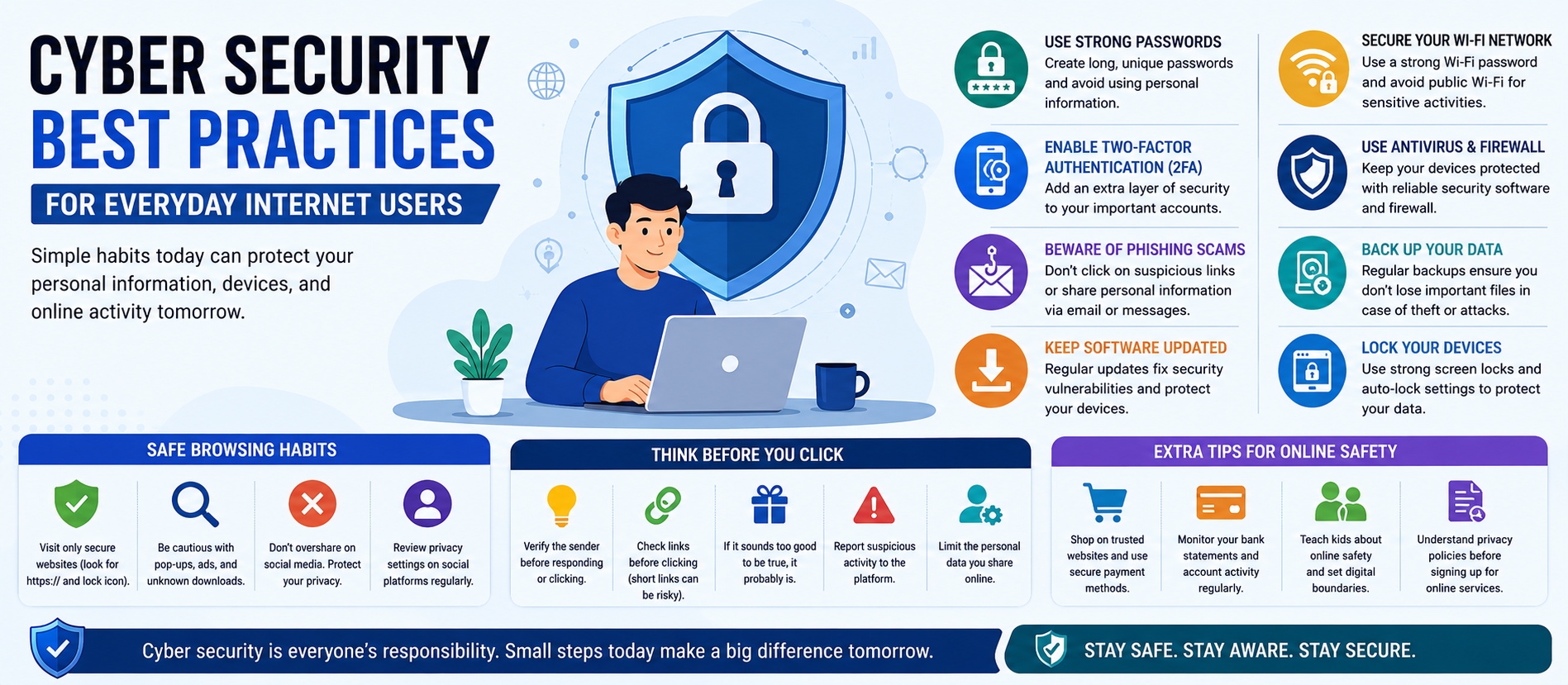
- Use a unique, strong password for every important account.
- Use a reputable password manager.
- Enable MFA on email, financial, social, and other sensitive accounts.
- Keep phones, computers, browsers, apps, and routers updated.
- Be cautious with unexpected emails, texts, calls, and links.
- Share less personal information on public profiles.
- Review app permissions regularly.
- Use device encryption and a strong screen lock.
- Secure your home Wi-Fi network.
- Back up important data securely.
- Limit sensitive information shared with online and AI services.
- Monitor financial and account activity.
- Delete unused accounts and apps.
- Act quickly if you suspect identity theft or account compromise.
Quick Checklist: How to Protect Personal Data Online
- Use unique strong passwords and a reputable password manager.
- Enable MFA on email, financial, social, and other sensitive accounts.
- Keep devices, apps, browsers, and routers updated.
- Verify unexpected emails, texts, calls, and links before responding.
- Limit public social-media information and review app permissions.
- Use a strong device lock and encryption where available.
- Back up important information securely.
- Limit sensitive information shared with online and AI services.
- Monitor account and financial activity and act quickly after suspicious activity.
Frequently Asked Questions
What is the most important step to protect personal data online?
Start with your most important accounts. Use unique strong passwords and enable multi-factor authentication. Protect your email account first because it can be used to reset other accounts.
Should I use the same password on different websites?
No. Password reuse increases risk. If one service is breached, criminals may try the exposed password on other websites. Use unique passwords and a reputable password manager.
Is two-factor authentication worth using?
Yes. MFA adds another security layer beyond the password. When available, stronger options such as authenticator apps or security keys can provide better protection than SMS alone.
How can I protect my data on social media?
Share less sensitive information publicly, review privacy settings, limit who can see your profile and posts, and avoid publishing details that could help someone impersonate you or answer account-recovery questions.
Should I share personal information with AI tools?
Be cautious. Do not upload sensitive information unless you understand why it is needed and how the service handles it. Remove unnecessary personal details from documents before uploading them when possible.
What should I do after a data breach?
Change affected passwords immediately. If the same or similar password was used elsewhere, change those accounts too. Enable MFA, review account activity, and follow the affected company's official breach guidance.
Final Thoughts
How to protect personal data online is not a question with one perfect answer. Good protection comes from several small habits working together. Strong passwords, MFA, secure devices, careful browsing, limited data sharing, updated software, privacy settings, and reliable backups create multiple layers of defense.
Start with the accounts and information that would cause the greatest harm if exposed. Protect them first, then improve the rest gradually.
For more practical digital security, technology, AI, and business insights, explore Digiifrog at www.digiifrog.com.
Sources and Further Reading
- FTC — Protect Your Personal Information From Hackers and Scammers.
- FTC — Strong Passwords and Two-Factor Authentication.
- CISA — Secure Our World and Data Protection Guidance.
- FBI — Stay Safe Online.
Ready to Grow?
Talk to us about a strategy tailored to your brand — we will help you stand out in search, AI discovery and social.
Comments (0)
Log in to leave a comment.