📋 Quick Summary
In this article:
Why Legal Business Registration Matters
Step 1: Choose the Right Business Structure
Limited Liability Company (LLC)
Step 2: Select and Verify Your Business Name
Step 3: Register the Business Name
Step 4: Obtain Required Tax Identification Numbers
Step 5: Register with Government Authorities
Step 6: Obtain Business Licenses and Permits
Step 7: Open a Business Bank Account
💡 Key Insight
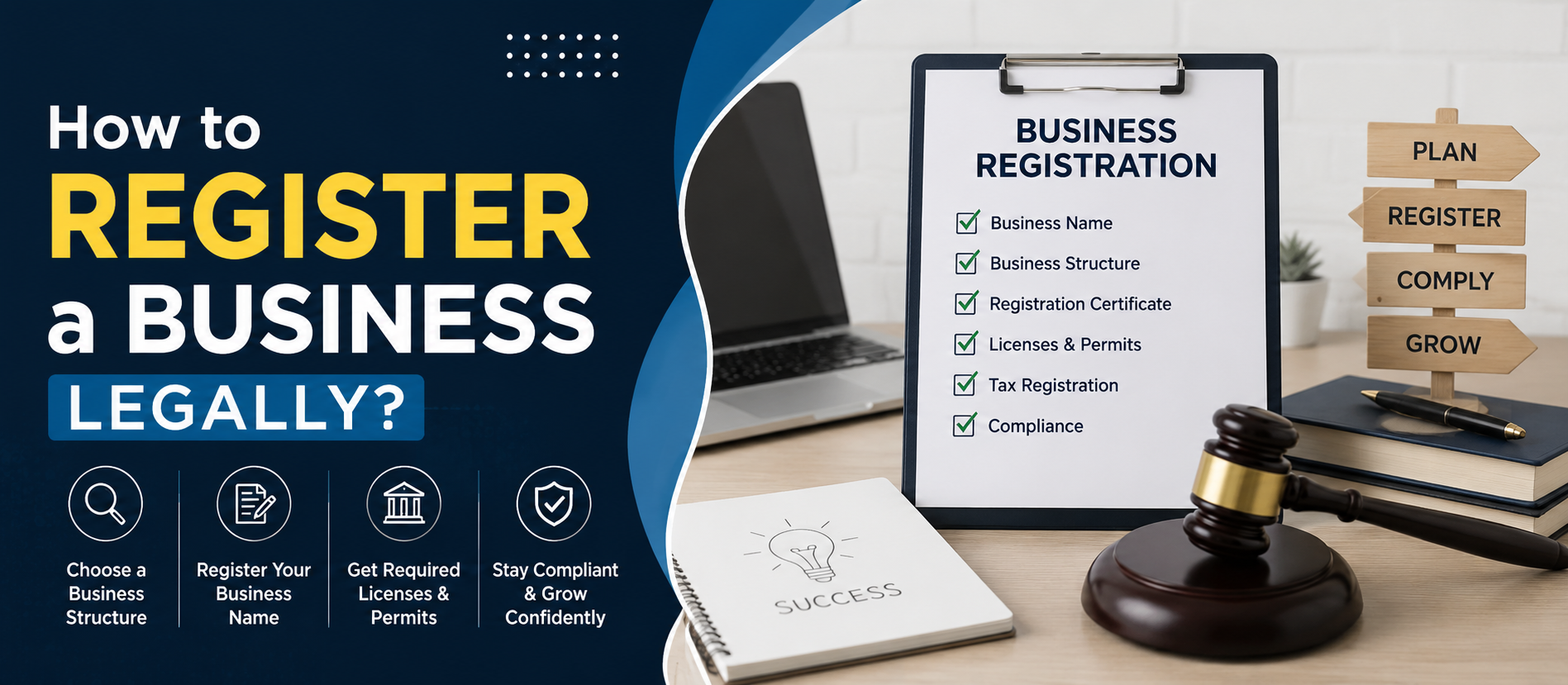
Starting a business is an exciting journey, but before you begin selling products or services, it is essential to ensure that your venture is legally registered and compliant with applicable regulations. Proper business registration not only helps establish credibility but also protects owners from legal complications, tax issues, and financial risks.
In today's competitive digital economy, entrepreneurs are launching startups, eCommerce stores, consulting firms, agencies, and local businesses at an unprecedented rate. However, many business owners overlook the legal foundation required for sustainable growth. This comprehensive guide explains how to register a business legally, the documents required, common mistakes to avoid, and the legal obligations every entrepreneur should understand.
Whether you are starting a small local company or building a global online brand, this guide from Digiifrog will help you navigate the process effectively.
Why Legal Business Registration Matters
Registering your business creates a formal legal identity. This identity allows you to operate professionally, open business bank accounts, enter contracts, apply for licenses, and build trust with customers and partners.
- Protects your personal assets
- Improves business credibility
- Helps secure funding and investment
- Enables tax compliance
- Allows access to government programs and incentives
- Supports long-term business growth
Without proper registration, business owners may face penalties, legal disputes, tax complications, and difficulties obtaining financing.
Step 1: Choose the Right Business Structure
The first step in registering a business legally is selecting an appropriate business structure. The structure you choose affects taxation, liability, compliance requirements, and ownership flexibility.
Sole Proprietorship
A sole proprietorship is owned and operated by one individual. It is simple to establish and involves minimal paperwork.
- Easy setup
- Full control of operations
- Lower compliance burden
- Unlimited personal liability
Partnership
A partnership involves two or more individuals sharing ownership responsibilities and profits.
- Shared decision-making
- Combined expertise
- Shared financial responsibility
- Potential partnership disputes
Limited Liability Company (LLC)
An LLC offers liability protection while maintaining operational flexibility.
- Separate legal entity
- Personal asset protection
- Flexible taxation options
- Professional credibility
Corporation
Corporations are separate legal entities owned by shareholders.
- Strong liability protection
- Easier access to investors
- Perpetual existence
- Higher compliance requirements
Step 2: Select and Verify Your Business Name
Your business name represents your brand identity. Before registration, ensure the name is available and does not infringe existing trademarks.
- Conduct a name availability search
- Check trademark databases
- Review domain name availability
- Verify social media handles
- Ensure compliance with local naming regulations
A unique and memorable business name supports both branding and SEO visibility.
Step 3: Register the Business Name
Depending on your jurisdiction, you may need to register your business name with government authorities.
Businesses operating under a name different from the owner's legal name often require a Doing Business As (DBA) registration or equivalent filing.
This process establishes legal recognition and prevents conflicts with existing businesses.
Step 4: Obtain Required Tax Identification Numbers
Most jurisdictions require businesses to obtain tax registration numbers for reporting and compliance purposes.
- Employer Identification Number (EIN)
- Taxpayer Identification Number
- GST/VAT Registration
- Sales Tax Registration
- Payroll Tax Registration
⚠ Watch Out
Proper tax registration ensures legal operation and avoids future penalties.
Step 5: Register with Government Authorities
Business registration procedures vary by country and region. However, the general process typically includes:
- Submitting incorporation documents
- Providing owner identification
- Paying registration fees
- Designating a registered address
- Appointing directors or officers where required
Government approval formally creates your legal business entity.
Step 6: Obtain Business Licenses and Permits
Many industries require specific licenses before operations can begin.
Examples include:
- Food service permits
- Health department licenses
- Professional certifications
- Construction permits
- Environmental permits
- Import-export licenses
Operating without required permits may result in fines or business closure.
Step 7: Open a Business Bank Account
Separating personal and business finances is critical.
A dedicated business bank account helps:
- Maintain accurate financial records
- Improve accounting efficiency
- Support tax compliance
- Build professional credibility
- Facilitate financing opportunities
Most financial institutions require registration documents before opening business accounts.
Step 8: Register for Applicable Taxes
Depending on your business activities, additional tax registrations may be necessary.
- Sales tax
- Value Added Tax (VAT)
- Goods and Services Tax (GST)
- Corporate income tax
- Employment taxes
Consulting a qualified tax professional can help ensure full compliance.
Step 9: Secure Business Insurance
Insurance helps protect businesses from unexpected liabilities and financial losses.
Common insurance types include:
- General liability insurance
- Professional liability insurance
- Workers' compensation insurance
- Cybersecurity insurance
- Property insurance
Insurance requirements vary by industry and jurisdiction.
Step 10: Create Essential Legal Documents
Every business should establish foundational legal documentation.
- Operating agreements
- Partnership agreements
- Employment contracts
- Service agreements
- Privacy policies
- Terms and conditions
- Non-disclosure agreements
These documents reduce legal risk and clarify responsibilities.
Digital Businesses and Online Registration Requirements
Online businesses often assume they do not need registration because they operate digitally. In reality, eCommerce stores, SaaS companies, agencies, freelancers, and content creators may still require registration and tax compliance.
Online business owners should consider:
- Domain registration
- Trademark protection
- Privacy compliance
- Consumer protection regulations
- Data security requirements
- International tax obligations
Legal Considerations for International Business Expansion
As businesses grow globally, additional legal considerations emerge.
- Foreign entity registration
- Cross-border tax obligations
- Import-export compliance
- International contracts
- Intellectual property protection
- Data privacy laws
Global expansion requires strategic legal planning.
Common Mistakes Entrepreneurs Make During Registration
- Choosing the wrong business structure
- Failing to verify name availability
- Ignoring licensing requirements
- Mixing personal and business finances
- Neglecting tax registrations
- Skipping legal agreements
- Overlooking intellectual property protection
Avoiding these mistakes saves time, money, and legal complications.
How SEO, AEO, GEO, and AI Search Impact Modern Businesses
Legal registration is only the beginning. Modern businesses must also establish strong digital visibility.
SEO (Search Engine Optimization) improves rankings on Google and Bing.
AEO (Answer Engine Optimization) helps content appear in featured snippets and AI-generated answers.
GEO (Generative Engine Optimization) ensures visibility within AI-driven search platforms.
AI Search Optimization positions brands for discovery through conversational AI tools and emerging search experiences.
Businesses that combine legal compliance with digital visibility create stronger long-term growth opportunities.
Frequently Asked Questions (FAQ)
How much does it cost to register a business?
Costs vary depending on location, business structure, licensing requirements, and government filing fees.
Can I register a business online?
Yes. Many jurisdictions provide online registration portals that simplify the application process.
Do freelancers need business registration?
In many cases, freelancers benefit from legal registration for tax, credibility, and liability reasons.
How long does registration take?
Processing times vary from a few days to several weeks depending on jurisdiction and entity type.
Can I change my business structure later?
Yes. Businesses often transition from sole proprietorships to LLCs or corporations as they grow.
Conclusion
Learning how to register a business legally is one of the most important steps for any entrepreneur. A properly registered business enjoys legal recognition, enhanced credibility, financial protection, and greater opportunities for growth.
From selecting the right structure and registering your business name to obtaining licenses, tax registrations, and insurance coverage, every step contributes to a strong foundation for long-term success.
As digital transformation continues to reshape commerce, combining legal compliance with SEO, AEO, GEO, and AI Search strategies can help businesses compete more effectively in modern markets.
For more insights on digital growth, business strategy, AI Search optimization, and online marketing trends, visit Digiifrog at www.digiifrog.com.
Digiifrog
Website: www.digiifrog.com
Helping businesses grow through Digital Marketing, SEO, AEO, GEO, and AI-powered visibility strategies.
Ready to Grow?
Talk to us about a strategy tailored to your brand — we will help you stand out in search, AI discovery and social.

Comments (0)
Log in to leave a comment.