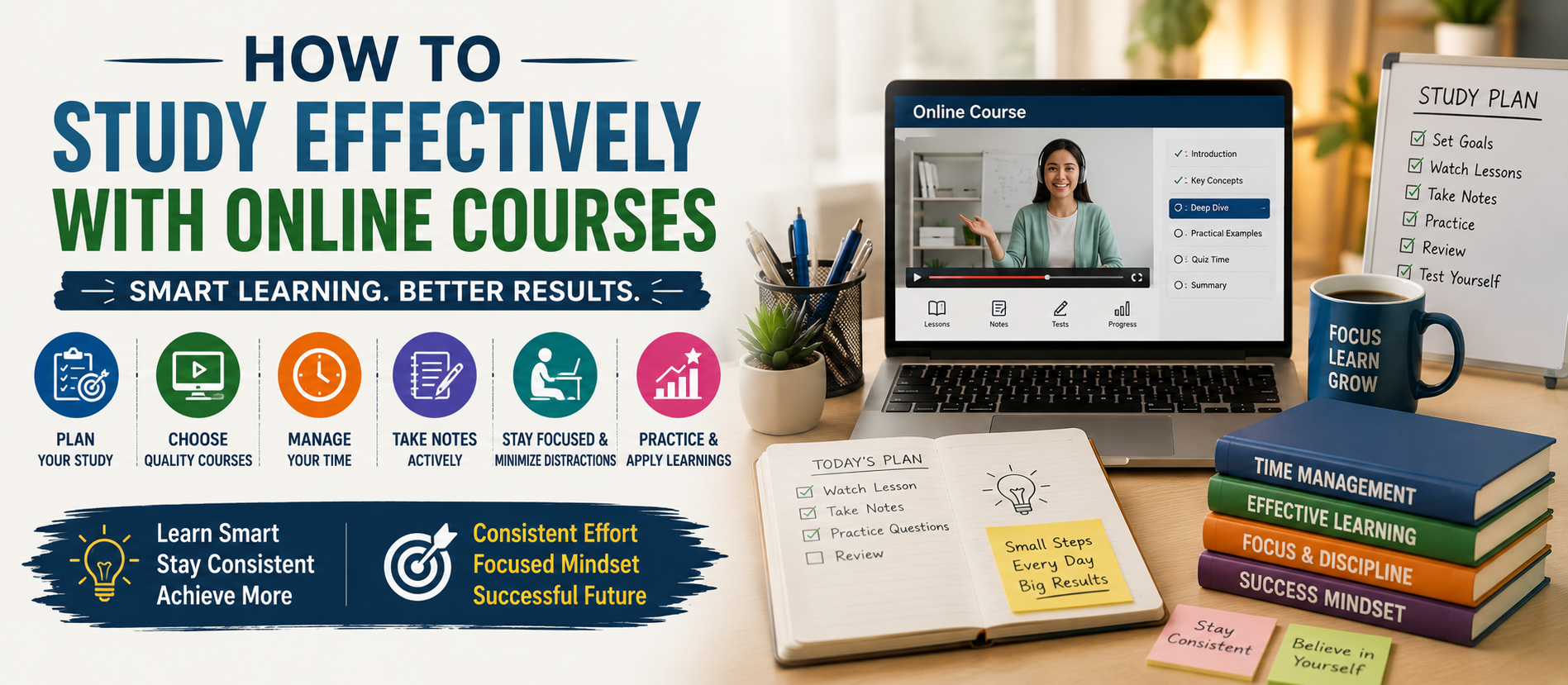
📋 Quick Summary
In this article:
Introduction to Effective Online Learning
Why Online Learning Is More Important Than Ever
Set Clear Learning Goals Before Starting
Create a Dedicated Study Environment
Develop a Consistent Study Schedule
Master Active Learning Techniques
Effective Active Learning Strategies
Take Smart Notes for Better Retention
Popular Note-Taking Methods
Digiifrog | www.digiifrog.com
Online learning has transformed education. Whether you are a student, professional, entrepreneur, or lifelong learner, online courses provide flexible access to knowledge from anywhere in the world. However, many learners struggle to stay focused, manage time, and retain information effectively. This comprehensive guide explains how to study effectively with online courses while maximizing productivity, knowledge retention, and career growth.
Introduction to Effective Online Learning
The rapid growth of digital education platforms has made learning more accessible than ever before. From technical certifications and business training to language learning and personal development, online courses offer unlimited opportunities. Yet flexibility often comes with challenges such as distractions, procrastination, lack of accountability, and information overload.
To achieve meaningful results, learners need a structured strategy. Successful online learners develop clear goals, create study schedules, use active learning techniques, and leverage technology intelligently. By applying proven learning principles, anyone can significantly improve their online learning outcomes.
Why Online Learning Is More Important Than Ever
Digital education is becoming a critical component of career advancement and personal growth. Companies increasingly value continuous learning, professional certifications, and upskilling. The rise of AI-driven workplaces means professionals must continuously adapt to new technologies and industry changes.
- Learn from anywhere at any time
- Access world-class instructors
- Reduce education costs
- Gain job-ready skills quickly
- Build industry certifications
- Improve career opportunities
Online courses are now a major part of modern education and workforce development.
Set Clear Learning Goals Before Starting
One of the biggest mistakes learners make is enrolling in courses without defining specific objectives. Before beginning any course, identify what you want to achieve.
Examples of Learning Goals
- Pass a certification exam
- Learn digital marketing skills
- Master Python programming
- Improve English communication
- Prepare for a promotion
- Launch an online business
Use the SMART framework: Specific, Measurable, Achievable, Relevant, and Time-bound goals. Clear objectives increase motivation and help measure progress.
Create a Dedicated Study Environment
Your environment directly affects concentration and productivity. Create a distraction-free learning space that encourages focus and consistency.
Best Practices
- Use a quiet workspace
- Maintain proper lighting
- Keep study materials organized
- Reduce mobile phone distractions
- Use comfortable seating
- Ensure stable internet connectivity
A dedicated study area helps your brain associate the space with learning, improving concentration over time.
Develop a Consistent Study Schedule
💡 Key Insight
Consistency is more important than intensity. Instead of studying for several hours occasionally, establish a daily learning routine.
Schedule learning sessions during your most productive hours. Many learners perform better early in the morning, while others prefer evening sessions. Identify your peak performance period and align your study schedule accordingly.
Sample Weekly Study Plan
- Monday: Watch course modules
- Tuesday: Take notes and summarize lessons
- Wednesday: Complete assignments
- Thursday: Practice exercises
- Friday: Review key concepts
- Saturday: Apply learning through projects
- Sunday: Assess progress and plan next week
Master Active Learning Techniques
Passive learning often results in poor retention. Instead, use active learning methods that engage your brain.
Effective Active Learning Strategies
- Take structured notes
- Ask questions during lessons
- Create concept maps
- Teach others what you learn
- Participate in discussion forums
- Complete practical exercises
Research consistently shows that active engagement improves long-term memory and understanding.
Take Smart Notes for Better Retention
Good note-taking transforms information into knowledge. Rather than copying slides, summarize concepts in your own words.
Popular Note-Taking Methods
- Cornell Method
- Mind Mapping
- Outline Method
- Charting Method
- Digital Note Systems
Review notes regularly to strengthen memory and reinforce understanding.
Use AI Tools Responsibly
Artificial intelligence is revolutionizing online education. Modern learners can use AI-powered tools for research, summaries, quizzes, language support, and study planning.
How AI Can Improve Learning
- Create study summaries
- Generate practice questions
- Explain difficult concepts
- Translate content
- Build flashcards
- Develop personalized study plans
⚠ Watch Out
However, avoid relying entirely on AI. Use it as a learning assistant rather than a replacement for critical thinking.
Apply the Spaced Repetition Method
One of the most effective learning techniques is spaced repetition. Instead of reviewing information once, revisit concepts at increasing intervals.
This method strengthens neural pathways and dramatically improves long-term retention.
Suggested Review Schedule
- First review: Same day
- Second review: After 3 days
- Third review: After 1 week
- Fourth review: After 2 weeks
- Fifth review: After 1 month
Practice Through Real Projects
Knowledge becomes valuable when applied. Project-based learning helps bridge the gap between theory and practical implementation.
For example:
- Digital marketing students can create campaign plans.
- Programming learners can build applications.
- Design students can develop portfolio projects.
- Business learners can create market analyses.
Practical application reinforces understanding and develops confidence.
Minimize Distractions During Study Sessions
Digital distractions are among the biggest barriers to successful online learning.
Common Distractions
- Social media notifications
- Messaging apps
- Television
- Email interruptions
- Multitasking
Consider using productivity tools, website blockers, and focus timers to maintain attention.
Use the Pomodoro Technique
The Pomodoro Technique improves productivity by dividing study sessions into focused intervals.
- Study for 25 minutes
- Take a 5-minute break
- Repeat four cycles
- Take a longer 20–30 minute break
This approach reduces mental fatigue and improves concentration.
Participate in Learning Communities
Learning becomes more engaging when shared with others. Join course communities, discussion groups, and online forums.
Benefits include:
- Knowledge sharing
- Motivation
- Networking opportunities
- Problem-solving support
- Exposure to diverse perspectives
Track Progress Regularly
Monitoring progress helps maintain motivation and accountability.
Metrics to Track
- Course completion rate
- Assignment scores
- Practice test results
- Hours studied
- Skills mastered
Regular assessments identify strengths and areas needing improvement.
Optimize Learning for AI Search and Future Careers
The future of education is increasingly connected with artificial intelligence, search technologies, and digital knowledge systems.
Students should focus on acquiring:
- Digital literacy
- AI literacy
- Critical thinking
- Problem-solving skills
- Data interpretation skills
- Communication abilities
These competencies are highly valued in modern workplaces and AI-enhanced environments.
AEO Strategy: Answer Engine Optimization for Learners
Answer Engine Optimization (AEO) focuses on obtaining direct answers from search engines and AI assistants. Students can improve learning by asking structured questions such as:
- What is the core concept?
- Why is it important?
- How is it applied?
- What are the advantages?
- What are the limitations?
This questioning framework improves understanding and knowledge retrieval.
GEO Strategy: Generative Engine Optimization Learning
Generative Engine Optimization (GEO) emphasizes content designed for AI-powered search and discovery systems. Students should learn how AI systems organize information and generate responses.
Understanding GEO helps learners consume information more effectively and remain competitive in the digital economy.
Common Mistakes to Avoid
- Skipping lessons
- Multitasking during classes
- Ignoring practical exercises
- Studying without goals
- Failing to review material
- Overreliance on AI tools
- Poor time management
Avoiding these mistakes can significantly improve learning outcomes.
Frequently Asked Questions (FAQ)
How many hours should I study online daily?
Most learners achieve excellent results with 1–3 focused hours per day, depending on course difficulty and objectives.
Are online courses effective?
Yes. Online courses can be highly effective when combined with active learning, practical application, and consistent study habits.
How can I stay motivated?
Set clear goals, track progress, celebrate milestones, and join learning communities.
Can AI improve online learning?
AI can support learning through summaries, practice questions, research assistance, and personalized study plans.
Conclusion
Learning effectively through online courses requires more than simply watching videos. Success depends on goal setting, consistency, active learning, practical application, and continuous review. By creating a structured study environment, using proven learning techniques, leveraging AI responsibly, and maintaining accountability, learners can maximize educational outcomes and accelerate career growth.
As digital education continues to evolve, mastering effective online learning strategies will remain a valuable skill. Whether you are pursuing professional certifications, academic advancement, or personal development, these methods will help you learn faster, retain more information, and achieve lasting success.
Published by Digiifrog
Website: www.digiifrog.com
Ready to Grow?
Talk to us about a strategy tailored to your brand — we will help you stand out in search, AI discovery and social.

Comments (0)
Log in to leave a comment.