📋 Quick Summary
In this article:
Hybrid Learning vs Blended Learning
How Does Hybrid Learning Work?
1. Rotation Model
2. Flipped Classroom Model
3. Flex Model
4. Enriched Virtual Model
5. Remote-First Hybrid Model
6. Synchronous Hybrid Model
7. Asynchronous Hybrid Model
Key Benefits of Hybrid Learning
Quick Answer: Hybrid learning combines face-to-face teaching with online learning. Students may learn partly in a physical classroom and partly through digital platforms. Different hybrid learning models use different schedules, levels of flexibility, technology, and teacher interaction. A successful hybrid model needs clear course design, reliable technology, strong communication, accessible learning materials, regular assessment, and support for both online and in-person learners.
Education now combines physical classrooms with digital tools. Hybrid learning is one approach that connects these two environments.
Hybrid learning can increase flexibility, but it also requires clear schedules, strong course design, suitable technology, and learner support.
This guide explains hybrid learning models in simple language. It covers what hybrid learning means, how it works, the main models, benefits, challenges, technology requirements, teaching strategies, assessment methods, and practical implementation steps.
What Is Hybrid Learning?
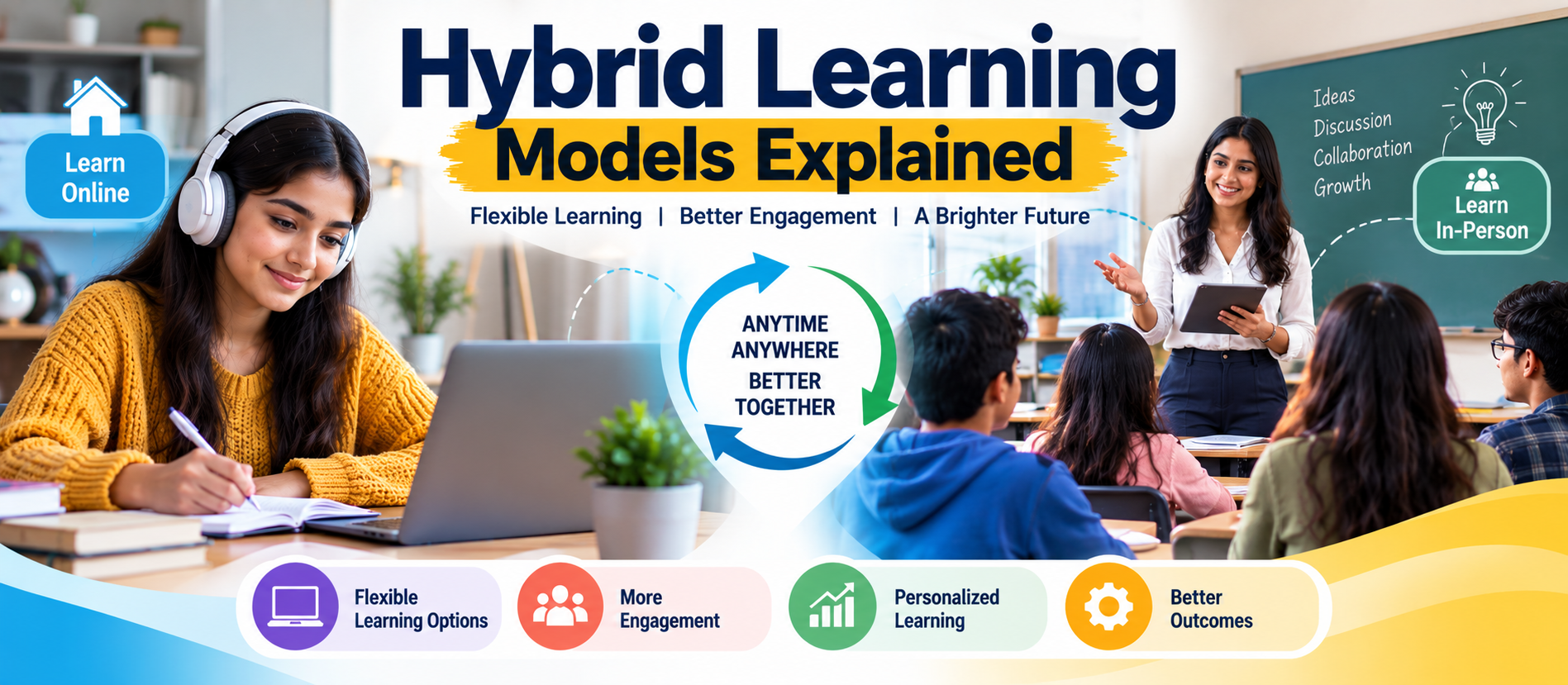
Hybrid learning is an educational approach that combines in-person learning with online learning. The two modes are connected within the same learning experience.
For example, students may attend a classroom session on certain days and complete lessons, discussions, assignments, or activities online on other days. In another model, some students may attend a class physically while others join the same lesson online.
The structure varies by course and institution. Hybrid learning is not one fixed timetable.
Hybrid Learning vs Blended Learning
The terms hybrid learning and blended learning are sometimes used interchangeably, but they can describe different approaches.
Blended learning generally combines face-to-face teaching with online activities as part of a planned course. The digital component may extend or reinforce classroom instruction.
Hybrid learning often places greater emphasis on combining physical and online participation within the same overall learning structure. Depending on the design, students may have more control over where or how they participate.
There is no single definition used by every institution. When comparing programs, look at the actual schedule and learning experience rather than relying only on the label.
How Does Hybrid Learning Work?
A hybrid course usually has three connected parts:
- In-person learning: Classroom teaching, practical work, group activities, discussions, or demonstrations.
- Online learning: Videos, readings, quizzes, discussion boards, assignments, digital projects, or live virtual sessions.
- Integration: The online and classroom activities support the same learning goals.
Integration matters. Adding online videos to a traditional course does not automatically create effective hybrid learning.
Main Hybrid Learning Models
1. Rotation Model
Students move between teacher-led classroom instruction and planned online or independent activities. It can support smaller learning groups and varied practice.
Useful for: Structured school courses and classrooms using learning stations.
2. Flipped Classroom Model
Students review selected material before class through videos, readings, or online lessons. Classroom time is then used for discussion, practice, problem-solving, and feedback.
Useful for: Higher education, schools, and subjects that benefit from active classroom practice.
3. Flex Model
Online learning is central, while teachers provide in-person support when needed. Students can have more flexibility in the pace of some activities.
Useful for: Flexible programs and learners who need greater schedule control.
4. Enriched Virtual Model
Most learning happens online, with planned face-to-face sessions for activities such as workshops, practical work, assessments, or group projects.
Useful for: Adult learners, higher education, and professional programs.
5. Remote-First Hybrid Model
The course is designed mainly for online participation, with physical sessions added when in-person interaction provides clear value. Remote learners need equivalent access to learning.
6. Synchronous Hybrid Model
Classroom and remote students participate at the same time. Good audio, video, displays, internet access, and deliberate interaction are essential so remote learners do not become passive observers.
7. Asynchronous Hybrid Model
Some online activities have no fixed meeting time. Students complete recordings, readings, discussions, and assignments by defined deadlines. This offers flexibility but requires clear instructions and self-management.
Key Benefits of Hybrid Learning
Greater Flexibility
Hybrid learning can provide more options for when and where students complete certain activities. This can help learners balance education with work, travel, family responsibilities, or other commitments.
Better Use of Classroom Time
Teachers can move basic information delivery online and use classroom sessions for activities that benefit from direct interaction. These may include discussions, experiments, presentations, collaborative projects, and problem-solving.
Access to Digital Resources
Students can access recorded lessons, digital documents, quizzes, learning platforms, and other resources outside the classroom.
More Learning Opportunities
Hybrid courses can combine the strengths of physical and digital learning. Students can receive direct teacher support while also using online resources for independent practice.
Support for Different Learning Needs
Digital resources can give learners opportunities to review material more than once. Recorded explanations, captions, transcripts, downloadable resources, and self-paced activities can support different learning preferences.
Useful for Distributed Learners
Hybrid education can connect learners who live in different locations. This can be useful for universities, professional training programs, and organizations with learners across multiple regions.
Challenges of Hybrid Learning
Technology Problems
Poor internet connections, device problems, audio issues, or software failures can interrupt learning. Institutions need technical support and backup plans.
Unequal Access
Not every learner has the same device, internet connection, study environment, or digital skills. Hybrid programs should consider accessibility and technology access before launch.
Teacher Workload
Creating materials for both classroom and online environments can require additional planning. Teachers may need to record content, organize digital activities, manage online discussions, and monitor multiple forms of participation.
Student Self-Management
Online learning requires students to manage time, deadlines, attention, and digital distractions. Some learners may need additional structure and support.
Engagement Gaps
Remote students can feel disconnected if online participation is treated as an afterthought. Hybrid classrooms need deliberate interaction strategies.
Assessment Complexity
Teachers must design assessments that work fairly across different learning environments. They also need to consider academic integrity, accessibility, feedback, and technology reliability.
How to Design an Effective Hybrid Course
1. Begin With Learning Outcomes
Start by defining what students should know or be able to do after the course. Then decide which activities should happen online and which should happen in person.
Do not begin with technology. Begin with learning goals.
2. Decide What Belongs Online
Online activities can work well for readings, recorded explanations, quizzes, reflection, research, discussion, and independent practice.
Use classroom time for activities that benefit from direct interaction, such as experiments, debates, demonstrations, group problem-solving, presentations, or hands-on projects.
3. Create One Clear Learning Path
Students should not have to guess what to do next. Organize the course into weekly or topic-based modules.
Each module can include:
- Learning objectives.
- Required resources.
- Online activities.
- Classroom activities.
- Assignments.
- Assessment or reflection.
4. Keep Instructions Simple
Use direct language. Tell students what to do, where to find resources, how much time they should spend, and when the work is due.
Complex instructions create unnecessary questions and increase the workload for both teachers and students.
5. Design for Mobile Access
Many learners use smartphones or tablets for at least part of their online learning. Course materials should be easy to read and navigate on smaller screens.
Avoid unnecessary large files or complicated interfaces. Provide accessible formats when possible.
Technology Needed for Hybrid Learning
Common tools include a Learning Management System, video conferencing, digital collaboration tools, assessment systems, content-creation tools, and learning analytics. Choose tools based on learning needs rather than adding technology for its own sake.
The Role of Teachers in Hybrid Learning
The teacher remains central to a successful hybrid course. Teachers design learning, explain difficult ideas, provide feedback, facilitate interaction, and support learners. Technology can assist these tasks but does not replace the teacher.
The Role of Students
Hybrid learning gives students more responsibility. They need to manage deadlines, participate in online activities, attend required sessions, ask questions, and review learning materials.
Assessment in Hybrid Learning
Assessment should match learning outcomes. Depending on the course, use quizzes, assignments, projects, presentations, practical activities, discussions, reflection, peer feedback, and examinations. Regular low-stakes assessment can reveal learning gaps early.
How to Keep Hybrid Students Engaged
Use Active Learning
Ask students to solve problems, discuss ideas, create projects, explain concepts, or apply knowledge. Avoid making the online component a long sequence of passive videos.
Create Interaction
Use polls, discussions, breakout activities, collaborative documents, quizzes, and classroom conversations.
Connect Online and Classroom Tasks
Students should understand why the online activity matters. For example, an online preparation task can become the foundation for a classroom discussion or practical activity.
Give Regular Feedback
Feedback helps students know whether they are progressing. It also helps them stay connected to the course.
Hybrid Learning and AI
AI is becoming part of digital education. Depending on the tools used, AI can help generate practice questions, provide explanations, summarize learning materials, support personalized practice, or assist teachers with content preparation.
AI should be used with clear academic and privacy guidelines. Teachers should review AI-generated material for accuracy and relevance. Students should understand when AI assistance is allowed and how they should acknowledge or document its use.
AI should support learning rather than replace thinking, discussion, practice, or teacher guidance.
How to Measure Hybrid Learning Success
Institutions should measure more than attendance. Useful indicators can include course completion, assignment submission, assessment performance, learner participation, support requests, student feedback, and teacher feedback.
💡 Key Insight
Learning outcomes remain important. High platform activity does not automatically mean students are learning effectively.
Use data to identify problems. For example, if many students stop completing online activities after a certain module, review the content, instructions, workload, and technical experience for that module.
Frequently Asked Questions
What is hybrid learning in simple words?
Hybrid learning combines classroom teaching with online learning. Students may learn through both physical and digital environments within the same course or program.
What is the difference between hybrid and blended learning?
The terms can overlap. Blended learning generally combines online and face-to-face activities, while hybrid learning often emphasizes a structure where physical and online participation are integrated. Institutions may use the terms differently.
What are the main hybrid learning models?
Common models include rotation, flipped classroom, flex, enriched virtual, remote-first, synchronous hybrid, and asynchronous hybrid approaches.
What are the benefits of hybrid learning?
Benefits can include flexibility, access to digital resources, better use of classroom time, support for different learning needs, and opportunities for learners in different locations.
What are the biggest challenges?
Common challenges include technology problems, unequal access, teacher workload, student self-management, engagement gaps, and assessment design.
Can hybrid learning use AI?
Yes. AI can support explanations, practice questions, content creation, personalization, and administrative tasks. Human review, privacy protection, and clear academic guidelines remain important.
Key Takeaways
- Hybrid learning combines online and face-to-face education.
- There is no single hybrid learning model.
- The right model depends on learners, learning goals, resources, and course requirements.
- Online and classroom activities should be connected.
- Clear instructions are essential.
- Technology should support learning rather than drive the course design.
- Teachers need training and ongoing support.
- Students need structure, time-management skills, and access to learning resources.
- Accessibility should be considered from the beginning.
- Assessment should measure learning outcomes across both environments.
- AI can support hybrid learning when used responsibly.
- Institutions should pilot, measure, collect feedback, and improve before scaling.
Final Thoughts
Hybrid learning is more than putting a traditional class online. It is a learning design that connects physical and digital experiences around clear educational goals.
A successful hybrid course gives students a clear path. They know what to learn, where to learn it, when to complete it, and how each activity connects to the larger goal.
Teachers remain essential. Technology can deliver content and provide useful tools, but teachers create meaningful interaction, explain difficult ideas, provide feedback, and understand the needs of their learners.
The strongest hybrid learning models are practical, accessible, flexible, and purposeful. Institutions should choose the model based on real learning needs rather than simply following a technology trend.
Start small. Define clear outcomes. Choose the right tools. Train teachers. Support students. Measure results. Then improve the model over time.
Digiifrog: Explore digital marketing, web development, content strategy, and AI-focused business solutions at www.digiifrog.com.
Ready to Grow?
Talk to us about a strategy tailored to your brand — we will help you stand out in search, AI discovery and social.
Comments (0)
Log in to leave a comment.