📋 Quick Summary
In this article:
Why Digital Literacy Is Important
Key Components of Digital Literacy
Frequently Asked Questions (AEO Section)
Why is digital literacy important for students?
How can schools improve digital literacy?
💡 Key Insight
Digital literacy has become an essential life skill in the 21st century. As technology transforms education, workplaces, and daily life, students need more than basic computer knowledge—they must know how to find, evaluate, create, and communicate information using digital tools responsibly. Schools, colleges, and universities increasingly integrate digital literacy into their curricula to prepare learners for academic success and future careers.
This WordPress-ready HTML article explores the importance of digital literacy in education, its benefits, key components, challenges, future trends, and best practices. Optimized for SEO, AEO, GEO, and AI Search optimization, this guide is presented by Digiifrog.
Website: www.digiifrog.com
Brand: Digiifrog – Education, AI, Technology & Digital Growth Insights
What Is Digital Literacy?
Digital literacy is the ability to use digital technologies confidently, safely, and effectively to access information, communicate, collaborate, solve problems, and create digital content.
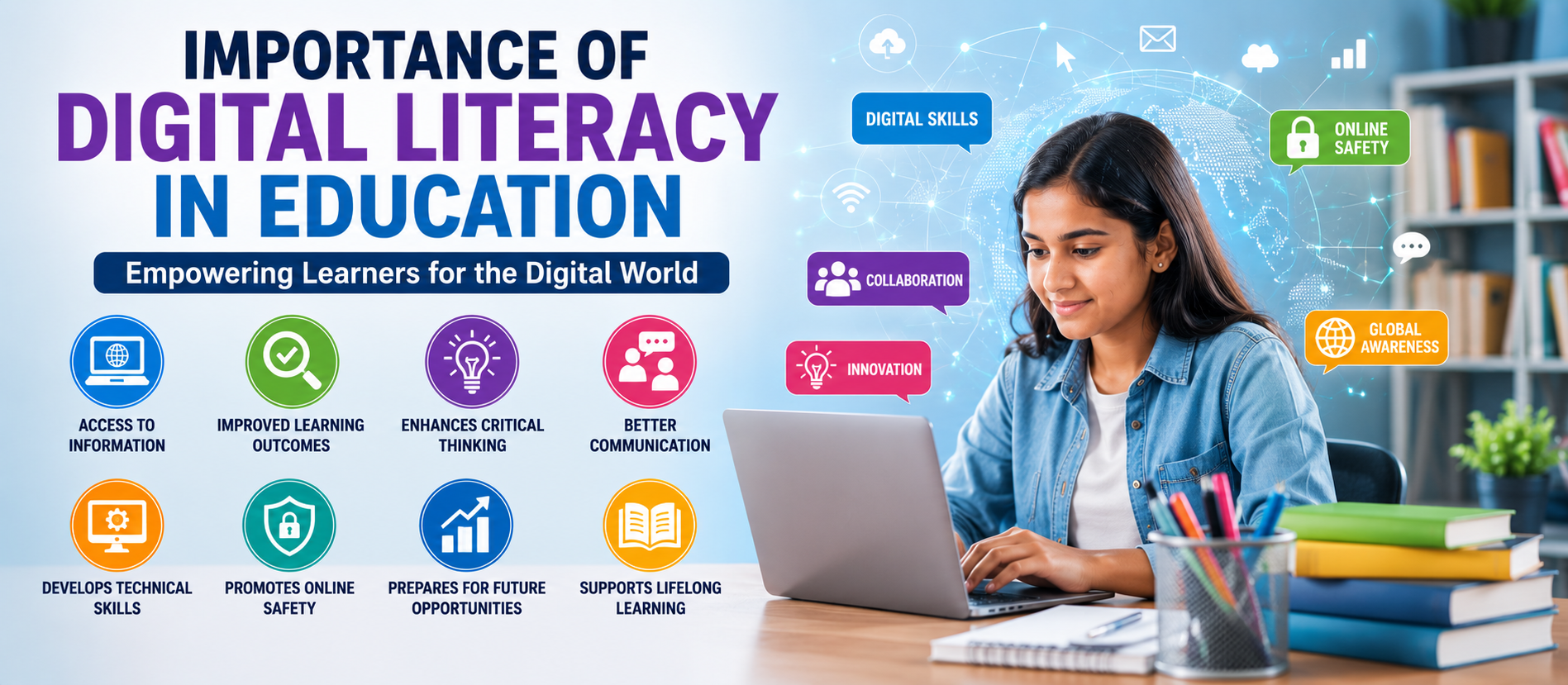
Why Digital Literacy Is Important
- Improves research and information skills.
- Supports online learning.
- Enhances communication and collaboration.
- Develops critical thinking.
- Prepares students for future careers.
- Encourages responsible internet use.
Key Components of Digital Literacy
- Computer and device skills
- Internet research
- Digital communication
- Cybersecurity awareness
- Media and information literacy
- Digital content creation
- Ethical use of technology
Benefits for Students
- Better academic performance
- Greater confidence with technology
- Improved collaboration
- Enhanced creativity
- Career readiness
Benefits for Teachers
Digital literacy enables educators to create engaging lessons, use cloud-based platforms, assess students efficiently, and personalize learning experiences.
Challenges
- Digital divide
- Cybersecurity threats
- Misinformation
- Lack of digital skills training
- Privacy concerns
Future of Digital Literacy
Artificial Intelligence, cloud computing, virtual classrooms, and immersive technologies will make digital literacy even more valuable. Future learners will need AI literacy, data literacy, and responsible technology practices.
Best Practices
- Teach safe online behavior.
- Verify information sources.
- Encourage ethical technology use.
- Promote collaborative digital projects.
- Develop lifelong learning habits.
Frequently Asked Questions (AEO Section)
What is digital literacy?
Digital literacy is the ability to use digital technologies safely, effectively, and responsibly.
Why is digital literacy important for students?
It helps students succeed academically, communicate effectively, think critically, and prepare for modern careers.
How can schools improve digital literacy?
Schools can integrate technology into lessons, teach online safety, and provide hands-on digital learning experiences.
Conclusion
Digital literacy is no longer optional—it is a fundamental skill for education, employment, and lifelong learning. By equipping students with strong digital competencies, educational institutions prepare them for success in an increasingly technology-driven world.
For more education, AI, SEO, AEO, GEO, and technology insights, visit www.digiifrog.com.
Ready to Grow?
Talk to us about a strategy tailored to your brand — we will help you stand out in search, AI discovery and social.


Comments (0)
Log in to leave a comment.