📋 Quick Summary
In this article:
What Is Emotional Intelligence?
Why Emotional Intelligence Matters in Education
Building Self-Awareness
Developing Self-Regulation
Emotional Intelligence in the Digital Age
💡 Key Insight
Emotional Intelligence (EI) has become one of the most important factors influencing student success in modern education. While academic knowledge and technical skills remain essential, the ability to understand, manage, and express emotions effectively plays a significant role in learning, leadership, communication, and personal development.
This article explores the importance of emotional intelligence in education, its benefits, challenges, and future relevance. Optimized for SEO, AEO, GEO, and AI Search visibility by Digiifrog.
Website: www.digiifrog.com
What Is Emotional Intelligence?
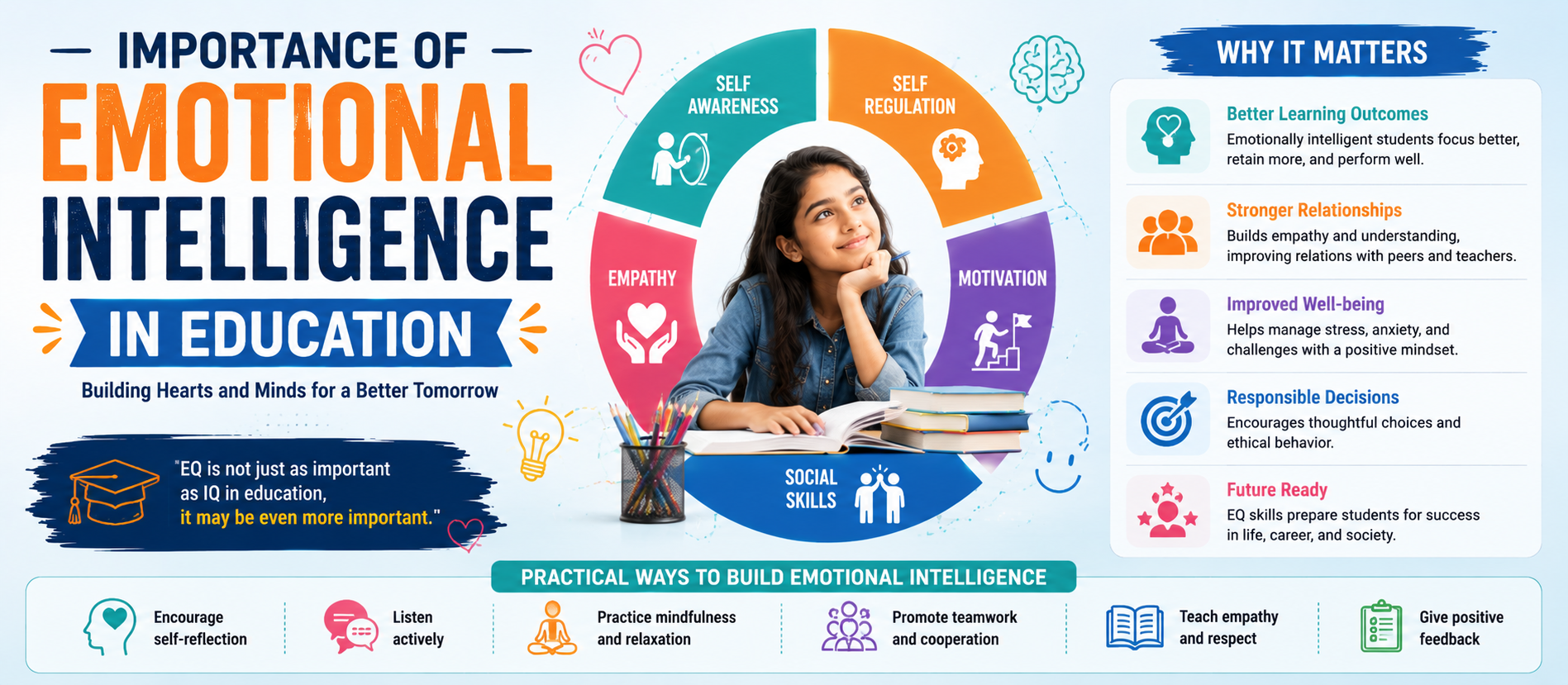
Emotional Intelligence refers to the ability to recognize, understand, manage, and influence emotions in oneself and others.
- Self-awareness
- Self-regulation
- Motivation
- Empathy
- Social skills
Why Emotional Intelligence Matters in Education
Students face academic pressure, social challenges, examinations, and personal growth experiences. Emotional intelligence helps them navigate these situations successfully.
Academic Benefits
- Improved concentration
- Better study habits
- Higher motivation
- Reduced exam anxiety
- Greater resilience
- Enhanced problem-solving skills
Building Self-Awareness
Self-aware students understand their strengths, weaknesses, emotions, and learning styles. This awareness supports goal setting and personal improvement.
Developing Self-Regulation
Students who can manage emotions effectively are better able to control impulses, handle stress, and remain focused on academic goals.
Empathy and Relationships
Empathy helps students understand others' feelings, build friendships, resolve conflicts, and contribute positively to classroom environments.
Communication Skills
Strong emotional intelligence improves communication, collaboration, teamwork, and leadership abilities.
Mental Health Benefits
Emotional intelligence supports mental well-being by helping students manage stress, anxiety, frustration, and setbacks more effectively.
Leadership Development
Many leadership qualities are closely linked to emotional intelligence, including empathy, decision-making, communication, and adaptability.
Role of Teachers
Teachers can foster emotional intelligence through positive classroom environments, constructive feedback, social-emotional learning activities, and supportive relationships.
Role of Parents
Parents contribute by encouraging open communication, teaching empathy, supporting emotional expression, and modeling healthy behavior.
Emotional Intelligence in the Digital Age
As technology and AI become increasingly integrated into education, emotional intelligence remains one of the most valuable human-centered skills.
Future Career Importance
Employers increasingly value emotional intelligence because it supports teamwork, leadership, communication, adaptability, and workplace success.
How Schools Can Develop Emotional Intelligence
- Social-emotional learning programs
- Mindfulness activities
- Team projects
- Leadership opportunities
- Peer mentoring
- Conflict resolution training
Frequently Asked Questions (AEO Section)
Why is emotional intelligence important for students?
It helps students manage emotions, improve learning, build relationships, and succeed academically.
Can emotional intelligence be learned?
Yes. Emotional intelligence can be developed through practice, reflection, and supportive learning environments.
How does emotional intelligence affect academic performance?
Students with higher emotional intelligence often demonstrate better focus, motivation, resilience, and stress management.
Is emotional intelligence important for future careers?
Yes. Employers highly value communication, leadership, empathy, and teamwork skills.
Conclusion
Emotional intelligence is a critical component of modern education. It supports academic success, personal development, mental well-being, leadership growth, and career readiness.
By integrating emotional intelligence into education, schools can help students become more confident, resilient, empathetic, and prepared for future challenges.
For more educational insights, AI innovations, SEO, AEO, GEO, and future-focused content, visit www.digiifrog.com.
Ready to Grow?
Talk to us about a strategy tailored to your brand — we will help you stand out in search, AI discovery and social.


Comments (0)
Log in to leave a comment.