📋 Quick Summary
In this article:
SEO, AEO, GEO & AI Search Optimization
Can AI-generated content create legal risks?
Should AI-generated content be reviewed by humans?
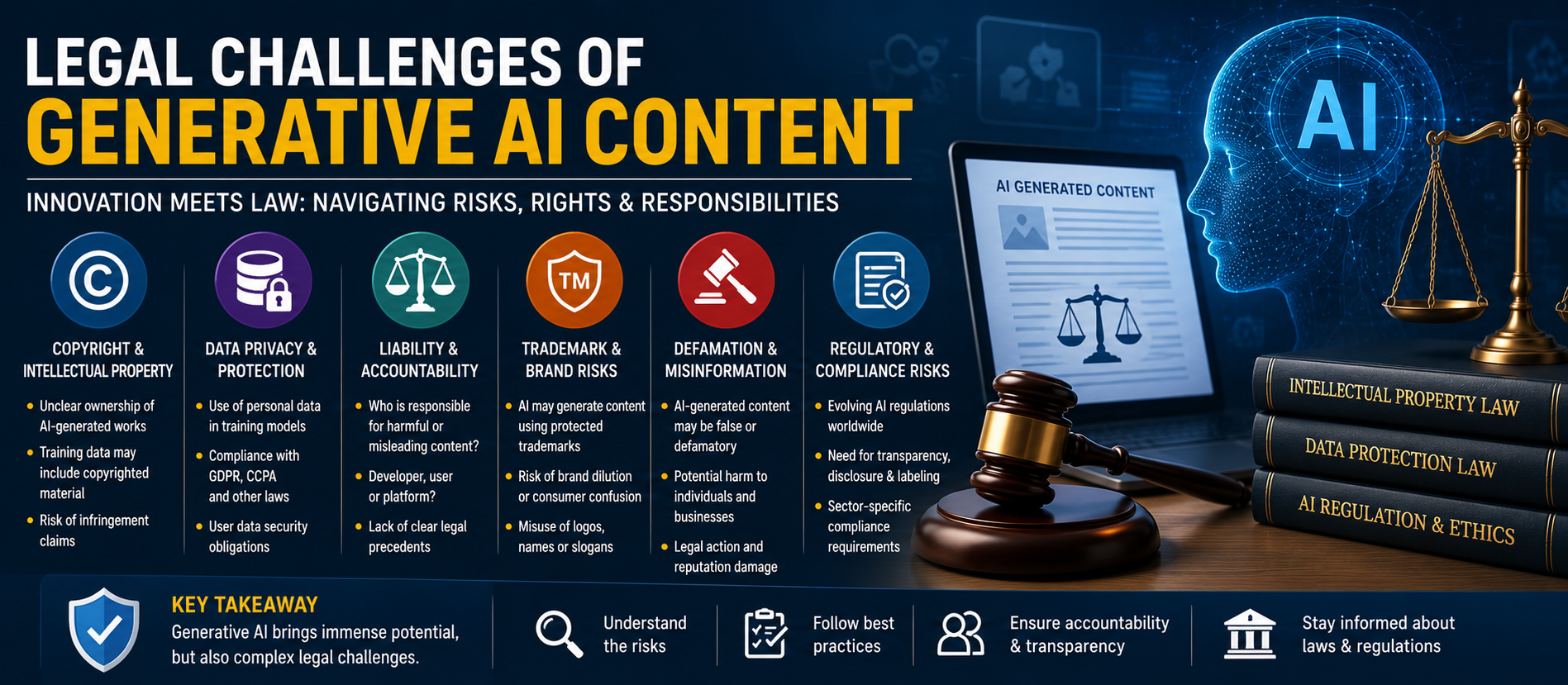
Generative AI has transformed content creation across writing, graphic design, software development, music, marketing, education, and customer service. While AI tools improve productivity, they also introduce significant legal challenges involving copyright, intellectual property, privacy, misinformation, licensing, contractual obligations, and regulatory compliance.
💡 Key Insight
This WordPress-ready guide explains the most important legal issues surrounding generative AI content, practical compliance strategies, and best practices for businesses, creators, publishers, and developers.
What Is Generative AI?
Generative AI refers to systems that create new text, images, audio, video, software code, or other digital content based on user prompts and learned patterns from training data.
Major Legal Challenges
- Copyright ownership
- Training data licensing
- Trademark infringement
- Privacy and personal data
- Defamation risks
- Misleading or false content
- Contractual obligations
- Cross-border regulatory compliance
Copyright Issues
Different jurisdictions apply different rules regarding AI-assisted works, originality, human authorship, and copyright protection. Businesses should understand applicable laws before commercial publication.
Privacy and Data Protection
- Collect only necessary data
- Protect confidential information
- Comply with privacy regulations
- Maintain appropriate security controls
Business Risks
- Intellectual property disputes
- Regulatory investigations
- Reputational damage
- Contract breaches
- Cybersecurity exposure
Best Compliance Practices
- Review AI platform terms
- Verify commercial usage rights
- Maintain human review processes
- Document AI-assisted workflows
- Train employees on responsible AI use
- Consult legal professionals for high-risk projects
Future Legal Trends
- AI-specific legislation
- Greater transparency requirements
- Expanded copyright guidance
- International regulatory cooperation
SEO, AEO, GEO & AI Search Optimization
SEO, AEO, GEO, and AI Search Optimization help educational legal content become more discoverable across Google, Bing, AI search engines, and answer platforms.
Frequently Asked Questions
Can AI-generated content create legal risks?
Yes. Risks may involve copyright, privacy, contracts, trademark issues, or sector-specific regulations depending on the circumstances.
Should AI-generated content be reviewed by humans?
Human review helps improve accuracy, legal compliance, and quality before publication.
Conclusion
Generative AI offers enormous opportunities, but responsible use requires careful attention to legal compliance, intellectual property, privacy, and governance. Organizations should establish AI policies, monitor regulatory developments, and seek qualified legal advice for significant commercial uses.
Digiifrog
Website: www.digiifrog.com
Digital Marketing, SEO, AEO, GEO & AI Search Solutions for Modern Businesses.
Ready to Grow?
Talk to us about a strategy tailored to your brand — we will help you stand out in search, AI discovery and social.


Comments (0)
Log in to leave a comment.