📋 Quick Summary
In this article:
Choose the Right Business Structure
Common Startup Compliance Mistakes
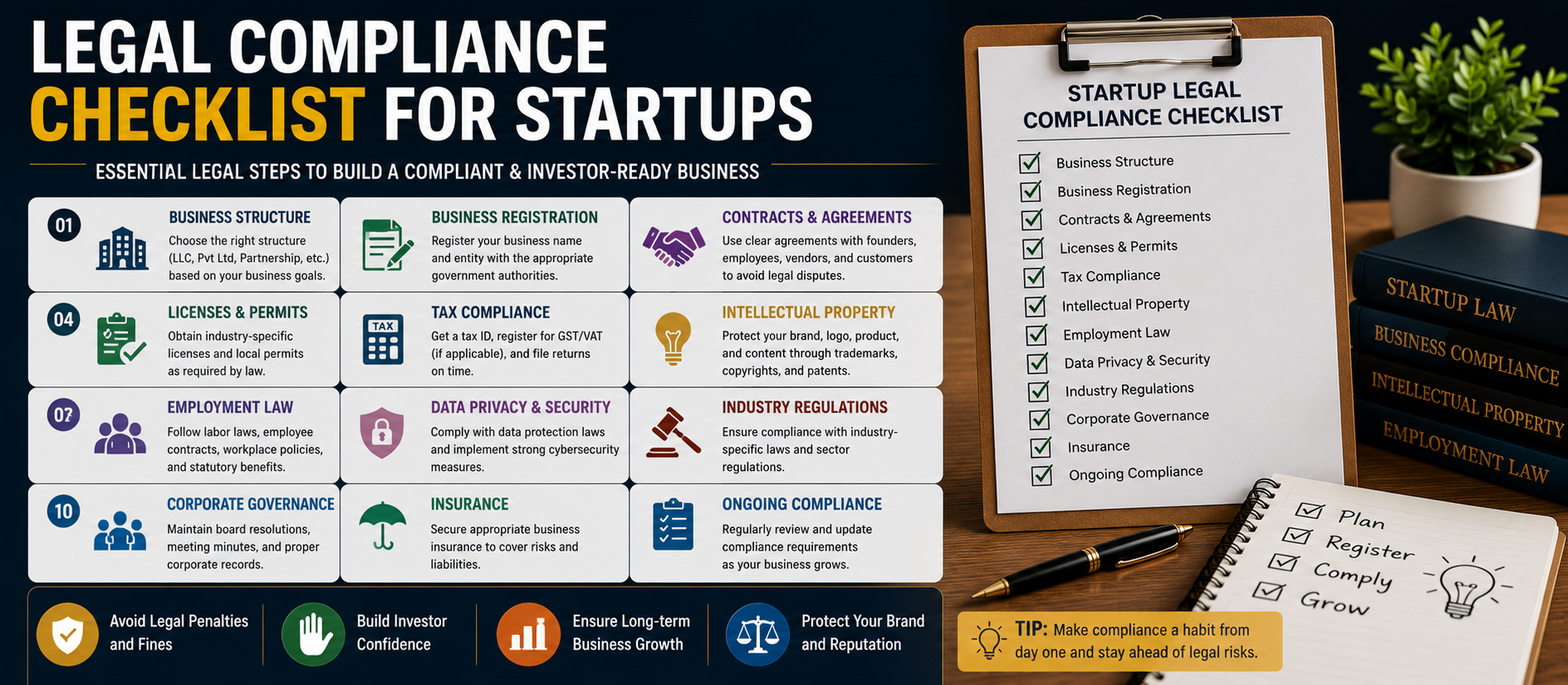
Launching a startup involves more than developing an innovative product or attracting customers. Every new business must comply with applicable legal, regulatory, tax, employment, privacy, and operational requirements. A strong compliance foundation helps reduce legal risks, build investor confidence, and support sustainable growth.
💡 Key Insight
This guide explains the essential legal compliance checklist for startups, covering business formation, licensing, contracts, intellectual property, employment compliance, tax obligations, cybersecurity, data privacy, and governance best practices.
Why Legal Compliance Matters
- Reduces legal risk
- Builds customer trust
- Improves investor confidence
- Supports business growth
- Avoids regulatory penalties
Choose the Right Business Structure
Select an appropriate legal structure based on ownership, taxation, liability, and funding goals.
- Sole proprietorship
- Partnership
- Limited liability company
- Corporation
Business Registration
Complete all required registrations with the relevant government authorities and obtain any mandatory identification numbers required in your jurisdiction.
Licenses and Permits
- Industry-specific licenses
- Local permits
- Health or safety approvals where applicable
- Professional certifications
Tax Compliance
- Business tax registration
- Payroll tax compliance
- Sales or indirect tax obligations
- Accounting records
Contracts and Agreements
- Founder agreements
- Employment agreements
- Vendor contracts
- Customer terms
- Non-disclosure agreements
Protect Intellectual Property
- Trademarks
- Copyrights
- Patents where appropriate
- Trade secrets
Employment Law Compliance
- Employee classification
- Wage compliance
- Workplace policies
- Anti-discrimination procedures
- Health and safety obligations
Privacy and Cybersecurity
Adopt clear privacy policies, implement cybersecurity safeguards, and comply with applicable data protection requirements.
Corporate Governance
- Maintain company records
- Document important decisions
- Review compliance regularly
- Monitor regulatory changes
Insurance
- General liability insurance
- Professional liability coverage
- Cyber insurance where appropriate
- Workers' compensation where required
Common Startup Compliance Mistakes
- Ignoring legal documentation
- Using copied contracts
- Missing tax deadlines
- Failing to protect intellectual property
- Poor recordkeeping
SEO, AEO, GEO & AI Search Optimization
SEO, AEO, GEO, and AI Search Optimization help startup compliance content reach entrepreneurs through Google, Bing, answer engines, and AI-powered search platforms.
Frequently Asked Questions
Why is compliance important for startups?
It reduces legal risks, supports growth, and improves credibility with customers and investors.
Should startups consult lawyers?
Professional legal advice is valuable when forming a business, drafting contracts, or protecting intellectual property.
Conclusion
A proactive compliance strategy allows startups to focus on innovation while reducing legal exposure. Regular reviews, accurate documentation, sound governance, and professional advice help businesses grow with confidence.
Digiifrog
Website: www.digiifrog.com
Digital Marketing, SEO, AEO, GEO & AI Search Solutions for Modern Businesses.
Ready to Grow?
Talk to us about a strategy tailored to your brand — we will help you stand out in search, AI discovery and social.


Comments (0)
Log in to leave a comment.