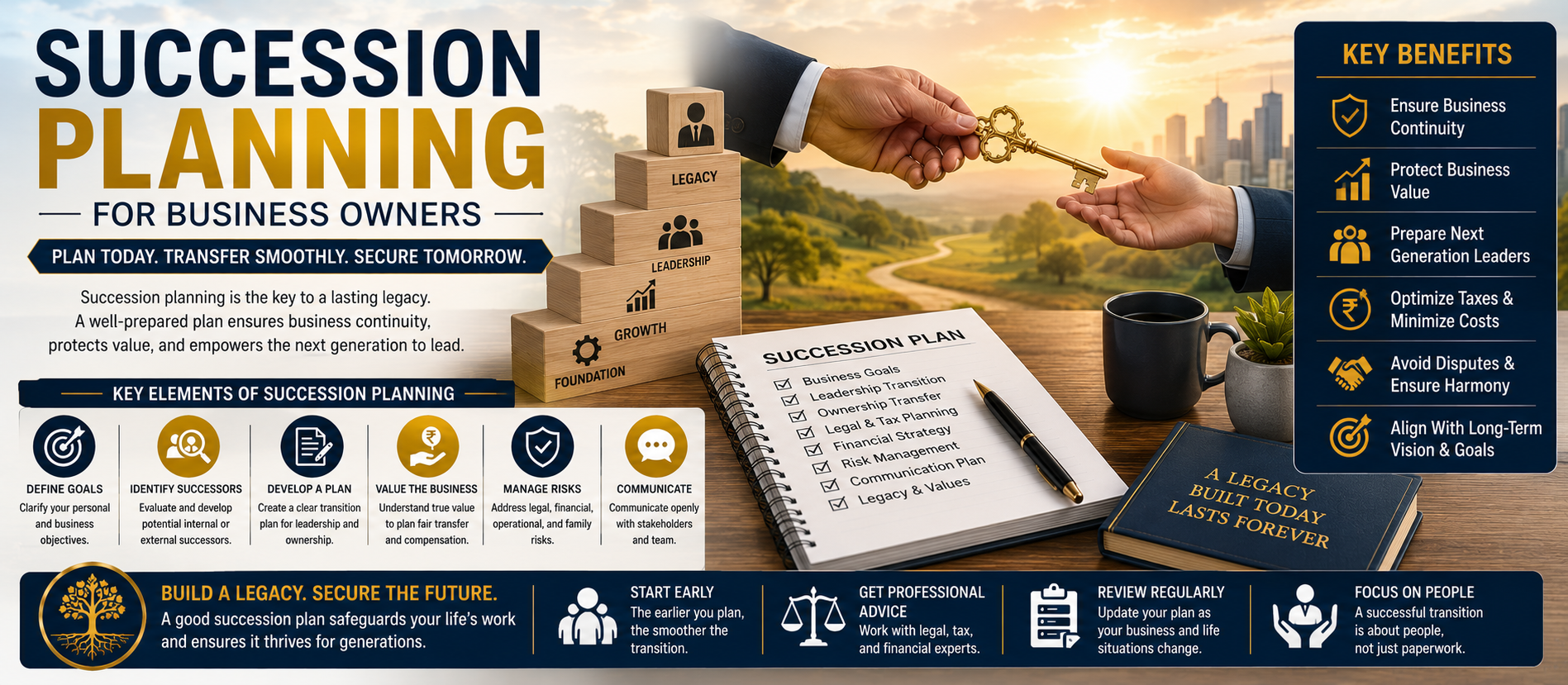
📋 Quick Summary
In this article:
Why Succession Planning Matters
Common Risks of Failing to Plan
When Should Business Owners Start Succession Planning?
Key Components of a Succession Plan
Family Business Succession Planning
Developing Successor Leadership Skills
Legal Documents Required for Succession Planning
Buy-Sell Agreements Explained
💡 Key Insight
Every successful business owner spends years building a company, developing customer relationships, managing employees, creating wealth, and establishing a strong market reputation. However, many entrepreneurs fail to prepare for one of the most important aspects of long-term business sustainability: succession planning.
Succession planning is the process of preparing for the transfer of business ownership, leadership responsibilities, and operational control when an owner retires, becomes incapacitated, or passes away. Without a proper succession plan, even profitable and well-established businesses can face uncertainty, internal disputes, financial instability, and operational disruptions.
Whether you own a family business, startup, professional practice, partnership, or large corporation, succession planning helps protect your legacy and ensures a smooth transition for future leaders.
This comprehensive guide explains succession planning for business owners, its legal and financial importance, common succession strategies, estate planning considerations, tax implications, and best practices for developing a successful transition plan in 2026.
What Is Succession Planning?
Succession planning is a structured process designed to identify and prepare future leaders or owners to take over a business when current leadership transitions out.
The process typically includes:
- Leadership transition planning
- Ownership transfer strategies
- Business continuity planning
- Talent development
- Legal documentation
- Financial planning
- Risk management
The goal is to ensure the business continues operating successfully during and after leadership changes.
Why Succession Planning Matters
Many businesses depend heavily on their founders. Without succession planning, unexpected events can create significant uncertainty.
Benefits of succession planning include:
- Business continuity
- Reduced operational disruption
- Protection of business value
- Employee confidence
- Investor assurance
- Family harmony
- Long-term stability
A well-designed plan protects stakeholders and preserves organizational success.
Common Risks of Failing to Plan
Businesses without succession plans often face serious challenges.
- Leadership vacuum
- Ownership disputes
- Loss of customers
- Employee turnover
- Declining business value
- Family conflicts
- Financial instability
Many successful businesses struggle or fail because leadership transitions were not properly managed.
When Should Business Owners Start Succession Planning?
One of the biggest mistakes owners make is waiting too long.
Ideally, succession planning should begin several years before an anticipated transition.
Early planning allows sufficient time to:
- Develop future leaders
- Train successors
- Structure ownership transfers
- Address tax issues
- Prepare stakeholders
The earlier planning begins, the more flexibility business owners have.
Key Components of a Succession Plan
Leadership Succession
Leadership succession identifies who will manage the organization after the current leader steps down.
Potential successors may include:
- Family members
- Senior executives
- Business partners
- External professionals
The selected successor should possess the skills and experience necessary to lead the organization effectively.
Ownership Succession
Ownership succession addresses who will own the business after transition.
Possible ownership transfers include:
- Family inheritance
- Management buyouts
- Partner buyouts
- Employee ownership plans
- Business sale transactions
Ownership and management succession are often separate but interconnected processes.
Family Business Succession Planning
Family businesses face unique succession challenges.
Common issues include:
- Sibling rivalry
- Inheritance disputes
- Leadership disagreements
- Unequal participation levels
- Emotional decision-making
Clear communication and documented plans help minimize family conflicts.
Identifying Future Leaders
Choosing the right successor requires careful evaluation.
Important factors include:
- Leadership ability
- Industry knowledge
- Business experience
- Communication skills
- Strategic thinking
- Financial understanding
Not every family member or employee is automatically suited for leadership.
Developing Successor Leadership Skills
Future leaders often require years of preparation.
Development strategies may include:
- Mentorship programs
- Executive coaching
- Management training
- Cross-functional experience
- Strategic planning participation
- Decision-making responsibilities
Gradual exposure helps successors build confidence and credibility.
Legal Documents Required for Succession Planning
Proper legal documentation forms the foundation of effective succession planning.
Common documents include:
- Business wills
- Buy-sell agreements
- Partnership agreements
- Shareholder agreements
- Operating agreements
- Trust documents
- Power of attorney arrangements
Professional legal guidance is essential when preparing these documents.
Buy-Sell Agreements Explained
A buy-sell agreement establishes procedures for transferring ownership under specific circumstances.
Triggering events may include:
- Retirement
- Death
- Disability
- Voluntary exit
- Ownership disputes
These agreements help prevent uncertainty and ownership conflicts.
Business Valuation in Succession Planning
Determining business value is critical during ownership transitions.
Valuation methods may consider:
- Revenue
- Profitability
- Assets
- Cash flow
- Market conditions
- Industry trends
Professional valuation helps establish fair transfer pricing.
Tax Considerations for Business Owners
Tax planning is a major component of succession planning.
Potential issues may involve:
- Capital gains taxes
- Inheritance taxes
- Gift taxes
- Business transfer taxes
- Estate taxes
Careful planning can help minimize tax burdens and preserve business value.
Estate Planning and Business Succession
Business succession planning should align with broader estate planning objectives.
Important considerations include:
- Wills
- Trusts
- Asset distribution
- Family wealth preservation
- Beneficiary planning
Coordinating business and estate planning creates a more effective transition strategy.
Business Continuity Planning
Succession planning and business continuity planning often work together.
Continuity planning addresses:
- Emergency leadership changes
- Operational disruptions
- Disaster recovery
- Critical decision-making authority
- Customer relationship management
Prepared organizations recover more effectively from unexpected events.
Communicating the Succession Plan
Communication plays a critical role in successful transitions.
Stakeholders may include:
- Employees
- Family members
- Business partners
- Investors
- Customers
- Lenders
Transparent communication helps build trust and reduce uncertainty.
Employee Ownership and ESOP Strategies
Some business owners choose employee ownership models.
Benefits may include:
- Business continuity
- Employee engagement
- Ownership stability
- Long-term commitment
Employee ownership plans require careful legal and financial structuring.
Succession Planning for Startups
Startups often overlook succession planning because founders focus on growth.
However, startups should address:
- Founder exits
- Equity ownership
- Investor rights
- Leadership transitions
- Intellectual property ownership
Early planning reduces future complications.
Common Succession Planning Mistakes
- Starting too late
- Ignoring family dynamics
- Failing to train successors
- Not documenting plans
- Overlooking tax implications
- Ignoring business valuation
- Poor communication
Avoiding these mistakes increases the likelihood of a successful transition.
Technology and Succession Planning in 2026
Digital transformation is changing succession planning practices.
- Digital documentation
- AI-driven risk analysis
- Leadership assessment tools
- Business continuity software
- Knowledge management systems
Technology helps organizations manage transitions more effectively.
SEO, AEO, GEO, and AI Search for Business Succession Education
Business owners increasingly research succession strategies online.
SEO (Search Engine Optimization) helps educational content rank on Google and Bing.
AEO (Answer Engine Optimization) improves visibility in featured snippets and answer engines.
GEO (Generative Engine Optimization) enhances discoverability within AI-generated responses.
AI Search Optimization ensures business planning content remains visible across emerging AI-powered search platforms.
Accessible information empowers owners to make better long-term decisions.
Frequently Asked Questions
What is succession planning?
Succession planning is the process of preparing for future leadership and ownership transitions within a business.
Why is succession planning important?
It helps ensure business continuity, protect value, reduce disputes, and maintain stakeholder confidence.
When should business owners start planning?
Ideally several years before an anticipated transition to allow sufficient preparation time.
Can family members automatically become successors?
Not necessarily. Leadership decisions should consider qualifications, skills, and business needs.
Do succession plans require legal documents?
Yes. Buy-sell agreements, wills, trusts, and ownership documents are often essential components.
Conclusion
Succession planning for business owners is not simply a retirement strategy—it is a critical component of long-term business sustainability. By preparing future leaders, documenting ownership transitions, addressing tax considerations, and aligning succession with estate planning goals, business owners can protect both their companies and their legacies.
Whether managing a family business, startup, partnership, or corporation, proactive succession planning helps ensure stability, continuity, and future success.
For more expert insights on business strategy, legal compliance, digital growth, SEO, AEO, GEO, and AI Search optimization, visit Digiifrog.
Digiifrog
Website: www.digiifrog.com
Digital Marketing, SEO, AEO, GEO & AI Search Solutions for Modern Businesses.
Ready to Grow?
Talk to us about a strategy tailored to your brand — we will help you stand out in search, AI discovery and social.


Comments (0)
Log in to leave a comment.