📋 Quick Summary
In this article:
Why Mobile Insurance Apps Matter
Introduction
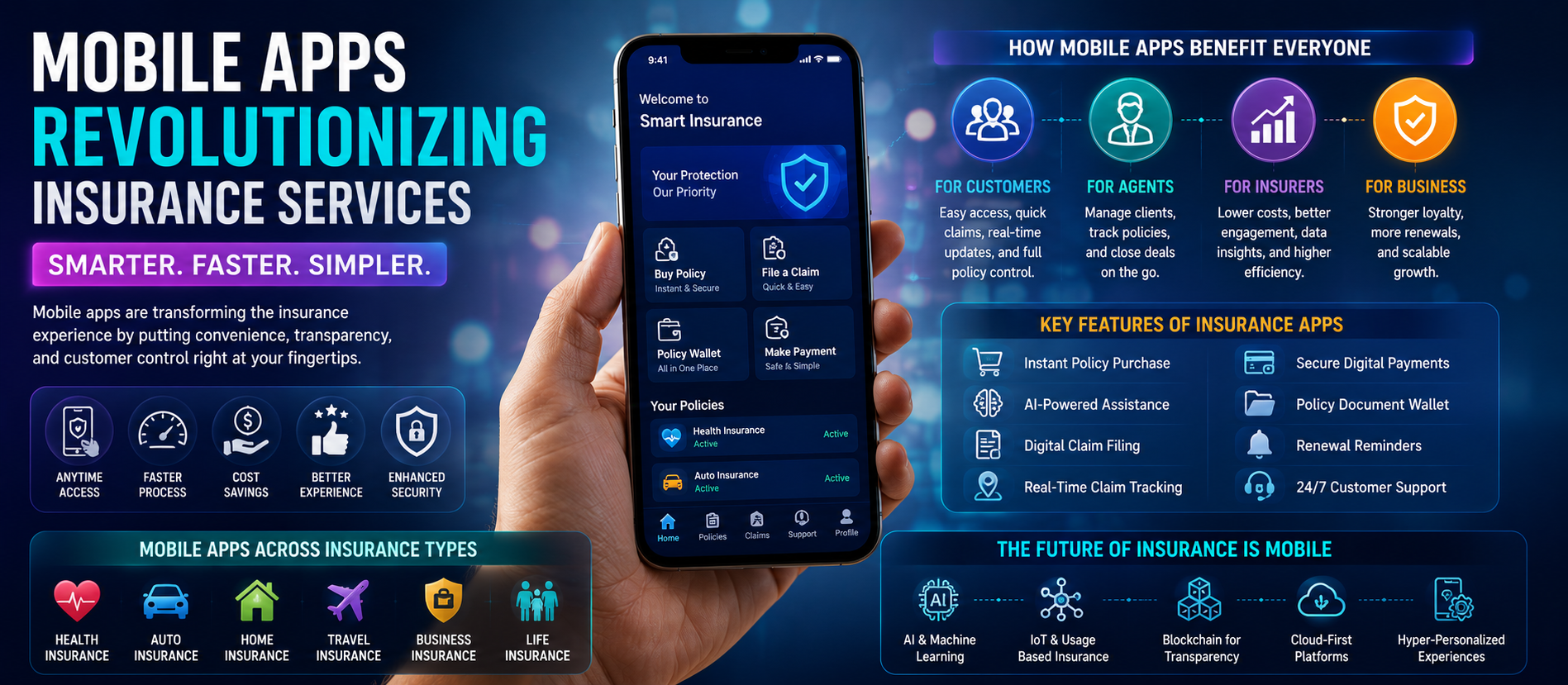
Mobile applications have transformed the insurance industry by making policies, claims, customer support, and risk management more accessible than ever. Today, policyholders can purchase coverage, compare plans, pay premiums, submit claims, upload documents, and track claim status directly from their smartphones. As insurers continue investing in artificial intelligence, automation, telematics, and digital customer experiences, mobile apps are becoming central to modern insurance services.
This WordPress-ready guide from Digiifrog explores how mobile apps are revolutionizing insurance services. It is optimized for SEO, AEO, GEO, and AI Search Optimization.
Website: www.digiifrog.com
Why Mobile Insurance Apps Matter
- 24/7 access to policy information
- Digital policy purchase and renewals
- Fast premium payments
- Real-time claim tracking
- Instant document uploads
- Improved customer communication
Key Features
- AI-powered chat support
- Digital ID cards and policy documents
- Claim filing with photos and videos
- Telematics for usage-based insurance
- Health and wellness tracking integration
- Push notifications for renewals and updates
Benefits for Customers
- Convenience and faster service
- Reduced paperwork
- Greater transparency
- Improved claim experience
- Personalized policy recommendations
Challenges
Insurers must address cybersecurity, data privacy, accessibility, digital literacy, and regulatory compliance while delivering reliable mobile experiences.
Future Trends
- Artificial intelligence and predictive analytics
- Blockchain-enabled claims
- IoT-connected insurance services
- Voice-enabled policy management
- Hyper-personalized insurance products
Frequently Asked Questions
Can insurance claims be filed through mobile apps?
Many insurers now allow policyholders to submit claims, upload documents, and monitor claim progress through their apps.
Are insurance apps secure?
Reputable insurers typically use encryption, authentication, and other security measures, though users should also follow good cybersecurity practices.
Conclusion
Mobile applications continue to reshape the insurance industry by improving accessibility, efficiency, and customer engagement. As digital technologies evolve, mobile-first insurance services are expected to become even more personalized, intelligent, and convenient.
Digiifrog
Website: www.digiifrog.com
This draft is intended for expansion into a fully original 2,000–2,500+ word article with app comparisons, case studies, implementation strategies, checklists, and 25+ AEO-focused FAQs.
Ready to Grow?
Talk to us about a strategy tailored to your brand — we will help you stand out in search, AI discovery and social.


Comments (0)
Log in to leave a comment.