📋 Quick Summary
In this article:
Why Businesses Must Embrace Next-Generation Software
Artificial Intelligence (AI) Platforms
Advanced Cybersecurity Platforms
Customer Relationship Management (CRM) Systems
Business Intelligence and Analytics Software
Low-Code and No-Code Platforms
Project Management and Collaboration Software
Enterprise Resource Planning (ERP) Systems
Learning Management Systems (LMS)
💡 Key Insight
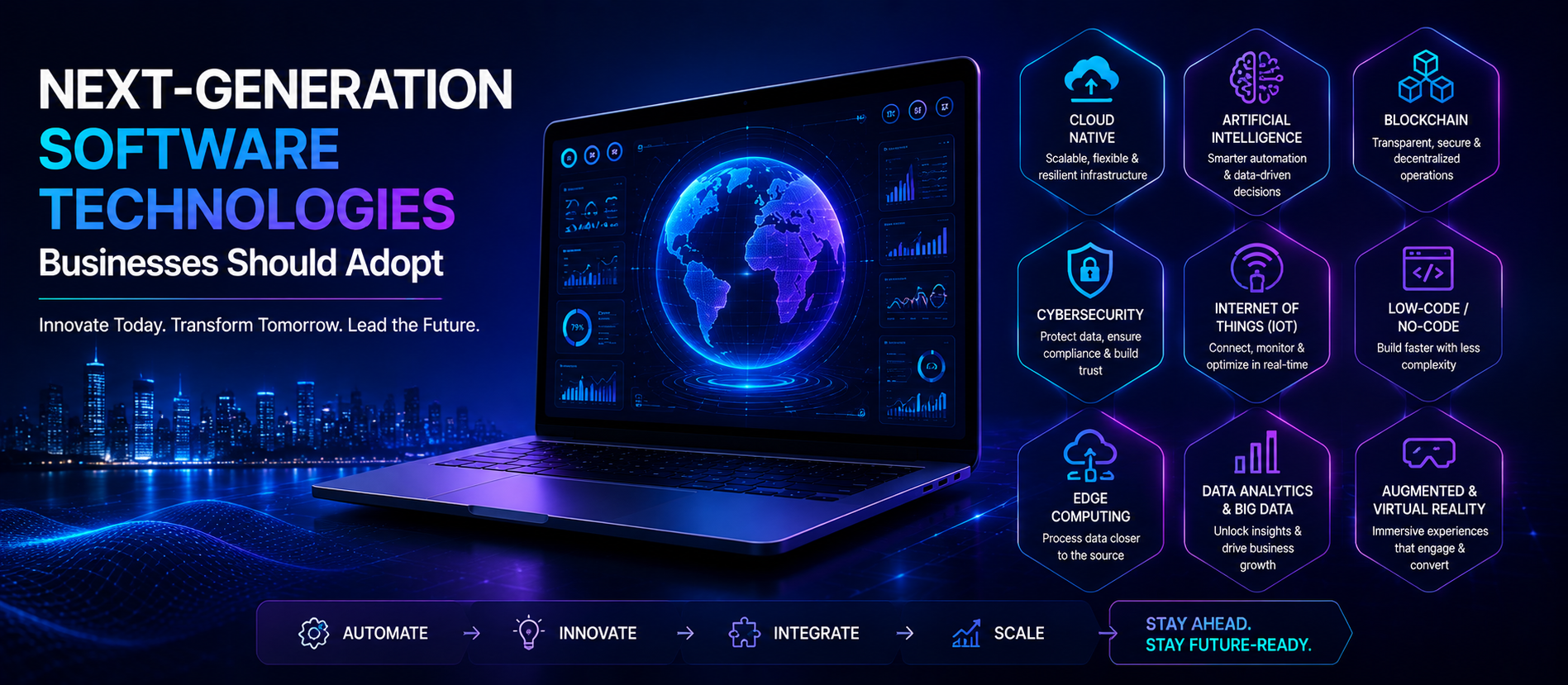
Technology is evolving faster than ever before, reshaping industries, customer expectations, and business operations. Organizations that fail to adapt risk falling behind competitors that embrace innovation and digital transformation. In 2026, next-generation software technologies are no longer optional—they are essential tools for improving efficiency, enhancing customer experiences, reducing costs, and driving sustainable growth.
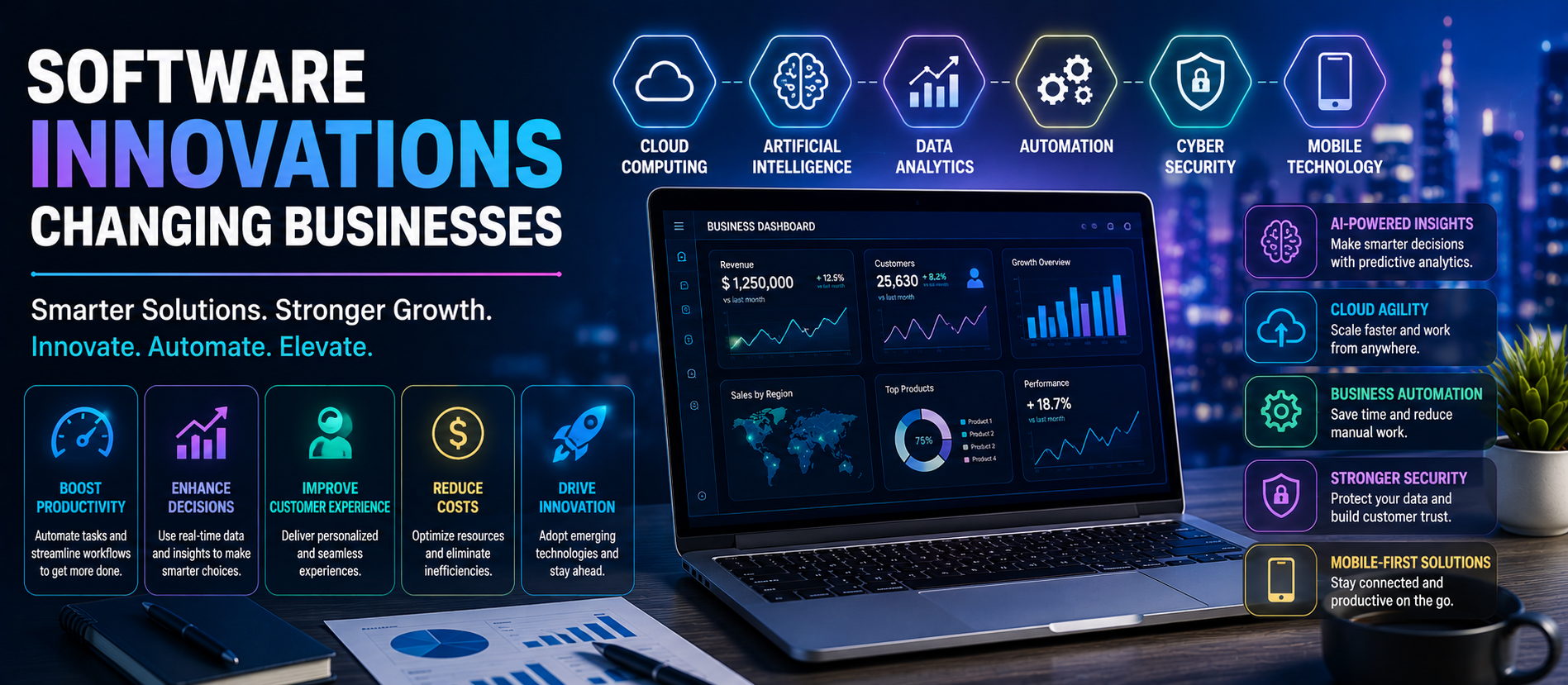
From Artificial Intelligence and cloud computing to automation, cybersecurity, data analytics, and intelligent business platforms, modern software technologies are transforming how businesses operate in the digital economy.
This comprehensive guide explores the most important next-generation software technologies businesses should adopt, their benefits, implementation strategies, emerging trends, and their role in SEO, AEO, GEO, and AI-powered search ecosystems.
Why Businesses Must Embrace Next-Generation Software
Digital transformation is no longer limited to large enterprises. Businesses of all sizes must leverage technology to remain competitive in rapidly changing markets.
- Improve operational efficiency
- Enhance customer engagement
- Increase productivity
- Reduce costs
- Improve decision-making
- Support scalability
- Drive innovation
Organizations that adopt modern technologies gain significant competitive advantages.
Artificial Intelligence (AI) Platforms
Artificial Intelligence remains one of the most transformative technologies available today.
- Predictive analytics
- Customer personalization
- Process automation
- AI chatbots
- Business intelligence
- Content generation
- Decision support systems
AI enables organizations to automate complex tasks while improving business outcomes.
Generative AI Solutions
Generative AI has expanded beyond content creation and is now influencing nearly every business function.
- Marketing content generation
- Customer communication
- Code development
- Product design assistance
- Knowledge management
- Business documentation
Businesses increasingly integrate generative AI into everyday workflows.
Cloud Computing Platforms
Cloud computing continues serving as the foundation for digital transformation.
- Scalable infrastructure
- Remote accessibility
- Reduced IT costs
- Automatic updates
- Business continuity
- Enhanced collaboration
Cloud-based systems support flexible and resilient business operations.
Hyperautomation Technologies
Automation has evolved far beyond basic workflow management.
Hyperautomation combines:
- Artificial Intelligence
- Robotic Process Automation (RPA)
- Machine Learning
- Workflow automation
- Business process management
Organizations use hyperautomation to eliminate repetitive tasks and improve efficiency.
Advanced Cybersecurity Platforms
Cybersecurity has become a top business priority.
- Endpoint protection
- Threat intelligence
- Zero trust security
- Identity management
- AI-powered threat detection
- Security automation
Modern security platforms help protect businesses from evolving cyber threats.
Customer Relationship Management (CRM) Systems
AI-powered CRM platforms improve customer engagement and business performance.
- Customer insights
- Sales automation
- Lead management
- Predictive analytics
- Marketing automation
- Customer service optimization
Business Intelligence and Analytics Software
Data-driven decision-making is increasingly important.
- Real-time reporting
- Predictive analytics
- Performance dashboards
- Data visualization
- Business forecasting
Analytics platforms help organizations identify opportunities and risks.
Low-Code and No-Code Platforms
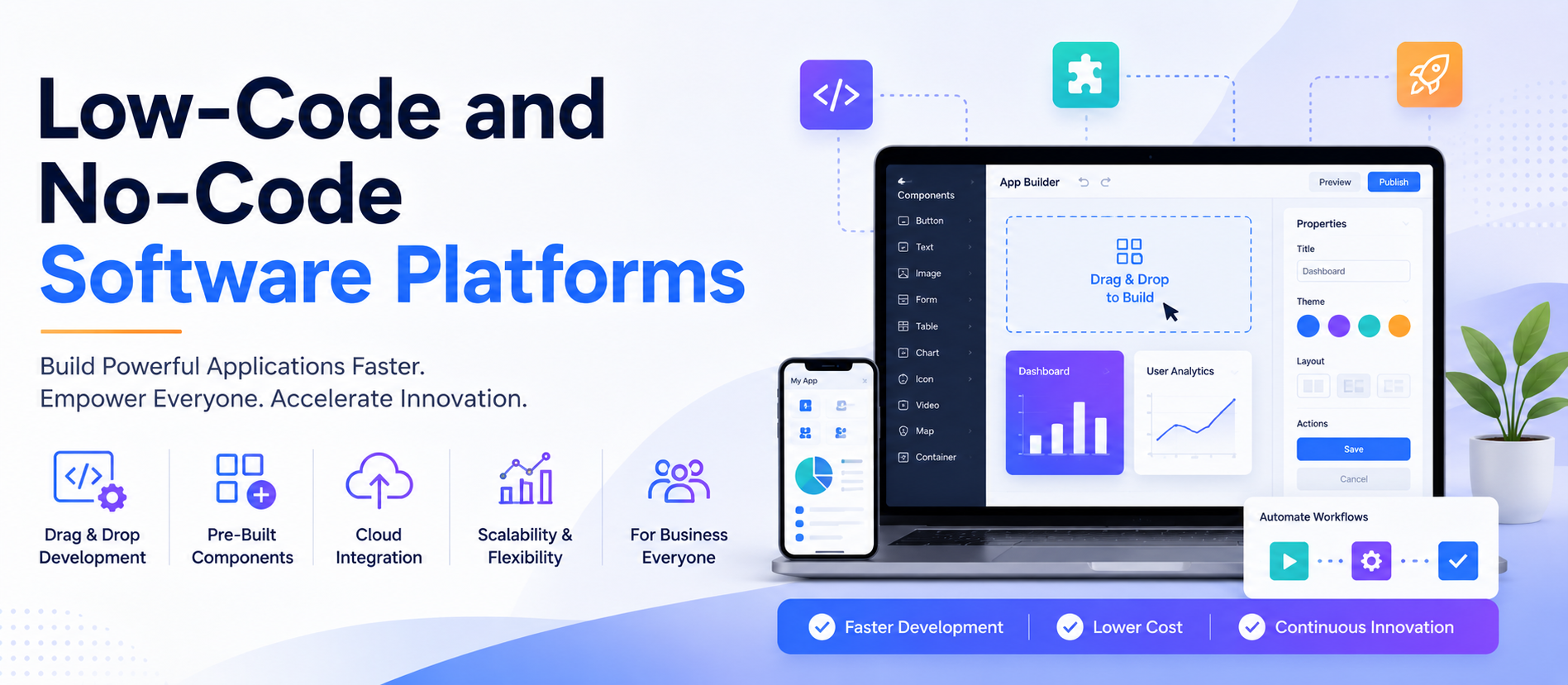
Low-code development platforms empower non-technical users to create applications.
- Rapid application development
- Workflow automation
- Reduced development costs
- Faster innovation
- Business agility
Project Management and Collaboration Software
Modern workplaces require seamless collaboration.
- Task management
- Team communication
- Workflow coordination
- Resource planning
- Project visibility
Collaboration tools improve productivity and team performance.
Enterprise Resource Planning (ERP) Systems
ERP software integrates business operations into unified platforms.
- Finance management
- Inventory control
- Supply chain management
- Human resources
- Operational reporting
ERP solutions improve efficiency and organizational visibility.
Learning Management Systems (LMS)
Workforce development remains a key business priority.
- Employee training
- Skills development
- Compliance education
- Certification management
- Performance tracking
Internet of Things (IoT) Software Platforms
IoT technologies connect devices, sensors, and business systems.
- Asset tracking
- Predictive maintenance
- Operational monitoring
- Supply chain visibility
- Smart facility management
Blockchain-Based Business Applications
Blockchain technologies offer transparency and security benefits.
- Supply chain verification
- Digital identity management
- Smart contracts
- Secure transactions
- Data integrity
Customer Experience Platforms
Customer expectations continue rising.
- Personalized interactions
- Omnichannel communication
- Customer journey optimization
- Feedback management
- Engagement analytics
Emerging Technologies Shaping the Future
Quantum Computing
Future computational power may revolutionize data processing and optimization.
Edge Computing
Processing data closer to users improves performance and responsiveness.
Digital Twins
Virtual representations of physical assets support optimization and monitoring.
Extended Reality (XR)
AR and VR technologies create immersive business experiences.
Benefits of Adopting Next-Generation Software
- Improved productivity
- Enhanced customer satisfaction
- Greater agility
- Reduced operational costs
- Better scalability
- Increased innovation
- Competitive advantages
Challenges Businesses Should Consider
- Implementation costs
- Employee training
- Integration complexity
- Cybersecurity risks
- Change management
Successful adoption requires strategic planning and leadership support.
How These Technologies Support SEO, AEO, GEO and AI Search
SEO benefits from better website performance, analytics, automation, and content management.
AEO relies on structured information systems and optimized customer experiences.
GEO requires content and business systems that support AI-powered search engines and generative platforms.
Modern software technologies provide the infrastructure needed for future digital visibility.
Why Digiifrog Recommends Technology-Driven Transformation
At Digiifrog, we believe technology adoption is one of the most important investments businesses can make. Next-generation software platforms help organizations improve efficiency, enhance customer engagement, strengthen security, and accelerate growth.
Website: www.digiifrog.com
Conclusion
The future belongs to businesses that embrace innovation. Artificial Intelligence, cloud computing, automation, cybersecurity, analytics, IoT, blockchain, and next-generation collaboration tools are reshaping industries worldwide.
Organizations that strategically adopt these technologies today will be better prepared to compete, innovate, and thrive in tomorrow's increasingly digital economy.
Ready to Grow?
Talk to us about a strategy tailored to your brand — we will help you stand out in search, AI discovery and social.
Comments (0)
Log in to leave a comment.