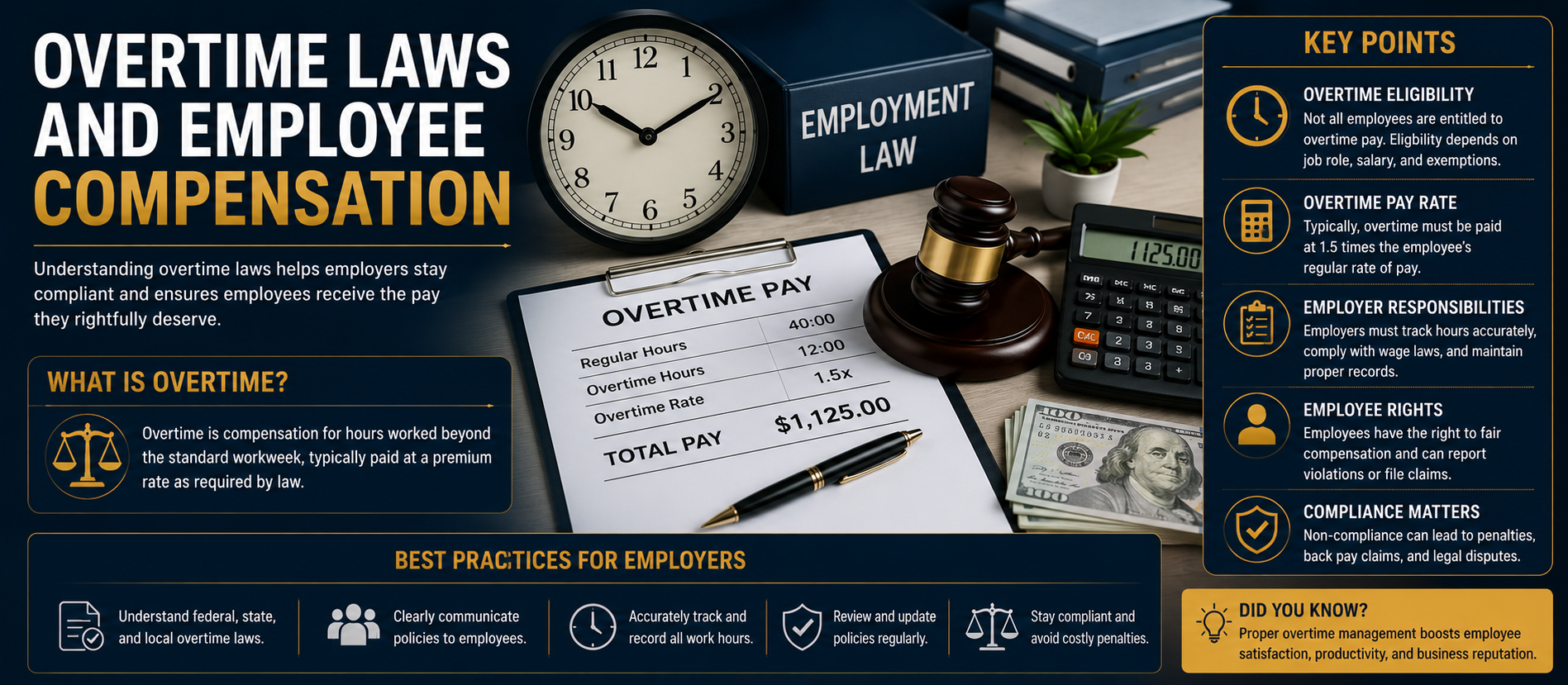
📋 Quick Summary
In this article:
Purpose of Overtime Regulations
Who May Be Eligible for Overtime?
How Overtime Pay Is Calculated
Compliance Tips for Businesses
💡 Key Insight
Overtime laws are an essential part of modern employment regulation, ensuring that eligible employees receive fair compensation for working beyond standard working hours. While overtime rules vary by jurisdiction, most legal systems establish minimum standards for wages, working hours, recordkeeping, and employee protections.
This comprehensive guide explains how overtime laws work, employee eligibility, employer responsibilities, compensation methods, exemptions, recordkeeping requirements, common disputes, and best practices for compliance in 2026.
What Are Overtime Laws?
Overtime laws regulate compensation for employees who work beyond legally defined or contractually agreed working hours. These rules are designed to prevent worker exploitation while encouraging fair labor practices.
- Maximum working hours
- Overtime wage calculations
- Employee classification
- Recordkeeping obligations
- Worker protections
Purpose of Overtime Regulations
- Protect employee welfare
- Encourage work-life balance
- Ensure fair compensation
- Promote lawful employment practices
- Reduce workplace disputes
Who May Be Eligible for Overtime?
Eligibility depends on applicable labor laws, employee classification, job duties, salary structure, and other jurisdiction-specific requirements.
- Hourly employees
- Non-exempt employees
- Certain contract workers where applicable
Some categories of employees may be exempt under local law.
How Overtime Pay Is Calculated
Calculation methods differ across jurisdictions. Employers should follow applicable legislation, employment contracts, collective bargaining agreements, and company policies.
- Standard hourly wage
- Applicable overtime premium
- Total overtime hours worked
Employer Responsibilities
- Maintain accurate time records
- Pay wages on time
- Follow statutory overtime rules
- Provide clear employment policies
- Retain payroll documentation
Employee Rights
- Receive lawful wages
- Access payroll information
- Report wage violations
- Seek legal remedies where available
Remote Work and Overtime
Remote work has increased the importance of accurate time tracking and clear expectations regarding working hours and after-hours communication.
Common Overtime Disputes
- Unpaid overtime
- Incorrect employee classification
- Missing time records
- Payroll calculation errors
- Off-the-clock work allegations
Recordkeeping Best Practices
- Time sheets
- Digital attendance systems
- Payroll reports
- Employment agreements
- Written overtime approvals
Resolving Overtime Disputes
Many disputes are resolved through internal grievance procedures, mediation, labor authorities, or court proceedings depending on local law.
Compliance Tips for Businesses
- Review employment classifications regularly
- Train managers on wage laws
- Conduct payroll audits
- Implement reliable time-tracking systems
- Update policies to reflect current legal requirements
Future Trends
Automation, AI-powered scheduling, remote work, and digital payroll systems continue to influence overtime compliance and employment regulation.
SEO, AEO, GEO & AI Search Optimization
SEO, AEO, GEO, and AI Search Optimization help educational employment law content reach users through Google, Bing, answer engines, and AI-powered search platforms.
Frequently Asked Questions
Does every employee qualify for overtime?
No. Eligibility depends on applicable law and employee classification.
Can employers require overtime?
Requirements vary according to local employment laws, contracts, and collective agreements.
Should employers keep overtime records?
Yes. Accurate recordkeeping is essential for compliance and dispute resolution.
Conclusion
Understanding overtime laws helps employers remain compliant while ensuring eligible employees receive fair compensation. Accurate recordkeeping, proper employee classification, transparent workplace policies, and ongoing legal compliance reduce disputes and support productive employment relationships.
Digiifrog
Website: www.digiifrog.com
Digital Marketing, SEO, AEO, GEO & AI Search Solutions for Modern Businesses.
Ready to Grow?
Talk to us about a strategy tailored to your brand — we will help you stand out in search, AI discovery and social.

Comments (0)
Log in to leave a comment.