📋 Quick Summary
In this article:
Quick Answer: What Smart Home Features Do Buyers Want Most?
Why Smart Home Features Matter to Today's Buyers
1. Smart Thermostats and Climate Control
2. Video Doorbells
3. Smart Security Cameras
4. Smart Locks and Keyless Entry
5. Smart Lighting Systems
6. Reliable High-Speed Home Connectivity
8. Smart Smoke and Carbon Monoxide Detectors
9. Water Leak Detection Systems
10. Smart Energy Monitoring
11. Automated Window Shades and Blinds
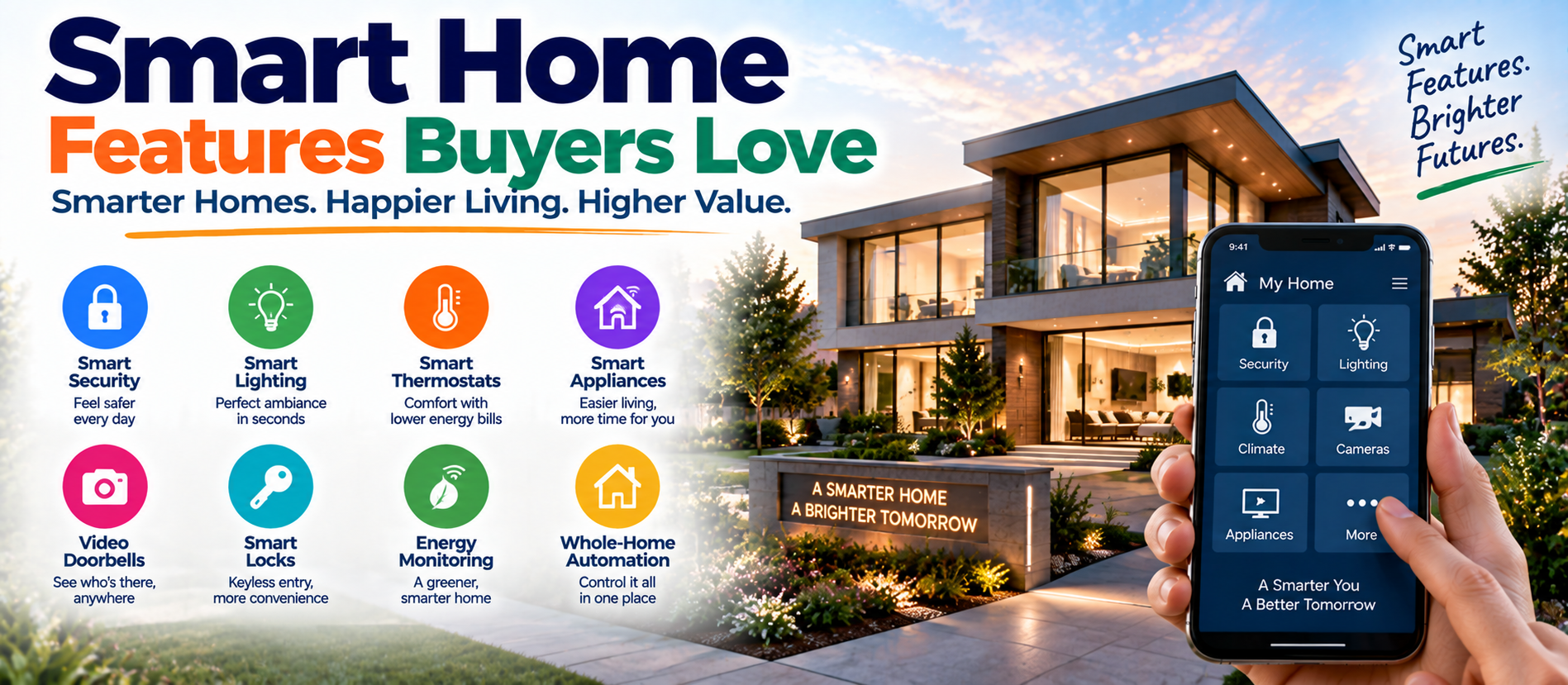
Smart home features buyers love are changing the way people evaluate modern properties. Buyers are no longer interested only in location, square footage, and interior finishes. Many also want homes that offer convenience, security, energy efficiency, and simple technology that improves everyday life.
From smart thermostats and video doorbells to automated lighting and connected security systems, smart technology can make a property more attractive to modern buyers. However, buyers usually value technology that is practical, reliable, and easy to use more than complicated systems with too many features.
This guide explains the most popular smart home features buyers love, why they matter, and how homeowners, sellers, real estate professionals, and developers can use smart technology to improve a property's appeal.
Quick Answer: What Smart Home Features Do Buyers Want Most?
Many home buyers look for practical smart features such as smart thermostats, connected security cameras, video doorbells, smart locks, automated lighting, energy monitoring, leak detection, and reliable home connectivity.
The most attractive smart homes usually provide clear benefits without making the property difficult to operate.
Why Smart Home Features Matter to Today's Buyers
Smart home technology is now common across many property types and price ranges.
Buyers may be attracted to smart features because they can provide:
- Convenience and automation.
- Better security awareness.
- Potential energy management benefits.
- Remote access to selected systems.
- Improved comfort.
- Early warnings about certain home problems.
The value of any smart feature depends on its quality, condition, compatibility, and usefulness.
1. Smart Thermostats and Climate Control
Smart thermostats are among the most popular connected home features because they address an everyday need: indoor comfort.
A smart thermostat may allow homeowners to adjust heating and cooling settings through a mobile device, schedule temperature changes, or review selected energy information.
Buyers appreciate climate features that make a home easier to manage and provide better control in larger properties.
The actual energy savings from a smart thermostat depend on the home, climate, HVAC system, settings, and homeowner behavior. Sellers should avoid making unsupported savings claims.
2. Video Doorbells
Video doorbells are popular because they combine convenience with basic security awareness.
Depending on the product and setup, homeowners may receive notifications when activity is detected near an entrance and communicate with visitors remotely.
Privacy and local laws should always be considered when installing cameras that may capture areas outside the property.
3. Smart Security Cameras
Connected security cameras can provide homeowners with selected views of entrances, outdoor spaces, and other areas of the property.
Common benefits include:
- Remote viewing.
- Motion alerts.
- Recorded video, depending on the system.
- Integration with other security devices.
Buyers often value professionally installed or well-maintained security systems. However, cybersecurity and privacy are important. Connected cameras should be protected with strong passwords, software updates, and secure network settings.
4. Smart Locks and Keyless Entry
Smart locks can provide a convenient alternative or addition to traditional keys.
Depending on the system, homeowners may unlock doors using a mobile device, keypad, digital credential, or other approved method. Some systems can also support temporary access for trusted visitors or service providers.
Buyers may appreciate the convenience of keyless entry, especially when a property has multiple family members or regular service needs.
Reliable backup access should remain available in case of battery failure, power problems, or technical issues.
5. Smart Lighting Systems
Smart lighting can improve both convenience and ambiance. Buyers may be interested in lighting that can be controlled remotely, scheduled, dimmed, or organized into different scenes.
Popular applications include:
- Automated entry lighting.
- Scheduled indoor lights.
- Dimmable living spaces.
- Outdoor and landscape lighting.
- “Away” lighting schedules.
Buyers generally prefer lighting controls that are reliable and easy to understand.
6. Reliable High-Speed Home Connectivity
A smart home depends on reliable connectivity. Strong home networking has become increasingly important as buyers use more connected devices, work remotely, stream media, and operate smart home systems.
Features buyers may appreciate include:
- Reliable Wi-Fi coverage.
- Strong connectivity in major living areas.
- Network equipment designed for the property size.
- Wired connections where useful.
Large homes may require more thoughtful network design. Weak Wi-Fi can make even the best smart devices frustrating to use.
8. Smart Smoke and Carbon Monoxide Detectors
Connected safety devices can provide alerts through compatible systems when certain alarms are activated.
These devices may be especially useful when homeowners are away from the property. However, smart detectors should meet applicable safety standards and should never replace proper installation, maintenance, and emergency planning.
9. Water Leak Detection Systems
Water damage can be expensive and disruptive. Smart leak sensors can help detect moisture or unusual water activity in selected locations.
Depending on the system, homeowners may receive alerts about:
- Water leaks.
- Unexpected moisture.
- Unusual water flow.
Some advanced systems may also connect with automatic shutoff equipment. These features can be especially useful in vacation homes or properties that remain empty for extended periods.
Leak detection does not guarantee prevention of all water damage, but early warnings may help homeowners respond more quickly.
10. Smart Energy Monitoring
Energy awareness is becoming more important to many buyers. Smart energy monitoring tools can provide information about electricity use and, in some cases, the performance of connected energy systems.
Possible features include:
- Household energy dashboards.
- Usage information.
- Monitoring of selected equipment.
- Solar system information where applicable.
11. Automated Window Shades and Blinds
Smart window treatments can add convenience, privacy, and comfort.
Automated shades may operate according to a schedule, a selected home scene, sunlight conditions, or manual controls.
This feature can be especially attractive in homes with large windows, difficult-to-reach coverings, or spaces where homeowners want greater control over privacy and natural light.
12. Smart Appliances Buyers Appreciate
Connected appliances can be appealing when they offer genuine convenience.
Examples may include:
- Smart ovens.
- Connected refrigerators.
- Automated coffee systems.
- Connected laundry equipment.
However, buyers may not value every connected appliance equally. A useful feature should make a task easier rather than introduce unnecessary complexity.
16. Whole-Home Automation
Whole-home automation connects multiple systems through a central interface or coordinated platform.
A homeowner might create simple scenes such as:
- Morning.
- Leaving Home.
- Evening.
- Movie Night.
One selected scene could adjust several compatible features, such as lighting, climate, entertainment, or window coverings.
Buyers generally prefer automation that is intuitive and flexible. A system should allow manual control and should not depend entirely on one device or service.
18. What Buyers Want: Simple Technology That Works
One of the most important lessons in smart home design is that buyers do not always want more technology. They want technology that works.
Smart features are more attractive when they are:
- Easy to use.
- Reliable.
- Secure.
- Compatible with other systems.
- Supported by clear instructions.
A home filled with disconnected apps and difficult controls can feel less appealing than a property with a few well-integrated features.
How Smart Features Can Help When Selling a Home
Smart home features can help a property stand out, but sellers should present them correctly.
Consider these steps:
- Create a clear list of included smart devices.
- Explain the practical benefit of each feature.
- Provide basic operating information.
- Reset personal accounts and data before closing.
- Clarify whether subscriptions or services are required.
During property showings, demonstrate simple features when appropriate. A working smart thermostat or automated lighting scene may be easier for buyers to understand when they can see it in action.
Smart Home Features and Property Value
Smart technology may improve buyer interest, but it does not automatically increase a home's value by a fixed amount.
The impact depends on:
- Property location.
- Local buyer preferences.
- Home price range.
- Technology quality.
- System age and condition.
- Ease of use.
Professionally installed and well-maintained systems may improve market appeal. Outdated technology or systems with expensive maintenance requirements may be less attractive.
Privacy and Cybersecurity: A Major Buyer Concern
As more homes become connected, buyers may ask questions about privacy and cybersecurity.
Good smart home practices include:
- Using strong and unique passwords.
- Keeping devices updated.
- Using secure Wi-Fi networks.
- Reviewing privacy settings.
- Removing former owners' access.
- Resetting devices before transferring ownership.
When purchasing a smart home, buyers should understand what technology remains with the property and what accounts or services are required for continued operation.
How to Choose the Right Smart Home Features
Homeowners and developers should begin with real needs rather than purchasing technology simply because it is new.
Ask:
- What daily problem does this feature solve?
- Will the technology remain useful in several years?
- Is it easy for guests and future owners to use?
- How will the device receive security updates?
- Does the feature depend on a subscription?
- Will it work with existing systems?
Strong connectivity, security, climate control, and simple automation are better foundations than many unrelated devices.
SEO, AEO, GEO, and AI Search Optimization for Smart Homes
Modern property content should answer questions clearly. This helps users and search technologies understand the topic.
SEO content can focus on relevant topics such as smart home features buyers love, best smart home technology, and modern home automation.
AEO benefits from direct answers to questions such as “What smart home features do buyers want?” and “Do smart home features help sell a property?”
💡 Key Insight
GEO is important because buyer preferences, climate, building standards, energy costs, and technology availability can vary by city and region.
AI Search optimization benefits from clear headings, simple explanations, accurate information, and useful context.
Frequently Asked Questions
What smart home feature is most popular with buyers?
Smart thermostats, connected security systems, video doorbells, smart locks, automated lighting, and reliable home connectivity are commonly valued because they provide practical everyday benefits.
Do smart home features increase home value?
Smart features may improve buyer interest and market appeal, but their effect on value depends on the property, location, technology quality, and local demand.
Should sellers leave smart devices in the home?
Sellers should clearly identify which devices are included in the sale and follow applicable contract and local requirements. Personal accounts and data should be removed or transferred appropriately.
Are smart homes safe from cyber threats?
No connected system is completely risk-free. Strong passwords, software updates, secure networks, and good privacy settings can help reduce risk.
What should buyers check before purchasing a smart home?
Buyers should review the installed devices, system age, compatibility, account requirements, subscriptions, software support, and instructions for operating the technology.
Final Thoughts
The smart home features buyers love most are usually practical, secure, reliable, and easy to use.
Smart thermostats, security cameras, video doorbells, smart locks, automated lighting, leak detection, energy monitoring, and reliable connectivity can improve convenience and make a property feel prepared for modern living.
The future of real estate will likely include even greater use of connected technology. However, successful smart homes will not be defined by the number of devices installed. They will be defined by how effectively technology supports the people living inside the home.
For homeowners, sellers, real estate professionals, and developers, the best approach is to choose technology with a clear purpose and maintain strong standards for privacy, cybersecurity, and usability.
For more insights about real estate, technology, digital marketing, SEO, AEO, GEO, and AI Search optimization, visit www.digiifrog.com.
Disclaimer
This article is for general educational and informational purposes only. It does not constitute legal, financial, cybersecurity, real estate, construction, or professional technology advice. Smart home products, security requirements, laws, and technology standards may change. Consult qualified professionals before making significant property or technology decisions.
Ready to Grow?
Talk to us about a strategy tailored to your brand — we will help you stand out in search, AI discovery and social.

Comments (0)
Log in to leave a comment.