📋 Quick Summary
In this article:
Quick Answer: What Is Smart Technology in a Luxury Home?
Why Smart Technology Matters in Luxury Real Estate
1. Intelligent Home Automation Systems
2. Smart Lighting for Personalized Ambiance
3. Advanced Climate and Air Quality Control
4. Luxury Home Security Systems
5. Biometric and Smart Access Control
6. AI-Powered Home Management
7. Smart Kitchens and Connected Appliances
8. Private Smart Entertainment Systems
10. Automated Window Treatments
11. Smart Outdoor Living Spaces
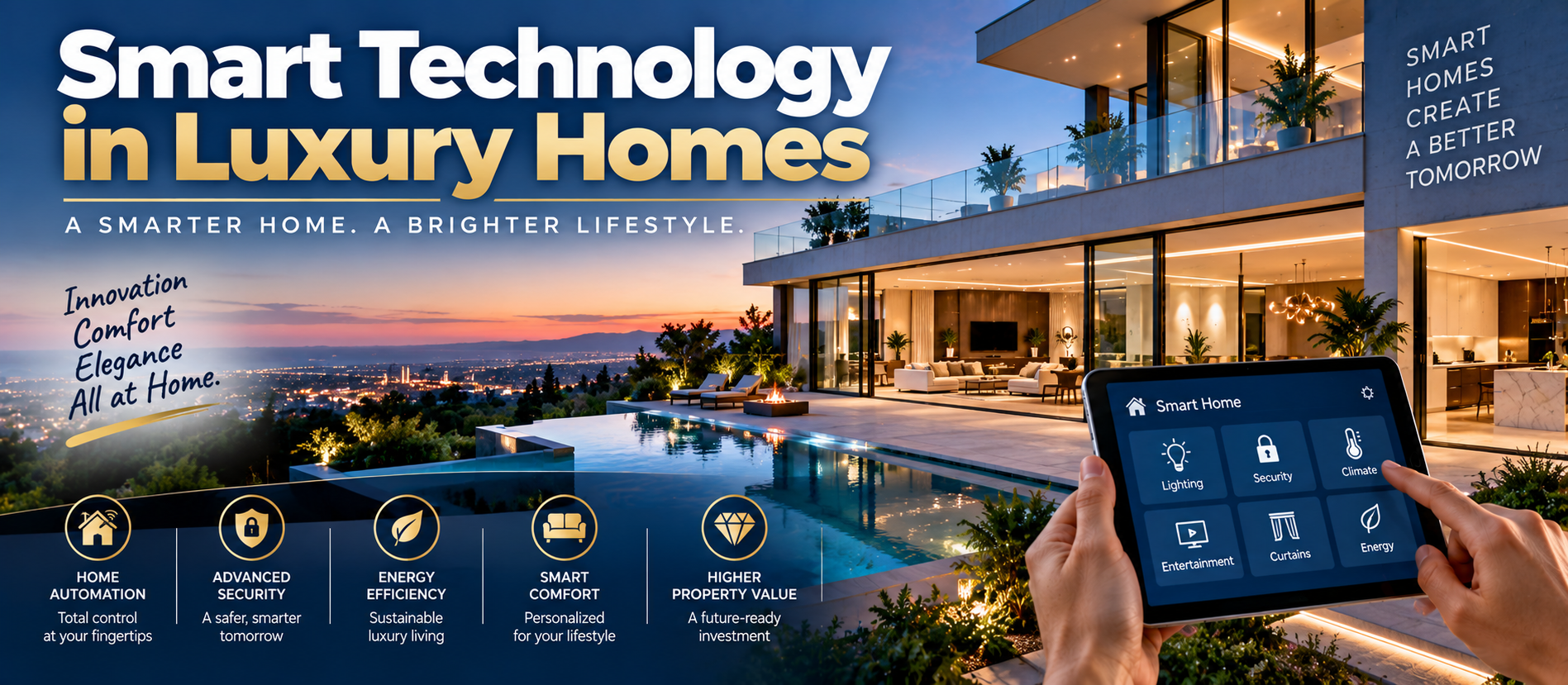
Smart technology in luxury homes is transforming the meaning of comfort, convenience, security, and personalized living. Modern luxury is no longer defined only by premium materials, large spaces, or impressive architecture. Today, high-end homeowners also expect intelligent systems that make everyday life easier and more efficient.
💡 Key Insight
From voice-controlled lighting and automated climate systems to advanced security, private entertainment rooms, and AI-powered home management, smart home technology is becoming an important part of the luxury real estate market.
The best smart luxury homes do not simply contain more devices. They connect technology in a thoughtful way. The result is a home that responds to the owner's preferences while maintaining privacy, security, comfort, and elegant design.
This guide explains smart technology in luxury homes, the most important features, the benefits for homeowners, and what buyers and developers should consider when investing in connected living spaces.
Quick Answer: What Is Smart Technology in a Luxury Home?
Smart technology in a luxury home refers to connected systems that allow homeowners to automate, monitor, control, and personalize features such as lighting, climate, security, entertainment, appliances, energy use, and access.
These systems may be controlled through wall panels, smartphones, voice assistants, automated schedules, sensors, or integrated home management platforms.
Why Smart Technology Matters in Luxury Real Estate
Luxury buyers increasingly expect more than attractive finishes. They want homes that provide a seamless experience.
Smart technology can help create that experience by offering:
- Greater convenience.
- Personalized settings.
- Advanced security.
- Improved energy management.
- Remote property monitoring.
- Integrated entertainment.
- Efficient daily routines.
A well-designed smart home can reduce unnecessary effort by preparing the environment automatically.
For example, a home may adjust lighting, temperature, music, and window coverings based on a preferred schedule or selected scene.
1. Intelligent Home Automation Systems
A central home automation system is often the foundation of a smart luxury property. Instead of managing each device separately, homeowners can control multiple systems through one connected platform.
Integrated systems may manage:
- Lighting.
- Climate control.
- Window shades.
- Security.
- Entertainment.
- Outdoor features.
Homeowners may create personalized scenes such as “Morning,” “Away,” “Dinner,” or “Movie Night.” A single command can activate several settings at once.
The quality of integration is often more important than the number of devices. A luxury home should feel simple to operate, not complicated.
2. Smart Lighting for Personalized Ambiance
Lighting plays a major role in luxury interior design. Smart lighting gives homeowners more control over brightness, color temperature, and timing.
Potential features include:
- Automated lighting schedules.
- Motion-based activation.
- Scene-based controls.
- Dimming systems.
- Remote control.
- Outdoor landscape lighting.
For example, lighting can gradually brighten in the morning and become warmer during the evening. Homeowners can also create different settings for entertaining, relaxing, dining, or working.
Luxury lighting systems should complement the architecture and interior design. Technology should enhance the space without making control devices visually distracting.
3. Advanced Climate and Air Quality Control
Luxury homeowners often expect precise control over indoor comfort. Smart climate technology can manage heating, cooling, humidity, and ventilation.
Some systems allow different areas of the home to have separate temperature settings. This is useful in large properties where different rooms may have different usage patterns.
Smart systems may also provide information about:
- Indoor temperature.
- Humidity.
- Air quality.
- Energy consumption.
- System performance.
Automation can help maintain preferred conditions while reducing unnecessary energy use. However, system design and professional installation remain important, especially in large or architecturally complex homes.
4. Luxury Home Security Systems
Security is one of the most valuable applications of smart technology in luxury homes.
Modern systems may include:
- Connected security cameras.
- Smart locks.
- Video doorbells.
- Motion sensors.
- Perimeter monitoring.
- Remote alerts.
- Professional security integration.
Homeowners may be able to check selected security information remotely and receive alerts about unusual activity.
However, connected security devices must be protected. Weak passwords, outdated software, and poor network security can create serious risks.
Luxury home cybersecurity should be considered part of the overall security strategy.
5. Biometric and Smart Access Control
Traditional keys are increasingly being supplemented by digital access systems.
Depending on the technology and local requirements, smart access may include mobile credentials, temporary visitor access, keypad entry, and biometric systems.
These features can be useful for:
- Family members.
- Household staff.
- Guests.
- Maintenance professionals.
Temporary permissions can provide greater control over when certain people can access a property.
Homeowners should also maintain reliable backup access options in case of power failures, device problems, or connectivity issues.
6. AI-Powered Home Management
Artificial intelligence is beginning to play a larger role in connected homes. AI systems can analyze patterns and help automate certain decisions.
Potential applications include:
- Learning preferred temperature settings.
- Optimizing energy use.
- Managing connected devices.
- Supporting predictive maintenance.
- Providing automated recommendations.
AI should make a home easier to manage. It should not remove important homeowner control.
Privacy and data handling are essential considerations. Homeowners should understand what information a system collects, where that data is stored, and how it is protected.
7. Smart Kitchens and Connected Appliances
The kitchen is increasingly becoming a connected space. Luxury homes may include intelligent appliances and integrated systems designed to improve convenience.
Examples may include:
- Connected ovens.
- Smart refrigerators.
- Automated coffee systems.
- Water monitoring technology.
- Voice-controlled features.
The best smart kitchen technology should remain practical. Homeowners should consider whether a feature genuinely improves daily life or simply adds complexity.
Integration with the overall home automation platform can also improve usability.
8. Private Smart Entertainment Systems
Luxury homes often include dedicated entertainment spaces. Smart technology can connect audio, video, lighting, and climate settings into one experience.
Popular features may include:
- Private home theaters.
- Multi-room audio.
- High-quality streaming systems.
- Integrated speakers.
- Automated lighting scenes.
A “Movie Night” scene might lower window shades, adjust the lighting, activate the display, and prepare the audio system automatically.
Proper acoustic design and professional installation are important for high-end entertainment spaces.
10. Automated Window Treatments
Smart window coverings can provide convenience, privacy, and energy management.
Automated shades and curtains can operate according to:
- Time of day.
- Sunlight levels.
- Selected home scenes.
- Manual commands.
In luxury properties with large windows, automated treatments can be particularly useful. They may help manage natural light while protecting privacy and interior furnishings.
11. Smart Outdoor Living Spaces
Luxury living often extends beyond the walls of the home. Smart technology can also support outdoor areas.
Examples include:
- Automated landscape lighting.
- Smart irrigation systems.
- Connected pool controls.
- Outdoor entertainment systems.
- Remote security monitoring.
Smart irrigation systems may help manage water use based on schedules and available environmental information.
Outdoor technology should be designed for weather exposure and maintained properly to ensure long-term performance.
12. Energy Management and Sustainable Luxury
Luxury and sustainability are increasingly connected. High-end homeowners may want sophisticated technology that improves comfort while managing energy consumption.
Smart energy features can include:
- Energy monitoring dashboards.
- Automated climate controls.
- Efficient lighting management.
- Solar energy monitoring.
- Battery system monitoring.
Real-time information can help homeowners understand how the property uses energy.
The environmental and financial benefits depend on the property, technology, local energy prices, and homeowner behavior.
16. The Importance of Seamless Design
One important difference between an ordinary smart home and a luxury smart home is the quality of integration.
Luxury buyers often prefer technology that is present when needed but does not dominate the visual design.
Examples of thoughtful integration include:
- Concealed speakers.
- Integrated wall controls.
- Hidden equipment spaces.
- Discreet sensors.
- Centralized technology management.
The technology should support the architecture rather than compete with it.
17. Privacy and Cybersecurity in Smart Luxury Homes
Every connected device can potentially create a security or privacy concern. Luxury properties may be attractive targets because of the value of the property and the information connected systems may collect.
Good practices include:
- Using strong and unique passwords.
- Keeping devices updated.
- Securing home Wi-Fi networks.
- Reviewing vendor security practices.
- Limiting unnecessary data sharing.
- Separating devices where appropriate.
Before purchasing smart technology, homeowners should ask how long the manufacturer provides software updates and security support.
18. Smart Technology and Luxury Property Value
Smart technology can make a property more attractive, but it does not automatically guarantee a higher resale value.
The value depends on factors such as:
- Location.
- Property quality.
- Buyer expectations.
- Technology quality.
- Ease of use.
- Condition and maintenance.
Well-designed and professionally installed systems may improve a luxury property's appeal. Outdated or overly complicated technology may have the opposite effect.
How to Choose Smart Technology for a Luxury Home
Before investing in a connected system, homeowners should start with their lifestyle needs.
Consider these questions:
- Which daily tasks would benefit from automation?
- Which systems need to work together?
- Who will manage the technology?
- How important is remote access?
- What privacy protections are required?
- How will the system be maintained and updated?
It is usually better to build a reliable technology foundation than to purchase many disconnected devices.
SEO, AEO, GEO, and AI Search Optimization
This article is structured to answer common questions about smart technology in luxury homes using clear and direct language.
For SEO, relevant topics include luxury smart homes, smart home technology, high-end home automation, and smart luxury real estate.
For AEO, the guide provides direct answers about the most useful technologies, the benefits of connected homes, security considerations, and factors that influence luxury property value.
For GEO and AI Search optimization, geographic context matters because technology standards, energy systems, climate needs, regulations, and luxury buyer preferences can vary between cities and regions.
Frequently Asked Questions
What makes a luxury home smart?
A luxury smart home uses integrated technology to automate and control features such as lighting, climate, security, entertainment, energy, and access while maintaining a seamless user experience.
Does smart technology increase luxury home value?
Smart technology can improve buyer appeal, but the effect on value depends on the location, property, technology quality, buyer demand, and how well the system is maintained.
What is the most important smart technology for luxury homes?
There is no single answer. Security, climate control, lighting, centralized automation, and reliable network infrastructure are often important foundations.
Are smart luxury homes secure?
Connected homes can provide advanced security features, but smart devices also require cybersecurity. Strong passwords, updates, secure networks, and reputable technology providers are important.
Can smart technology help manage a second home?
Yes. Connected systems can provide selected remote monitoring and alerts for security, climate, water, energy, and access systems.
The Future of Smart Luxury Homes
The future of luxury living will likely involve deeper integration between artificial intelligence, automation, sustainability, security, and personalized experiences.
Homes may become better at responding to homeowner preferences while providing greater control over privacy and data. AI may help automate routine tasks, while smart building systems may improve energy and maintenance management.
The most successful luxury homes will not necessarily contain the most technology. They will use technology intelligently.
Final Thoughts
Smart technology in luxury homes represents a shift from connected gadgets to complete, personalized living experiences.
Modern homeowners can use technology to create comfortable environments, improve security, manage energy, enjoy entertainment, and monitor properties remotely.
However, luxury technology should remain reliable, intuitive, secure, and easy to maintain. The best systems work quietly in the background and give homeowners control when they need it.
For buyers, developers, and real estate professionals, smart home technology will continue to be an important part of the luxury property conversation.
For more insights about real estate, technology, digital marketing, SEO, AEO, GEO, and AI Search optimization, visit www.digiifrog.com.
Disclaimer
This article is for general educational and informational purposes only. It does not constitute legal, financial, cybersecurity, investment, construction, or professional technology advice. Smart home products, laws, technical standards, and security requirements can change. Consult qualified professionals before making significant technology or property investment decisions.
Ready to Grow?
Talk to us about a strategy tailored to your brand — we will help you stand out in search, AI discovery and social.

Comments (0)
Log in to leave a comment.