
📋 Quick Summary
In this article:
How Traditional Phishing Works
Characteristics of Traditional Phishing
Characteristics of Spear Phishing
Spear Phishing vs Traditional Phishing: Key Differences
Cyber security threats continue to evolve rapidly, but one attack method remains consistently effective: phishing. Despite advances in artificial intelligence, security automation, and threat detection technologies, phishing attacks continue to be one of the leading causes of data breaches, financial fraud, and credential theft worldwide.
💡 Key Insight
Understanding the differences between spear phishing and traditional phishing is essential for businesses, employees, IT professionals, and cyber security teams. This guide explores how each attack works, their key differences, common tactics, real-world impacts, prevention strategies, and future trends shaping phishing attacks in 2026.
What Is Phishing?
Phishing is a cyber attack technique in which attackers impersonate trusted individuals, organizations, or services to trick victims into revealing confidential information or performing actions that compromise security.
Attackers commonly seek:
- Usernames and passwords
- Financial information
- Credit card details
- Personal data
- Corporate credentials
- Confidential business information
Phishing attacks often arrive through email but can also occur through text messages, phone calls, social media platforms, and collaboration tools.
What Is Traditional Phishing?
Traditional phishing refers to mass-distributed phishing campaigns sent to a large number of recipients simultaneously.
The attacker creates a generic message and distributes it widely, hoping that a percentage of recipients will respond.
Common examples include emails claiming to come from:
- Banks
- Online retailers
- Cloud service providers
- Government agencies
- Social media platforms
- Payment processors
Traditional phishing relies on volume rather than personalization.
How Traditional Phishing Works
A typical phishing attack follows several stages:
- Attackers create a fraudulent email.
- The email impersonates a trusted organization.
- The victim receives the message.
- A malicious link or attachment is included.
- The victim clicks or downloads the content.
- Credentials or sensitive data are stolen.
Because the same message is sent to thousands or millions of recipients, attackers only need a small percentage of victims to succeed.
Characteristics of Traditional Phishing
- Broad targeting
- Generic messaging
- High-volume distribution
- Minimal research required
- Automated campaigns
- Lower success rates per target
Traditional phishing remains effective due to the sheer scale of attacks.
What Is Spear Phishing?
Spear phishing is a highly targeted phishing attack designed specifically for an individual, department, or organization.
Unlike traditional phishing, attackers conduct research on their targets before launching the attack.
Information gathered may include:
- Name
- Job title
- Company information
- Professional relationships
- Social media activity
- Business projects
This personalization makes spear phishing significantly more convincing and dangerous.
How Spear Phishing Works
A spear phishing campaign typically follows these steps:
- Attackers research the target.
- Information is collected from public sources.
- A highly personalized message is crafted.
- The message appears legitimate.
- The target is encouraged to click a link, open a file, or transfer information.
- Attackers gain access or steal sensitive data.
Because messages are customized, victims are more likely to trust them.
Characteristics of Spear Phishing
- Highly targeted attacks
- Personalized content
- Detailed reconnaissance
- Smaller target groups
- Higher success rates
- Greater financial impact
Spear phishing often targets executives, finance departments, HR personnel, and system administrators.
Spear Phishing vs Traditional Phishing: Key Differences
Target Audience
Traditional phishing targets large groups of people simultaneously. Spear phishing targets specific individuals or organizations.
Personalization
Traditional phishing uses generic content. Spear phishing includes personalized details gathered through research.
Preparation
Traditional phishing requires minimal preparation. Spear phishing involves extensive reconnaissance.
Success Rate
Spear phishing generally achieves higher success rates because messages appear more credible.
Impact
Traditional phishing may compromise individual accounts, while spear phishing often leads to larger breaches affecting entire organizations.
Why Spear Phishing Is More Dangerous
Spear phishing exploits human trust more effectively than traditional phishing.
Examples include:
- Fake emails from executives
- Vendor impersonation
- Invoice fraud
- Business email compromise (BEC)
- Credential theft campaigns
Because messages appear legitimate, even experienced professionals can become victims.
Common Spear Phishing Techniques
Executive Impersonation
Attackers pretend to be company executives requesting urgent actions.
Vendor Fraud
Cyber criminals impersonate trusted suppliers or business partners.
Payroll Scams
Human resources staff are targeted for employee data or payroll information.
Invoice Manipulation
Finance departments receive fraudulent payment requests.
Credential Harvesting
Victims are directed to fake login pages designed to capture credentials.
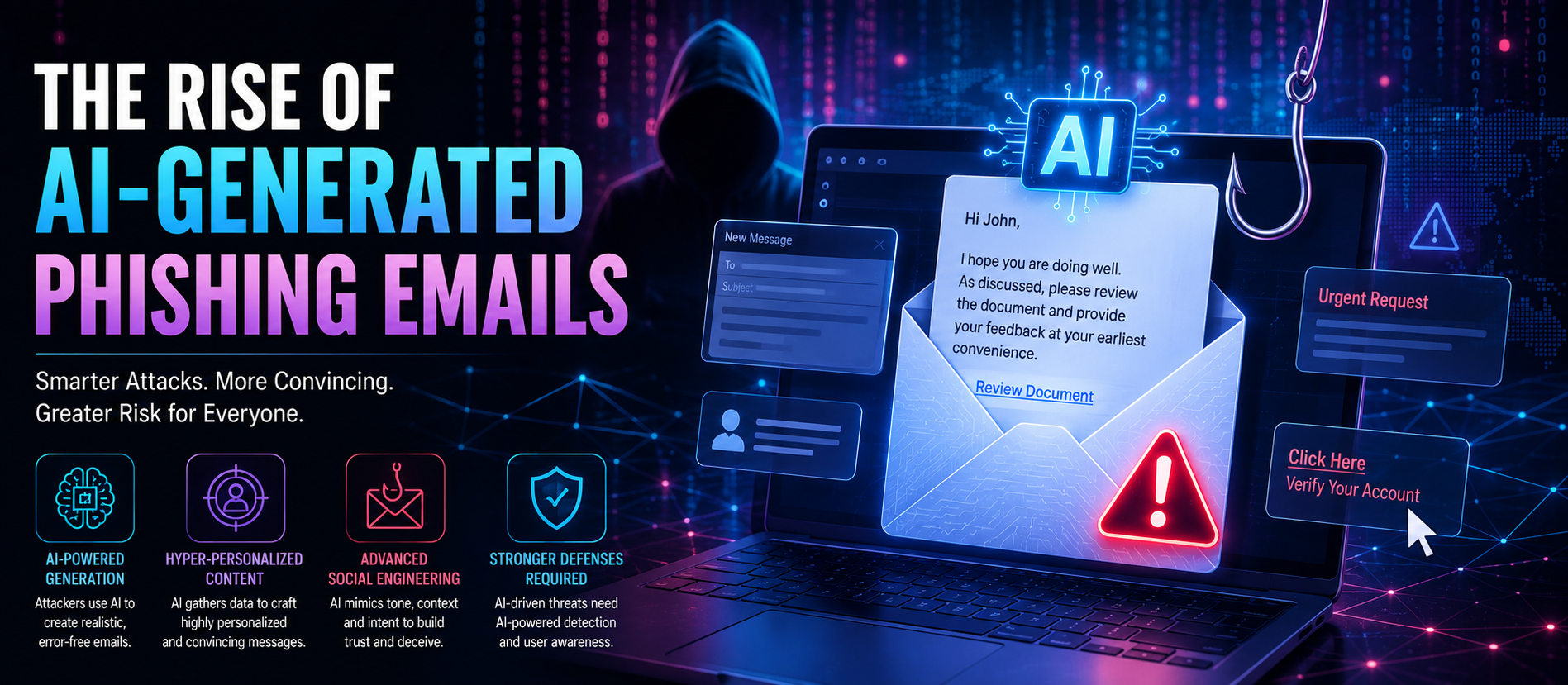
The Role of Artificial Intelligence in Phishing Attacks
Artificial Intelligence is transforming phishing campaigns in 2026.
Attackers use AI to:
- Create convincing emails
- Generate personalized content
- Analyze target behavior
- Automate reconnaissance
- Produce realistic fake communications
AI-powered phishing attacks are becoming increasingly difficult to detect.
Warning Signs of Traditional Phishing
- Generic greetings
- Poor grammar
- Unexpected attachments
- Suspicious links
- Urgent requests
- Threats or warnings
⚠ Watch Out
Recognizing these signs helps users avoid common phishing traps.
Warning Signs of Spear Phishing
- Unexpected requests from known contacts
- Unusual payment instructions
- Requests for confidential information
- Changes to vendor banking details
- Unexpected login verification requests
- Urgent executive communications
Even personalized messages should be verified independently.
Business Email Compromise (BEC): A Specialized Form of Spear Phishing
BEC attacks represent one of the most financially damaging cyber threats.
Attackers impersonate executives, vendors, or trusted employees to:
- Request wire transfers
- Steal credentials
- Access financial systems
- Obtain sensitive information
Many organizations lose millions of dollars annually through BEC scams.
How Organizations Can Prevent Phishing Attacks
Security Awareness Training
Educate employees about phishing techniques and attack indicators.
Multi-Factor Authentication (MFA)
MFA reduces the impact of stolen credentials.
Email Security Solutions
Advanced filtering technologies help block malicious messages.
Phishing Simulations
Regular simulations improve employee awareness and preparedness.
Verification Procedures
Employees should verify unusual requests through independent channels.
Cyber Security Best Practices for Individuals
- Verify sender identities
- Inspect email addresses carefully
- Avoid clicking suspicious links
- Use MFA on important accounts
- Keep software updated
- Report suspicious messages
Simple precautions can significantly reduce phishing risks.
Future Trends in Phishing Attacks
Several trends are expected to shape phishing attacks in the coming years:
- AI-generated phishing emails
- Deepfake voice impersonation
- Cross-platform phishing campaigns
- Cloud service impersonation
- Supply chain phishing attacks
- Hyper-personalized spear phishing
Organizations must adapt their defenses continuously to address evolving threats.
AEO & GEO Optimized Frequently Asked Questions
What is the difference between spear phishing and traditional phishing?
Traditional phishing targets large groups with generic messages, while spear phishing targets specific individuals using personalized content.
Why is spear phishing more dangerous?
Spear phishing is more convincing because attackers research their targets and create customized messages.
How can businesses prevent spear phishing?
Organizations can use security awareness training, MFA, email security tools, phishing simulations, and verification procedures.
What is Business Email Compromise?
Business Email Compromise is a specialized spear phishing attack that impersonates trusted business contacts to steal money or information.
Can AI improve phishing attacks?
Yes. AI allows attackers to create highly personalized and realistic phishing messages at scale.
Conclusion
Both traditional phishing and spear phishing remain significant cyber security threats in 2026. While traditional phishing relies on volume and broad targeting, spear phishing focuses on precision and personalization, making it significantly more dangerous.
Organizations that invest in employee awareness, AI-powered security solutions, multi-factor authentication, email protection technologies, and strong verification procedures will be better positioned to defend against these evolving threats.
Understanding the differences between spear phishing and traditional phishing is essential for building resilient cyber defenses in an increasingly complex digital landscape.
For more expert insights on Cyber Security, Digital Transformation, AI Search Optimization, SEO, AEO, GEO, and emerging technology trends, visit Digiifrog at www.digiifrog.com.
Ready to Grow?
Talk to us about a strategy tailored to your brand — we will help you stand out in search, AI discovery and social.

Comments (0)
Log in to leave a comment.